
Bobby Fischer: The Borderline of Madness and Genius
A story that begins with ambition, continues with genius, and ends with a thought-provoking bitterness and sadness
"In The Name Of God"
Hello again; after a long time
I am glad that this site is available to us again.
This time we will examine an unparalleled legend in the history of chess;
Robert James Fischer!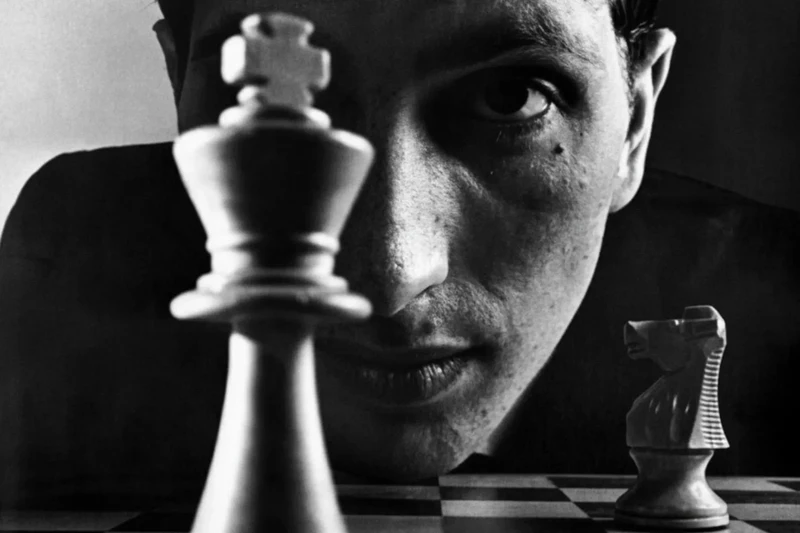
-
Life:
Robert James Fischer, known to the world as “Bobby,” was born in Chicago on March 9, 1943.Bobby preferred chess to popular games like Monopoly because “there was no chance.” There were no dice rolls, no coincidences. If you lost, it was your own fault; if you won, it was your own doing. In a world of chaos and insecurity, the chessboard provided him with a refuge of order and control.
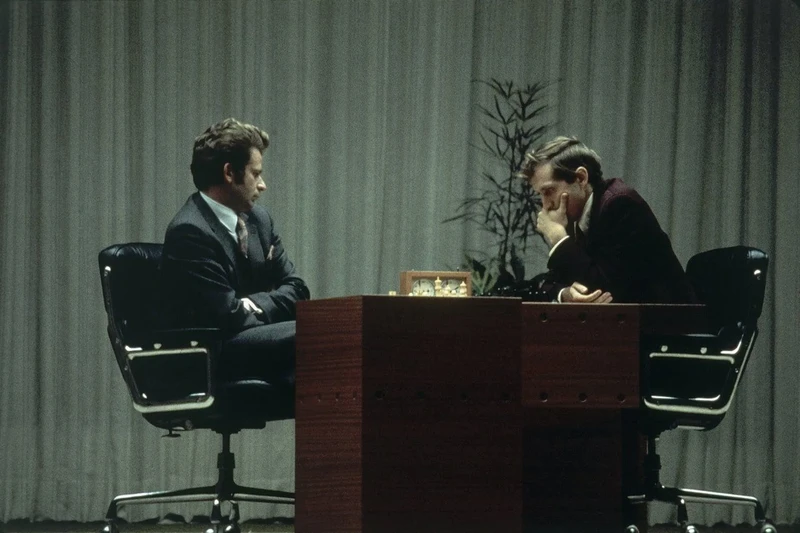
He became the U.S. Chess Champion at the age of 14 and went on to win the title eight more times.He was the world chess champion from 1972 to 1975. In 1972, at the 1972 World Chess Championship, he defeated Boris Spassky with a score of 7 wins, 3 losses, and 11 draws in the most controversial match in chess history, known as the Match of the Century. The reason for the importance of this competition was the Cold War and the political rivalry between the United States and the Soviet Union.Three years later, he refused to defend his title against Anatoly Karpov due to a protest against FIDE and lost the title to Karpov.
-

-
The game of the century; the birth of a legend
On October 17, 1956, 13-year-old Bobby Fischer faced 26-year-old Donald Byrne, one of the top 10 chess players in America. On paper, it seemed an unequal battle: a kid in sneakers against an experienced master.
Bobby was playing with the black piece, and in the middle of the game, he decided to do something that had never been done before among chess players: sacrifice the queen.
Everyone thought it was the end of the game, but Fischer sacrificed his queen to break his opponent's defense. His moves were deadly, like Henry's; beautiful, precise, and ruthless.Donald Byrne, with all his experience, was completely disarmed. Fischer not only won the game, but he crushed his opponent's pride.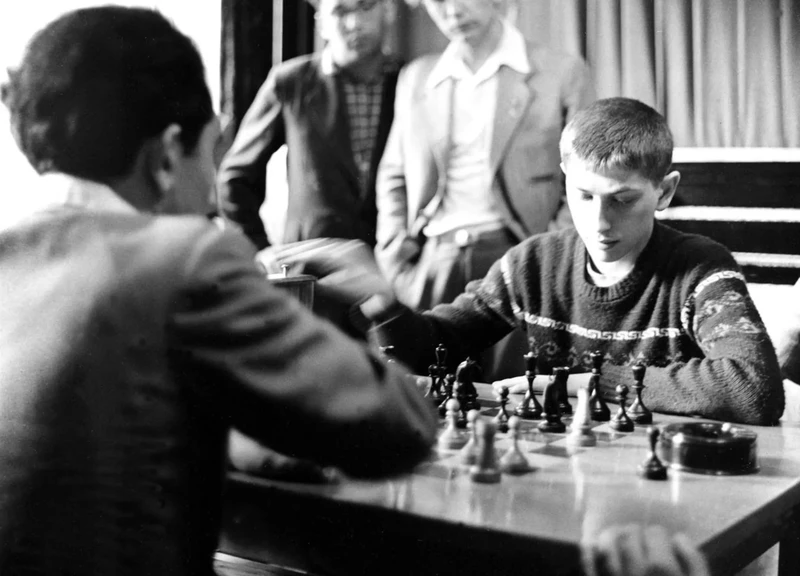
-
After the “Game of the Century,” Bobby Fischer’s engine of success never let up. The following year, at the age of 14, he became the United States Chess Champion, and the following year, he became the youngest grandmaster in chess history. Gradually, he abandoned his sporty, boyish clothes and began wearing tailored suits to look more dignified and grown-up.
-
One of the spectators was Carmine Nigro, president of the Brooklyn Chess Club, an American chess expert with near-master authority and a mentor. Nigro was so impressed by Fischer's play that he introduced him to the club and began to coach him. Fischer said of his time with Nigro: "Mr. Nigro was probably not the best player in the world, but he was a very good teacher. Meeting him was probably the determining factor in my progress in chess."
Nigro hosted Fischer's first chess tournament in his home in 1952
-
Fischer played in eight US Championships, winning all of them by at least a one-point margin.
-
Fischer refused to play in the 1958 Munich Olympiad when his demand to play first board ahead of Samuel Reshevsky was rejected. Some sources claim that 15-year-old Fischer was unable to arrange leave from attending high school.Fischer later represented the United States on the first board at four Chess Olympiads, winning two individual silver medals and one individual bronze medal.
- An ideological battle; chess instead of a battlefield:
During the 1960s and 70s, at the height of the Cold War, the United States and the Soviet Union competed in everything from the space race to nuclear weapons. But for the Russians, chess was more than just a sport; it was part of their national identity and a tool to demonstrate the intellectual superiority of communism over the West.

-
The Soviets treated chess like a state science or religion, with specialized academies, big budgets, and teams of analysts behind their champions.
-
For 24 years, the world championship was the Soviets’ monopoly. Canadians may be hockey-mad and the Chinese may love ping-pong, but the Russians’ obsession with chess was unmatched by any other nation.
-
The Russians were and are strong in chess! They have produced skilled chess players over the decades; they have founded many chess schools, and in general, we can say that they were among the founders of a professional approach to chess, which we discussed in the article "The Evolution of Chess" and said that Mikhail Botvinnik played a very important role
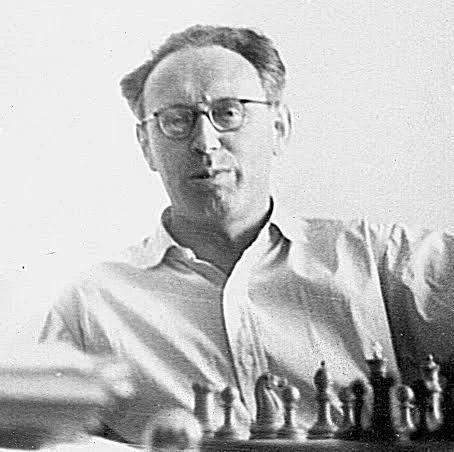
And suddenly, a lone wolf emerged from America to take on the Soviet chess empire alone.When Fischer reached the World Championship final in 1972 to face the reigning champion, Boris Spassky, the world held its breath, awaiting the outcome.
- https://lichess.org/study/5f15g3bl/A939TaUb
- The 1972 final in Reykjavik, Iceland, was billed as the “match of the century,” but it almost didn’t happen. Increasingly paranoid and narcissistic, Fischer refused to fly to Iceland.
Finally, Henry Kissinger, the then US Secretary of State, personally contacted Fischer and told him, in a mixture of plea and command: “Go out there and play. America needs this win.” But Fischer was only satisfied when an English banker doubled the prize money to $250,000.
Fischer’s victory ignited chess fever in America. Membership in chess clubs doubled, and everyone wanted to be like Bobby.He was invited to appear on popular television shows, such as the Johnny Carson Show, where Bobby showed off his genius by solving a 15-piece puzzle in just 17 seconds, saying, “It wasn’t very well put together.”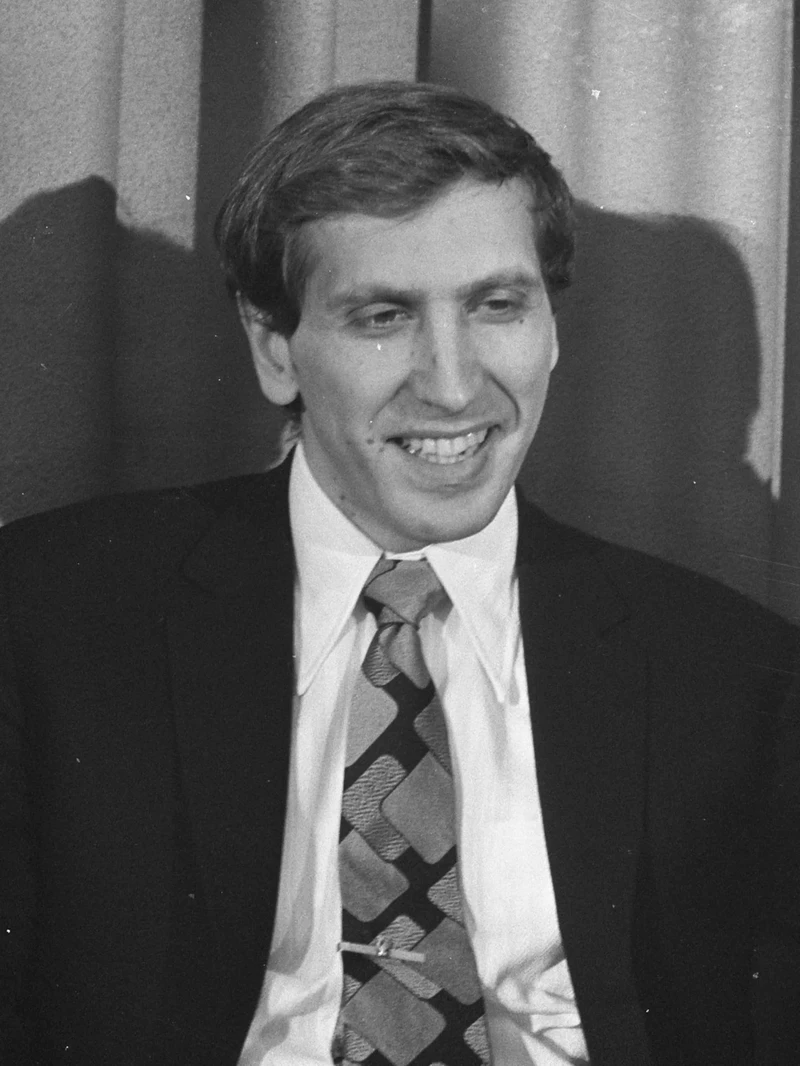
-
The beginning of the collapse;
After his 1972 championship, the world expected Fischer to reign supreme, but he disappeared. In 1975, when he was due to defend his title against Anatoly Karpov, he laid out a long list of bizarre conditions that the World Chess Federation refused to accept, and Fischer simply relinquished the world championship. He never again appeared in an official professional match.
Fischer’s mind, trained for years by analyzing his opponents’ plots on the chessboard, now saw the plots in the real world.Paranoia took over, and he believed that spy agencies were trying to poison his food, that his hotel was being bugged, and that the Russians were trying to blow up his plane. During those years, Fischer began giving bizarre radio interviews, recorded in the Philippines or Hungary, full of conspiracy theories.
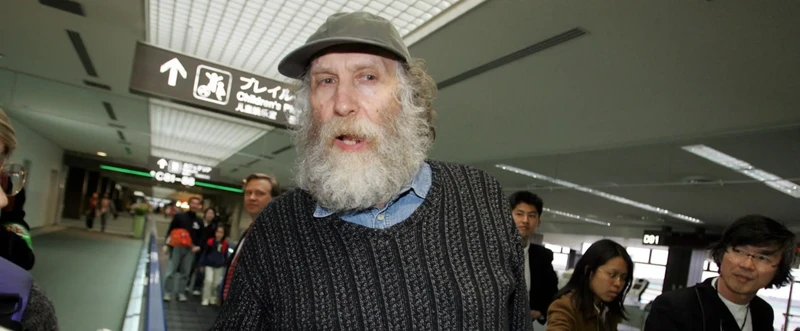
His dementia also showed in his appearance. The athletic young man who had taken up swimming and tennis to keep mentally fit had now become a scruffy-looking man who had even had his fillings pulled out, believing that the metal in his mouth could absorb radio waves and affect his brain. He was even arrested in California for looking like a bank robber and later wrote a book about alleged torture in prison.
-
After the 1992 competition
After the 1992 competition, Fischer became a ghost.He lived in secret for years in Hungary, the Philippines and Japan, constantly changing his appearance and terrified of any contact. In Japan, he lived with Miyoko Watai, the president of the Japanese Chess Association. They are said to have married so that Fischer could obtain residency, but even that could not save him.
In 2004, Fischer was arrested as he was about to fly out of Tokyo’s Narita Airport. The US government had revoked his passport. The former world champion was now a prisoner number in a Japanese immigration detention centre.Fischer spent nine months in prison, and while the US sought his extradition and trial, he turned to the only country that had fond memories of him: Iceland.
The tiny country of Iceland, which Fischer had made a name for himself in 1972, showed its loyalty here.In an extraordinary move, the country’s parliament granted Bobby Fischer full citizenship, and he arrived in Reykjavik, disheveled, bearded, and weary-looking, not as a world champion but as a refugee who simply wanted to die in peace.
-
Behind the scenes of the collapse.
What happened to Bobby Fischer? It’s a question that chess psychologists and historians have asked themselves time and again. Ruben Fine, a chess grandmaster and psychologist who Fischer’s mother once consulted, believes the roots of the collapse go back to Bobby’s childhood. According to Fine, Bobby took up chess as an escape from the real world, but once he reached the top of the game, there was nowhere else to run.
FBI documents later released showed that his mother, Regina, also had a long history of being “unstable.”His real father, Pavel Nemanj, was also a strange man who always walked around with pockets full of soap because he was obsessed with cleanliness.
Bobby seems to have inherited genes that bordered on the thin line between genius and madness. Many experts today believe that Fischer probably suffered from paranoid schizophrenia or Asperger's syndrome.
But he was never treated, never received an official diagnosis. The mind that was capable of creating the most complex strategies in the world could not accept the simplest help for its treatment.
The end of the legend: 64 houses, 64 years
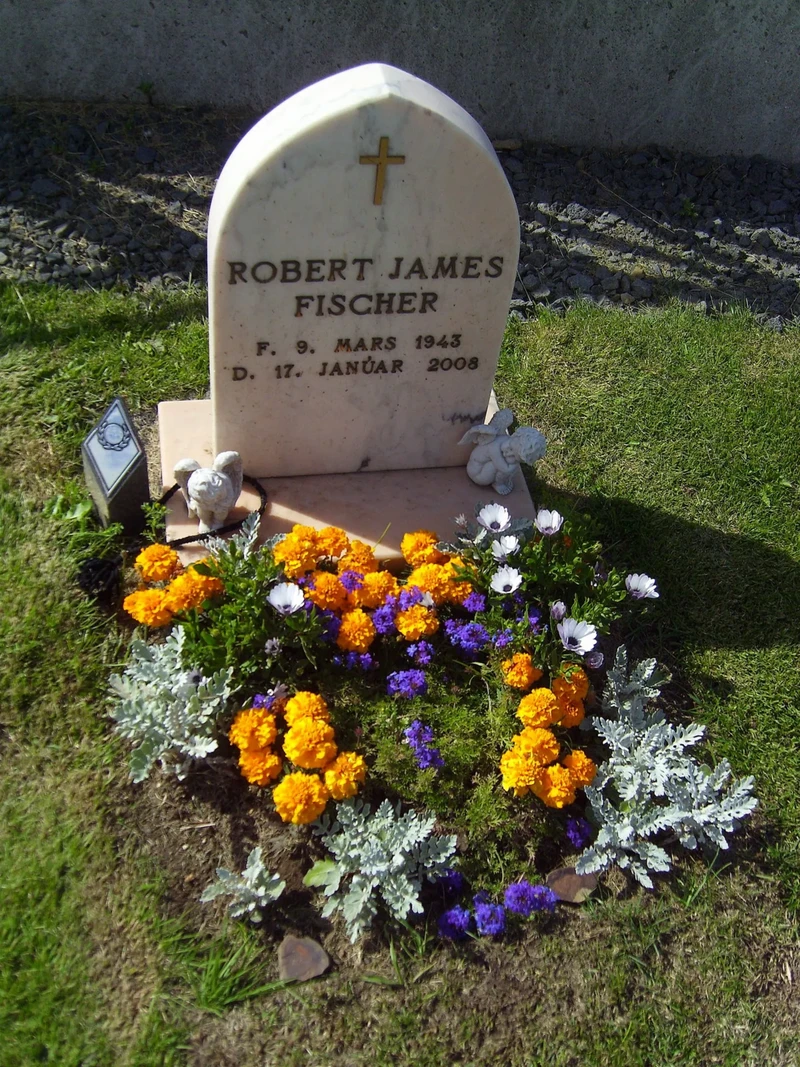
Bobby Fischer died on January 17, 2008 at the age of 64, which unintentionally brought to mind the 64 houses of a chessboard. It was as if his life were a chess game that ended when the last house was filled. Bobby was buried in a simple, remote grave in the courtyard of a small church in Iceland. -
Recommended book;
My Memorable Sixty Games;
-
Another Games:
https://lichess.org/study/5f15g3bl/fLZoynNxhttps://lichess.org/study/5f15g3bl/hXfrGDY2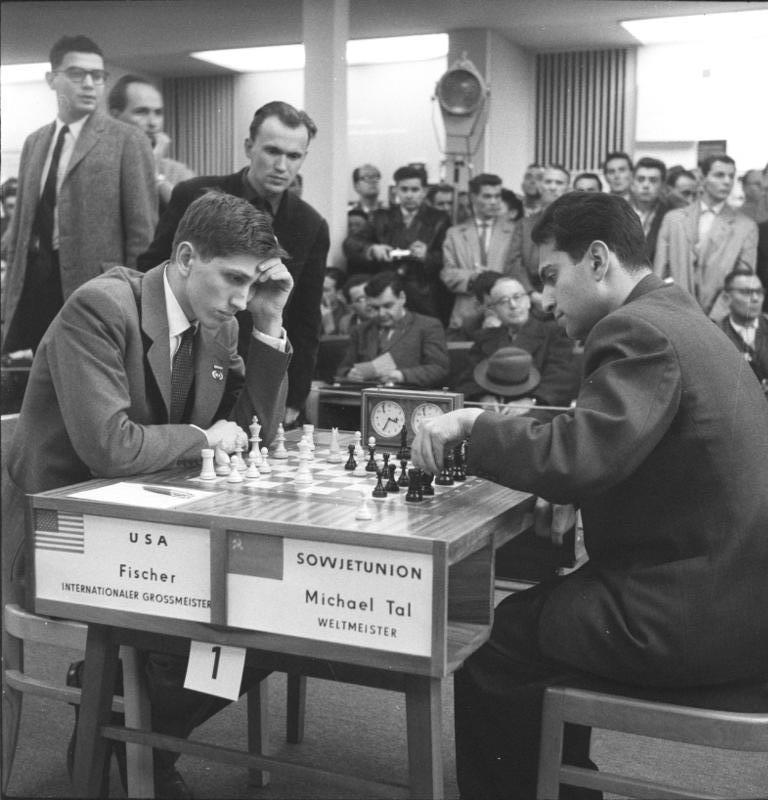 https://lichess.org/study/5f15g3bl/lziVgK8u
Persian Gulf forever!
You may also like
 A1399Mk-aliyari
The Evolution of Chess
From the Romantic School to the Hypermodern School to the Soviet School /Where are we now? A1399Mk-aliyari
Max Euwe,
Dutch chess king, world champion, doctor of mathematics, commentator, author!! A1399Mk-aliyari