
Komodo Dragon 3 vrs Stockfish 16
Two chess engines evaluate a position
Komodo Dragon 3 vrs Stockfish 16
By NM Donny Gray
One of the many things I try to teach my students is that in many positions there are several ways to win. That is one of the reasons I like chess. You can go your own way and develop your own style. If there is a position that has a mate in 4 but you finally win by mate in 8, who cares? A win is a win! You don’t get bonus points by winning quicker than someone else would have done.
When working with chess software just because it says that the move Nf3 is best in a particular position, what good does that do if you have no understanding of it? For the move Nf3 to do you any good you have to understand how to follow up on it. Many times if you are having a computer engine analyze a position for you, you might understand it’s 3rd best line way better than the top 2 lines it recommends.
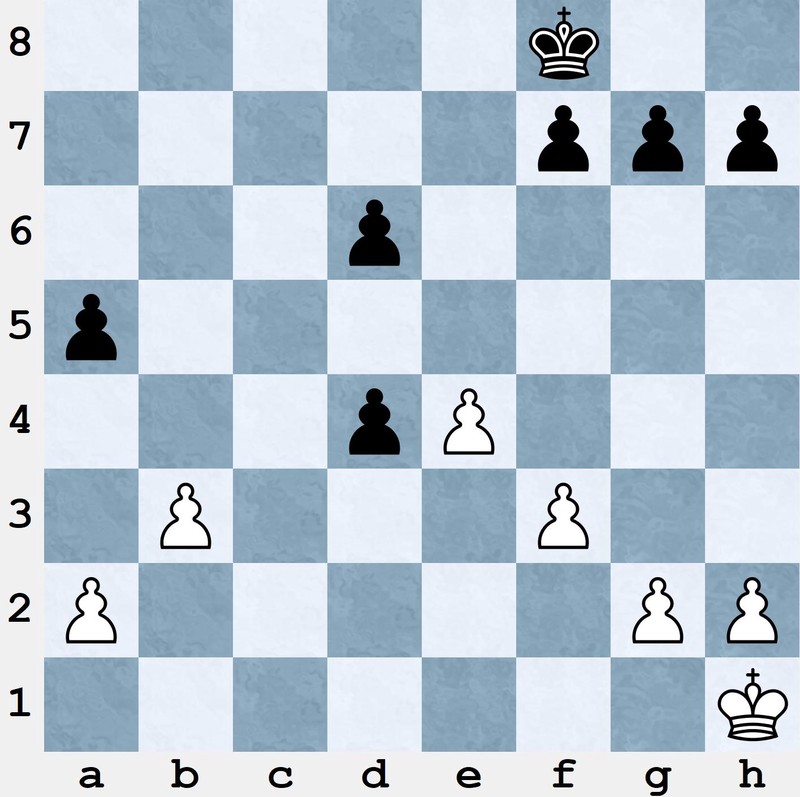
Recently I did 3 tests with Komodo Dragon 3 and Stockfish 16 on the following position.
Test #1
I let Komodo Dragon 3 and Stockfish 16 both play against itself for 5 moves, and noted their evaluation of the position after each move.
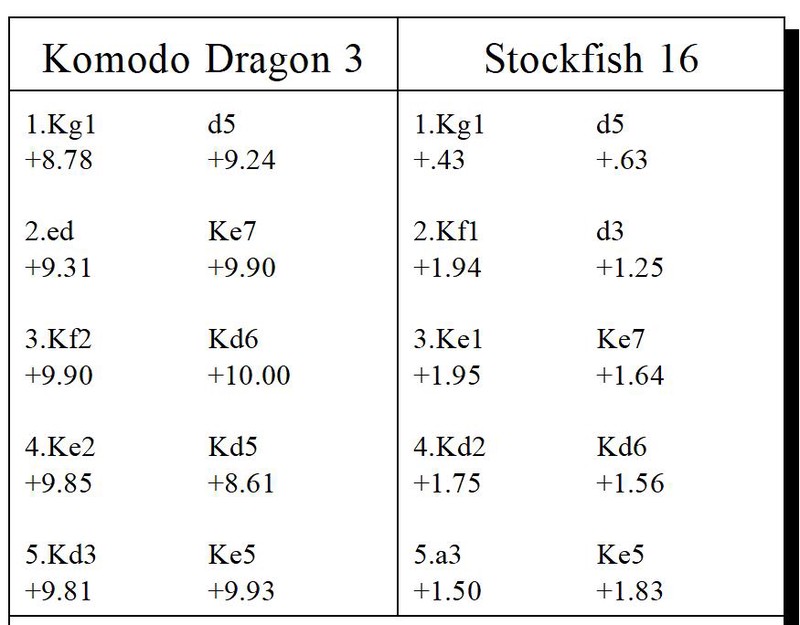
As you can see, they both had way different ideas on how the game was to start. And both had way different ways of evaluating the position.
Komodo was way more accurate in letting you know that white was winning. If you believed Stockfish evaluations, you would think that white had a slight advantage but close to a draw in the beginning.
From move 1 Komodo saw that the position was way in favor of white. On move 1 Stockfish barely gave white an advantage at all.
Test #2
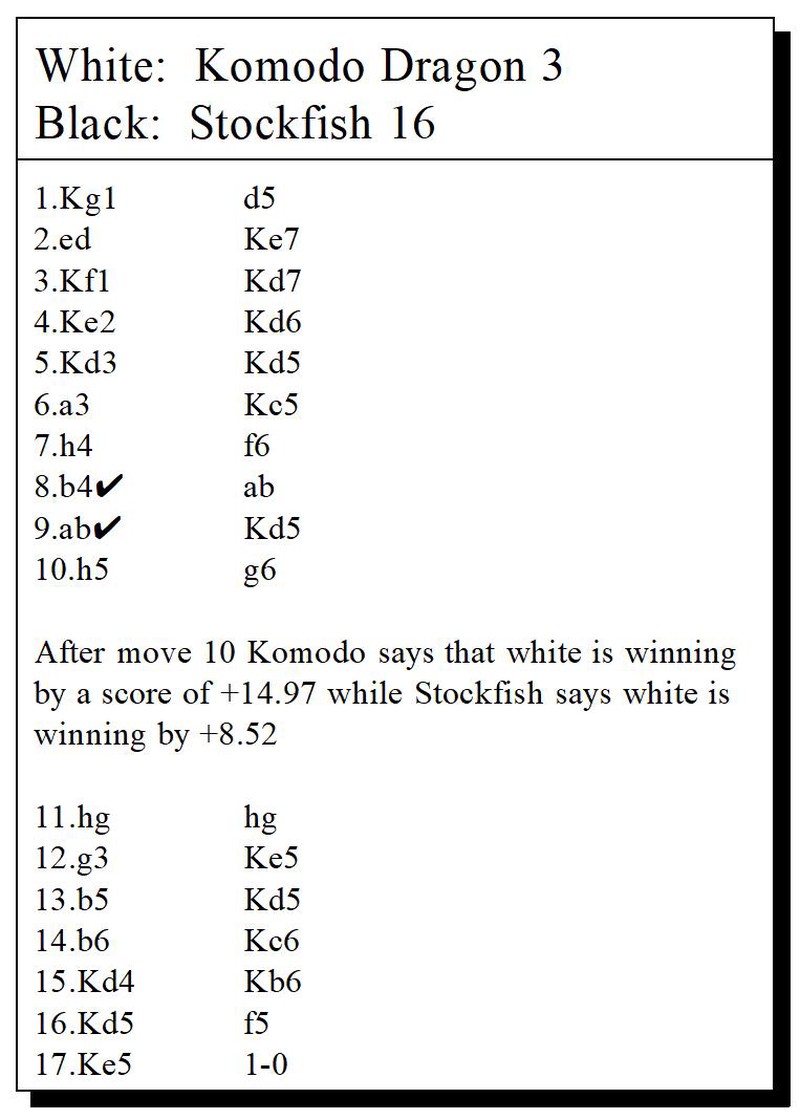
Next test I had Komodo play white against Stockfish. I let each program think for about a minute on each move. One note about this. Komodo was way faster in thinking. It almost always would be on depth 30 to 33 in its thinking by the 1 minute mark while Stockfish was always around depth 28. Komodo Dragon 3 is advertised as to be way more aggressive in its play than other computer programs, and that was very apparent in my opinion in their games against each other.
In this test I did not write down an evaluation of each move like before. This time I waited until move 10. By that time both were showing white to be winning by a great margin. It was only around move 8 that Stockfish started showing that white was winning by a great margin. Up until then you would think white was just barely winning if you were going by Stockfish’s evaluations.
Test #3
Next test I had Stockfish play white against Komodo. As before, I let each program think for about a minute on each move. Also, as before I did not write down an evaluation of each move but waited until move 10.
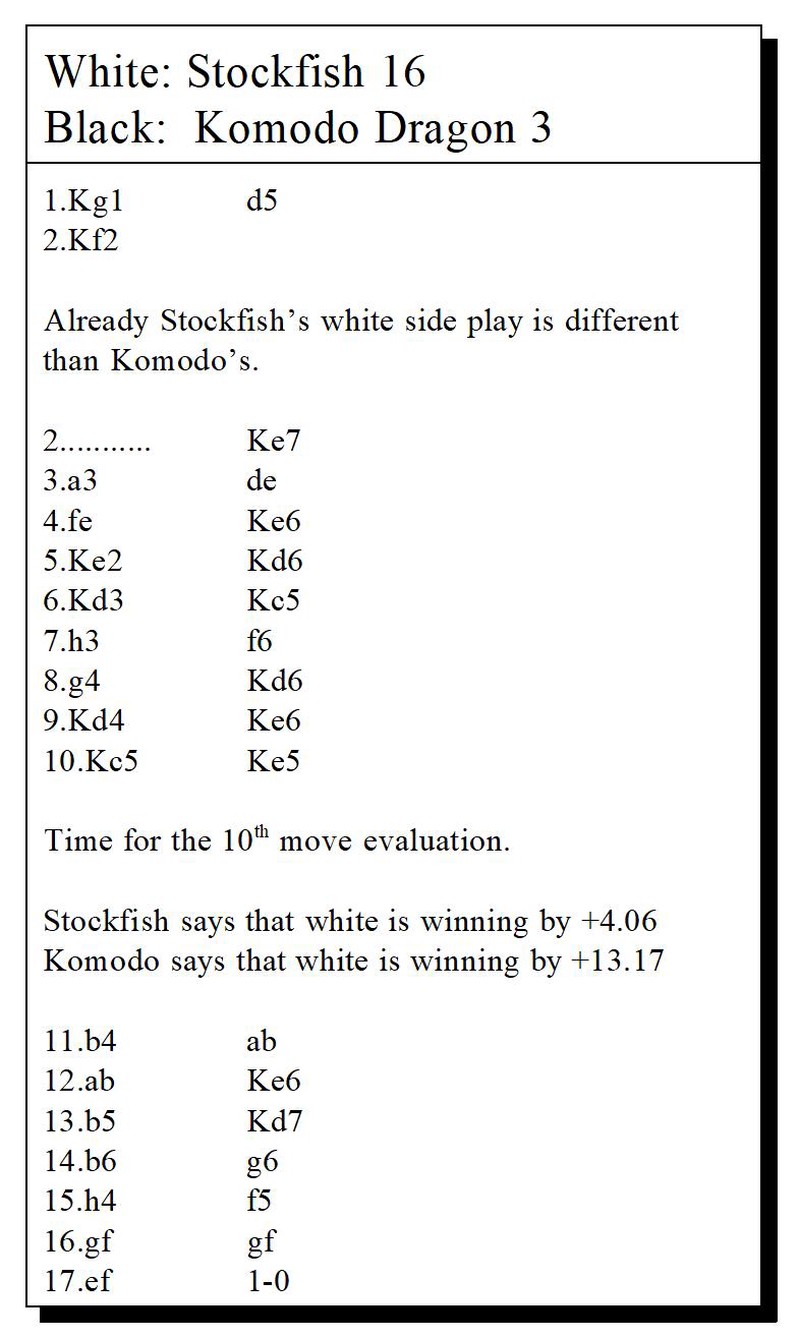
In conclusion I prefer Komodo’s play as white better than Stockfish. It just made more sense to me. After seeing how Komodo played white I feel I could produce a win like it did as I understand its reasoning. Stockfish’s play as white just did not seem as logical. But, they both won so, that is all that matters.
Always try to play lines you understand not what someone or some computer says that is best. World class grand master Victor Korchnoi said it best: "Chess you don't learn, chess you understand."
This quote of his emphasizes the idea that chess is not merely about memorizing moves, but comprehending the game at a deeper level. It highlights the importance of understanding the strategic, tactical aspects, and ending ideas of chess rather than just rote learning.
NM Donny Gray
The best place to practice your endings is ChessThinker.com
The best place to find a chess coach is ChessExercise.com
You may also like
 WFM fla2021
Bishop or Knight? Which one to choose?
In this blog post, I want to show you some practical examples to help you understand when a bishop i… WFM fla2021
Endgame Tips That Might Change Your Life...Or Not!
In this post you will find some important tips to improve your endgames without having to study that… NM AngryWeasel
Gukesh uses King on the 6th technique
King on the 6th NM AngryWeasel
Why Study Rook Endings?
The most common ending of all is rook vrs rook endings NM AngryWeasel
10 Chess Strategies
A quick look at ten different strategies NM AngryWeasel