
Chess/Mikhail Tal
Grandmaster(chess)
Grandmasters...Grandmaster is a title given by FIDE to very strong chess players. Aside from the title of "World Champion", grandmaster is the highest honor a chess player can attain.
The title is valid for life from the moment it is earned. The title of grandmaster used together with the abbreviation GM (“Grand Master”) in terminology is also seen as “International Grand Master” (IGM) in old sources.
The titles GM, IM, and FM apply to both men and women. The GM norm that Nona Gaprindashvili won in 1978 was followed by several actresses later on. Since 2000, the top 10 female chess players are GM titles. The title of Female Grandmaster (WGM) is also included between the FIDE Master and the International Master. This title has been the subject of various debates due to its name.
FIDE also gives the title of grandmaster to people who prepare and solve chess problems.
The International Chess Federation honors players with the title of International Chess Grandmaster (ICCGM). history The term grandmaster was first encountered in the newspaper Bell's Life dated 1838.[1] However, Arpad Elo argues that the word "grandmaster" entered English after 1914.
This is Tarrasch. 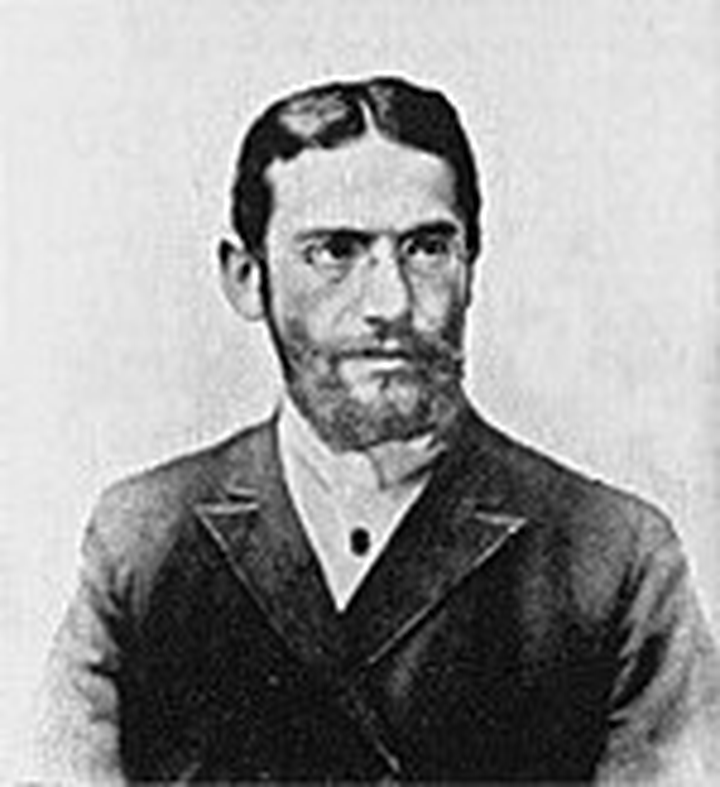
This is Rubinstein.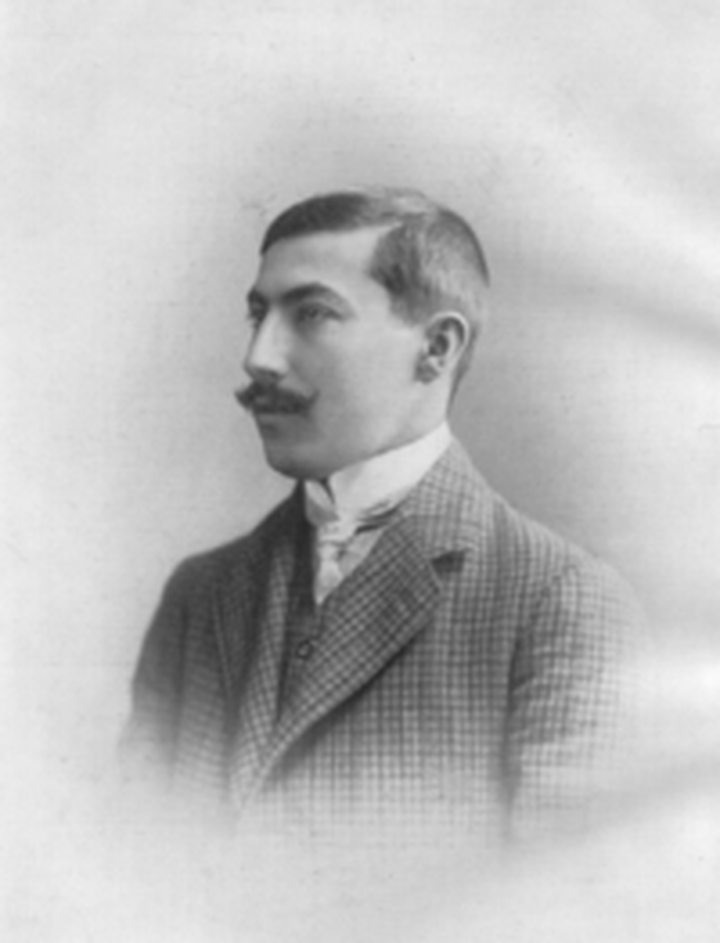
Use in early tournaments.
The term "Grandmaster" (Großmeister in German) was used in the 1907 Ostend tournament. tournament was divided into two groups, the championship and the masters tournament. The Championship was aimed at players who had previously won first place in an international tournament.[2] Siegbert Tarrasch, who finished first in the tournament ahead of Carl Schlechter, Dawid Janowski, Frank Marshall, Amos Burn and Mikhail Chigorin, was known as the grandmaster with these players.
The San Sebastián tournament, which was held in 1912 and won by Akiba Rubinstein, was an event attended by grandmasters.[1] Rubinstein finished the tournament with 12½ points, while Aron Nimzowitsch and Rudolf Spielmann took the second place with twelve points each.[3]
Rubinstein.
The title of "Grandmaster" was officially given to the Russian Tsar II., one of the sponsors of the 1914 Saint-Peterburg Chess Tournament. It was put forward by Nikolai.[2] The Tsar awarded the title to the following finalists: Emanuel Lasker, José Raúl Capablanca, Alexander Alekhine, Siegbert Tarrasch and Frank Marshall (World Champion, two future World Champions, and two players who lost the World Championship to Lasker, respectively). Chess historian Edward Winter bases this fact on an article by Robert Lewis Taylor dated June 15, 1940 and Marshall's biography, My 50 Years at Chess (1942).[4][5]
Use in the Soviet Union before 1950
The term "grandmaster" was also used for some chess players before 1950. FIDE (FIDE or the World Chess Federation) was founded in Paris in 1924, but this institution had not yet determined by what criteria the title of grandmaster should be awarded.
With a decision taken in 1927, the Soviet Union Chess Federation gave the title of Grandmaster of the Soviet Union to all players in the country. This was because these players were unable to participate in tournaments outside the country. This title was given to Boris Verlinsky, who won the 1929 Soviet Championship, and was withdrawn in 1931.[6] The title was reinstated in 1935 and was given to Mikhail Botvinnik, the first "official" grandmaster of the USSR. However, Verlinsky did not regain his title.
II. Reorganized after World War II, FIDE decided to make regulations on the criteria by which international titles would be awarded. Accordingly, the titles would be determined by the FIDE General Assembly and the Merit Workshop. FIDE first awarded the grandmaster title to 27 players in 1950. These players were:
Top players of that time: World Champion Botvinnik and players who qualified for the Candidate Tournament Boleslavsky, Bondarevsky, Bronstein, Euwe, Fine, Flohr, Keres, Kotov, Lilienthal, Najdorf, Reshevsky, Smyslov, Ståhlberg and Szabó.
Current players: Bernstein, Duras, Grünfeld, Kostić, Levenfish, Maróczy, Mieses, Ragozin, Rubinstein, Sämisch, Tartakower and Vidmar.
Considering the world-class players before 1950, the title of grandmaster has followed a continuous path since 1914. Actors who lost their lives between 1914-1950 (Carl Schlechter, Richard Réti and Aron Nimzowitsch) are excluded from this definition.1953 regulations
The titles awarded under the applicable regulations became the subject of political concerns. Efim Bogoljubov, who had immigrated to Germany from the Soviet Union, was not counted among the proficient players despite being in World Championship matches against Alekhine. Bogoljubov won this title in a 1951 vote, which was adopted by eight votes to thirteen. While Yugoslavia supported this application, other communist countries took the opposite side. FIDE announced in 1953 that it was removing the old regulations, but approved the honor of players who had earned the title of grandmaster before that date but did not. The new regulations ensure that every player who meets the criteria listed below will be awarded the FIDE International Grandmaster title.[7]
World champion Masters who qualify to play in the World Championship Candidate Tournament and any player with 50% or more win rate Players who have won first place in international tournaments whose equivalence has been recognized by FIDE, or who have placed twice in said tournaments within a four-year span. These tournaments must consist of at least eleven rounds and at least 80% of the participants must be International Grandmasters or International Masters. Also, 30% of participants must be players who qualify for the next World Championship Candidate Tournament, or players who have been to said tournament within the last ten years. Players who have excelled in an international tournament or match equivalent to the tournaments listed in the third article. Titles awarded pursuant to this article must be approved by the Merit Workshop with at least five affirmative votes.1957 regulations Immediately after FIDE enacted the 1953 regulations, these regulations were observed to be haphazard. The FIDE General Assembly meeting in Vienna in 1957 approved the so-called FAV system. This system is attributed to International Judge Giovanni Ferrantes (Italy), Alexander (Conel Hugh O'Donel Alexander) and Giancarlo Dal Verme (Italy). The 1957 regulations ensured that every player who met the criteria listed below was awarded the FIDE International Master title. World champion Players promoted from interregional tournaments to the Candidate Tournament Players who were entitled to play in the Candidate Tournament according to the results of the interregional tournament, but could not take part in the said tournament due to the fact that the number of players that the federation of which they are a member can send to this tournament is exceeded. Players who have played in the Nomination Tournament and achieved a win rate of at least 33%1965 regulations
Concerns were growing that the 1957 regulations were too lax. Speaking at the FIDE General Assembly in 1961, GM Milan Vidmar said that the regulations in effect honor many players who do not deserve international titles. Meeting in Tel Aviv in 1964, the board decided to set up a sub-workshop to review the regulations. The workshop brought serious criticism to the criteria by which titles are awarded and proposed some changes in the rules governing the formation of the Merit Workshop. Many delegates, including GM Miguel Najdorf, supported this proposal.[8] FIDE tightened the rules for the acquisition of international titles at the general meeting held in Wiesbaden in 1965. Accordingly, the title of International Grandmaster would be distributed in accordance with the following rules.
1. World Champion will be able to hold the GM title in all circumstances
2 a. Any player with 40% or more win rate in the quarterfinals of the Candidate Tournament
2b. Players with a 55% win rate against grandmasters, 75% over International Masters, and 85% over other players in a tournament (GM "norm")
In order for the 2b condition to be met, the player must either earn the GM norm in tournaments in category 1a, either win two norms in tournaments in category 1b within a three-year period, or win the norm in tournaments in category 2a and 1b in the same period. Tournament rankings are as follows. 1a—consists of at least sixteen players. Players must be at least 50% GM and 70% IM 1b—consists of at least twelve players. At least one-third of players must be GMs and 70% must be IMs 2a—consists of at least fifteen players. At least 50% of players must be IM 2b—Consists of 10 to 14 players. At least 50% of players must be IM. Players who did not have a GM or IM title until five years prior to the tournament are not included in this calculation, as FIDE titles are valid for life. In addition, the number of players competing for a country in tournaments consisting of 10 to 12 players cannot exceed one more than half of the total number of players. This is two more than half the total number of players for larger tournaments. Between 1951 and 1968, 74 GM titles were awarded. Only ten of these titles were awarded in 1965. In 1966 and 1968, titles were distributed once. Today's rules The conditions for earning the title of grandmaster are quite complex. A player must have at least 2500 ELO points to earn this title. The required ELO score to earn the International Master title is 2400. Also, in order for FIDE to honor a player with one of these titles, several norms have to be won in tournaments already attended by grandmasters. There are also different paths that a player can follow in order to be nominated for international titles. These are winning first place in the World Women's Chess Championship, the World Junior Chess Championship, or the World Senior Chess Championship. For regulations currently in force, the FIDE Handbook can be viewed.[9]Increase in the number of titles
The number of grandmasters in 1972 was only 88. 33 of them represented the USSR. When it comes to July 2005, it is seen that the number of grandmasters exceeded 900. This was mainly because FIDE ratings (the numbers used in calculating title norms and threshold values) made it easier to gain grandmaster norms. A study on this subject shows that the increase in the ratings reached up to 100 points between 1985 and 2000.[10] For example, Nigel Short, who was recognized as the third best player in the world in 1989, had a rating of 2650. It can only find a place in the 50th to 60th places. The rating of the third best player today is around 2750. There are other factors that trigger the increase in the number of titles. Cheaper air travel and the increase in the number of tournaments around the world make it possible for many players to increase their rating in a short time. The fact that former Soviet Union and Eastern European country players, whose outgoings were restricted to a certain extent before 1990, do not have such an obstacle today can be seen as a reason for the unexpected increase in the number of titles. In addition, today's players can win the norm in tournaments that used to be considered very short.[11]
The main reason why the grandmaster title does not lose its credibility even today is that it represents a very strong player base compared to other title holders. While a chess master is in the top 2% of all players, this figure is 0.02% for grandmasters.[12]
However, many of today's grandmasters have not achieved the dominance of the old grandmasters in their own time. Lasker, Capablanca and Alekhine were world champions of the time. Tarrasch and Marshall were strong enough to play in World Championship matches (despite losing against Lasker).
Many suggestions have been made in order to ensure that the title of grandmaster regains the value it deserves. One is that the title is ensured that no players other than players who have pursued or actually held the World Championship throughout their career can claim it. Nigel Short advocates the removal of the grandmaster title, which is also held by players who are far from the World Championship. Short speaks of: "Give up the stupid titles."[11]"grand-grandmasters"
The increase in the number of titles has caused the difference between the relative strengths of today's grandmasters to become very large. The term "grand-grandmaster" was coined to distinguish the strongest players from the weaker grandmasters. This term has neither an official nor a general definition.
For the list of players who are likely to be considered grand-grandmasters, see the list of players with an ELO rating of 2700 and above.
Notes
- ^ a b Hooper, David; Whyld, Kenneth (1992), Oxford Satranç Arkadaşı, Oxford University Press, ISBN 0-19-280049-3
- ^ a b Sunnucks, Anne (1970), Satranç Ansiklopedisi, St. Martins Press, ISBN 978-0-7091-4697-1.
- ^ "1912 San Sebastian Turnuvası Sonuç Çizelgesi". 3 Temmuz 2008 tarihinde kaynağından arşivlendi. Erişim tarihi: 16 Ekim 2008.
- ^ Winter, Edward (1999), Krallar, Sokaktakiler ve Üçkâğıtçılar: Satranç Gözlemleri, Russell Enterprises, Inc., ISBN 1-888690-04-6
- ^ Winter, Edward (2003), Satranç Tanıtım Kitabı, Russell Enterprises, Inc., ISBN 1-888690-17-8
- ^ Cafferty, Bernard; Taimanov, Mark (1998), Sovyet Şampiyonaları, Cadogan Books, ISBN 1-85744-201-6
- ^ Harkness, Kenneth (1956), Resmi Satranç Ansiklopedisi, David McKay Company
- ^ a b Harkness, Kenneth (1967), Satranç Resmi El Kitabı, David McKay Company
- ^ "Gerçek El Kitabı". fide.com. 15 Mart 2008 tarihinde kaynağından arşivlendi.
- ^ "FIDE Reytinglerindeki Yükseliş". members.shaw.ca. 21 Aralık 2014 tarihinde kaynağından arşivlendi.
- ^ a b Praful Zaveri (10 Aralık 2006). "Nigel Short ulusal şampiyonanın galibi". chessbase.com. 9 Kasım 2012 tarihinde kaynağından arşivlendi.
- ^ "2002 Reyting Dağılım Çizelgesi". uschess.org. 13 Şubat 2006 tarihinde kaynağından arşivlendi.
- Elo, Arpad (1978), Geçmişteki ve Günümüzdeki Satranç Oyuncularının Reytingleri, Arco, ISBN 0-668-04721-6
- Sunnucks, Anne (1970), Satranç Ansiklopedisi, St. Martins Press, ISBN 978-0-7091-4697-1
This is a short video to watch.https://www.youtube.com/watch?v=pglJLLzm_8A&pp=ygUVY2hlc3Mgd29ybGQgY2hhbXBpb25z
https://www.youtube.com/shorts/SpWQUhuAiy4?feature=share
| Chess is everthing!!! |
|---|


