
The 9 Historical Developments Of The London - Part 1
Discover how the London's ideas and theory evolved to the state it's at today!Introduction
What is the most annoying opening in chess?
For many, it is the London System (1.d4 followed by either 2.Bf4 or first 2.Nf3 and only then 3.Bf4).
A couple of weeks ago, an old chess friend was frustratedly telling me how many of his online opponents would 'play d4/Nf3/Bf4/e3/c3/Nbd2/h3/Bd3/0-0 and then shuffle the pieces for the rest of the game'. Perhaps you relate to that :)
However, the London System is far more than a system opening, especially in the hands of strong players.
Why You Should Read To The End
By the time you finish this article, you will understand:
- How to set up a kingside attack against passive Black setups;
- Why doubled pawns are a strength in the 'dream' London endgame;
- The advantage of the Accelerated London move order (and how it caught out a future World Championship challenger!).
I think you'd agree that mastering even one of these things would be worth your time :)
Is it all right if we over-deliver?
Let's jump right in.
Development 1 - James Mason Introduces The London At The Top Level
Only some people here have heard of James Mason before today...
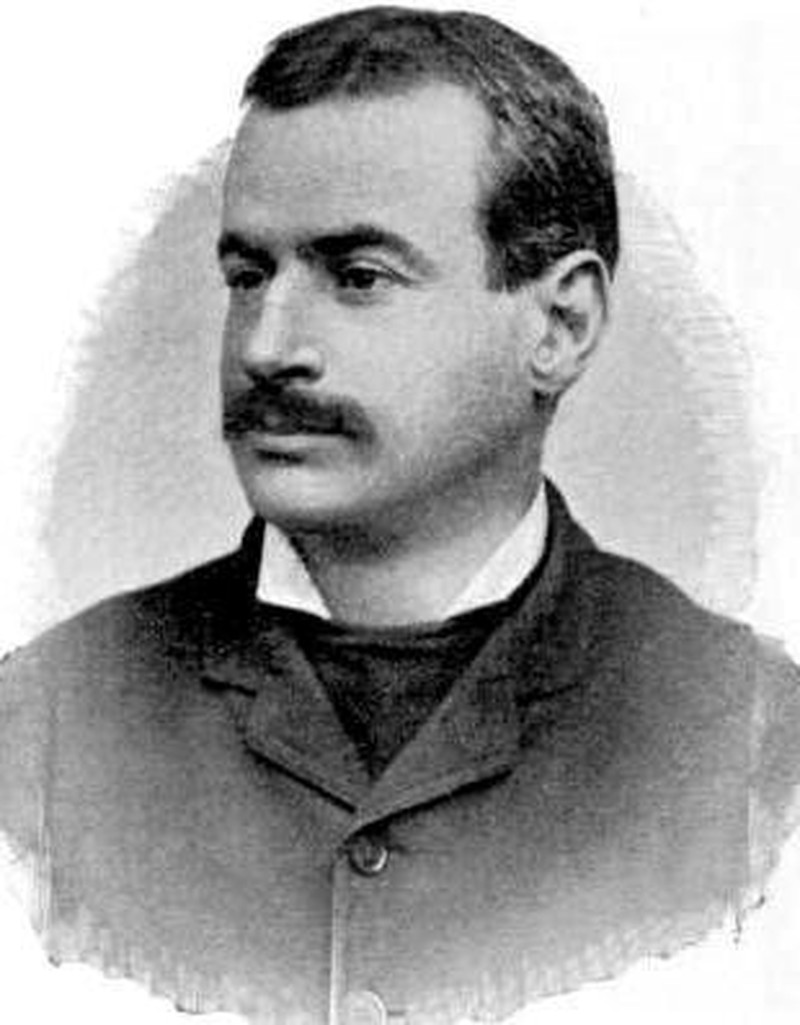
However, we can learn a lot from his games—he was one of the best chess players in the world in the 1970s and 1980s (Chessmetrics even ranked him as number 1 from August 1877 to June 1878).
Most of his London games are no longer so theoretically relevant - the first one through the wall always gets bloody, to quote the Boston Red Sox manager in 'Moneyball' - but this one, against Wittek, remains a classic (as I first discovered in Sedlak's work on the London System for White):
This is White's dream setup when Black plays passively (in this case, in the Tartakower QGD style with a queenside fianchetto). It also shows why we shouldn't automatically play h3 to avoid the harassing...Nh5; we can also prevent this with Ne5, covering the h5-square with the queen. And then, having the h3-square available for the queen allows us to pressure the h7-pawn, limiting Black's options.
If White had not castled short, a logical follow-up would be g4-g5, when Black would suddenly find his king under considerable pressure.
This is why, when I was coaching privately in my early to mid-20s, I would teach my junior students that you can't just play the same way against London as the Queen's Gambit. Because London is an attacking system, we need to fight for control of the game.
Development 2 - The First GM To Predominantly Play The London
Who here has heard of the Croatian GM, Vlatko Kovacevic?
There is no reason why you should—except that he was the first GM to play London as his primary system as White (back in the late 1970s).
One of my Chinese friends (who saved me from a deep and dark depression in 2016) coined the phrase 'old pigs' to describe older Grandmasters who play very solidly and suddenly counterattack when you least expect it.

(Before you think he's taking the mickey out of them, note that I'm pretty close to falling into this category myself).
In any case, parallel to my frequently drawing lessons from the games of the young talents (not just the 'obvious' Abdusattorov/Gukesh/Praggnanandhaa, etc., but the 'nascent' ones like Oro/Erdogmus/Zemlyanskii), you can draw lessons from the games of the old masters.
You're unlikely to understand White's 'dream' endgame in the London System if you don't know Kovacevic's games.
So, what is White's dream endgame in the London System?
I'll give you a hint - it arises when Black commits the positional mistake of ...c6 (Slav setup) against the London.
Here's the answer:
I have frequently used the knowledge I'm about to share with you to cleanly outplay players rated around 2600-2800 in online chess. Of course, you still have to convert White's clear advantage from the above position into a win (a topic for another time), but understanding how to prosecute White's advantage in the queenless middlegame will give you a strong head start.

The obvious point is that White wants to play b4-b5, turning his doubled pawns into a strength by splitting Black's pawn structure into frigid weaknesses (isolated a7-pawn, backward and fixed c6-pawn) with b5xc6.
But what if Black stops this with ...a6?
The first point is that ...a6 isn't automatically preventing the b5 break. We may be able to make it work for tactical reasons, like in the game below:
Black cannot take the pawn safely after 17.b5! as 17...axb5 18.Ra8 skewers the king and rook, while 17...cxb5 18.Nxb5! sets up the Nd6 fork to win the b7-pawn and the game.
But Max, What If The Knight Is Already on F3?
That's very observant of you! In the previous game, White had not played Nf3 yet, making the kingside pawn storm easier to realise.
Good news—we are still much better with the knight on f3, and the next two games demonstrate how to exploit that advantage.
This is the critical transformation of the position, as was first shared with me by my past trainer, GM Ian Rogers, at his home in 2011.
Here, Kovacevic transformed his advantage: 14.Na5! Bxa5 15.bxa5!, with the point that the b7-pawn is fixed as a weakness to attack with a later Ra4-b4!
More instructive games with this idea (such as Carlsen-Hansen) have subsequently been played - there was no need for Kovacevic to allow Black counterplay with ...e5/...Re8/...Ne4 - but stories are easier to remember than games :)

The best chess students ask many specific questions - and you may have found yourself asking - what if Black doesn't take on a5 but instead defends the b7-pawn with ...Ra8-a7?
Well, another Kovacevic game addresses that situation:
Even though Black has tried to tie up the board, he is strategically lost - White is not just grabbing kingside space but can pick the right moment to transform the position with Nxb7, Bxa6 and later b5 to get the queenside pawn armada rolling.
In the game, Black tried to break free with 17...b6?. But it only fell out of the frying pan and into the fire after White's 18.Bxa6! Rxa6 19.Nxc6 Rxc6 20.Rxa6, winning a small amount of material, but more importantly, leaving Black helpless against White's impressive pawn armada.
Development 3 - The Rise Of The Accelerated London
If you're anything like me and watch YouTube chess videos, you may attribute the growth of 1.d4/2.Bf4 (being nearly as popular as 1.d4/2.c4 at lower levels on Lichess) to IM Eric Rosen's YouTube channel.
While this is undoubtedly the biggest influence, the story of Accelerated London began much earlier.
In early 2006, the Dutch IM Mark den ver Werf wrote an article in 'Secrets Of Opening Surprises 5' on the Accelerated London, with 1.d4 d5 2.Bf4. I never read that article, but I can tell you the main advantage of the 2.Bf4 moves the order by comparing it with the 'old' 2.Nf3/3.Bf4 move order.
The London System was not considered a serious opening in Grandmaster play because of 1.d4 d5 2.Nf3 Nf6 3.Bf4 c5 4.e3 Nc6 5.c3 Qb6!, attacking the b2-pawn before White can complete his setup. Could you tell me, does 6.Qb3 c4! 7.Qxb6 axb6 (diagram below) remind you of anything?
That's right - Black is using our own 'Anti-Slav' idea against us! And the idea of ...b5-b4 (along with his queenside space advantage) leaves him slightly better.

Trying to avoid this with 7.Qc2 doesn't help either because of trick 7...Bf5! we can't take the bishop because of ...Qxb2 and ...Qxa1, winning our rook. And 8.Qc1 Nh5!, winning the bishop pair, also favours Black, as demonstrated in Kamsky-Carlsen, World Blitz Championship 2007, among other games.
The Main Advantage Of The Accelerated London
Suppose we compare the Accelerated London move order with 1.d4 d5 2.Bf4, we quickly see the main advantage—Qb6 no longer works so well!
Our old hero from before, Vlatko Kovacevic, first wrote about the pivotal trap in his 'Winning With The London System' (co-authored with Sverre Johnsen for Gambit Publications in 2005).
After 1.d4 d5 2.Bf4 c5 3.e3 Nc6 4.c3 Qb6 5.Qb3 c4 6.Qc2 Bf5, the difference is that we can now take the bishop with impunity, sacrificing the rook but trapping in Black's queen on a1!

So we play 7.Qxf5 Qxb2 8.Qxd5 Qxa1 and now 9.Qb5!, defending our b1-knight and threatening a nasty Qxb7 fork. After 9...0-0-0, we take with 10.Bxc4, snapping the trap shut on the queen. And if Black tries to free himself with 10...e5, we play 11.Ne2!, as in the game below:
We bring the knight here (and leave our bishop on) so we have time to trap their queen with 0-0 and Nd2 (with the e2-knight importantly defending the c3-pawn so that we win the queen for a rook).

In the game above, Black could save his queen, but only at the price of allowing a crushing attack.
You are probably wondering how things transpire if Black takes the bishop - and that is what happened in the game Grachev-Gelfand, Tal Memorial blitz 2008, reaching the position below:
Grachev remains one of the world's leading experts on the London System (I lost to his London many times online, despite being a leading expert myself as White). And in this game, he comprehensively crushed a future World Championship challenger (Gelfand took his 2012 World Championship Match vs. Anand to tiebreaks, losing only in a closely contested rapid playoff).
Black is lost in this queen+pawn vs. two rooks middlegame because of White's material advantage, White's central pawn mass, and the opposite-coloured bishops, both of which amplify White's initiative to decisive proportions.
A final point - it is too late for Black to try and return to the 'old' London with 6...Nf6 (instead of 6...Bf5), as we can play 7.Nd2! to prevent the ...Bf5 threat for good and ensure we beat Black to the punch with 7...g6 8.e4! for an advantage (like in my 2016 Isle Of Man Open game against Rakesh Kumar Jena).
Summary
In the comments thread, could you share with us what you learned from this post?
Here is my summary:
1. We shouldn't just play h3 without thinking; we may be able to stop ...Nh5 with Ne5 and leave the h3-square for our queen to attack their king!
2. The doubled pawns are often an advantage for us in the London System, giving us a half-open file for our rook and the b4-b5 lever to weaken their queenside pawn chain (while keeping ours).
3. If you wish to neutralise the disruptive ...c5/...Qb6 plan (targeting our undefended b2-pawn), start with 2.Bf4 and delay Nf3!
If you enjoyed this article, you can find many more Grandmaster posts, puzzles, and videos on my free Facebook group, 'Adult Chess Improvers'.
What's Next
Because of the scope of this topic (the London System has evolved tremendously in the last ten years!), I had to divide this into a three-part series.
Here's a teaser of what to expect in Part 2:
- The first super-GM to frequently play the London (and win with it);
- Kramnik's influence (and no, it's not spurious cheating allegations);
- How Carlsen Performed At 2900 With The London
Are You Looking To Get To 1950+ Lichess Rapid/Classical?
In the past, I would coach many students privately...
However, I found that these students (nearly all rated below 1600 over-the-board, which translates to below 1950 Lichess rapid/classical) had the same significant weaknesses that prevented them from reaching the next level.
I'd teach the same things many times - one at a time, to each private student. It's what they needed to improve, not because I especially wanted to (it gets boring teaching the same thing repeatedly).
Instead of charging USD 3000-5000 to cover everything you need to know to quickly get to 1600+ over-the-board/1950 Lichess rapid, I now cover the full curriculum (that got my private students to that level) in my 'Road To A 1600 Chess Rating' program.

This is not for you if you:
- Don't have any money to spare for chess;
- Aren't interested in improving your chess;
- Are happy to continue improving at the same (likely, slow) pace;
- Don't mind throwing away otherwise well-played games with one 'silly' blunder;
- Are cool with losing to diligent six and seven-year-olds;
- Still believe your focus on 'understanding chess' and finally cracking the mysterious 'formula' to always find the best move is what will get you to the promised land;
- Believe openings are what decide most of your chess games;
- Enjoy the flavour of the blue pill, where you don't know what you don't know;
This is for you if:
- You're sick and tired of spending a lot of time on chess without seeing much improvement;
- You want to improve at chess, and you know why;
- You see improvement in your chess as an investment in your personal growth rather than an expense;
- You've watched YouTube videos but found it hard to apply those same ideas in your games;
- You want to know precisely what's deciding most of your chess games;
- You want to improve your chess at your own pace (rather than someone else's);
- You want to improve your chess skills the right way rather than wondering why you're stuck at the same level with ingrained bad habits;
- You want to enjoy chess more - and by that, I mean winning more;
- You want to get to the next level - like unlocking the next level in a video game;
- You value the months and years you'll save learning from me.
If you're still on the fence, I recorded a 30-minute video here to help you make the right decision for yourself.
Until my following content, take care :)
You may also like
 Lichess
Accomplished Bangladeshi GM Ziaur Rahman Dies Mid-Game
Lichess extends its condolences to the family, friends, and many fans of GM Ziaur Rahman, who died a… GM Craze
The Best 1.e4 Openings For White Below 1600
Discover the most effective ways to play 1.e4 below 1600 on Lichess! NM RyanVelez
I want to improve, but I'm busy !!!
This article is for people who want to improve but are busy, and for anyone who wants to know how to… GM Craze
My Very First Adult Tournament Game
Are you ready to start playing over-the-board tournaments? Solve today's puzzle and see for yourself. GM Craze
The Top 10 Chess Openings In 2026
Discover the 10 openings performing the best in GM games in 2026 CM HGabor