
What Improvers Often Misinterpret About Chess Principles
How Helpful Are Chess Principles For Making Good Moves?A Small Favour
Comment in the thread - how helpful are chess principles for making good chess moves?
Introduction
It's always interesting to see chess players philosophise about different perspectives on making better decisions in chess games.
But how do we make this practical?
How can we use it in our games?
Source Of Pedagogic Breakthroughs

Rather than automatically dismissing something that questions our current view, we should remember that significant breakthroughs in any field tend to come from other fields:
- Adriaan de Groot (one of the very first to break down how chess masters think about a position) was a psychologist;
- Chess computers transformed the way we understand chess, from solving the game to a draw to proving that many 'ugly' openings/positions are, in fact, fully playable.
- The biggest name in chess improvement, Chessable, was built by David Kramaley - who used his knowledge of computer science and psychology in education to create the now-famous 'MoveTrainer'.
(I could share many 'mental game' and sports psychology examples, but that's for another time)
I like exploring such topics, not to prove I am right, but to determine what is right (paraphrasing Ray Dalio).
Why Return To Principles?
The recent and ongoing 'Axiom System' series by FM Jack Puccini (at least to my understanding) tries to apply Aristotle's 'First Principles' method to chess decision-making, which I have been consistently doing for the last six months to improve my chess.

The premise of Part 4 of 'The Axiom System' is:
- Chess principles don't help us find the best moves without prioritisation;
- Justifications for moves are based in hindsight rather than the actual thought process to get to the decision (a point Willy Hendriks also made in 'Move First, Think Later');
- Focusing on evaluation aspects (which most refer to as 'chess understanding') can lead one to focus on justification rather than what indeed forms our chess skill - intuition.
Breaking Down My Experiences
I'm a very intuitive player (not a 'mastermind' like Caruana), so I have a natural confirmation bias toward the 'intuition' argument. But let's look more objectively.
My coaching approach has become much more concrete - rather than focusing on principles, I tend to focus more on thinking techniques with my students - focusing on training that technique so that we can apply it more successfully in our games. (I will use various super-learning methods, which I will cover in my coaching program soon). I imagine that Puccini will address this philosophy later in his series.

What Adult Improvers Often Get Wrong
One of the main challenges as a coach is explaining the decision-making process. We must ensure that we give accurate information regarding the top engine moves and present a realistic way to find such (or at least decent) in similar situations in our games. The point is to get results for the student, not to look smart.

This can be very difficult to do alone - it is challenging to see ourselves.
My favourite point of the article is a point I also observed in my coaching journey - that many adult improvers focus on understanding chess rather than playing chess better (because they equate the two as the same thing).
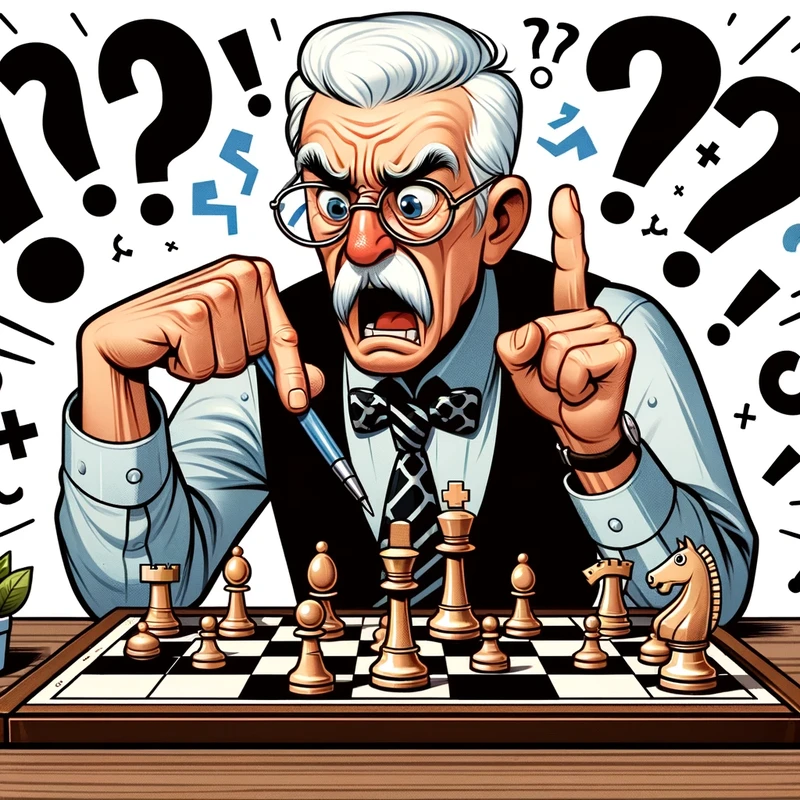
While this happened less when I changed my content style (focusing heavily on chess improvement rather than entertainment or stories), you see it in chess discussions online.
The Argument For Principles
Speaking of stories - we get to what I consider the central 'blind spot' of the anti-principles argument.
How do you forget where you put something 15 minutes ago, yet remember that weird moment with your friend from 20 years ago?
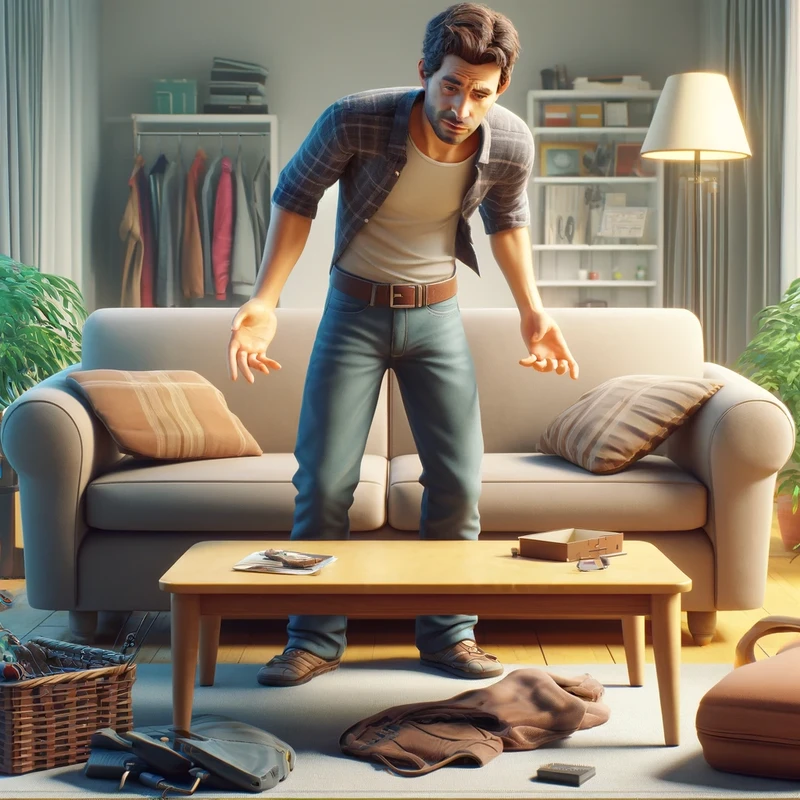
Because the weird moment was memorable, placing your item is usually mundane and automatic. (Maybe you were also on your mobile while placing the item.)
Even if one agrees that principles alone aren't beneficial for making chess decisions (and that's probably true of severe players), they serve as powerful mnemonics, significantly shortening the process of reaching unconscious competence in a skill.
An amusing oxymoron in the Chess Personality Quiz is that Caruana is the suggested model player for a 'Mastermind' style (which is fair). Still, the proposed opening is the English Attack of the Najdorf, which is historically Caruana's weakest opening. (To be fair, he does very well with other 6th moves).

Because of that memory, I'll never forget how Dominguez outplayed him with a dark-squared strategy and dynamic play or how Topalov ground him down by shutting down his ideas.
How Principles Can Hold You Back
The risk is that telling the 'wrong' story may hold back the student in the long term by reinforcing bad habits (e.g., doubled pawns are 'always' bad—great coaches avoid absolutes unless necessary).
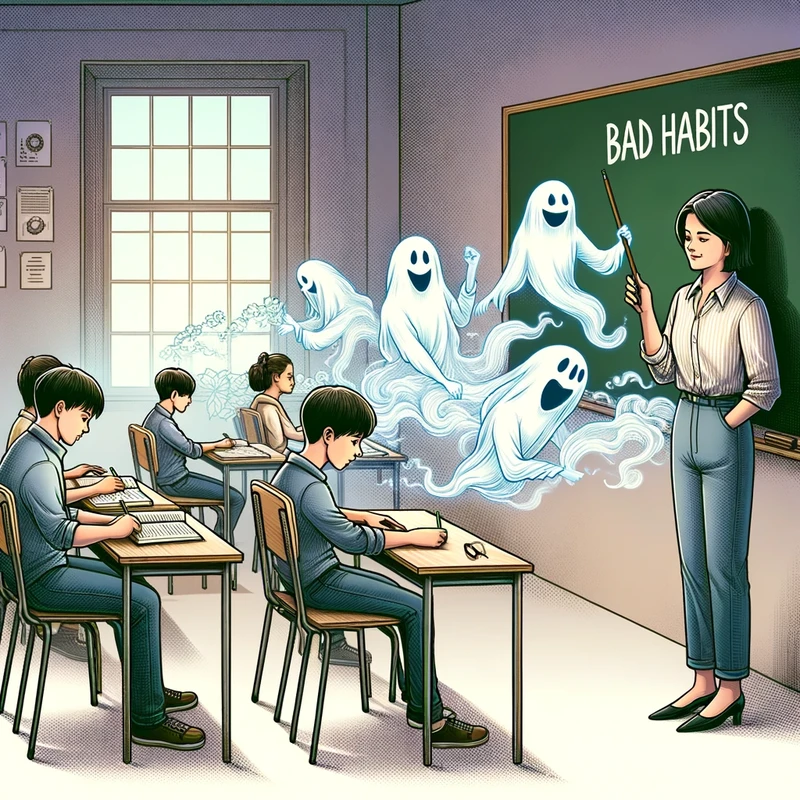
Chess is a complex game, and we should respect that the 'simplest' effective answer may not necessarily be simple compared to weight loss, driving, or financial management (for example).
Conclusion
Fortunately, with the data from Stockfish (who even correspondence players are typically unable to beat from the initial position), we can quantify how different principles should be prioritised (and recognise that, in the majority of cases, missing the best move is the result of not seeing moves you or the opponent could have played).
The next logical step is to discuss how we can specifically improve our intuition - and where intuition may fail us in finding the best move - but we have already gone deep into the weeds of principles.

My next detailed post will likely not be for some time (I'm saving some of my most practical stuff for my coaching program), but I'll likely share some of my YouTube videos in future posts.
For more chess content, join my free FB group, 'Adult Chess Improvers': https://www.facebook.com/groups/576574453005821.
You may also like
 IM mmsanchezchess
How to Beat Stronger Chess Players: Part 1
Hi everyone! I’m Max Gedajlovic, an International Master from Canada, and I’m planning on starting a… GM Craze
My Very First Adult Tournament Game
Are you ready to start playing over-the-board tournaments? Solve today's puzzle and see for yourself. GM Craze
The Top 10 Chess Openings In 2026
Discover the 10 openings performing the best in GM games in 2026 GM NoelStuder
99% Make This Game Analysis Mistake
Most chess player's game analysis, if they do it at all, looks somewhat like this: GM Craze
The Best 1.e4 Openings For White Below 1600
Discover the most effective ways to play 1.e4 below 1600 on Lichess! GM NoelStuder