
Cognitive Dissonance and Chess Improvement
Why do the least enjoyable training methods have the largest impact?
A recurring theme in the science of expertise is deliberate practice, which consistently appears as the most significant factor in developing expertise, with around 25-50% variability. Anders Ericsson (1993) defines deliberate practice as an activity that is most effective in improving performance, highly effortful, and not inherently enjoyable. Of note to students of any field looking for improvement is the evidence that what has the most impact on improvement will not be fun; it requires hard work, precisely the type of hard work that one inherently does not want to do. Theorists have tried to develop a 'universal theory of expertise' for all skill acquisition. Although what makes one good at chess has unique elements, the process is universal, having similar stages and factors as mathematics, athletics, music, or any other field. The key ingredient to this universal path to improvement is deliberate practice. Before continuing the series on various models of expertise, understanding the theory of cognitive dissonance is useful.
Cognitive Dissonance is one of the best-known psychological theorems, with explanatory power into the basic motivations of human behavior. Unlike most early psychological theories, Cognitive Dissonance (CD) has survived the advancements in neuroscience and the Hard Problem of Consciousness, with modern neurological studies verifying CD and being incorporated into many of the top Theories of Mind. I will explain the fundamentals of Cognitive Dissonance, trace the origins of CD within the greater framework of psychology to the present day, including the Neural Correlates of CD, and go over a few recent theories of mind that have incorporated CD, then return to the implications to chess improvement, a universal theory of expertise, and why the least enjoyable training methods have the largest impact.
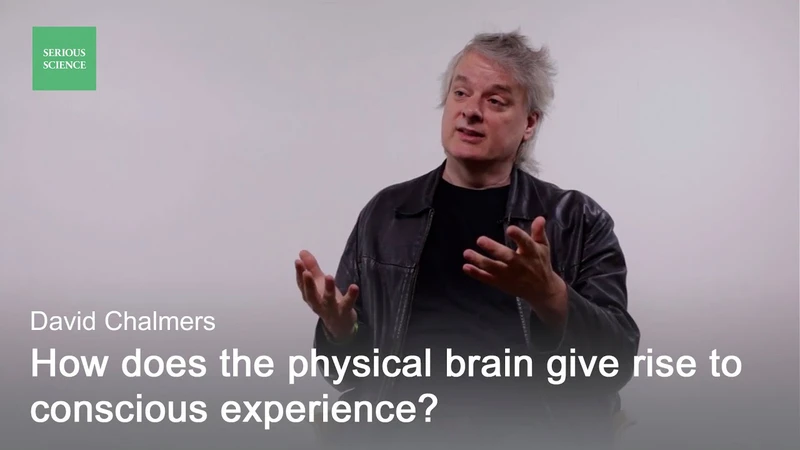
Cognitive Dissonance originated with Leon Festinger. Festinger studied religious movements and false prophets, going as far as to embed himself within a cult to witness people when their predictions failed personally, and published his findings in 'When Prophets Fail' (1956). Based on historical analysis of similar groups dealing with the fallout of failed prophecy, Festinger posited that despite the evidence, people in the cult would not admit they were duped, but instead double down on their apparently wrong beliefs. The following year, Festinger published ‘A Theory of Cognitive Dissonance’ (1957) with a comprehensive psychological model explaining the phenomenon, which could be applied to general human behavior, belief, and motivation. Cognitive Dissonance is stress caused by a mismatch between a person’s actions and cognitive phenomena such as feelings, ideas, beliefs, values, and environmental perception. Festinger borrowed the term from music, Dissonance, referring to the disharmony of sounds, to emphasize that Dissonance between mind and action is expected, as opposed to stronger language, such as hypocrisy. Dissonance refers to inconsistencies and consonance, like in music, the resolution to the Dissonance returning to a state of consistency.
Cognitive Dissonance lends to a more scientific interpretation with a mathematical interpretation, where CD can have a magnitude and be seen as a ratio between the sum of dissonant cognitions divided by the total of dissonant and consonant cognitions, or sometimes just the ratio of dissonant to consonant elements. The magnitude showing the amount of Dissonance of the various cognitions to actions represents the inconsistencies we face, signifying a measure of how much stress a particular dissonance causes a person. To reduce stress, a cognitive dissonance reduction, the person must choose between a few options. One can attempt to change behavior or cognition, both difficult tasks. More commonly, people justify their actions or cognition by changing or adding new behaviors or cognitions that at least temporarily reduce the Dissonance. Alternatively, they can entirely ignore and reject information that conflicts with previously held beliefs. As mentioned, Festinger developed the theory studying religious cults and failed prophecy but quickly adapted Cognitive Dissonance to the general cognitive phenomenon, designing many ingenious experiments to demonstrate the phenomenon, usually in a counterintuitive way, showing that people will justify illogical behavior to reduce Dissonance.
Cognitive Dissonance in the 1950s was a pivotal theory in changing the paradigm of how we understand psychology and human motivation. In repeated tests and studies later, it has stood the test of time, further vindicated by neural correlates. In the 1950s, the dominant psychological theory was Behaviorism, the theory that human and animal behavior can be explained in terms of conditioning, without appeal to thoughts or feelings, and that psychological disorders are best treated by altering behavior patterns. Like Freud’s psychoanalysis, Cognitive Dissonance focuses on cognitive processes, including unconscious motivations.
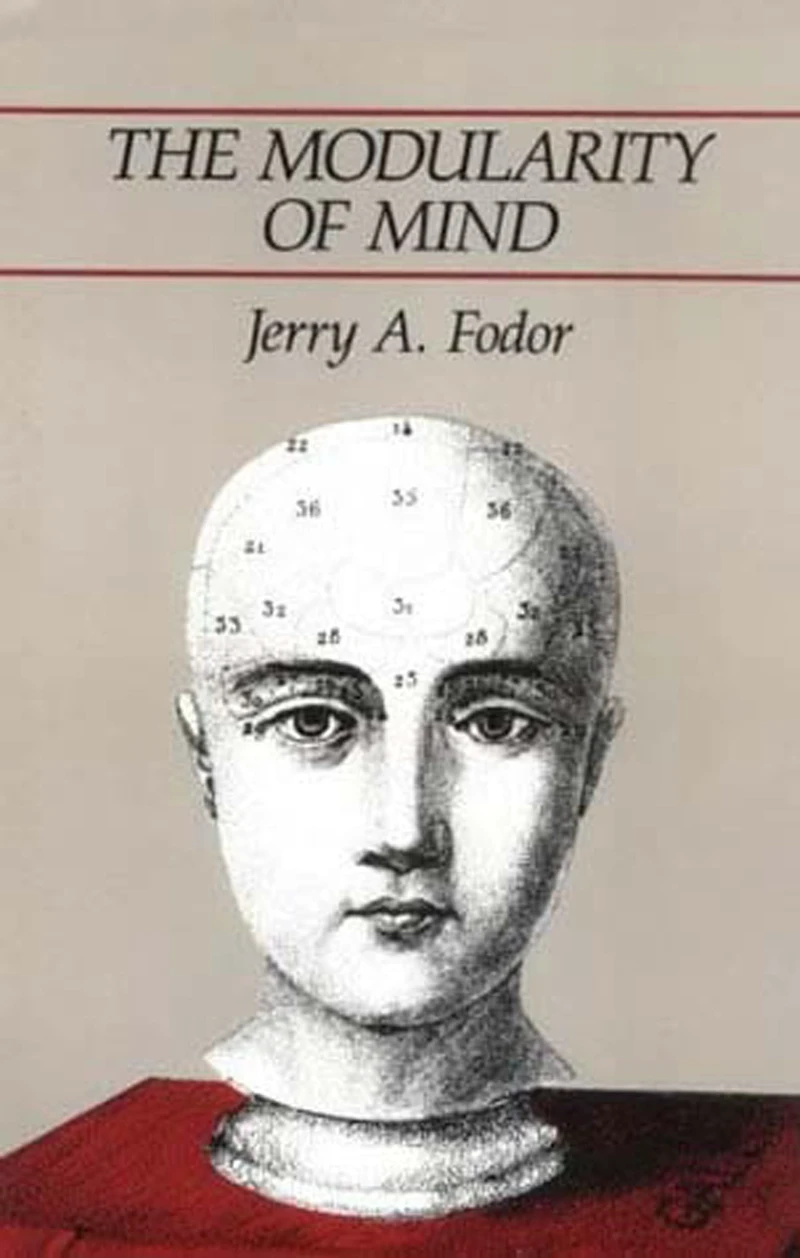
Cognitive Dissonance can be considered part of the more significant cognitive revolution of interdisciplinary studies of the mind and its processes that displaced behaviorism. Festinger and other great thinkers like Noam Chomsky (Universal Grammar), Marvin Minsky, Allen Newell, and Herbert Simon (Chunking Theory) showed that cognitive processes affect behavior as much or more than conditioning. The 1960s saw many tests and advancements on CD. Still, in the 1970s and 80s, other alternative cognitive theories became more popular than CD, such as Elliot Aronson’s Expectation of Self and Higgin’s Self-Discrepancy Theory (1987), although similar to CD, more focused on self-perception, and Dissonance from our self-concept, our behavior and the way we are viewed from others or perceive the environment. In 1983, Jerry Fodor proposed in Modularity of Mind offering an evolutionary explanation for the CD phenomenon, hypothesizing that the mind is composed of innate neural structures of mental modules that have distinct, established, and evolutionary developed functions, hence pushing one in different directions causing Dissonance which is moderated by higher order processing somewhere in the brain. Even though research started following different directions, many new theories were built on Cognitive Dissonance Theory, and tests and experiments continued to confirm the CD phenomenon and the expression Cognitive Dissonance entered popular culture to explain irrational decisions people commonly make due to conflicting beliefs.
In the last few decades, Cognitive Dissonance made a comeback with new studies focusing on the Neural Correlates, using various methods to measure what happens in the brain while repeating classic CD experiments. A series of experiments using fMRI scans confirmed a neural basis to CD, showing changes in the striatum region of the brain reflecting people’s change in beliefs when mismatched with various actions. Neural Basis of Rationalization: Cognitive Dissonance Reduction During Decision Making (2010) showed the neural activities of rationalization occur in seconds without conscious deliberation on the person's part, and the brain engages in emotional responses during decisions. Contributions from Research on Anger and Cognitive Dissonance to Understanding the Motivational Functions of Asymmetrical Frontal Brain Activity (Harmon-Jones 2004) correlated anger and emotions with decision-making and the dissonance reduction process. Further studies also showed neural correlates of CD about guilt, envy & embarrassment. Studies showed Cognitive Dissonance also functions in monkeys and young children. As tests continued to affirm CD and reveal the neural correlates, more advanced theories focusing on the exact neural mechanisms behind CD appeared.
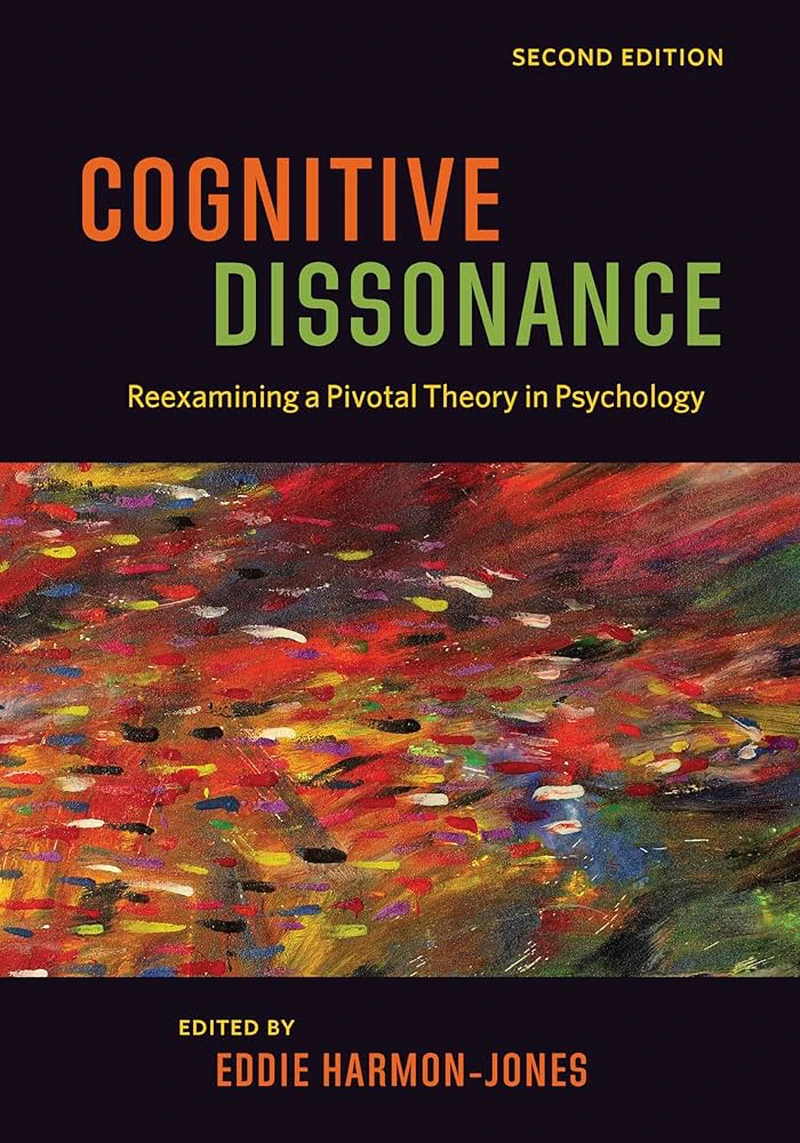
As seen in my previous essay on the Science of Consciousness Conference, in the last few decades as technology and neural sciences have advanced, so have theories of mind, some specifying mechanism behind Cognitive Dissonance. Eddie Harmon-Jones, in An Action Based Model of Cognitive Dissonance Processes (2015), proposed psychological Dissonance occurs consequent to the stimulation of thoughts that interfere with goal-driven behavior, extending the original CD theory by proposing a mechanism for how CD prompts Dissonance and dissonance reduction. The Action-based Model focuses on cognitions with action implications that conflict, making it difficult to act and often pitting short-term decisions against long-term decisions. In 2018, Roope Oskari Kaaronen proposed the Theory of Predictive Dissonance relating the CD phenomenon to theories of predictive coding, around since the 1860s with Helmholtz’s Unconscious Interference, but regaining popularity in materialistic models of mind focusing on the brain’s function of making predictions about our environment and how the environment will respond to our choices. Predictive Processing presents a new take on cognitive Dissonance with a unifying account of perception, action, experience, and expectation, providing a theoretical (possibly empirical) account of a fundamentally embodied and environmentally situated mind, with the larger predictive processing model attempting to explain the CD phenomenon fully. Cognitive Dissonance has returned to the forefront of psychological research and a central place in new theories of mind.
Cognitive Dissonance Theory has a rich history, standing the test of time; unlike many psychological theories, CD has been vindicated by advancements in technology and neurology. The basic concept of CD is well known to most educated people and is part of the common lexicon. It often comes up in everyday conversations related to the peculiarities of human behavior and decision-making. At the same time, new studies on the neural correlates of the CD phenomenon are helping to advance the understanding of the brain. Cognitive Dissonance is an integral part of many of the leading models of mind, attempting to incorporate the CD phenomenon into an integrated model of mind. Any model of mind must explain the well-documented CD phenomenon.
So what does all this have to do with chess improvement and deliberate practice, and why do the least enjoyable training methods have the most significant impact? Cognitive Dissonance is likely the reason why chess improvement is so tricky. One of the original tests of Leon Festinger on Cognitive Dissonance was the difficulty of chess improvement. The problem with improvement is unlearning our current understanding, which is humbling and challenging. We are relatively functional and proficient at whatever level one is currently at. To reach the next level is humbling and a constant blow to the ego. We must constantly break ourselves down to build ourselves up; there is no pleasurable way to break ourselves down. Even acquiring new skills where we do not currently have a false understanding is difficult, as we must accept and acclimate information that may not conform with what we believe we already know.
Many people compete in chess in their youth, have some coaching, and study the game. Past that, there is a slight improvement, quickly reaching a plateau and eventual decline, only to be humbled by the next generation working hard. Players often make the same mistakes repeatedly, play the same dubious opening lines, and never master the techniques they know they are lacking. Why? Part of the reason is diminishing returns. About 1 in 5 people worldwide play occasion casual chess, while only about 1 in 100 are seriously competitive, putting in deliberate practice to improve. One who competed at chess, even just a short period in their youth, has a heavy advantage over a casual player. The work to beat competitive players is insurmountable for a busy adult. Is it worth investing hundreds of hours of deliberate practice to move up the ranks of competitive players slowly? Adult improvement for just a 200 hundred rating point gain can take at least a hundred hours, often several hundred hours of deliberate practice. More gain than that requires regular, deliberate practice over many years.
The other primary reason preventing adult improvement is the inherent non-enjoyable effort needed for deliberate practice. Most people play chess for fun, as a hobby, and deliberate practice takes the enjoyment out of the game. An adult could put that same effort into something that would benefit their career, increase their financial and social status, family life, or any other life aspect. Chess is usually a hobby meant for relaxation and fun, not to demand discipline and work. Hence the paradox of improvement and the importance of deliberate practice. Another hindrance is the humbling nature of an adult learning something new, especially something they could have / should have known their whole life. An experienced chess coach, just looking at a few games, can create a long list of areas of improvement, serious errors, gaps of knowledge, dubious openings, missed tactics, lack of middle game planning, technical endgame skills,..., and so on. All of these gaps in skills will cost one game, often to a youth fresh in training, eager to capitalize on one's chess knowledge and skills gap.
Next, I plan to republish a few general essays on chess and then move forward with my series, reviewing the major models of expertise next year. A special focus of mine will be the universal process of obtaining expertise, similar to all fields, with chess as the primary example. Hopefully, the series will bring together essential ideas from different fields and eventually be part of my forthcoming book on 'How to Coach Chess'! These ideas are controversial, especially among chess trainers who use various methods. I also plan on publishing introductory material related to chess variants, mostly Horde and Crazy House and maybe Racking Kings.
Blessings, Happy Holidays!
You may also like
 DIAChessClubStudies
Chess as a Pedagogical Tool – Four Basic Concepts
How to use Chess to teach children basic thinking skills! CM HGabor
How titled players lie to you
This post is a word of warning for the average club player. As the chess world is becoming increasin… CM HGabor
How to make your chess training effective
This is the first post of a series about effective chess training. In the following posts, I will di… DIAChessClubStudies
3D Printing & Additive Manufacturing
A History and Overview of 3D Printers GM GABUZYAN_CHESSMOOD
Why Being Amateur Might Be Better Than Being Grandmaster
Discover the hidden advantages of being an amateur chess player compared to professionals, and learn… IM theScot