
Introduction to Chess
How to Learn & Play Chess in Lichess: Beginner Guide
In this new blog, I will teach you how to learn and play chess in Lichess as a beginner. Take this as a starter guide for your introduction to chess. Let's start with the main content.
Chess Pieces: The Pawn to the King
The Pawn:
The pawn is the only one of the chess pieces that can capture other pieces in a method that's different from how it normally moves. The pawn captures by moving one square diagonally forward to the left or right.
The Rook:
The rook is a piece in the game of chess. It may move any number of squares horizontally or vertically without jumping, and it may capture an enemy piece on its path; additionally, it may participate in castling.
The Knight:
The Knight is a unique piece – it can move two squares forward or backward and one square to the side, or two squares to the side and one square forward or backward, so that his movements resemble the shape of an L.
The Bishop:
The bishop chess piece moves in any direction diagonally. Chess rules state that there is no limit to the number of squares a bishop can travel on the chessboard, as long as there is not another piece obstructing its path. Bishops capture opposing pieces by landing on the square occupied by an enemy piece.
The Queen:
The Queen is the most powerful piece. The Queen can move 1 to 7 squares in any direction, up, down, left, right, or diagonal, until the Queen reaches an obstruction or captures a piece; however, the Queen cannot jump over pieces and can only capture one piece per turn.
The King:
The King is a piece that moves only one step in every direction – forward, backward, to the sides. King can capture any of the opponent's pieces that are standing any square surrounding King.
Tips and Tricks of Winning Chess Games
After you have read about how the pieces work in chess, now we will see some tips and tricks of winning chess games.
Making Good Opening Moves:
The goal of your first moves in chess are to establish control of the board. The most important part of the board is the center. If you can control the center with your pieces and pawns, you will be able to dictate the direction of the game. In the position below, White's two pawns perfectly control the center of the board while Black's have no influence.
Don’t Give Away Pieces for Free:
Trading pieces is a normal part of chess, but you should only trade pieces of equal value. Many players lose because they simply give away their pieces and pawns for nothing. On the other hand, you should capture all of the material your opponent gives you for free, but watch out for traps!
Get Your Pieces in Position:
Before you can get to the king, you will need to put your pieces in position to attack. This means you will want active chess pieces that have a lot of options. Pawns control squares. Knights like to be in the center. Bishops like to be on long diagonals. Rooks like to be lined up in the center or on open files. Your queen should be ready to spring into action.
Coordinate an Attack on the King:
You cannot usually checkmate the king with just one piece. Usually, it takes many pieces working together to checkmate. Often you will need a piece to check the king, and at least one piece defending the checking piece so the king cannot take it. And sometimes you need even more pieces to sacrifice and break down the enemy defense.
Watch the Safety of Your Own King:
Sometimes players get so focused on their opponent’s king that they forget to watch their own. Remember, the other player is playing too and will also be attacking your king. Make sure to look at the threats created by every move your opponent makes. One of the best ways to make your king safe is to place your king behind some defensive pawns. In the position below, White's king is snug and safe while Black's is easily attacked.
Always Be a Good Sport:
Regardless of if you win or lose, always congratulate or thank your opponent for the game. Both winning and losing are a part of the game. Even the best players in the world lose often. So be gracious and kind when it’s over, and then take time to think about what you could do better next time.
A Chess Winning
After you have read about some tips and tricks, let us now see a picture of a person doing a checkmate and winning the game.
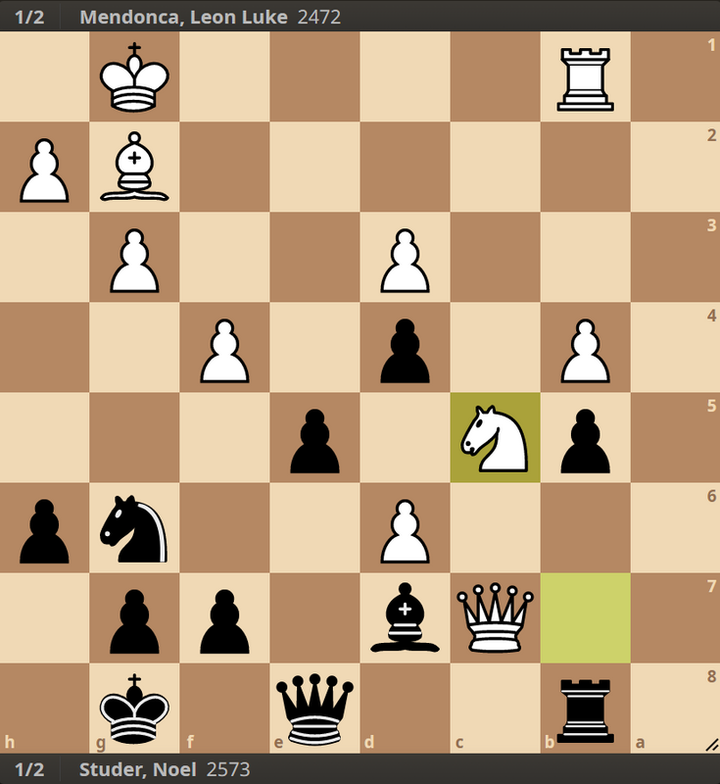
You can also win these chess games like these too! Remember, chess is only for your brain power, it’s only a game to practice to test your skills.
Coordinates in Chess
Each square of the board is identified by a unique coordinate pair—a letter and a number—from White's point of view. The vertical columns of squares, called files, are labeled through from White's left which is the queen side and to the right which is the king side. For example, you are using the move b4, the piece will specifically go into that place. Coordinates are some letters and numbers for chess to remember for your brains.
Checkmating The King
It is very important to know the steps on how to checkmate the King as it plays an important role in chess. Let us learn some tricks to checkmate the King.
Rook and Queen Checkmate:
Our first example uses a queen and rook together to deliver a checkmate. However, this same pattern can be accomplished with any two major pieces. Alone king against the edge of the board is easily checkmated by any two major pieces. While one piece prevents the king from moving away from the edge, the other can move to the same rank or file as the king to deliver a checkmate.
Back-Ranking Checkmate:
The back-rank checkmate may not look much like our first example, but the pattern is very similar. While we will still be using a major piece to deliver checkmate on the edge of the board, this time, the king's own pawns prevent him from escaping from our attack. The diagram above is a typical example of a back-rank mate. White's king is trapped behind his own pawns and is therefore stuck on the first rank. Black can deliver checkmate by playing Rc1++.
Queen and Knight Checkmate:
The queen is a powerful attacking piece, but it usually needs some help to deliver checkmate. Many basic checkmates use the queen to deliver the checkmate, supported by a minor piece. The diagram above shows a queen and a knight working together to checkmate a king. White can finish the job by playing Qe7++.
Queen and Bishop Checkmate:
The bishop can play a supporting role for a queen similar to that of the knight in the previous example. While the queen delivers the checkmate, the bishop can support the queen from afar. In the diagram above, White has a rook guarding the first rank, making a back rank mate impossible at the moment.
Two Bishops Checkmate:
Minor pieces can deliver checkmates on their own, too. A pair of bishops can work together effectively; as each one can be dominant on squares of a single color, together they can dominate the entire board. In the diagram above, White's king is in a precarious position. His pawn prevents him from moving up to h2, while Black's dark-squared bishop stops him from walking out to g1.
Analysis and Testing Your Skills
Finally, now let's check your knowledge and skills about chess. So, let's do a small quiz about it to understand how chess is important to your brain.
1. How many squares does a chessboard have?
2. Who were the opponents in the famous Evergreen Game?
3. How many moves was the longest known chess game in history?
4. What is it called when a player can’t defeat an attack against their king?
5. How many moves does it take to make the quickest checkmate?
Final Thoughts for this Blog
A big thank you to all of those who have seen this blog and learned from it. I wish to make more blogs like this to help people in the future.
Also, don't forget to like and share the blog to others so that they can become advanced players in Lichess!
You may also like
 Dark_Ninja2478
Atomic's Explosion of Integrity: Leading to a Better Variant
In this blog, I will mention the aspects of the explosive variant of chess mainly known as atomic ch… Dark_Ninja2478
How the Brain Functions During a Chess Match: IQ Power Guide
In this blog, I will mention about how your brain functions during a chess match to help and express… Dark_Ninja2478