
How to Lose with the Catalan
Some of my horrific opening mistakes in the Catalan and how you can avoid themHello! I'm a 2000 FIDE/2100 USCF chess player with the end goal of becoming a national master. I've had a couple of rough months recently, losing a lot of rating. One of my weaknesses has been my openings, so I decided to follow the botvinnik school of chess improvement and analyze some my games in this post for the opening.
Lately, I've been playing a lot of strong players. I’ve played the Catalan for multiple years at this point, so I’ve had recently some very bad games in the Catalan. Additionally, although I’ve had a lot of bad openings before, I feel the effect of the bad opening much much more against stronger players because they punish mistakes better. I’ll probably write a post on my best swindles soon though.
Anyways, the first game was a year and a half ago against someone who was approximately 100 points higher rated than me.
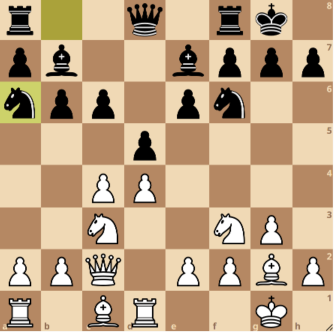
He chose to go into this line of the closed catalan. I’ve never seen this line, and I chose the move e4? Playing the classic idea of opening up the center. However, this doesn’t really work, immediately equalizing for black. In the opening, the goal for black is to get equality, so this isn’t good for me. Now, the thing I calculated in the game was e4 dxe4 Nxe4 Nxe4 Qxe4, and this position is good for white with the c-pawn pinned and white’s more active pieces.
However, black can also play dxc4, which is the correct move. A pawn sacrifice is generally normal in these lines. However, white needs to play actively in order to counter this.
Now, what should I have played instead? The main move played by masters is a3, which I also believe is the best move. The reason this is so good is that on the next move white can play e4. Additionally, if dxc4 is played, then Ne5 immediately wins the pawn back (b5 Nxb5!), although that line is pretty drawn.
If it were me right now after e4 dxc4, I’d play e5. This is what the two master games play also, and this e5 push is also pretty common in the Catalan. I don’t think I knew much in the Catalan back when I played this game, so I played Ne5. He played b5 very quickly, keeping the pawn, and now this is the current position: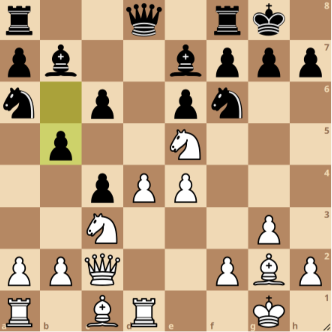
Now the issue with e4 can be seen. Since there is no direct way to win the pawn back, white has to get some counterplay. The general way to get counterplay is with the a4/b3 breaks. However, without the a3 move already played, there are also possibilities of Nb4 followed by a6. So, when you play a4, you get met with Nb4 Qe2 a6, and now black clearly keeps the pawn along with white not really having enough counterplay to compensate for it. That basically means b3 is the better move (actually the best move according to the fish) because black would have to take (Nb4 Qe2 a6? a3 and now you see the point of not moving the a-pawn earlier, and now white gets the pawn back).
Unfortunately, I played a4 this game, going into the exact line I said above. Skipping a few moves to my next mistake, we reached the below position. As you can see my opponent has pretty clear development and I don’t really have anything, although I’m trying to start a possible attack with h4.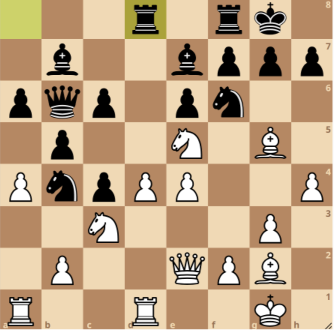
Here, the pawn is attacked, so I should be defending it. After defending it, a solid plan is to continue with b3. How can I continue with b3 if there is no a-pawn defending the b-pawn? Well, you just play Rb1 and defend it with the rook! However, in these positions, black has the important break c5, so you need to be very vigilant to make sure it’s not terrible for white after c5. Some other ideas are h5 followed by Bh3 or doubling up on the d-file. You may be curious why most of these plans don’t do anything, and it’s because black has such a strong hold over the position that the best thing to do is to wait for c5 and then continue to play the game down the pawn.
You may be wondering what move I played here. Well, I played the spectacular axb4! This move told my opponent that I had absolutely no clue what I was doing. axb4 only helps white - I open up black’s terrible bishop and allow black’s queenside to start rolling with a5 and b4, leading to a fate of pure suffering for white. After the only logical move cxb5 I play the move d5. It’s not really a bad move, and it’s what white needs to play in order to do something in this position, but it is futile. Additionally, in more fortunate positions for white d5 is usually a good move. Unfortunately, it doesn’t really do anything for me after Qc7, targeting my now weak e5 knight. The rest of the game is below, if you want to see his questionable conversion:
In the next game, I was playing someone 50 points lower rated than me at my state’s Denker qualifier. You may be wondering why I’m recapping this game again - it’s because I didn’t really talk about the opening in that post. In that game my opponent played the move Nf6 in the very trendy a5 line.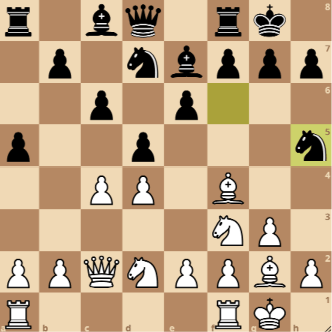
Here, you may be thinking “Oh, just move the bishop”. However, I thought that it was fine to give up my bad dark squared bishop for the knight, so I played the move cxd5. I didn’t really understand the problem with this move, but it’s actually very bad for white. The reasoning for this is that black will eventually open up the queenside. So, once that happens, the dark squared bishop will be good, and then I’ll really regret that. The second reason is that there is no attack on black’s king after gxf4. Why? There is too many defenders, which means that I can’t do any of that. If both of my reasons for giving up the bishop pair are actually based on faulty reasoning, why lose the bishop? So, the correct move and the move played by masters is Be3, which makes a lot of sense. The main reason I disliked it was because I didn’t now what I’m supposed to play after Be3. Apparently the plan is to play Nd2-b3-c1-d3, which is kind of impossible to find during the game. Additionally, another plan here is to play cxd5 Ne5. Routing the knights to d3 and f3 seems like a general plan here, where you just kind of ignore the e3 bishop. In fact, even trading white’s dark squared bishop for black’s dark squared bishop is bad, as seen in this position:
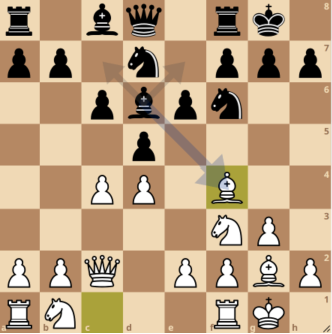
I reached this position about a year ago against a 1900. Although this is definitely better than the other line since white gets black’s bishop in exchange, this still isn’t too good due to the reasons stated above. Although there are still 86 master games, black has already equalized according to low-depth stockfish, which isn’t ideal. Instead, normal moves like Nc3, Nbd2, or Rd1 are better choices in the above position.
The final position for this post I’d like to talk about is another a5 catalan, similar to the 2nd position/game I showed:
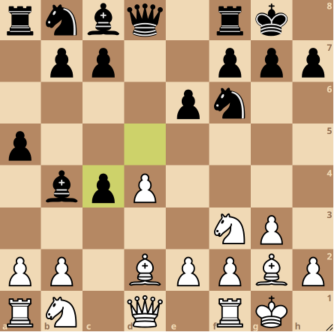
Here, my opponent captured on c4. Pretty logical move. In the game, I thought I’d be guaranteed to get the pawn back after Bxb4 axb4 Ne5, so I stopped calculating there. However, this line is actually really bad due to Nc6! Nxc6 bxc6 Bxc6 Ra5!! I knew this was all prep due to him blitzing all the moves out. Usually, when black plays Bc6 after Ne5, his position is much worse and less active (For example, the classic Nc6 Catalan line is this:
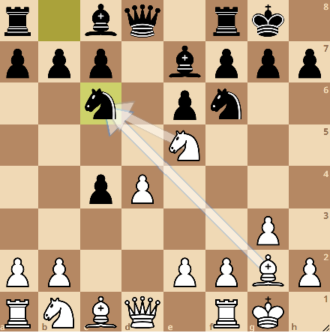
There are a ton of games here with both Nxc6 and Bxc6 being played equally. However, in comparison, this is much worse for black as they have to give up much more stuff and and could potentially have doubled pawns in exchange for trading off his light squared bishop, which is obviously much worse for black than in the game).
Instead, white should play a normal pawn sacrifice line with Qc2 and give up the pawn for activity.
Final Takeaways:
- Trading the dark squared bishop in exchange for a bad structure is usually not that good.
- Sacrificing a pawn in the Catalan is normal - don’t be afraid of it.
- When you sacrifice a pawn, you MUST have compensation. No compensation = don’t sacrifice that pawn.
- e5 is usually a good move after sacrificing the pawn
I have a couple more examples of me getting absolutely crushed in the Catalan, so if you want to see that, let me know! Additionally, if you want to read more of my blog posts, you can check them out at https://chessgrindr.substack.com/.
You may also like
 GM Avetik_ChessMood
10 Things to Give Up to Enjoy Chess Fully
Discover how embracing a lighter mindset can help you enjoy chess again and achieve better results. ElementalMaster1
How to Choose the Right Coach
A Guide to Navigating Chess Coaching ChessMonitor_Stats