
Remote Chess Academy
How Psychology Helped Me Become a Chess Grandmaster
One of the best players of all time, Bobby Fischer, famously said, “I don't believe in psychology. I believe in good moves.” But psychology has a lot to do with whether a player finds those good movies. It’s not so much about knowing what or how your opponents think; rather, it’s about your mindset and how you think about the game that matters most. As important as strategy and tactics are in the game, the most important things I learned about chess dealt more with the internal psychological battles. Today, I will share with you some of the key insights I learned from chess that has helped me become a chess grandmaster.My Introduction and Motivation to the Game
The personalities of people are usually formed during the first five to seven years of their lives. Hence, let me briefly share how I was introduced to the game. When I was six-years-old, my dad introduced me to the game of chess. Though I wish I could brag about being a genius prodigy, like Morphy, Capablanca or Fischer, that was not my story. My dad beat me again and again which led me to cry.
This went on for two years but that didn’t stop me. On the contrary, beating my dad became my main motivation at that time to get better at chess. When I was finally able to win some games against my dad, my parents brought me to the local chess club.
That was when I began chess training and eventually participated in tournaments. My progress was so rapid that by age 10, I had attained the first category ranking and became the champion of our city among schoolboys.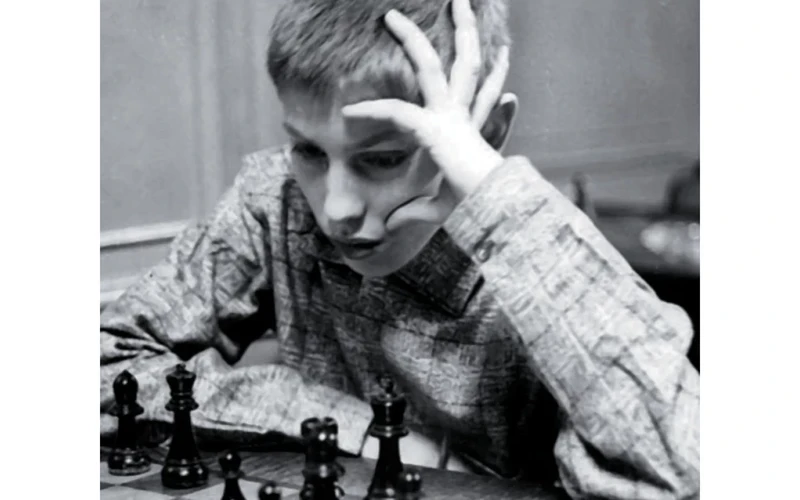
How Pain Helps Develop Passion
My early years in chess taught me how to deal with losses. While many others don’t elaborate on this, my later reflection and study of psychology helped me understand what went on in my head–what made me continue despite losing again and again, while many other kids who had a similar experience would just move on to other activities
Being stubborn was certainly a factor. If I start something, I nearly always finish it. Ultimately, people can stay engaging in an activity as long as they have a passion for it. While there are stories about people developing passion instantly, that is not what happens in most cases.
Passion almost always involves some component of pain. To develop that passion one must have the ability to convert pain into passion. It’s not about being a masochist but being able to and needing to adapt. When things go too smoothly, it is hard to motivate yourself to work harder. When things go badly, you’ll be motivated to change it for the better.
Chess Was Not For My Brother
Seeing my success in chess, my parents wanted my older brother, Oleg, to try chess, but he had a very different personality. He is dynamic, a communicator and loves holding conversations. He struggled sitting in one place.
Chess requires players to be quiet and basically sit for long hours. His impatience often made him make impulsive moves which led to blunders. Ultimately, he abandoned chess. Today, he works in a field that highlights his strengths–journalism. Similarly, a chess player should focus on his strengths.
This doesn’t mean neglecting the weaknesses. After all, this is why chess players should review their games to see the flaws and not repeat them in future games. However, there is a limit to the improvement one can make by focusing on their weaknesses. Most of the successful people in any field achieved their success not by focusing on their weaknesses but by developing what they’re already good at.
I Almost Quit Chess
Because I had rapid progress in chess early on, I won a few tournaments, raising my rating. I was considered a promising player and my parents expected me to have a great career. My parents were regular working people, with average wages. Financing my entry into faraway strong events was challenging for them and I am grateful that they did, but at times, I felt guilty because I knew the strain it put on them.
This guilt feeling would be exacerbated by the games I lost, especially when I had a winning position. In one particular tournament, I was in contention for the win and if I won my game, I would’ve won the tournament overall.
During my last game of that tournament, I had a good position against my opponent but made an embarrassing oversight and lost. When the final rankings were announced, I won no prize at all. I felt my parents’ disappointment on top of my own.
My Return to Chess
While it is usually a good thing that parents and coaches consider their kids and students to be outstanding players, this may create unrealistic expectations and add extra psychological pressures. Competitive chess is psychologically intense as it is, so adding this extra psychological pressure does not help.
I decided that I would quit chess. Four months went by, my parents and my coach, seeing how unhappy I was, urged me to return to playing chess. My return to chess brought me great success. Since then, I have been involved in chess in one form or another.
I had the fortune of learning valuable chess insights from one of the few strong players in my area, Coach Murashko, most importantly, how to attack. I believe that propelled my rating several hundred points and helped me earn the title of International Master at age 13. Reaching that level, however, meant that I will have to compete in higher level tournaments.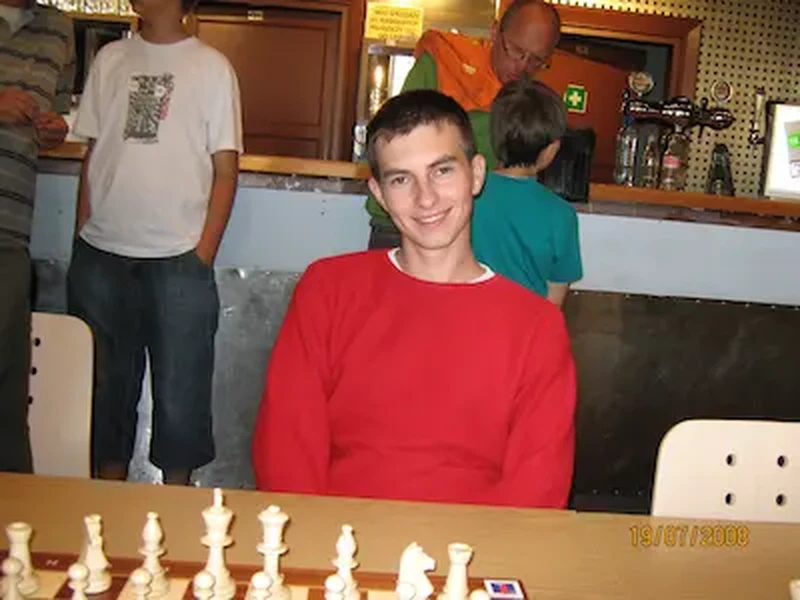
Time For Reflection and Intuition
Early on, I also had to learn how to manage my time more efficiently during games. This came as a result of experiencing and reflecting on time troubles in my tournaments. A turning point happened in 2003 at the European U-18 team championships in Hungary.
In my first three games, I only scored two draws and a loss. What made this even tougher to deal with psychologically was that I had good positions, even winning ones. The problem was that I started calculating so many variations and became indecisive. This ate up my time and eventually my position crumbled from the stress and time pressure.
I took myself for a walk, mentally beating myself up for my poor play. Just then, a wild idea from a book about intuition I had been reading before the tournament entered my mind. Since calculating deeply wasn’t working, I decided to let my intuition do all the work in the next game.
The result was nothing short of amazing. At one critical point, the position required a pawn sacrifice. I played that move without much thought and won the game. I continued the tournament with the same strategy and beat opponent after opponent in quick fashion.
Later on, Ukrainian Grandmaster Drozdovsky told me: “It doesn't make sense to play 30 perfect moves only to spoil your game by making a blunder in time trouble". He recommended that a player maintain a normal quality of moves throughout the whole game. Therefore, play quickly and play decent moves, even if they are not necessarily the best moves.
Hitting a Plateau
At age 15, I reached a rating of 2450 but my progress simply stopped. I trained very hard, played tournaments, analyzed my games and did everything I was supposed to in order to get better. These were things that used to give me good results but for some reason, this regimen stopped working.
There’s a concept in educational psychology that I later learned about–the learning curve. It applies not only in chess but in any discipline. It postulates that there are phases of rapid progress followed by periods of stagnation, which can be frustrating. During the early stages, mastering basic concepts often leads to quick improvements. However, as a player advances, the gains become harder to achieve and feels like hitting a plateau.
Working Smarter
I couldn’t work any harder but perhaps, I could work smarter. Looking for a solution led me to a long journey, five years to be exact. This is how I came to take up psychology in a university, though I never intended it to be my profession. I simply wanted to know how my brain works and if such knowledge could help chess training become easier and more effective. In short, I wanted to learn the best way to learn.
It took me five years to get my Master’s degree in psychology; however, I still had to put in a lot of extra effort to supplement my studies in order to find what I was looking for because a lot of the things I learned were not relevant to my interests.
I took extra classes, read more books and scoured the internet for more information about the topic I needed. All this effort paid off when I finally found what I was looking for. I started to play much better and attained the Grandmaster title soon after.
Breakthrough Ideas That Shaped My Thinking System
There are actual techniques that I had to learn in order to improve. It took me years to learn them but eventually, all these lessons formed my thinking system. The first breakthrough lesson I learned was how to attack. This was what helped me become an international master. To reach 2450 rating, I had to learn better time management, but to be in the league of grandmasters I had to think like one.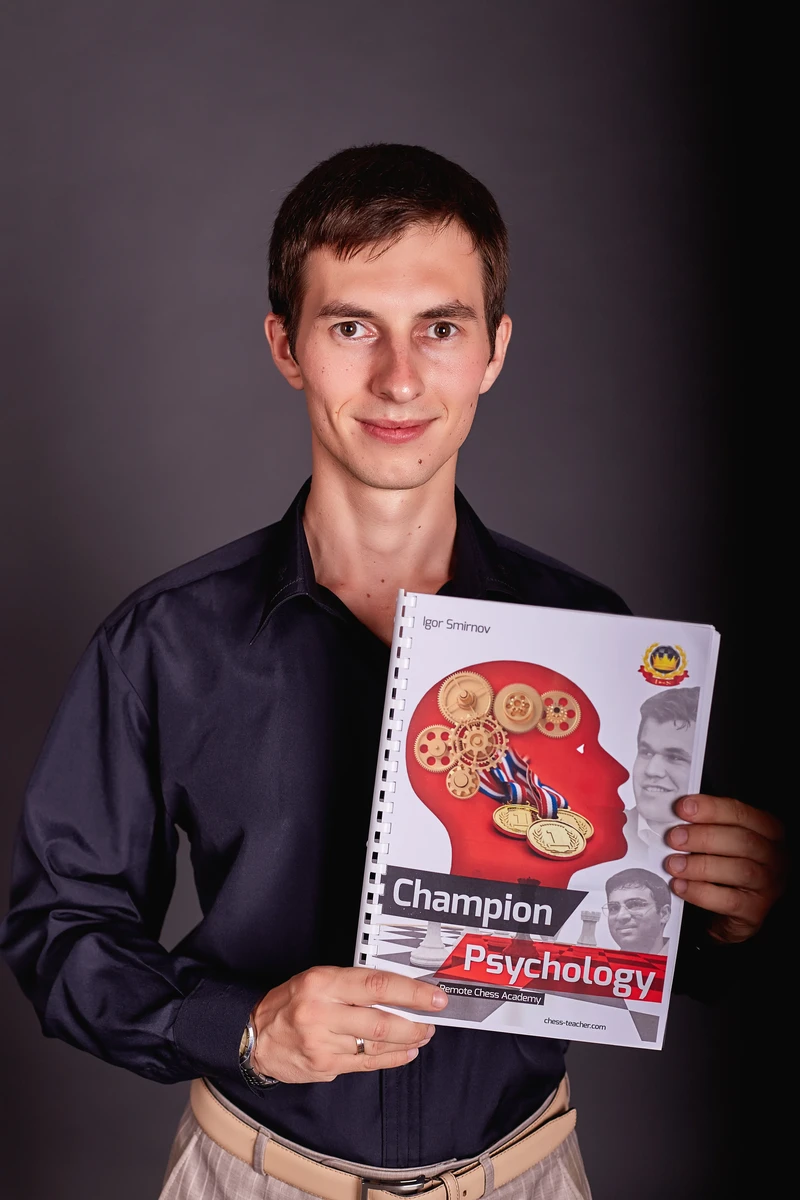
Make 40 Good Moves Instead of Looking for One Brilliant Move
I took the words of grandmasters more seriously and also observed what they do. The seventh world chess champion, Vasily Smyslov, said, “I’m going to play 40 good moves. If my opponent is able to do the same – that’ll be a draw”. This statement, though seemingly simple, has several implications.
Finding 40 good moves in a game is not always easy but it is doable. It is then better to do something attainable than attempt to find the best moves. Unfortunately, this is easier said than done because we have been conditioned to strive for perfectionism.
This has been developed in our school age. If you make an error, you do not pass an exam. In order to get “A” marks, you should be flawless and perform everything perfectly. Good moves, on the other hand, often only require one to follow the principles of chess and not commit blunders or at least greatly reduce mistakes during a game.
Anti-Blunder Technique
Following Einstein’s line of thinking, “We cannot solve our problems with the same thinking we used when we created them,” there’s a simple technique that chess players can do to help avoid blunders–an anti-blunder technique.
This simply requires a player to look away from the board for a few seconds. What this does is refresh the mind. When looking back at the board, ask yourself, what attacking moves your opponent can play.
After that, you can proceed to formulate your own plans. If you keep your focus on attacking moves, you will often notice that there are only one or two attacking moves in any given situation. This makes it easier to spot them,
Information is Not Enough
It was not just a few ideas that I had to learn but a whole system of thinking that allowed me to organize all of the principles I have acquired throughout my chess journey. There are so many more insights that I couldn’t possibly include in this article. That said, I believe that most players reading this, if they apply these insights, will see significant improvement in their games, as many of my students have
Just as we do not expect medical students to become good doctors simply by reading books or watching videos, we should not expect chess players to become strong masters simply by acquiring information through passive learning.
In the world we live in today, information is easily accessible but honing skills still requires hours of deliberate learning and practice. So keep at it. I am rooting for your success and hope that all your efforts pay off but more importantly, you should enjoy the journey.
FREE MASTERCLASS
Ready to level up your chess skills? Join my Free Masterclass to learn practical strategies and insights that will help you play with confidence and precision. Sign up today!
You may also like
 CM HGabor
How titled players lie to you
This post is a word of warning for the average club player. As the chess world is becoming increasin… Lichess
Accomplished Bangladeshi GM Ziaur Rahman Dies Mid-Game
Lichess extends its condolences to the family, friends, and many fans of GM Ziaur Rahman, who died a… GM NoelStuder
How to make chess easy (not what you expect)
Imagine playing a poker tournament for 7 days straight for 12+ hours a day. $10,000 of your own mone… FM CheckRaiseMate
The Power of a Plan
And how to make the engine into an effective teacher GM NoelStuder