
A very cursed chess puzzle
An illusion or a riddle?
We could all agree that solving chess puzzles is a great way to improve pattern recognition and raise tactic awareness but also discover some of the most beautiful combinations and sacrifices to ever happen (or could have happened).
However, on this incredible journey of learning, we sometimes encounter problems so enigmatic, that no matter how hard to try, we simply cannot get our heads around them.
Let me share with you what I like to call a 'Chess Chimera', a puzzle that's on the boundary between impossible and insanely difficult to understand. Feel free to try and solve it yourself.
The puzzle
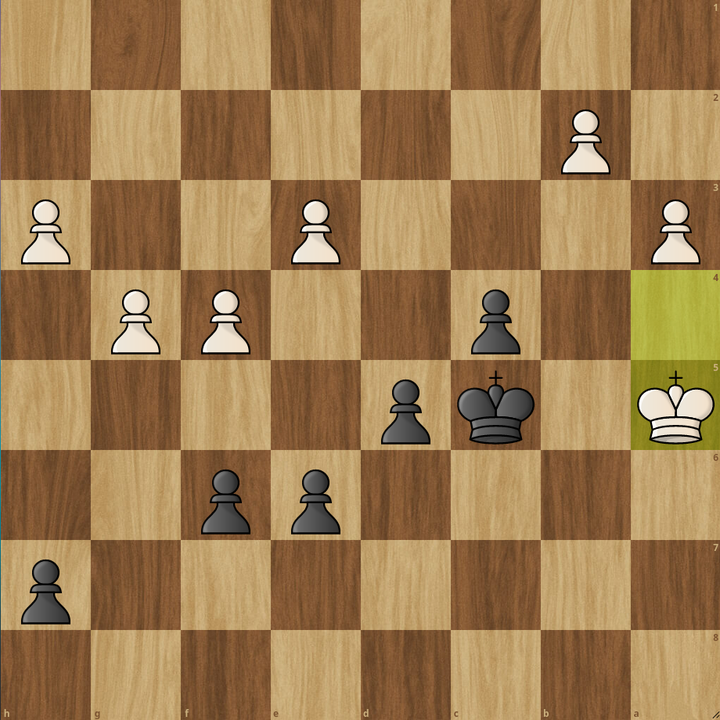
This is the position from a bullet game between two 1700 players on Lichess. Instead of b4, white just played King to a5 and is now losing, despite being a pawn up. All black needs is a precise pawn break.
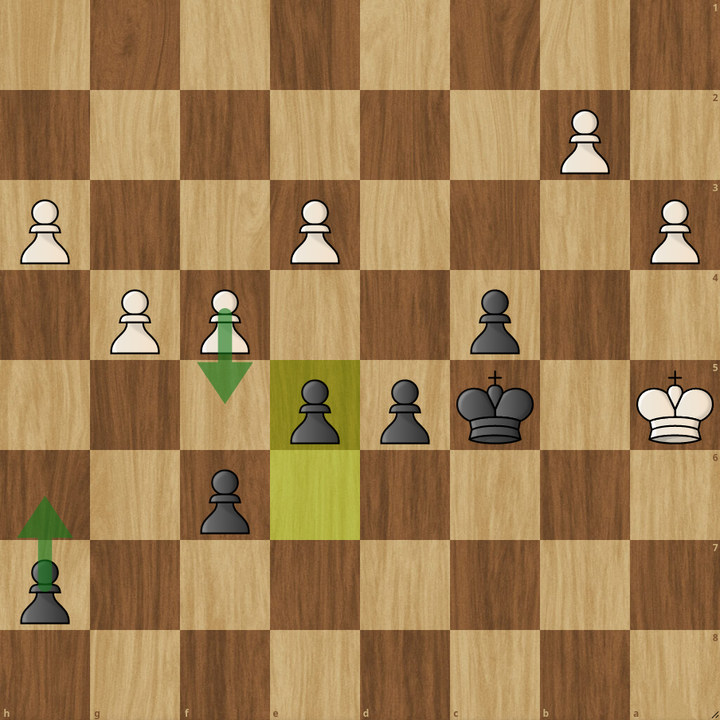
By simple calculation we come to the only winning move - e5! Not a lot of choice for white. They either push f5, which is met with h6 (or even d4), or...
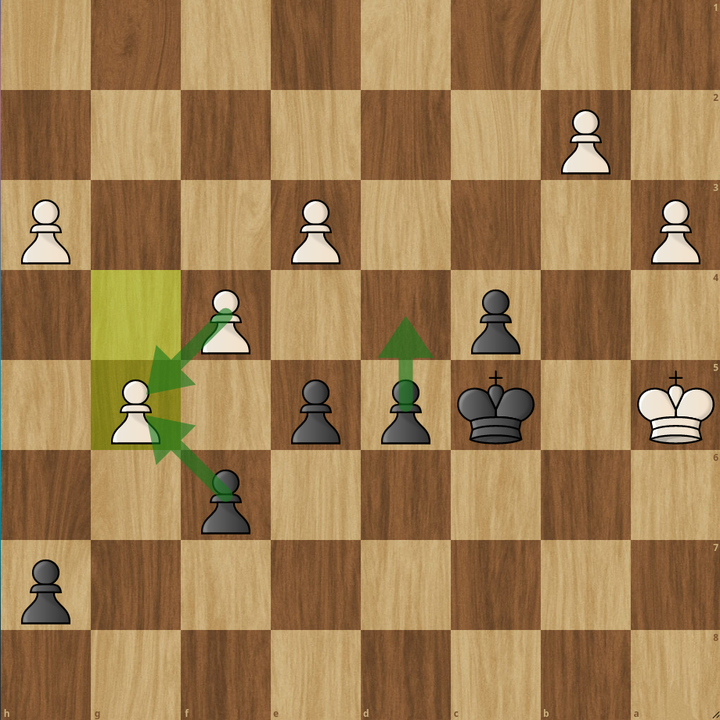
...they counter-attack with g5, but now we take, since white cannot take back due to d4, winning on the spot!
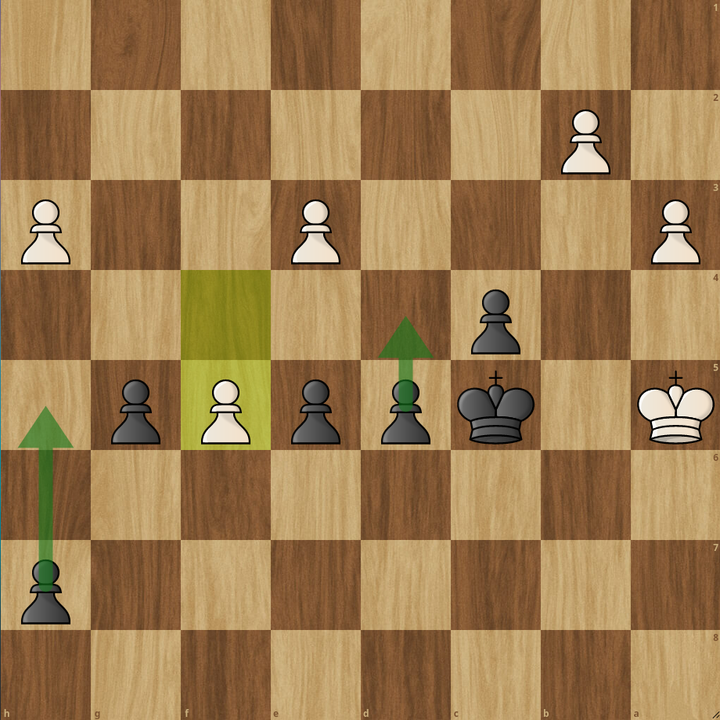
The best try is f5, and now the critical position arises! There's only two candidate moves black can make - h5 and d4. It took me about 30 minutes to pick one up and instinctively I went d4 right away, when I got my choice declared as incorrect and I failed the puzzle...
Now I naturally have a problem with 50/50 type of situtations. Give me a thousand options and I would feel far more comfortable choosing, even if there's only one correct answer, but A or B kind of problems...I can't stand them.
However, this is not one of those times when our instinct disappoints us, or maybe it is?!
Analysis
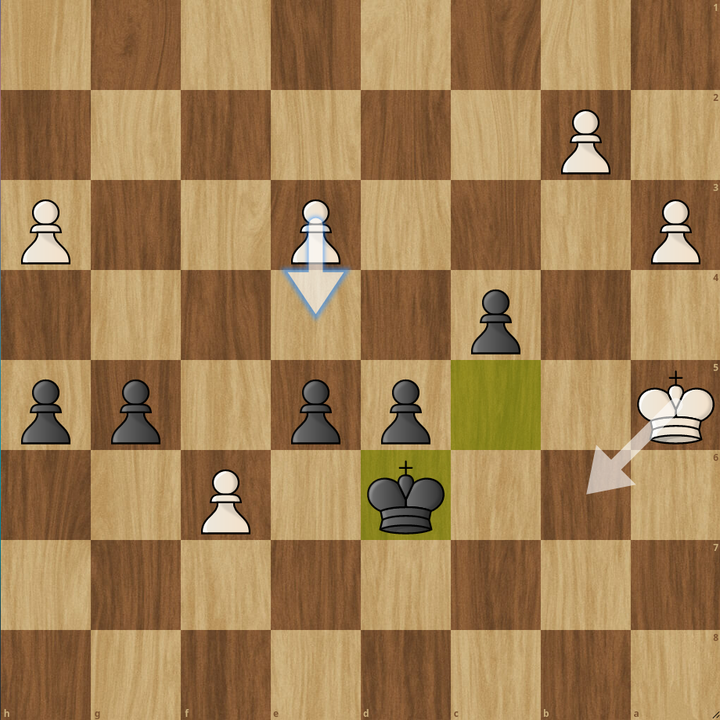
So let's first check h5, the move we were expected to play. On h5 white goes f6, and now we approach the pawn with Kd6, fairly easy. If e4, we can either take or go g4, which both win. If Kb6, we go d4 or g4 which again, both win. Same goes for Ka4, Kb4 and Kb5!
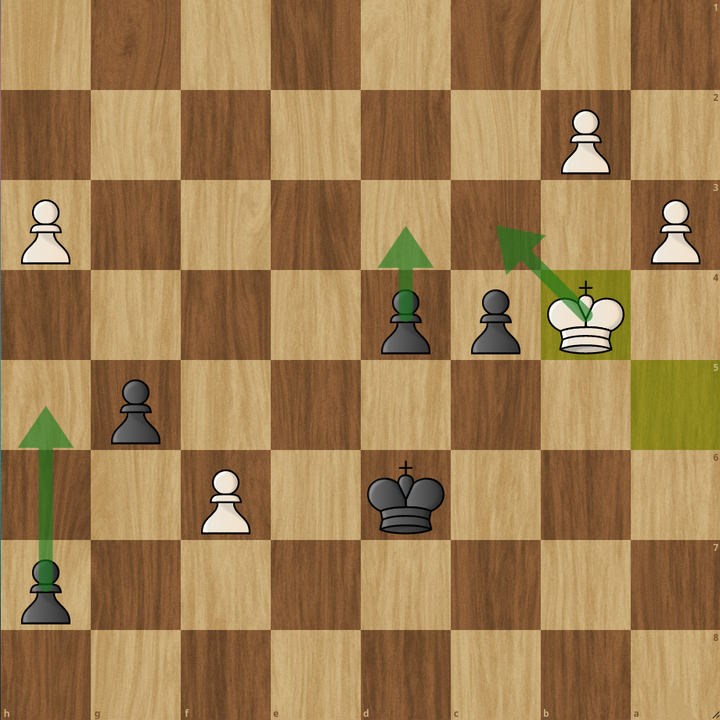
But! What happens on d4 immediately? Well, white's best option is to take and than go f6, or the other way around. Move order is irrelevant, since black's follow up remains the same: exd4 and Kd6. King to b4 is met by either d3 or h5, both moves secure a win for black!!
So how to explain this occurrence? Is it simply a multi-choice puzzle or an incredibly deep tactic that not even Stockfish can fully conquer?
Now, Stockfish gives a slightly higher evaluation for h5 (-9.0, Depth 26) than for d4 (-7.5, Depth 26).
But if both moves win, it wouldn't make much sense to only accept h5, even though it might be a quicker victory, since white is getting mated shortly anyway. This leans towards the opinion I overlooked something, which is very much possible.
But despite the solution being revealed to me, and having the strongest chess engine on Earth opened up, I still don't see the real difference between these two moves.
Maybe Stockfish could find it on depth 99 (my pc is too slow to run it), or maybe I'm just missing out on something obvious. Perhaps some of you can unveil this mistery and be kind enough to share it.
Inspiration
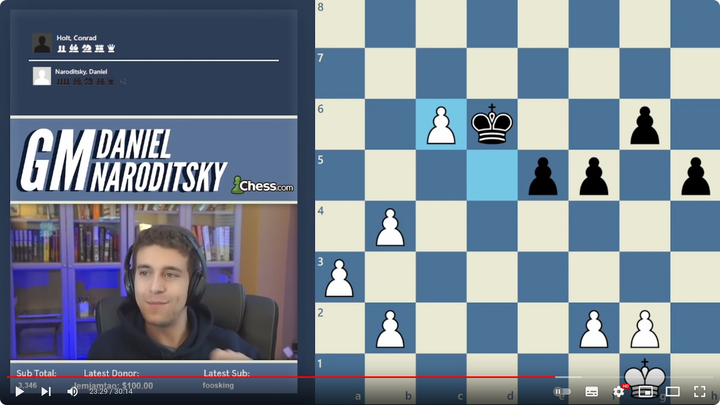
When I first ran into this puzzle, I instantly remembered Danya's lecture about pawn endings and that mind-blowing position from one of his tournament games. Is this something similar? You tell me.
Introduction to Pawn Endgames | Principles of Chess Endgames | GM Naroditsky
Post Scriptum
I don't know with certanty if puzzles on lichess always necessarily have only one solution, but personally, I don't recall coming across many if any of those multi-win ones, especially with two candidate moves so close in evaluation that there's basically no difference. Regardless, this puzzle felt very unfair so lichess, you owe me 15 puzzle rating points :) I'm sure there's a logical explanation to this phenomenon, but apparently I don't have the brainpower to comprehend it yet. I'm looking forward to any feedback and thoughts on this topic. Thanks for coming by.
You may also like
 CM Kingscrusher-YouTube
12-Hour Lichess Winter Chess Marathon: Insights, Strategies, and a Touch of Grit
Very interesting chess battles. Some hints and tips for doing well in the marathon BlindfoldBlunderer
Record Live Games & Upload them to Lichess with ChessCam
An introduction to ChessCam, a free website/app to digitally export live chess games SayChessClassical
Is Chess Culture Important for Improving at Chess?
Should we really ignore all books written before 2000? IM mmsanchezchess
How to Play against Lower Rated Opponents Part 1: Know your Advantage
Previously, I have written a series on how to do well and score upsets against higher rated opponent… ambrona
Vampires in Chess III - The Encounter
We culminate this series on chess vampires by analyzing a magnificent specimen. IM mmsanchezchess