
The Illusion of Intelligence – Part 1 Chess AI’s Early Days
Chess is a game of intellect and strategy that has always been a battleground for human minds. But what happens when the opponent is not human?
This blog series explores the intriguing journey of Artificial Intelligence in chess, from its humble and often misleading beginnings to its current superhuman abilities. It examines how AI is changing the way people learn and play chess—both on the board and behind the scenes.
We’ll trace the evolution of chess AI from 18th-century illusions, through the theoretical breakthroughs of computing pioneers, to the dramatic human-machine clashes of the late 20th century, and finally to the rise of self-learning neural networks that are redefining the game.
If you're curious about how these advances are already transforming chess training, don’t miss my earlier post on AI coaches and the future of chess improvement. It’s a glimpse into how players, both now and in the future, will be learning faster and smarter with help from machines.
Chapter 1: The Dawn of Chess Machines — Illusions and Early Innovations
The first efforts to give machines chess-playing skills mixed creativity with showmanship, often blurring the lines between real automation and clever trickery.
The Mechanical Turk (1770)
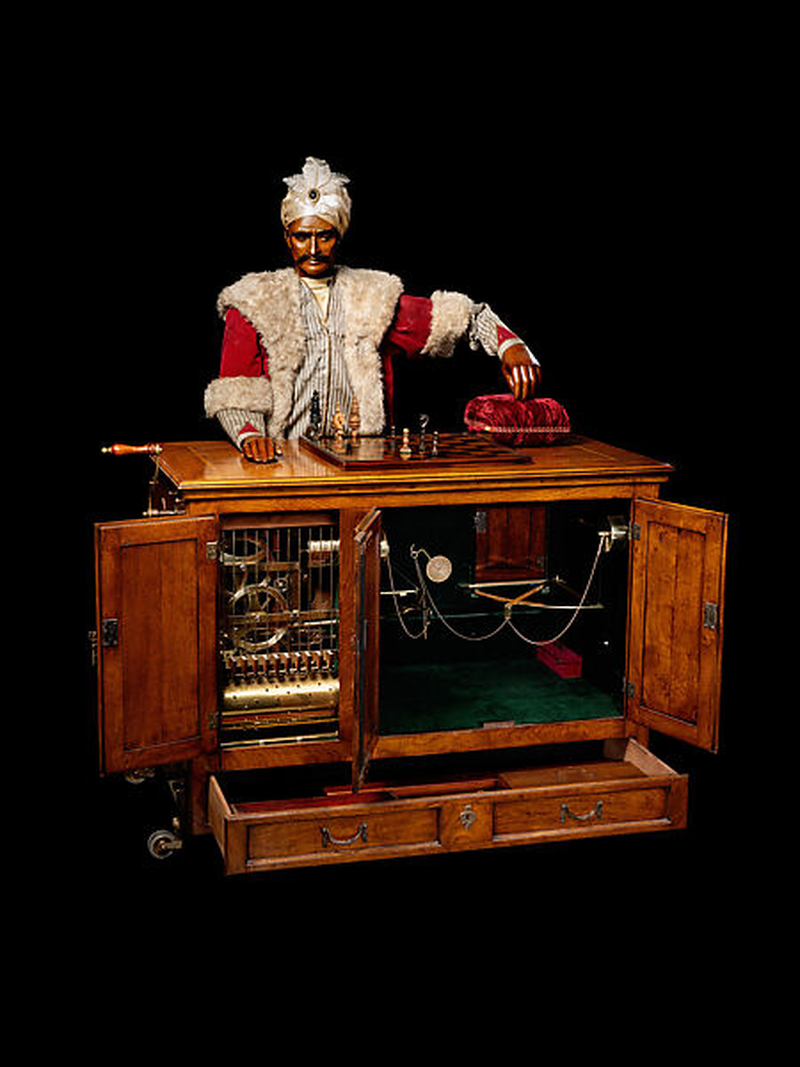
The Mechanical Turk, created by Hungarian inventor Wolfgang von Kempelen in 1770, was a life-sized automaton that amazed audiences across Europe for 84 years. This intriguing contraption, featuring a human head and torso in Ottoman robes, seemed to play chess well and solve the challenging knight's tour puzzle. It famously defeated notable figures such as Napoleon Bonaparte and Benjamin Franklin, leading many to think it was the world's first autonomous chess robot.
However, despite its impressive demonstrations, the Turk was later exposed as a sophisticated hoax. A human chess master was cleverly hidden inside its large cabinet, manipulating its movements through a complex system of levers and magnets.
This early "fake AI" unwittingly sparked a deep public fascination with the idea of intelligent machines playing chess.
Illustration: The Mechanical Turk
Credit: The Metropolitan Museum of Art
El Ajedrecista (1912)
In contrast to the Turk, Spanish engineer Leonardo Torres Quevedo created "El Ajedrecista" (The Chess Player) in 1912. This automaton is recognized as the first true autonomous chess machine. El Ajedrecista could play a specific endgame—King and Rook vs. King—and consistently checkmate a human opponent.
It could even identify and signal illegal moves made by the human player, showing real computational skill without human help.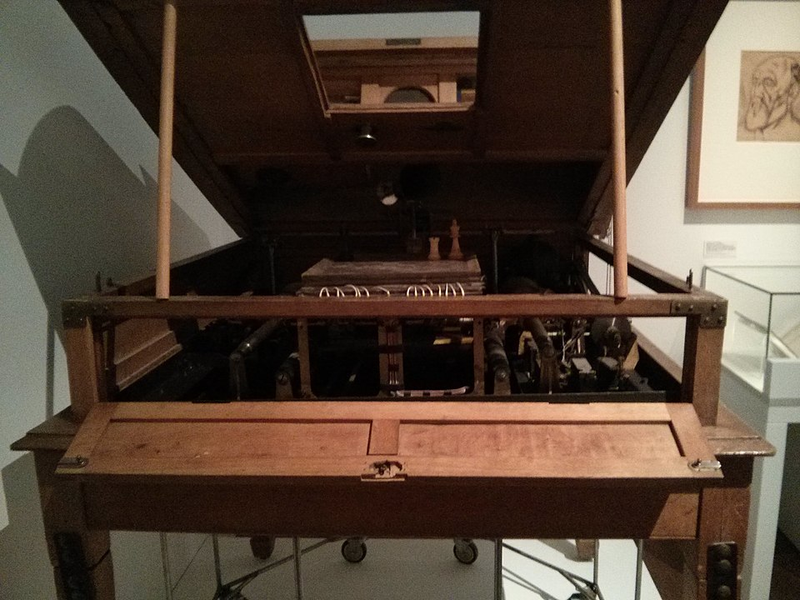
Illustration: El Ajedrecista
Credit: Wikimedia Commons
Chapter 2: Laying the Theoretical Foundations — Pioneers of Computer Chess
In the mid-20th century, visionary thinkers emerged, laying the mathematical and algorithmic groundwork for modern computer chess, even before the needed hardware was available.
Alan Turing (1940s–1950s)
Alan Turing, a pivotal figure in computer science and artificial intelligence, developed "Turochamp" in 1948 with David Champernowne. This groundbreaking program was intended to play an entire chess game by calculating potential moves and assigning point values to board positions using a heuristic evaluation function.
Turing famously "played" a game manually in 1952, executing the program's logic by hand.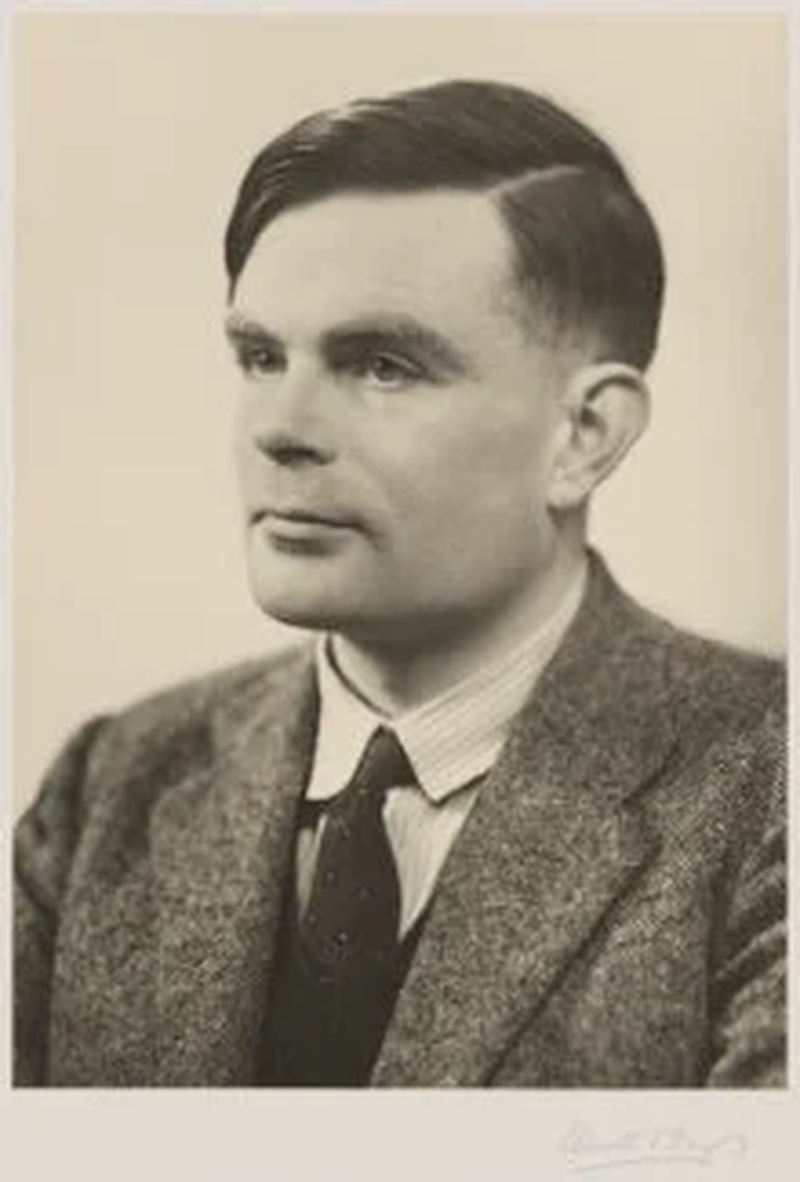
Illustration: Alan Turing
Credit: National Portrait Gallery
Claude Shannon (1950)
Claude Shannon, often called the "Father of Information Theory," published his important paper Programming a Computer for Playing Chess in 1950. In this influential work, he outlined Type A (brute-force) and Type B (selective) search strategies.
He also introduced the Shannon Number—an estimated 10^120 possible games—highlighting the game’s staggering complexity.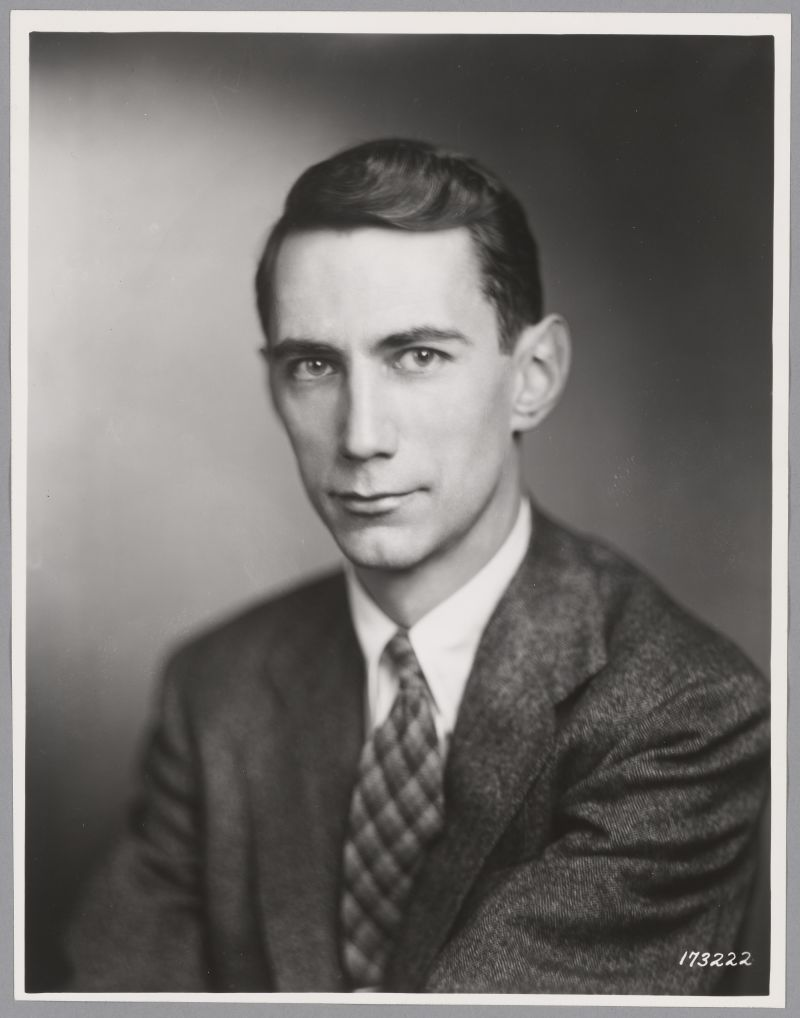
Illustration: Claude Shannon
Credit: MIT Museum,
Early Programs: Los Alamos MANIAC I (1956)
In 1956, researchers at the Los Alamos Scientific Laboratory, including Stanislaw Ulam, created one of the earliest chess programs for the IBM MANIAC I. The program played a simplified 6x6 chess version, known as Los Alamos Chess, and became the first computer to defeat a human in a cognitive game.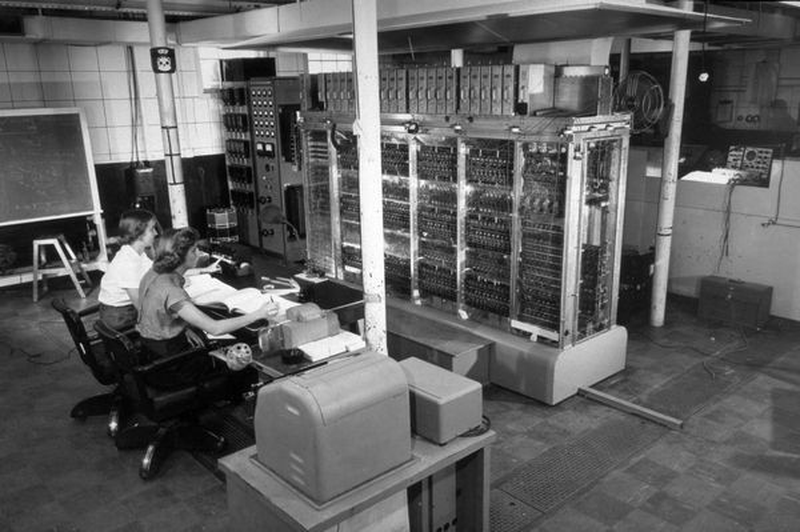
Illustration: The IBM MANIAC I
Credit: Los Alamos National Laboratory, via The Computer History Museum
Table 1: Key Milestones in Early Chess AI
| Year/Period | Entity/Program | Key Contribution/Significance |
|---|---|---|
| 1770 | The Mechanical Turk | Fraudulent automaton, sparked public interest in intelligent machines |
| 1912 | El Ajedrecista | First true autonomous chess machine (endgame) |
| 1948 | Turochamp (Alan Turing) | First full-game chess program (theoretical) |
| 1950 | Claude Shannon's Paper | Formalized search strategies, introduced Shannon Number |
| 1951 | Dietrich Prinz's Program | First computer to solve mate-in-two problems |
| 1956 | Los Alamos MANIAC I | First computer to beat a human (simplified chess) |
Other Notable Early Milestones
While the table above highlights key breakthroughs, several other important developments helped shape the evolution of chess AI:
- Mac Hack VI (1967) – First program to defeat a human in a tournament setting.
- Belle (1980s) – One of the first dedicated chess computers; won multiple world computer championships.
- Minimax & Alpha-Beta Pruning – Core algorithms that made deep search practical for early engines.
- Fritz, Junior, and Rybka (1990s–2000s) – Dominant engines before the neural network era, widely used by top players.
These milestones bridged the gap between theory and modern dominance, paving the way for Deep Blue and beyond.
Chapter 3: The Era of Brute Force — Deep Blue’s Historic Triumph
Deep Blue’s Genesis
What began as ChipTest at Carnegie Mellon became Deep Thought, and then evolved into Deep Blue at IBM, capable of evaluating 200 million positions per second with massive computational power.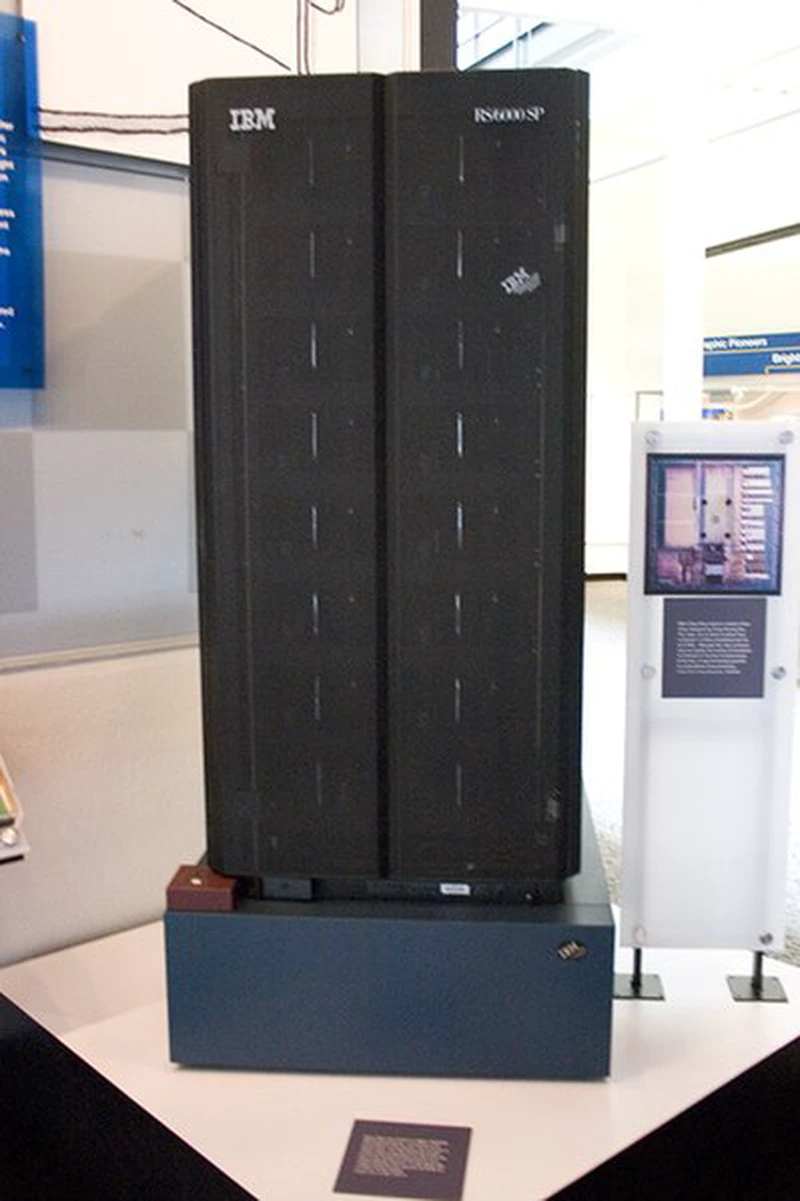
Credit: Jim Gardner, via Wikimedia Commons
The Kasparov Showdowns (1996 & 1997)
- 1996 Match: Deep Blue wins Game 1 first time a machine beat a world champion under normal time controls. Kasparov wins the match 4–2.
- 1997 Rematch: Deep Blue defeats Kasparov 3.5–2.5. A historic moment in AI history.
The Aftermath
Deep Blue’s triumph was a milestone, but it was also limited. It didn’t learn or generalize. Its success opened the door for self-learning AI systems that came next.
Chapter 4: The Neural Network Revolution — AlphaZero and Beyond
AlphaZero’s Paradigm Shift (2017–2018)
Developed by DeepMind, AlphaZero learned chess from scratch through self-play using deep learning and MCTS.
- Played creatively, often surprising even grandmasters.
AlphaZero marked a turning point in AI, demonstrating how general-purpose learning algorithms could discover strategies beyond human intuition.
Leela Chess Zero (Lc0)
An open-source effort launched in 2018 to replicate AlphaZero’s approach using volunteer training.
- Rapidly rose to elite level.
- Won TCEC Cup and Superfinal in 2019.
- Proved powerful AI doesn’t need corporate resources—community can drive innovation too.
Stockfish NNUE (2020–2023)
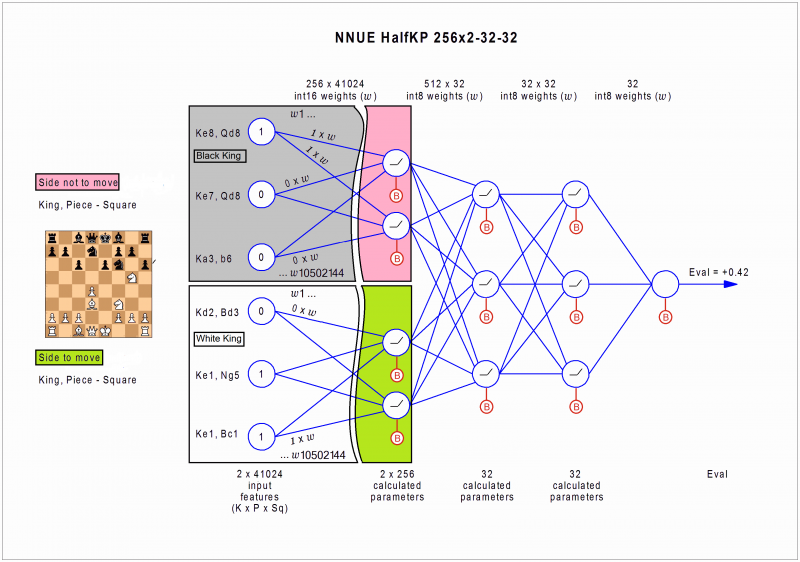
Stockfish incorporated Efficiently Updatable Neural Networks (NNUE) for positional evaluation.
- Originally from Shogi engines.
- Added ~100 Elo points.
- Fully integrated in Stockfish 16 (2023).
- Combines traditional alpha-beta search with deep pattern recognition.
Conclusion for Part 1
From the deceptive Turk to the brute-force power of Deep Blue and on to the revolutionary self-learning of AlphaZero, Lc0, and Stockfish NNUE, the journey of AI in chess has been nothing short of transformative.
But the story isn’t just about machines defeating humans. It’s about how AI is now helping humans learn better, faster, and in more personalized ways than ever before.
You may also like
 FM MathiCasa
Chess Football: A Fun and Creative Variant
Where chess pieces become "players" and the traditional chessboard turns into a soccer field FM Linesman39
AI Coaches and the Future of Chess Training
Artificial Intelligence is transforming chess training, turning cold evaluations into personalized c… DaBassie
Can I random walk myself to 2300?
Instead of relying on actual skill, I wondered whether random rating fluctuations are sufficient to … FM Linesman39