
https://www.pexels.com/photo/chess-piece-260024/
A beginners guide to chess
A beginner's guide that teaches you how to play, study, and improve at chess.
Introduction
Before delving into all of the intricacies of this beautiful game we call chess I need to outline what this guide will and won't do. It won't be a panacea for all your chess problems or delve into 20 move opening lines. This chess guide, is a guide for beginners that already know how the pieces move and are aware of the rules of chess (if you want to learn them then go to chess basics in Lichess). This chess guide aims to provide a solid chess foundation for beginners. Its aim is not solely focused on how to play chess but also on how to study and in turn improve at it.
Index:
1. Glossary
2. Opening
3. Middlegame
4. Endgame
4. How to Study Chess
5. Final Remarks
Glossary:
Use this glossary as a reference when things are mentioned that you do not understand don't try to memorize everything now as throughout the guide these motifs and ideas will be mentioned repeatedly:
Active squares: Where pieces control the most amount of space and are participating the most possible in the game.
Backward Pawn: A pawn that is behind all pieces of the same color and is unable to safely advance.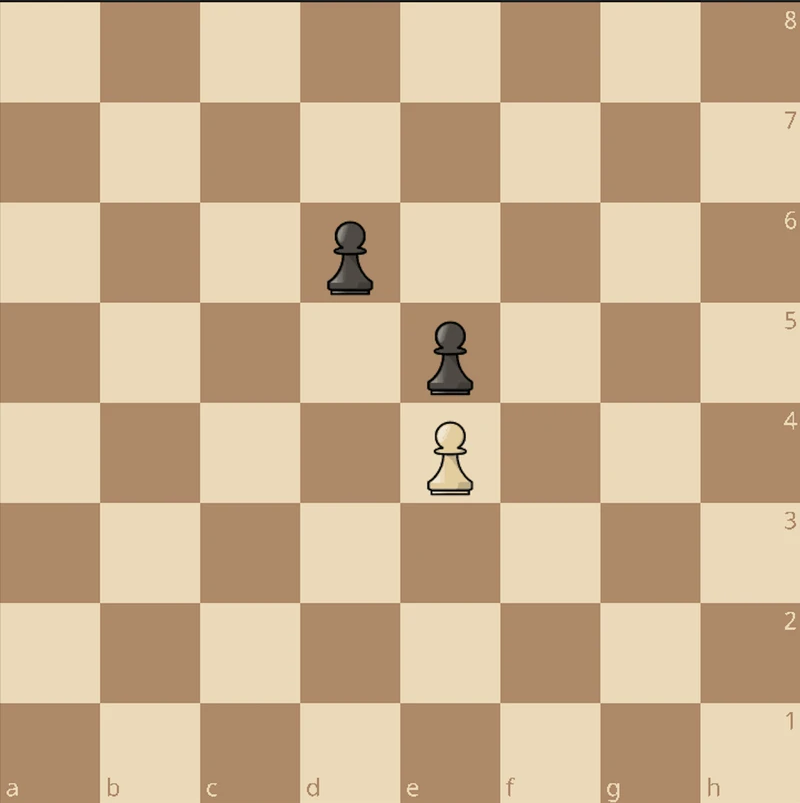
In this example black's D5 pawn is isolated has it does not have any pawn that can support it and can not advance safely forward.
Closed potion: Position where the center is locked and few pawns are trade. Knights are better than bishops in these positions as they can move through through pawn walls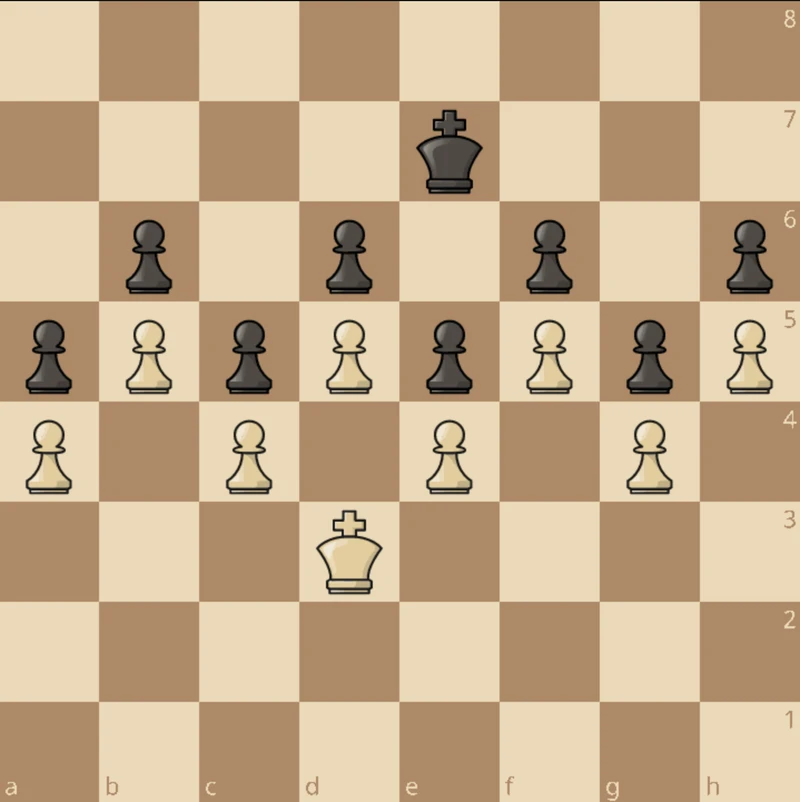
Connected Pawns: Pawns of the same color that are protecting each other 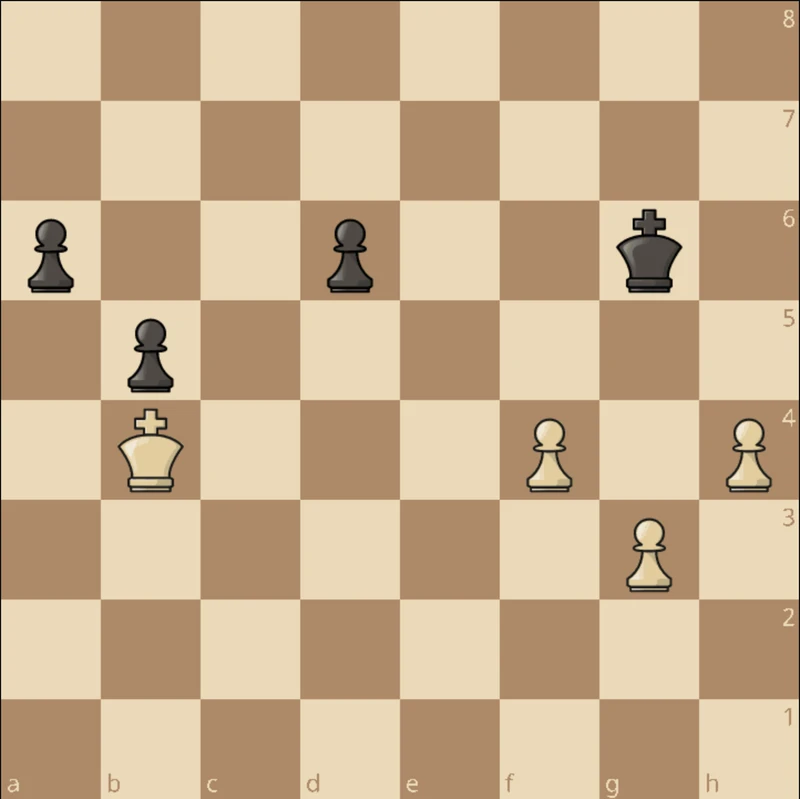
Doubled pawns: Two pawns of the same color on the same file, these pawns are usually weak.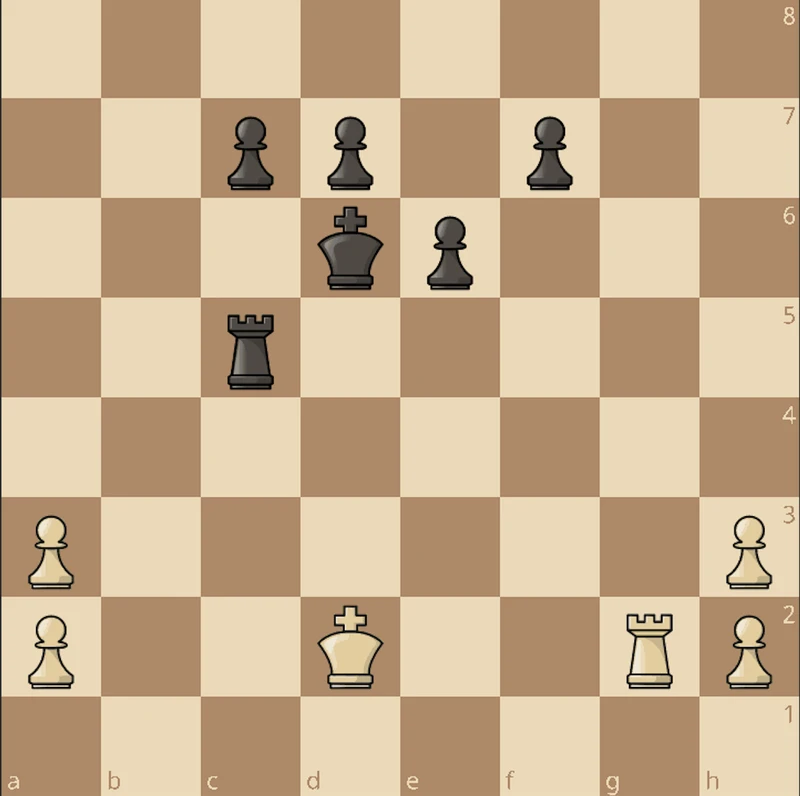
In this example while the material is even black's positions is much better as the black rooks can easily target all of the pawns. Black's pawns on the other hand are connected making it easier for the black king to protect them
Fianchetto: Little flank in Italian when the bishop is developed to the second rank b or g file so it controls the longest diagonal. This is done by pushing the b pawn usually up one square and the developing the bishop.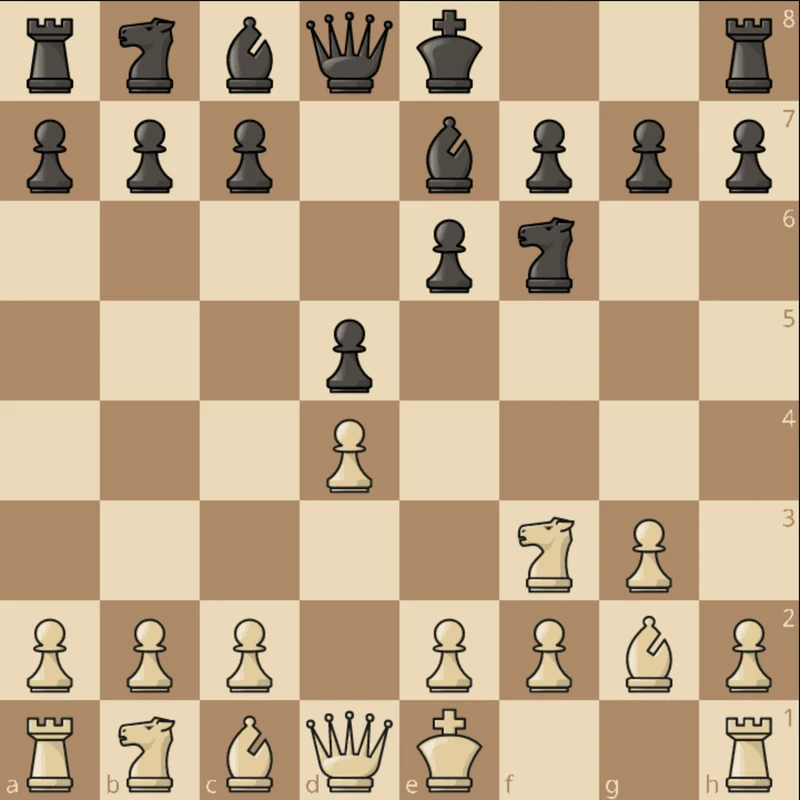
In this example white's light squared bishop is fianchettoed which will make it a powerful piece later on if white uses it to the best of it's abilities.
Heavy pieces: Rooks and Queens
Isolated Pawn: A pawn that has no pawns of the same color on the adjacent files.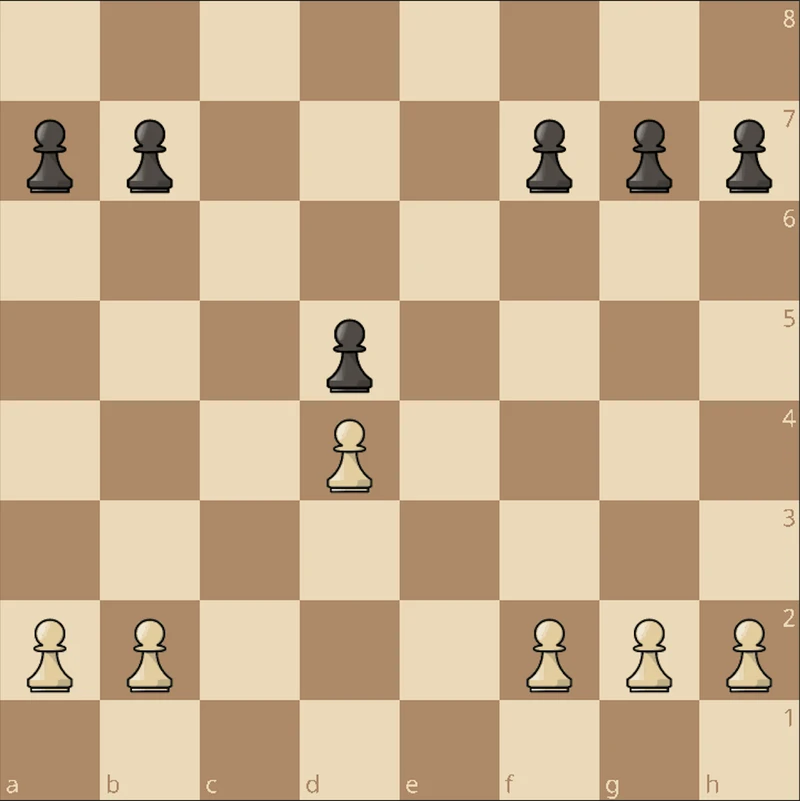
In this example both black and white have an isolated D pawn (IQP), one of the most common forms of isolated pawns.
Minor pieces: Bishops and Knights
Open position: A position with no locked pawns and few pawns traded making it open. In these positions bishops are better than knights because they can use their long range attacks more.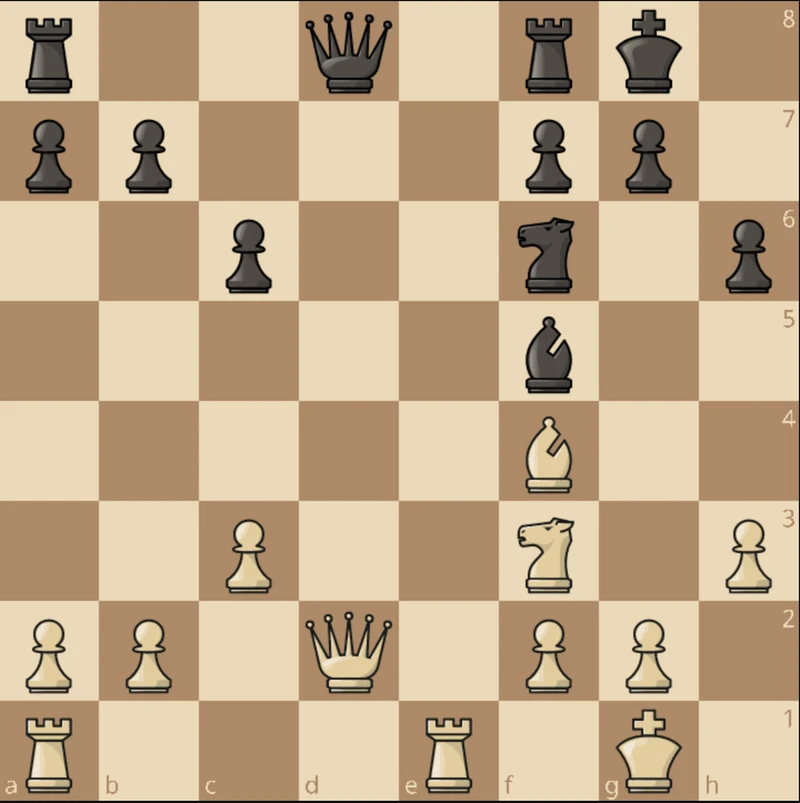
Pin: A piece that makes another piece unable to move because it is in front of a piece of higher material and the opponent will usually have an advantage if the piece is moved (relative pin) or it’s an illegal move as the king is behind making the piece unable to move at all (absolute pin). The rook, queen and bishop can create a pin, but most commonly bishops are the one pinning pieces.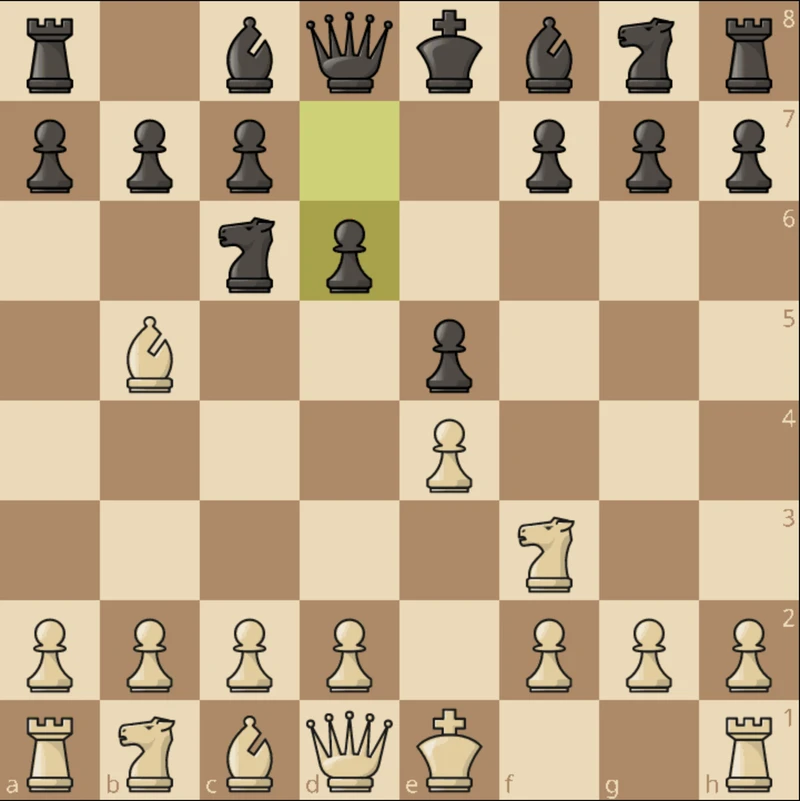
In this position the knight cannot move or else the king would be checkmated meaning it is an absolute pin.
Promotion: When a pawn reaches the other side of the board it can turn into any other piece (queen, knight, rook and bishop) except for the king
Positional: Long term strategy where every minute detail of a move and how it affects its position is considered, more about taking space and promotion of pawns
File: Vertical/column line in a chess board ordered by letters from a to h
Open File: A file that has no pawn blocking it on both sides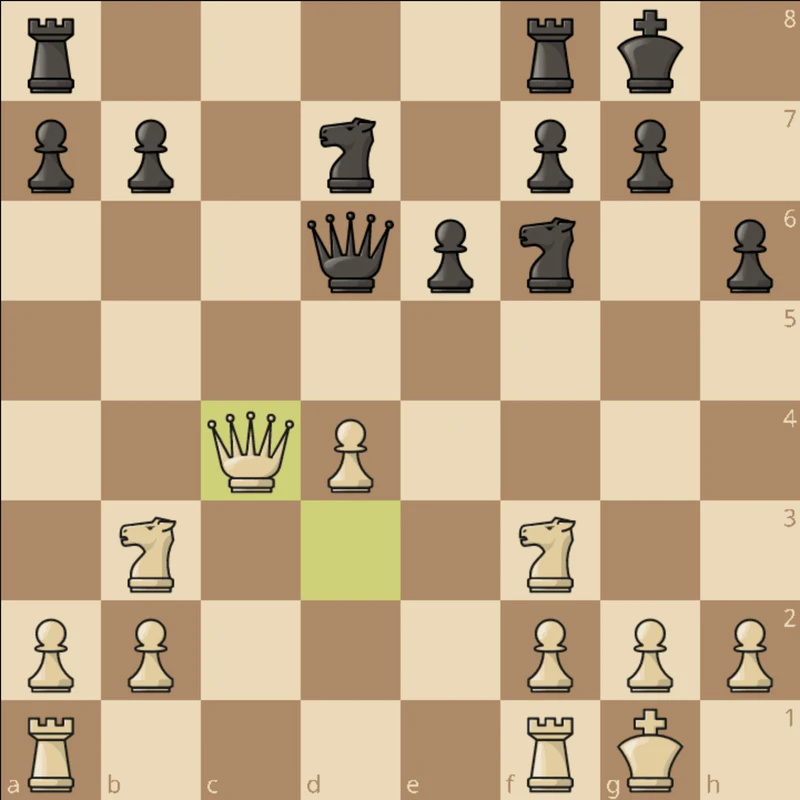
The open file is created and for now white controls it but black will try to contest it by bringing one of their rooks.
Outpost: Advanced square, on the other side of the board from yourself so the fourth, fifth, sixth rank or seventh that you can plant a piece in. This advanced square needs to be able to protect the piece and make the piece able to be easily dislodged. This most common types of outpost are knights outpost; even though, there are rook and bishop outposts.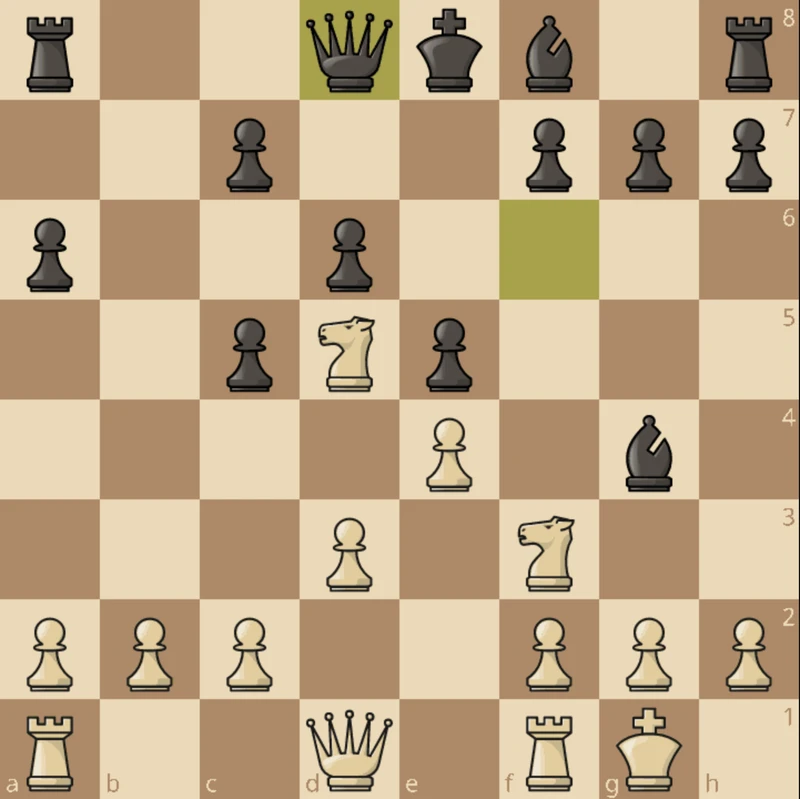
White's knight is firmly planted on the D5 square as it can't be easily taken away by a piece of similar value and can't be pushed by any adjacent pawns.
Outside pawns: Outside pawns are pawns that are separated from the main bunch of pawns by multiple files usually on the a or h file. In this example the h pawn is an outside pawn making it very hard for the black king to stop its promotion.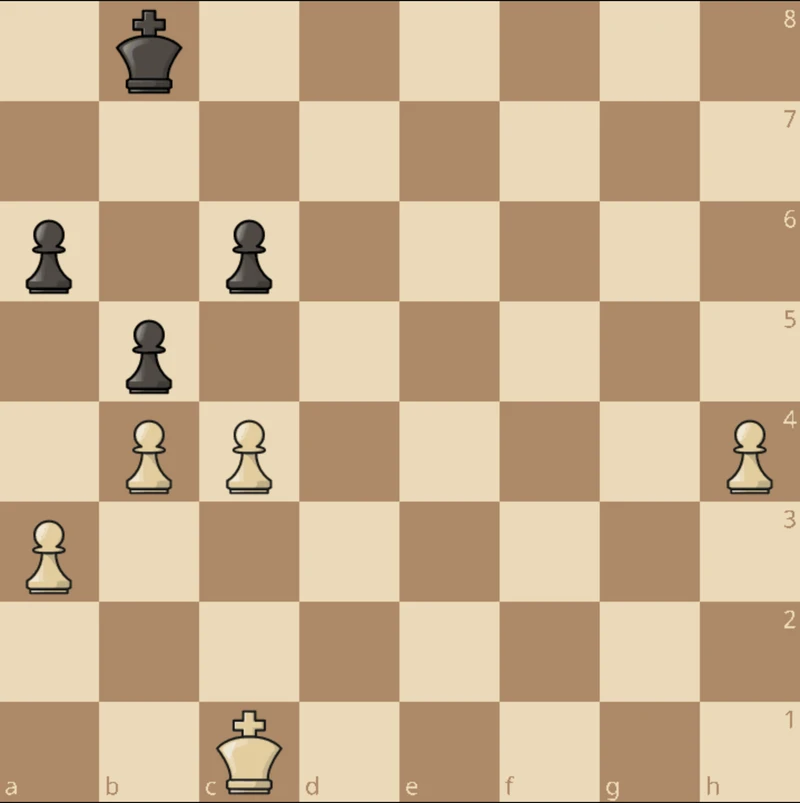
Passed Pawn: A pawn that has no pawn blocking its way to promotion.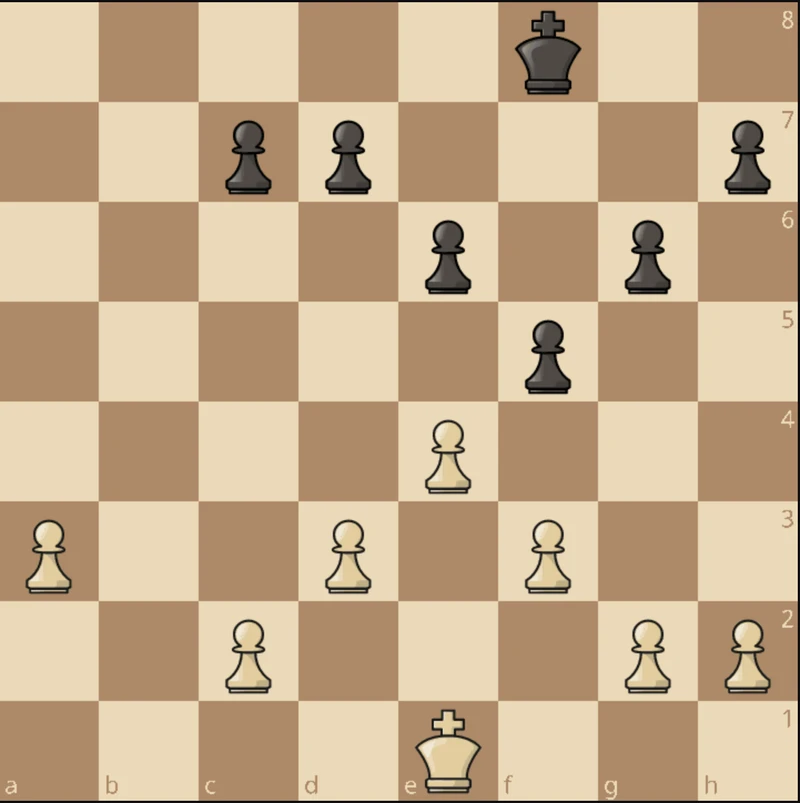
In this example the pawn on a3 is a passed pawn as there are no pawns blocking it's way to promotion making it a powerful piece.
Rank: Horizontal lines on a chessboard ordered by numbers from 1 to 8
Tactical: Short combination of moves that result in checkmate or winning material.
Tempo: A single move by either player
Opening
The opening is the start of the game where each player tries to control the center by developing their pieces to their most active squares while also castling their king to safety This section won't go over the main openings or specific opening lines but basic principles that should help you get a solid position ready for the middle game. These principles should not be learned by heart but give you an idea of what to do in the opening.
Principle #1-Develop Your Pieces
This means to move your pieces to their most active squares which is usually when they are controlling the center as this in most games this is where all the action happens. This needs to happen as fast as possible so you can attack the opponent before they can attack you or defend themselves.
Principle #2-Don't bring your queen out too early
Bringing out your queen early will lead it to get captured or allow your opponent to get free tempo by attacking your queen and developing their pieces at the same time.
Principle #3-Castle by move 10:
Castling is very important because if your king is still in the center it can get checkmated easily. Castling allows your rooks to be connected which is when they are the most powerful. This is usually the last part of development as before castling you should have developed most of your minor pieces and a few of your pawns.
Principle #4-Connect your rooks:
While your rooks are not that important in the opening and middle game after developing all your minor pieces and castling your king you should move your queen up to allow your rooks to be connected and move along the back rank.
Principle #5-Develop a strategy with your pieces, not only pieces:
You're not only developing your pieces, you have to think about why you are putting your pieces to the most active squares: attacking pawns, threatening checkmate or protecting a pawn. You need to develop your pieces with purpose not just for the sake of developing
Principle #6-Don’t move the same piece twice before move 10:
If you're moving the same piece twice in the first 10 moves without a reason then you are just wasting tempo allowing you're opponent to develop and then attack.
What a perfect position after the opening would look like
How to study openings:
While masters study 20+ moves of opening theory for most of us chess players the opening is not the most important part of the game but if you want to learn them the best place are YouTube channels like Hanging pawns and Gothamchess or Lichess studies.
Middlegame
Even though the middlegame due to its high variance isn't studied theoretically as much as the opening and endgame, the middlegame is where most games are won or lost. Which is why you should focus most of your time on improving your middlegame skills. In this section I will cover the tactics involved in the middlegame and give you a rough idea and plan to execute in the middle game through exemplar games and some middle game principles
Tactics
"Chess is 99% percent tactics"-Richard Teichmann (German chess master), although this is slightly exaggerated this becomes very apparent in the middle game. To first learn tactics you need to know the different types of them, which Lichess again has simple yet instructive resources. Once you know the basic tactics patterns you can then practice them by doing puzzles. The main thing you want to train is your pattern recognition so that in a game you can instantly spot a blunder but the puzzles will also help you to improve your calculation skills for those endgames and complicated positions.
Middlegame Principles:
Most of these middlegame principles will be about preparing for the endgame as if the game is not decided in the middlegame it will be decided in the endgame and you want to have a better position by then:
Knights vs Bishops: As the game progresses knights become worth less and less, with their unique ability of jumping over pieces being less useful as the game progresses and their shortcoming of not being able to traverse large distance quickly hindering them greatly in the endgame. This is why when you reach the final moves of the middle game transitioning to the endgame if you have knight you should trade them away for bishops and keep your bishops.
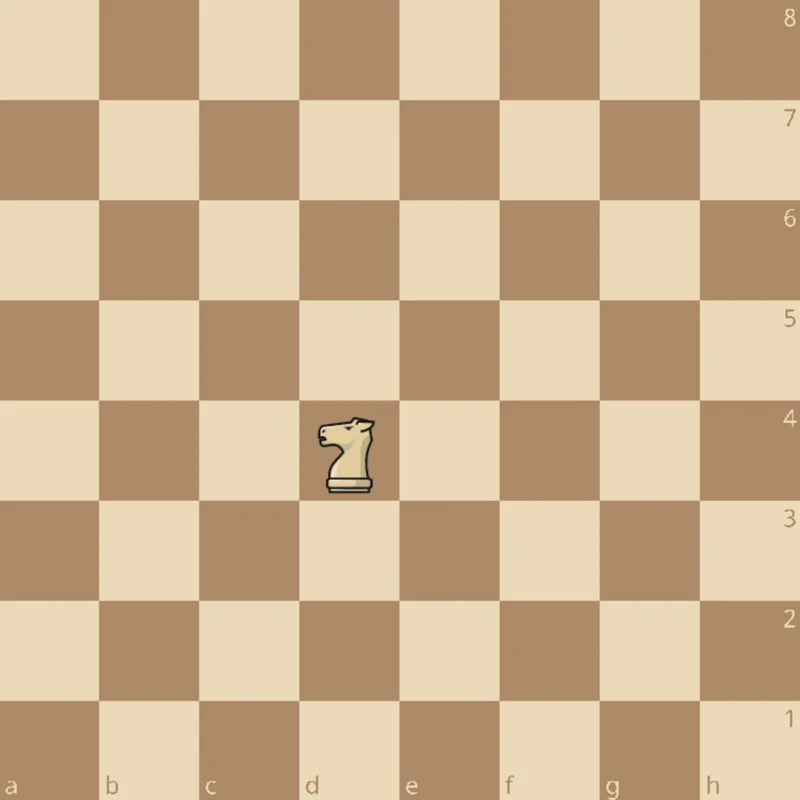
The most squares a knight can control at once is 8 with the average being 5.25. The unique maneuver that the knight has in the middlegame usually becomes less useful in the endgame making it a less valuable piece as the positions are much more open.
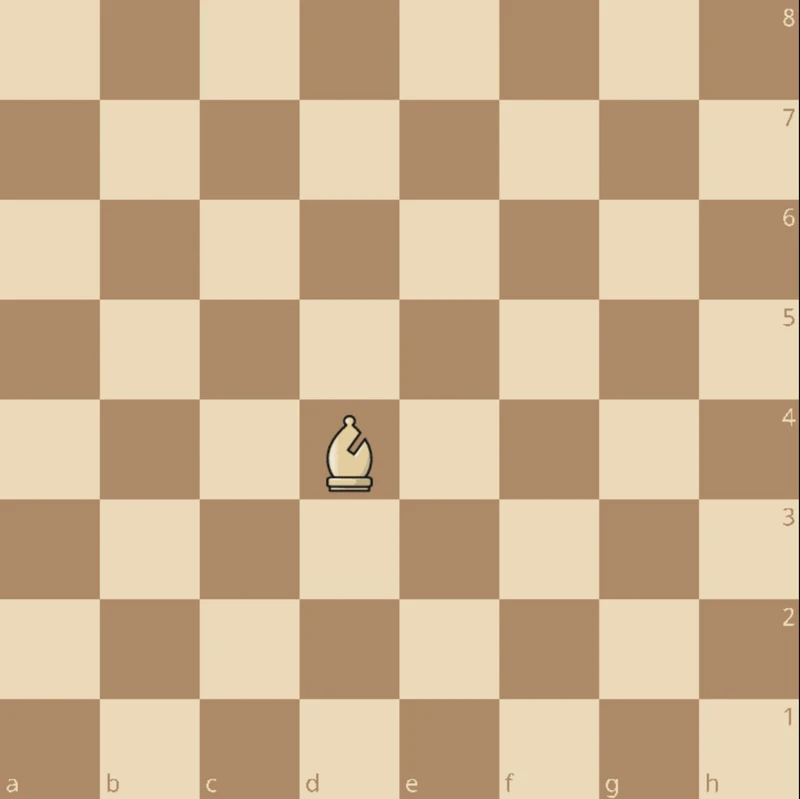
The most squares a bishop can control at once is 14 with the bishop on average controlling 8.75 squares. The bad thing about the bishop is that it can only control light squares or a dark squares but that is solved with a bishop pair.
Be Mindful of Pawn structure: While pawns are not that valuable on their own, as a whole they are of high importance: they protect your king, define what kind of game your playing and become the most important piece in the endgame. Because of this you need to make sure your pawn structure is intact by not having pawn islands, double pawns and backwards pawns. If you have a bad pawn structure you will have a very hard endgame trying to defend all those pawns and pushing your pawns to promotion, that's why pawn structure is very important to keep in mind.
Creating a Plan: A plan is better than no plan thats why when you finish developing all your pieces you must think of what you are going to do with them. Maybe you are going to try launching a pawn storm on the kingside maybe you want to break open the center. It doesn't really matter a plan is better than no plan just try do do something a stick with it.
The three major factors: The three major factors in the middlegame is your mobility (space), material and king safety. You might have two of them, space and material but if your king is about to get checkmated your not winning. As your playing the middlegame every move that you play you should consider how they affect these three factors and hopefully try to gain the advantage in these factors
King safety: Without your king you have lost the game thats why you should always keep your king safe by protecting checkmate threats that the opponents creates and keeping your pawn structure around your king intact. The pawn you should pay the most attention is the f pawn before castling and when castling kingside as it is usually weak. Try to also stop back rank checkmate threats and back rank checkmate by moving the kings pawn one square usually the h or g pawn when castling kingside or the a or b pawns when castling queenside.
Space: If you can, you should control the most amount of space possible with your pawns by moving them forward, but make sure that you don't turn your pawn into liabilities by over extending them (not supporting them with your pieces), making it easy for your opponent to target them. Space is very useful as it allows you to create attack and threats while your opponent can only defend against them.
Material: Material is key thats why should make sure, to not blunder and miss tactical opportunities from your opponent's blunder. Having a material advantage of a rook and more most of the time will lead you to checkmating your opponent in the middlegame. If you have less then you will have a winning position in the endgame making it most of the time easy to convert.
Example middlegames
Most of the time in the middlegame if everything goes well and there are no crazy attacks you want to slowly improve your position to get a better position in the endgame and win it there. But some games are decided in the middlegame due to attacks and blunders.
Pawn Storm/king side attack:
Ian Nepomniachtchi vs. Anish Giri 2024 Sinquefield Cup
In this exemplar game we learned the importance of kingsides pawns, the dangerous and dynamic play of pawn storms and how to give up all your pieces to checkmate your opponent in a flashy style.
Closed Position/Maneuvering Game:
Anatoly Karpov Vs. Wolfgang Unzicker 1974 Chess Olympiad
In this other example game we learned about the importance of patience, tempo not mattering that much in closed positions and the importance of launching the right pawns to break open closed positions.
Endgame
The endgame is the last phase of the game where each side tries to push their pawns to promotion so that they are able to checkmate the opponent's king. The endgame starts when most pieces are traded and only few remain. The endgame like the opening is much more theoretical, because of this I would highly recommend using lichess practice to learn the basic pawn endgames, king opposition and rook endgames. If you would like additional practice I would also recommend using chesstempo. I will again provide some principles that will mostly apply to endgames with more pieces on the board than just a few pawns and king (as this is easily studiable)
Rook Behind the pawn: You want to support your pawn to promotion thats why you should try to put your rook behind the pawn supporting its ascent to the promotion squares. You shouldn't be putting the rook in front of the pawn because then you are hindering its progression to the promotion squares.
Get your king active: After being shielded the whole game your king becomes very useful as the number of pieces you have dwindle. Because of this you should try to get your king as active as possible helping your pawns reach promotion squares.
Get better pawns: Your pawns are the most valuable asset in the endgame thats why you should try to make them better. This is done by creating passed pawns (especially outside passed pawns), connecting your pawns together, and pushing them ever and ever closer to the promotion squares.
Magnus Carlsen Vs. Ian Nepomniachtchi Game 6 of 2021 World Championship match:
How To Actually Improve at Chess
For improving at chess I will give you a summary of the Art of Chess training book by GM Noël Studer:
- Have a goal for chess: If you do not have something to aspire in chess improvement why are you doing it at all with a goal in mind it is much easier to stay focused and practice your chess
- Longer time controls, with short time controls like blitz and bullet the quality of your move deteriorate and you can not improve your chess as much compared to classical and rapid, if you want to improve at chess stick to at least 10 minute chess for each side
- Quality over quantity: Don't play aimless games play a few games where after you analyze your mistakes and jot down what you can improve on
Minimalist training method:
- 1/3 of your time playing and analyzing your games
- 1/3 of your time solving tactical exercises (Lichess and chesstempo puzzles, puzzle storm and etc)
- 1/3 of your time supplementary chess learning where you think you are the weakest at, theoretical chess endgames, opening and strategy
Final Remarks
First of all I would like to thank Lichess for making such an intuitive yet powerful interface to create blogs about chess and to whoever is reading this I wish you the best in your journey of chess improvement.
Reference list
https://www.chess.com/article/view/the-principles-of-the-opening
https://www.chess.com/blog/ThePawnSlayer/chess-losers-richard-the-fifth
https://www.chess.com/players/ruy-lopez-de-segura
https://chess.com/events/2024-gct-sinquefield-cup/03/Nepomniachtchi_Ian-Giri_Anish
https://www.chess.com/news/view/fide-world-chess-championship-2021-game-6
https://www.chess.com/blog/vinniethepooh/putting-on-the-bind-1-karpov-unzicker
https://www.chessstrategyonline.com/content/tutorials/introduction-to-chess-endgames-minor-piece-endgames#:~:text=against%20a%20knight.-,Bishop%20vs%20Knight,one%20flank%20to%20the%20other.
https://www.chess.com/terms/backward-pawn-chess
https://www.chess.com/openings/Ruy-Lopez-Opening
https://www.chess.com/terms/outpost-chess
https://www.youtube.com/watch?v=26174PF9Gmw&t=90s