
Wikimedia.org
General Plans of Common Pawn Structures (Part 1)

Introduction on Pawn Structures
How many times have you said ''The middlegame arrived, and I simply did not know what to do!'' or maybe ''I could not find the best places for my pieces'' etc?
Plenty of times by now. Even top chess players suffer in pawn structures at times, just not as frequently! So don't be sad. It's a universal problem, however chess has some very common pawn structures. If you can master them, your life will become much easier!
What are Pawn Structures?
Pawn structure literally refers to the pawn placement or pawn configuration in a position, disregarding all other pieces. Many different types of pawn structures can result from different openings. Some pawn structures can be identical or strikingly similar even though they come from completely different openings! (Source: Chess.com)
Why Are Pawn Structures Important?
Pawn structures are important because they tell us a lot of information about the position. By studying them, you can easily carry out your middlegame, significantly increasing your chances for a win. Let's start!
1. Isolated Queens Pawn Structure (IQP)
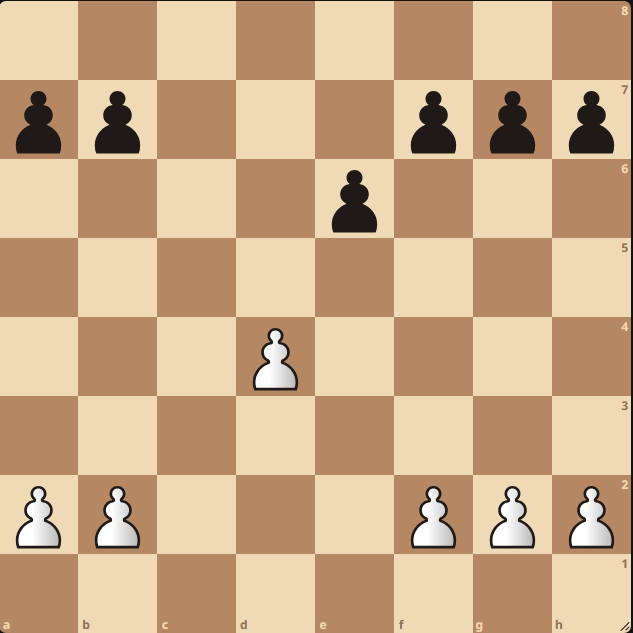
(We will suppose that White has the IQP)
The isolated queen's pawn is an extremely important pawn structure. It arises in many opening variations; the Queen's Gambit Accepted, Slav, Tarrasch Defence, Nimzo Indian, Sicilian Alapin or French Tarrasch to name a few! Each side has it's own assets. Generally speaking, White has great prospects in the middlegame, thanks to the powerful central pawn, which allows him to generate powerful Kingside attack. The isolated queens pawn also provides him better piece activity which compensates for his poor pawn structure.
Now, lets dive into what Black brings to the table. If black can trade enough pieces and transpose into an endgame, the IQP will prove to be a liability. Practically speaking, in an endgame, White would be tied to protect this pawn and Black can build momentum over the weak d4 pawn. Black also has two pawn islands (2:4) meanwhile white has three pawn islands (2:1:3).
Therefore, White's main aim will be to build an attack, while Black's hope will be to neutralize such an attack and simplify the position, obtaining a superior endgame.
Let's discuss some specific plans:
# White's plans
1. Create a kingside attack. Most standard plans will include the moves Ne5, Bg5 and the battery Qd3-Bc2. In some cases a piece sacrifice on the kingside is needed to break through the defence. Rooks are typically placed on e1 and d1 (or c1), and a rook transfer via the third rank is possible.
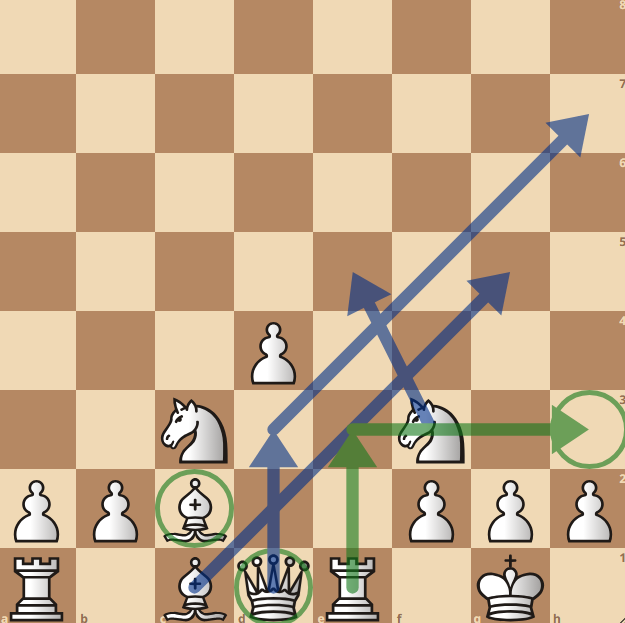
2. Break in the center with d4-d5, trading pawns and opening lines with an overwhelming initiative (or even sacrificing a pawn with the same purpose).
#Black's Plans
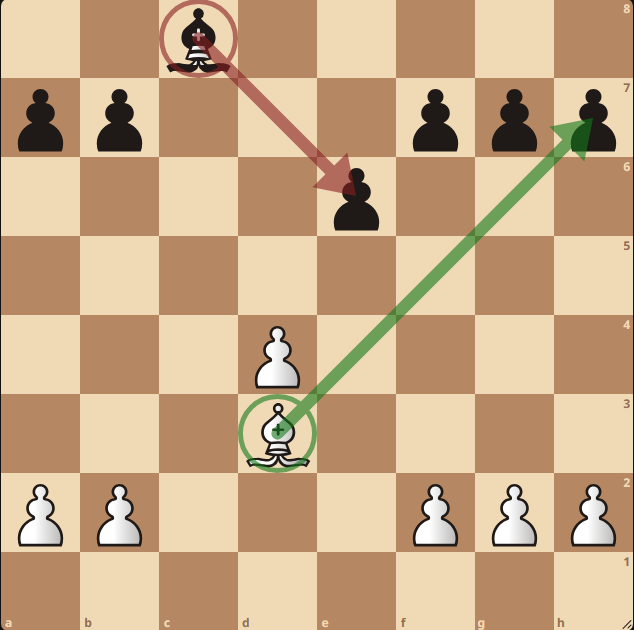
1. Trade pieces to win an endgame. In particular, exchange White's good bishop (the light squared bishop). This is because White's Light bishop is the epicenter of all the kingside attacks which happen. Therefore, if we trade our passive bishop with his Active one,
- We reduced the number of pieces on the board, dramatically increasing our advantage.
- We got rid of our relatively inferior bishop.
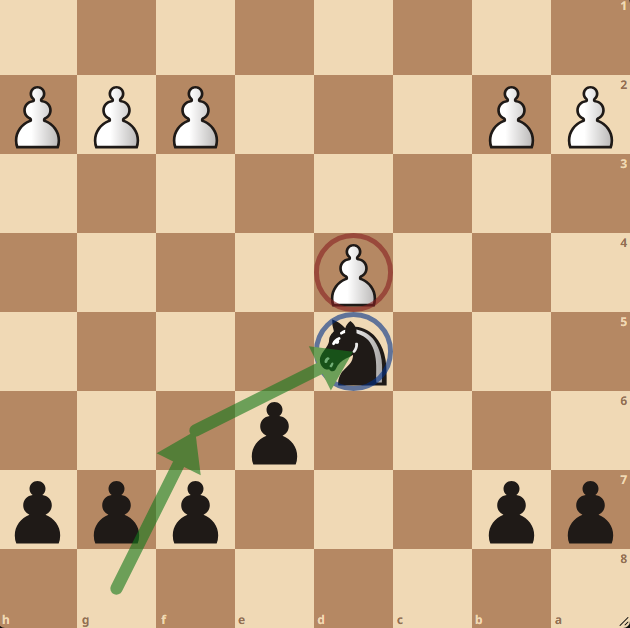
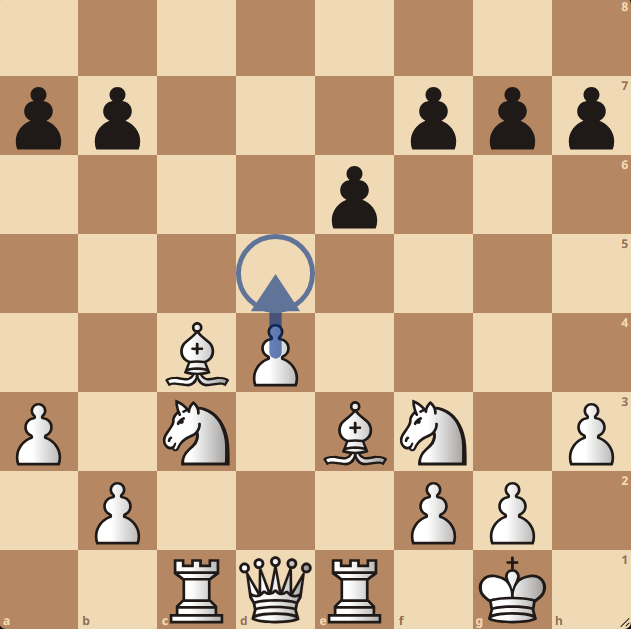
2. Place a knight on d5. This prevents the central break d4-d5, and controls some key squares. In an endgame a rook, bishop or even a king would be strong on this square! By performing this maneuver, We
- Centralize our knight on a powerful outpost.
- Gain more space in the center, allowing us the possible Bf6-Bg7 maneuver in some cases.
- Blockade the d4 pawn. This is highly crucial as it stops the thematic push d4-d5.
The plans in this structure are logical and quite easy to understand, right? Playing these positions, on the other hand, can be tricky!
"Great precision is required when calculating, and a good positional understanding is necessary in order to judge when the isolani provides good attacking chances (or other compensation) and when it is simply a weakness. ~(Mauricio Flores Rios)"
Let's look at some games featuring these points.
Vadim Zvajaginsev (1-0) Rodrigo Vasquez
Efim Geller (1-0) Alexey Suetin
This game once again shows the power of the d4-d5 theme along with crushing tactics.
Classic Rook lift:
Artyom Timofeev (1-0) Svidler Peter
Skoko, M. (0-1) Smith, B.
A game on how to play against the IQP
2. Hanging Pawns Structure (H.P)
The reason why I have included both of these structures in Part 1 is because they are very closely related to each other. In fact, most hanging pawns arise from an IQP position, in which Black trades his knight on d5 for White's knight on c3. Later, White is likely to advance c3-c4 yielding the position in the diagram. For convenience I would call them (H.P)
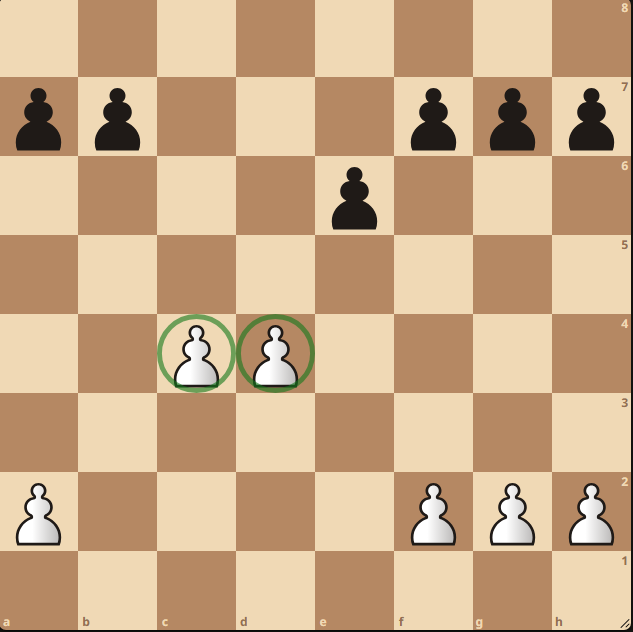 (We suppose that White has the Hanging Pawns)
The pawns circled in green color represent the starter of every H.P structure. A fascinating thing about Hanging Pawns is that they involve the same middlegame plans like IQP Structure. Therefore,
1. Just like The IQP Structure, The side with Hanging pawns has a spatial edge and better piece activity.
2. Similarly, the latter has better endgame prospects and should absolutely aim for that.
Let's quickly move to each side's general plans:
#White's Plans
1. Create a kingside attack. Most plans will include moves Ne5, Bc2, Qd3, and a likely rook transfer through the third rank, say Re1-e3-h3
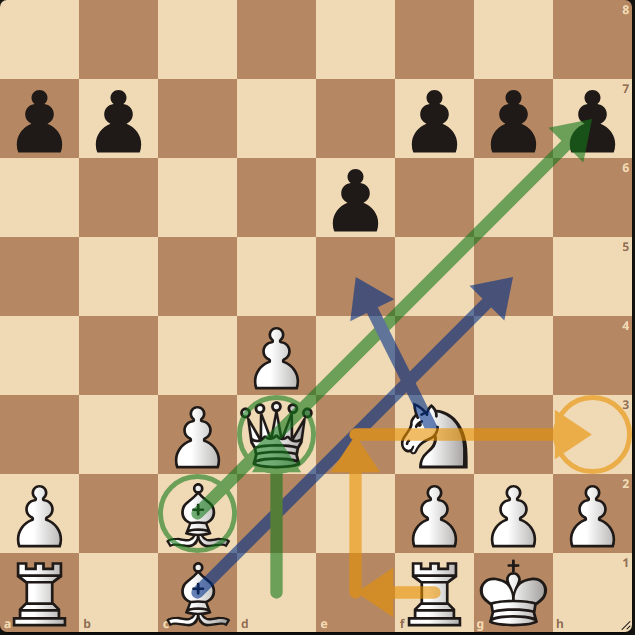
2. Break in the centre with d4-d5, either to open lines for attack, or to create a powerful passed pawn on the d-file.
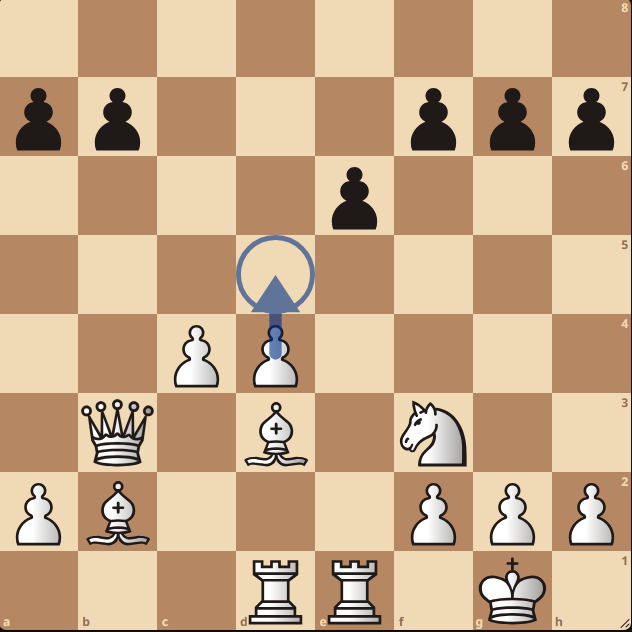 (The placement of White pieces is an ideal set-up)
#Black's Plans
- Trade off pieces attempting to neutralize the attack. (Just like in IQP)
- Pressure the central pawns, and block them if possible. Why? Hanging Pawns are the strongest when they face shoulder to shoulder. Applying pressure on them would force one of them to move, hence creating holes that can be won as an outpost.
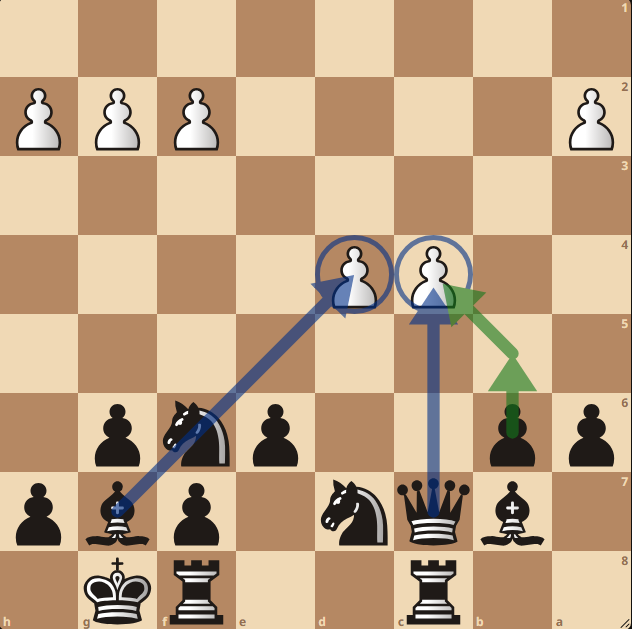 (The placement of the Black pieces is an example)
3. Break the hanging pawns, either with ... b6-b5 or ... e6-e5!
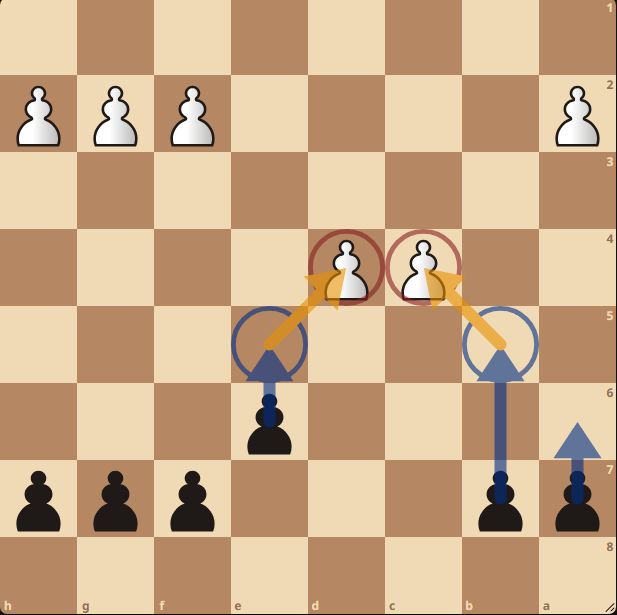
Now, let's look at some games featuring these ideas.
Henrique Mecking (1-0) Sandro Mareco
(This is a model example of the d4-d5 break)
Mareco (1-0) Toth
(Model example on how to exploit poor handling of the H.P)
Macieja- Hernandez
(A grandmaster annotated game on how to exploit poor handling of H.P)
Outro
This was the very first chess blog I made. There surely are some mistakes in my formatting but I felt more than happy to teach some of us, the General Pawn structures.
Please note that I'll try my best to make a blog on Basic Pawn structures like: Isolated Pawns, doubled pawns, Pawn islands etc.. (but not soon)
I hope that Part 1 (Isolated Queen's Pawn & Hanging Pawn Structure) made you feel more confident in them. However, the number of games I posted here are by no means enough to conclude for once and all. You have to study games continuously to increase your understanding.
You can find more IQP games here: https://www.chessgames.com/perl/chesscollection?cid=1002786
You can find more H.P games here: https://www.chessgames.com/perl/chesscollection?cid=1043440
I highly recommend you to study the book Chess Structures: A Grandmaster Guide by Grandmaster Mauricio Flores Rios. In fact, I presented many of his plans here. (Not sponsered/advertisement)
As an ending note, I would love to share one of my games with the IQP:
Please leave your feedback in the below forum and suggest things I can improve. I'll try to make a Part 2 (although I'm not free often).
Keep improving! <3
Best Regards,
TheMagnusAura!
You may also like
 TheMagnusAura
Why does Chess.com have enormously more users than Lichess?
... CM HGabor
How titled players lie to you
This post is a word of warning for the average club player. As the chess world is becoming increasin… RuyLopez1000
History of the Knight: Increase Your Horsepower
An Exploration. Fire-work
I made a program to find craziest sacrifices in a row. Here is what it found
"Aren't those 2 bishops our last hope? Surely not, we can sacrifice them to create a perfect checkma… TheMagnusAura
Epic things that happened on lichess forums.
It's only gonna get nasty flash3s