
Think Like A Toddler
He had never seen a balloon before.There is something magical about watching another human encounter such a mundane item for the first time.
He did everything he could conceive of with that balloon. He stared at it, he squeezed it, he sat on it, he tried to eat it, he bounced it repeatedly off my face, he dipped it in the dog's water bowl, he kicked it like a football, he licked it, he took it for a walk, he brought it to meet his dinosaur and they had a conversation together, he even spent a good 20 minutes trying to fit the entire balloon in his sock.
I gave the same blue balloon to my wife later that day with zero context. I just handed it to her as she sat and watched her evening Netflix show. She frowned at me, batted it away and said: “You’re so fucking weird.”
Studying Too Much
It is curious to me that as adults, even if we could muster a fraction of the enthusiasm for anything in life as my kid did for that balloon, we would still approach our balloon learning in a totally different way.
If I could get as into balloons as my kid was that day, I would probably have gone immediately online, ordered and read Everyone’s First Balloon Workbook, How to Reassess your Balloons, Balloon Dynamics, Back to Basics: Balloons, The Anatomy of the Balloon, and The Accelerated Hydrogen Balloon Gambit (Revised Edition).
I would have gone through them all in the next few weeks (or possibly months) and I would still know less about balloons than my kid learned from his practical balloon experiments in one single afternoon.
Doing Too Little
Knowledge and skill are often touted as being horrifically imbalanced for adult improvers in chess. As a chess coach with only adult improver clients, I can confirm that with some really rare exceptions - this is generally true. I am just as guilty of it as my students are.
I study too much, I do too little.
Don’t repeat my mistakes. Let me help you out with your chess in a free trial lesson.
Take the 4v3 rook ending with all pawns on one side of the board. I know an inordinate amount of information about this ending. A genuinely embarrassing plethora of wisdom. I have read about this ending in Levenfish and Smyslov’s Rook Endings, Korchnoi’s Practical Rook Endings, and Mednis’s identically titled Practical Rook Endings, I have watched video courses on the topic in Hellsten’s Winning Endgame Strategy, Arkell’s: Arkell’s Endings and King’s Test Your Rook Endgames.

Sidenote: is it just me or could chess books use a PR manager? Where is Richterrouser’s Rabble-Rousing Raunchy Rook Ruckus - that’s an immediate bestseller right there and its content is just every conceivable starting position that can be called the Lucena.
Anyway, I watched all these courses, read all these books, but where I really learned this ending was in practice.
Setting up positions from the books I had studied and hitting “play against the computer” or calling up my friends (okay I have one friend, I’m busy, leave me alone) and playing out these endings against them.
The repetition, actually feeling these endings, is what got me to a point where I could actually play them with confidence.
Reading or watching just one of the many resources I went through would have been more than sufficient to give me the “rules” and "guidelines" of this ending - enough for me to start playing the positions out and testing the ideas. And honestly, if I went into the drilling part - the skill part - with zero knowledge at all, I trust myself enough to believe I would have started to pick it up through repetition.
But okay, why prolong the learning experience? I do think getting some guiding information first is useful, but one book or video course would have been more than enough to prepare me for the drills.
The Secrets of the Super Outpost
Unfortunately, it’s not just me who is obsessed with learning. Many of my students have just as much chess knowledge as me. And many of them have, just like I have, specialised unnecessarily deeply. They have read 20 different strategy books, all with identical contents pages.
Take the outpost for example, you can read 20 different chapters on these unique pawn-supported weak squares if you like, but an outpost will remain an outpost. You won’t read book 21 and unlock the secrets of the super-outpost. It’s an outpost in Winning Chess Strategies and it’s an outpost in Grandmaster Preparation: Positional Play.
Creating and exploiting an outpost is something you need to learn once. You need to know what it is, and some general ideas about exploiting it. And then you need to play lots of games to gain experience. It is only through the experiences that we start to feel the power of the outposted knight on the sixth rank. Only then will we learn to appreciate its might.
I think that feeling is the key word here.
Space People Go to Space
The concept of space is another thing I see many students struggle to understand from chess books or videos. I believe that experience is the best way to learn about space. To understand it you have to feel it.

Truly, you have to be on the receiving end of the squeeze to understand. You need to get a nice and terrible position where you are totally cramped and feel like you can’t move a single piece and then, from that awful place, you can suddenly breathe a sigh of relief.
Because now you understand what Michael Stean was trying to tell you. This is what a lack of space is. And then you’ll know it.
That one bad game is more valuable for your chess development than the 2nd, 3rd, 4th and 5th chapter on space that you’ll read subsequently to Stean, Seirawan, Hellsten, Grooten, Silman or Nimzowitsch.
Tell Me Something I Don’t Know, Ono
Skill > Knowledge. I’m like a broken record. I know.
I know that you know that you have too many chess books, I know that you know that skill is worth more than knowledge.
So I’ll stop hitting you over the head with it. I get it. Chess is so fucking interesting. I want to learn more, it’s hard to do more because it somehow feels like that can’t possibly be better for my chess.
But let's say you’ve done it. You’ve flipped the ratio the right way. You’ve played a classical game and annotated it instead of watching 2 more hours of your latest Chessable Strategy course. You’ve done 5 runs of Puzzle Storm instead of reading about another Capablanca ending.
Good for you.
But there is another layer to this still, another hurdle adults have, and the main point of this particular blog post.
Even if we can cut ourselves off at learning the principles and ideas of an ending from just one book, or reading just a single chapter on attacking with the h-pawn - we often still can’t bring ourselves to experiment with our new ideas in our actual games.
Why?
The Ladder Anxiety Problem
Because we are scared of losing rating points.
Take the h-pawn attack.

I know, when I was a kid, if someone had shown me a beautiful and successful checkmating attack where the key idea was to launch the h-pawn down the board, I would have gone away and tried to fire that bit of wood at my opponent's king in every game I played thereafter until I made it work.
I’d have probably opened the first few games with 1.h4. I’d have not cared if I lost 50 games in a row or lost 1000 rating points as long as I got the sweet satisfaction of replicating the type of attack I had just learned about once.
How many adult players do you know who would be willing to do that? And who, at the end of those 50 games, will be the better chess player? Who will have truly learned something about the nuances of attacking with the h-pawn?
And who would you rather be?
Fearless Learning
I want to share a real-life example with you now. Because believe it or not, there are adults out there still capable of playing.
Take solace from my online friend Kristan who was recently interviewed on an episode of Chess Journeys.
In that interview, host Kevin Skull called Kristan’s approach one of ‘fearless learning’. Kristan described her approach like this:
“I am a big learn-from-mistakes person, I like to learn from playing. I would purposely make outlandish mistakes just to see where the game took me, just to try and get out of those situations. So I had a lot of fun doing that.
I’d make sacrifices I had no business making, just to see what happened. That got me into the flow of how the pieces moved too, because I had no real idea, I had no concept of that.”
And so Kristan made those mistakes. She became interested in the attacking games of Tal, but rather than standing back and admiring those sacrifices from a distance, rather than nervously wandering in her own games if the sacrifice might work, talking herself out of it and playing a ‘safe’ move instead. She played with Tal’s ideas.
She was fearless in her learning: she was willing to make mistakes, and take risks, so she could learn from them.
Kristan is rated over 2000 on Lichess after playing for just two years. Two years of playing with an almost childlike freedom and fearlessness. Two years in which not only did she play, learn and improve, but it actually sounds like she also had a lot of fun.
And as someone whose most popular blog post is titled Has Chess Ruined My Life, I might have a thing or two to learn from her.
So now we know it is possible to have a childlike learning-through-experience approach as adults.
Kristan has done it. We have a choice. We can still play.
Embracing Your Inner Child
Maybe this whole neuroplasticity thing is bullshit.
Maybe life has just kicked the shit out of our ability to learn and play like joyful children, unafraid of embarrassing ourselves and damaging our carefully crafted identity and rating.
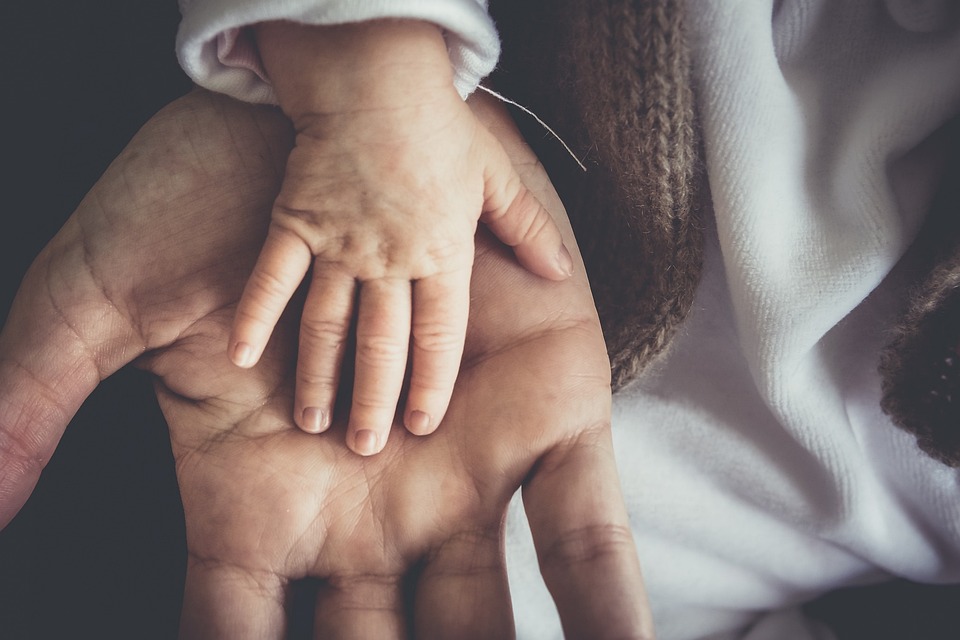
So let’s fix this. Let’s think like a toddler. Let's make the next chess concept we learn like the balloon I gave to my child. Let’s explore it with uninhibited wonder.
Let's try to play with it. Let it put a smile on your face. Let it make you laugh. Let curiosity consume you. See if you can fit that weak colour complex in your sock.
And now for the really brave part: let your learning come at the expense of your rating. And know that the chess player you are now will still be there at the end of it all.
Your friends and peers might look at you and see a lower number. But you will look at you and see more than that number. You’ll see the better chess player.
You will see yourself smiling and laughing. You will see an adult playing.
Not only is that person joyful and happy, but they're holding a big blue balloon that they truly understand, feel and dare I say: love. And I know I can’t be the only adult improver who desperately needs to take chess a little less seriously so that I can not only learn about, but also enjoy this beautiful game.
What about you? Do you ever play chess with a toddler’s mindset? Or do you feel stuck in your serious ways, and maybe care a little bit too much about your rating, too? Let me know in the comments.
Either way, if you are an adult improver rated <1100 FIDE (<1600 Lichess rapid/classical, <1300 chess.com rapid) then I'm happy to give you a free trial lesson.
In 60 minutes, I’ll do my best to give you specific pointers on the next steps for your chess improvement, based on 3 of your actual games. I don’t do one-size-fits-all approaches, you’ll get a personalised chess lesson, for no cost at all. So why not?
Enjoyed this blog? You can enjoy it early + ad-free + get access to other perks if you join my Patreon.
If you want to be notified about future blog posts and other news (like my upcoming Ono Another Chess Podcast), make sure to subscribe to my newsletter. You can still grab your free Chess Study Plan Template here.
I’ve also got a really great partnership with ChessMood where they give you 20% discount if you try one of their memberships through this link.
Just so you know: I’ll never promote any organisation, company or individual whose products or services I do not wholeheartedly support. I also never give any creative control to anyone (except for maybe my wonderful wife who’s hilarious and amazing and may or may not have written this about herself whilst editing this blog post at 1 am last night).
Finally, if you want to get in touch with me, please do so on your medium of choice:
I have a contact form on my website www.theonozone.com, you can hit me up on Twitter, send me an email at info@theonozone.com, or message me right here on Lichess. Interacting with other chess players always makes my day, which is why I love to hear from you - and also why I have the best job in the world.
You may also like
 FM CheckRaiseMate
How To Use The Opening Explorer
Hint: don't leak your world championship prep FM CheckRaiseMate
Memory: The Key To Chess?
Examining the connections between chess and memory research TheOnoZone
At The Top Of The Hill, Go Faster
I was 4 years old and preparing for the most important egg and spoon race of my life. TheOnoZone
Adult Chess Clock
I used to say that nobody doesn’t have the time for something, they just don’t want to prioritise it. TheOnoZone
Chess Flavoured Peanut Butter
Inspiration struck me as I gazed at a half eaten jar of peanut butter. NM Chess-Network