
Lichess
The Qc7 variation of Alekhine's Defense, when White annoyingly plays Nc3
... how to still have fun against chess accountants
Intro
I play the Alekhine's Defense because it's fun, but also because - according to the Opening Explorer - it scores best in blitz against White's e4. And there are a lot of weird lines and gambits that I quite enjoy. However, I meet people who refuse to play the correct response after 1.e4 Nf6, which is 2.e5. It's the best move, but they would rather play their boring setups or follow the principles of other openings they are familiar with instead.
One such response is 2. Nc3, which annoyed me for a long time until I stumbled upon this variation of the Geschev Gambit!
The Qc7 solution
There is a version of this line that is reached by the most played White moves which is gambit rich, fun to play and obscure enough that I have found no videos or courses about it. It starts with the Geschev Gambit, named after (but somewhat misspelled) Georgi Geshev, a Bulgarian chess master from the beginning of the 20th century.
The basic line is 1. e4 Nf6 2. Nc3 d5 3. exd5 c6 4. dxc6 Qc7 where we sacrifice 2 pawns for immediate development and kill the cowardly White king as soon as it runs for the safety of short castling.
In the study that accompanies this post you will find exciting lines even if White insists on playing the most boring lines imaginable.
I didn't want to name it officially in any way, but personally I call it the Birthday variation. So let's delve into the Geschev Gambit, Birthday variation.
Why Nc3 sucks
The normal response to the Alekhine's Defense makes sense: push e5 with tempo to gain space. The knight can only move back or to a square where it can be attacked again. The fun continuations are about a confident White player overextending and losing the pieces and pawns they brazenly sent into your territory.
But Nc3 says "I don't want space, or time, I will just defend my pawn and do absolutely nothing interesting". There are three main responses to 2. Nc3:
- e5 - transposing to the Vienna Game, Falkbeer Variation
- d5 - the so called Scandinavian variation of the Alekhine
- d6 - the Pirc Defense
From these three, I believe the most interesting to be d5. The most followed moves in this line, the so called Exchange variation, are 2... d5 3. exd5 Nxd5 4. Nxd5 Qxd5 and as the name implies it gets all the pieces exchanged, leading to a less interesting continuation. Still wins for Black 52% of the time, though.
So playing Nc3 knowing the most likely outcome is a drawish kind of continuation (or not knowing where it leads at all) is just mean.
 Ugh!
Ugh!
Why Qc7 is cool
The Geschev Gambit's 3... c6 solves everything. It doesn't propose an exchange of knights, it baits the central White pawn away from the center. Even the mainline, where 4. dxc6 is followed by 4... Nxc6, is interesting by developing an extra knight compared to White, for just a pawn sac.
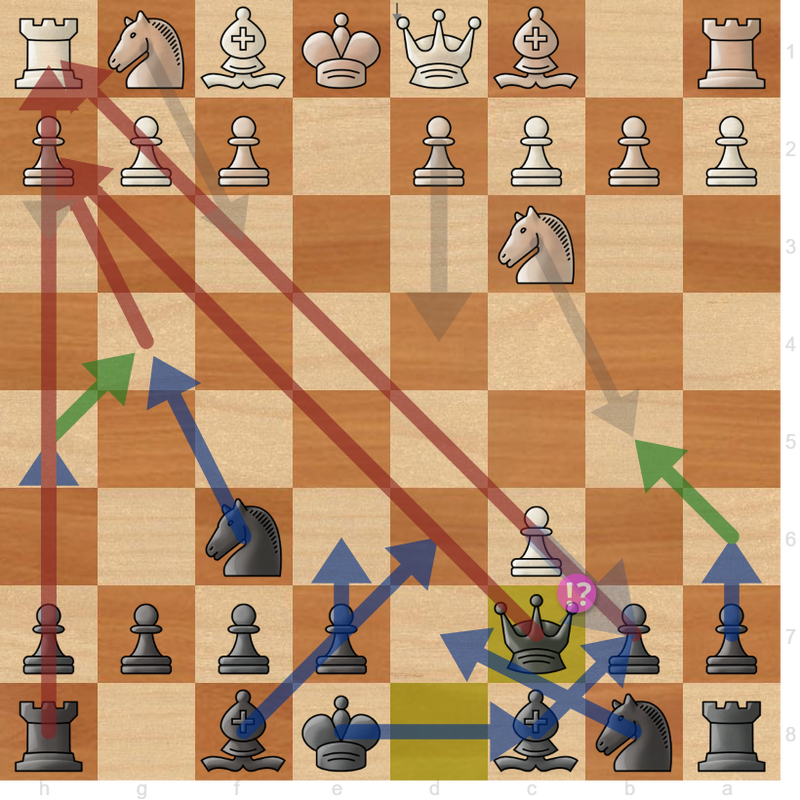
But then, when White takes the c6 pawn: 4... Qc7!? Now the queen eyes h2, attacks the pawn on c6, defends b7 and e5. The only reasonable response for White is to take on b7. If you look at the alternatives, Nf3 and d4 give back the pawn for nothing. Bb5 is interesting, maybe I will look later into it, but the fact that the Black queen can fork the king and the bishop by going to e5 can be a minus for White.
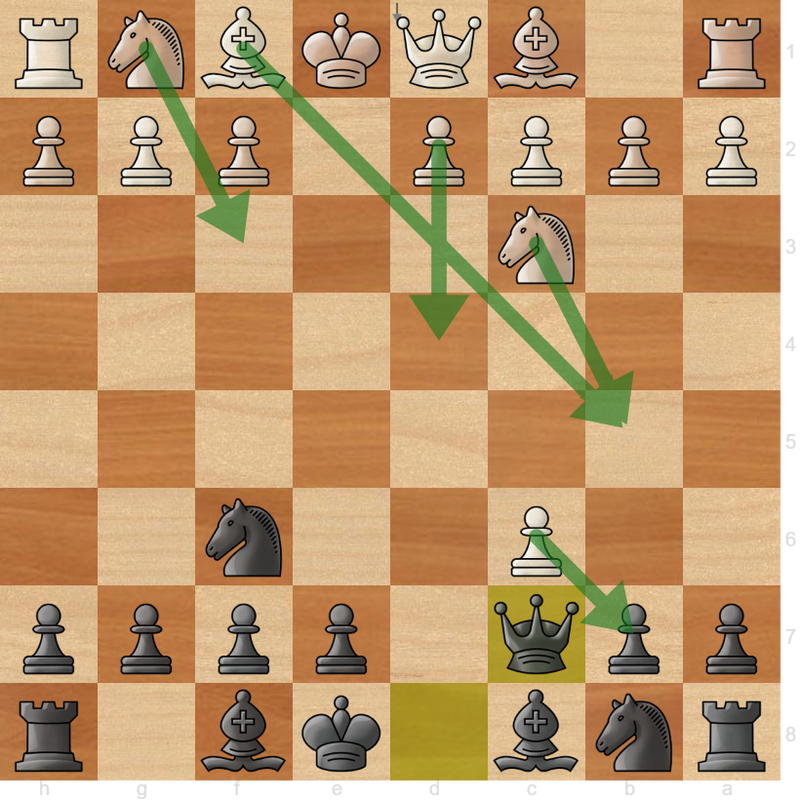
White can still try to ruin our fun with any of those moves and the study looks into the 5. Nf3 line, where we have a surprise for them as well, but the focus is on White taking the pawn with 5. cxb7. After we take with the bishop, Black basically has three pieces developed to White's one. We're doing great!
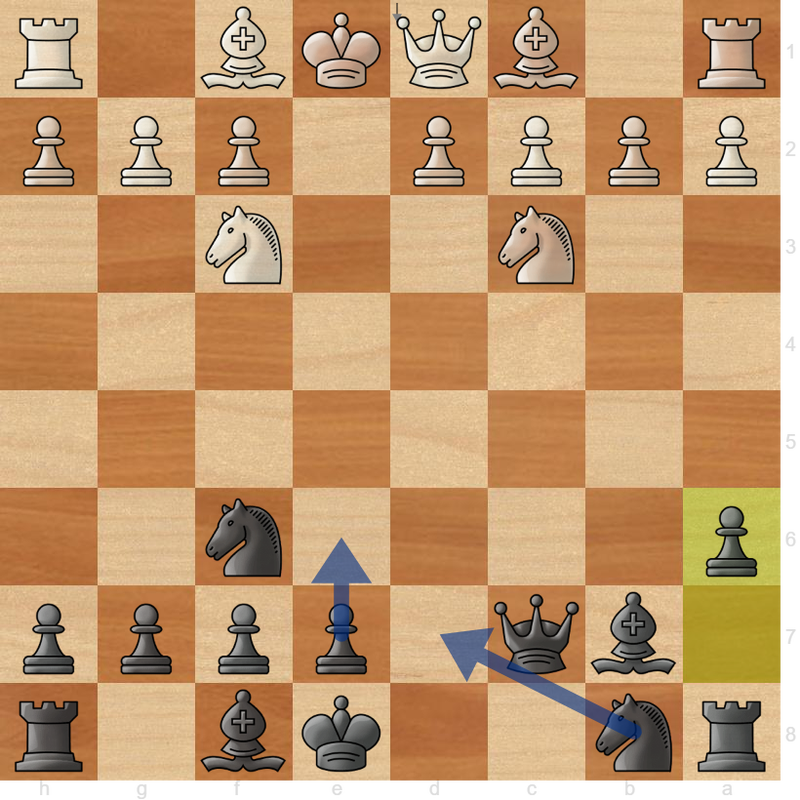
An important move is a6, which looks weird after all that talk about development of pieces, but that I recommend to play at the earliest convenience. For example, best White moves now are Nf3, which is played the most, and d4. But as good in terms of eval is Nb5, attacking our queen immediately and also eyeing d6, where in many lines a dark squared bishop is essential. Yet Nb5 almost never played. So here, after let's say Nf3, play 6...a6, preventing anything White from coming on b5.
In fact it's such an important move that an a6 Geschev variation, where a6 is played before Qc7, looks promising. I've added an extra short chapter at the end of the study about it.
From here there are two plans: Nd7 and e6. Both moves are good and lead to similar ideas. e6 needs to be played eventually, to liberate the dark square bishop, but I recommend Nd7 first. This protects the king for random checks, but also allows an unintuitive idea: long castle, which in some lines frees the last piece, the rook on a8, for attack by castling on the side that has no pawns. In fact, we are waiting for White to short castle. If they don't, you keep developing pieces, so if you started with Nd7 and White still doesn't castle, you can play e6 next.
The blow comes with Ng4 immediately as White castles. h2 is attacked by knight and queen and the only defender of that square is attacked by the bishop on b7. You protect the knight on g4 with the h5 pawn. If the knight is captured, even by a pawn, the h8 rook will continue keeping pressure on h2. The bishop can go to d6, adding more pressure to h2 or g3. All of Black's pieces, except maybe the a8 rook, are laser focused on the king side while White has three pieces completely not developed: a rook, a bishop and their queen.
White is in dire straits and most of the time, they misplay the position anyway, even if objectively they are on top.
The situation
Based on the position (there are several combinations of moves that reach similar positions) White has multiple options, but chooses poorly. h3 is usually played, g3 is a close second, and although sometimes they are decent moves, they almost always end up badly. If the light square bishop can reach e4, Be4 is usually great for White, but hard to find. Other things like Re1 can be good, but are almost never played.
h3 is met with h5, g3 seems to solve a lot of problems, but the knight on g4 can take on h2 anyway, making room for the rook, and in some situations the f2 pawn is pinned to the king rendering g3 undefended. Any g3 pawn can be taken with a bishop sac anyway, inviting the queen in. The light square bishop on b7 is a monster which can coordinate with any other piece for sacrifices, pins or give support to a rook mate.
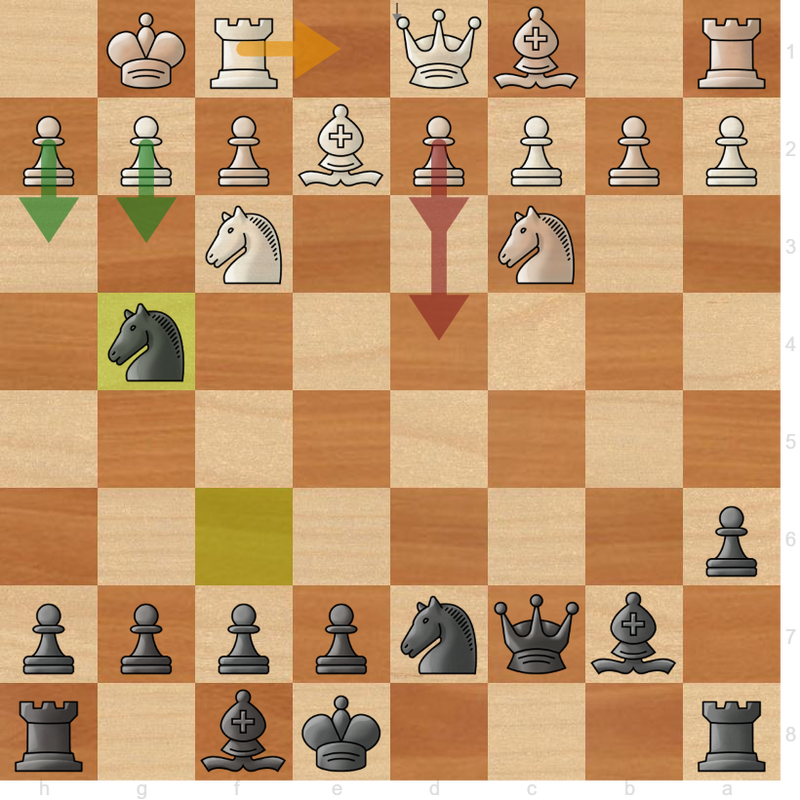
In the situation above, for example, Re1 is the best move and was played once. h3 is a close second, but after that 69.4% of games ended with Black winning.
In the following moves after h3, you get to this: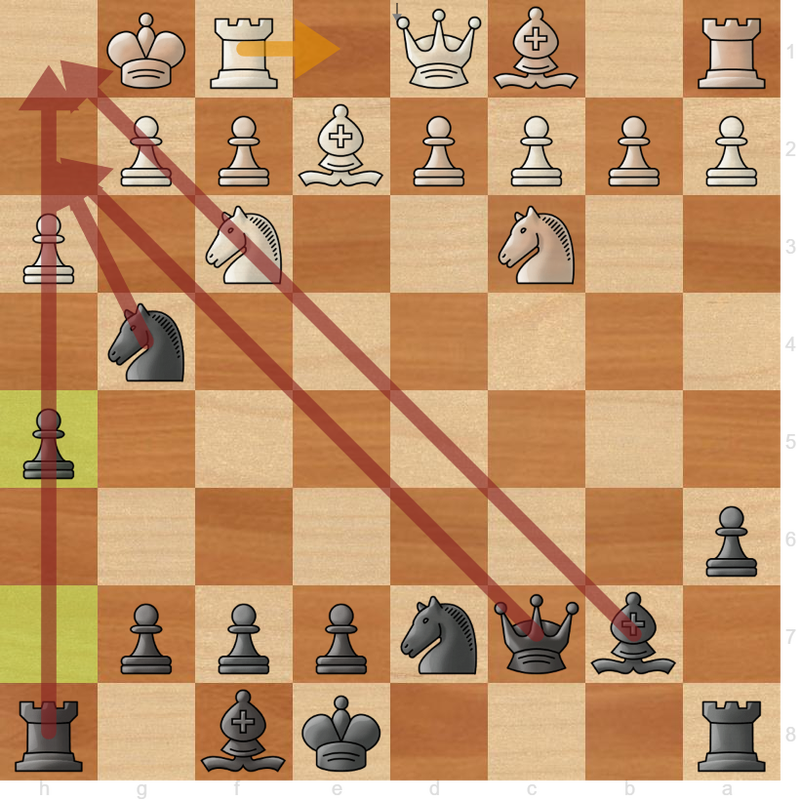
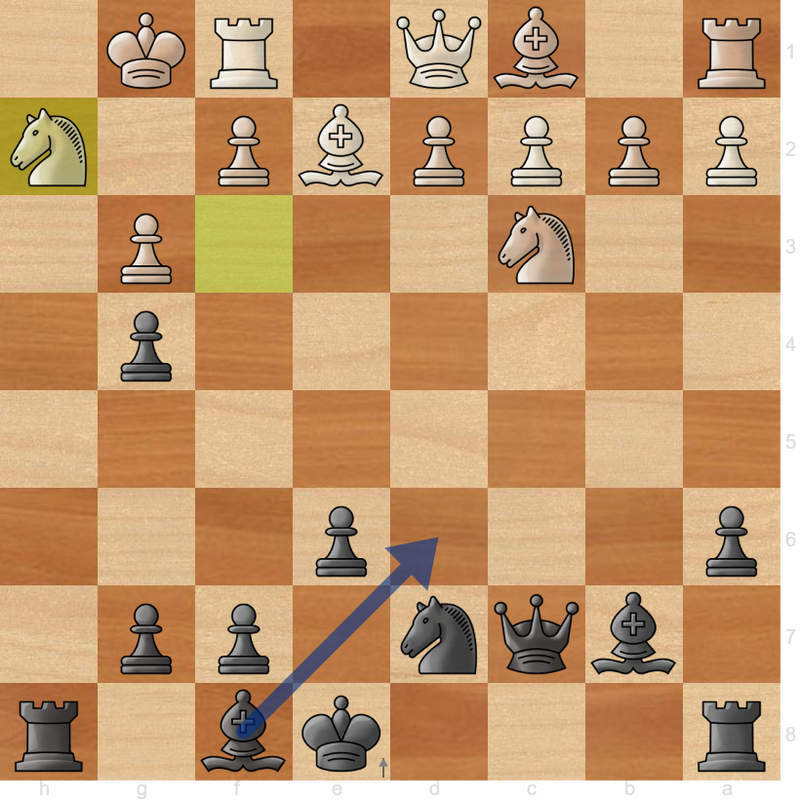
Re1 still the best move, g3 a decent one, everything else loses. The most common continuation leads to -5 eval and is won by Black most of the times even if they don't make the best move which at some point if Qf4.
The study
So here is the study I made for this. It's pretty rough, but it shows some nice lines where Black absolutely bamboozles White. Yes, I am bringing "bamboozle" back! It's time it is used more in clickbait chess video titles.
Conclusion
Responding to e4 with the Alekhine, we invite White to a wild game with lots of tricks and traps. Nc3 is often the reply from people who don't want that level of action. The Qc7 variation of the Geschev Gambit returns fun to the game and forces White to navigate some very tricky situations.
Black's win percentage from the moment White plays cxb7 is 57% for Blitz or slower games rated 1800+, for White's 40%.
The attached study is showing what the plans are and the most likely lines.
Hope you use this in your games. Let me know!
You may also like
 TotalNoob69
Correspondence games. Why was I so afraid of them?
... the good, the bad, the weird TotalNoob69
Did you know Lichess can do this?! Opening Explorer and Tablebase
... do click on that little book button TotalNoob69
The REAL value of chess pieces
... according to Stockfish TotalNoob69
Discerning chess plans with Stockfish?!
... surely this can't be a thing thibault
How I started building Lichess
I get this question sometimes. How did you decide to make a chess server? The truth is, I didn't. TotalNoob69