
The Evolution of AI in Chess: A Journey Through History
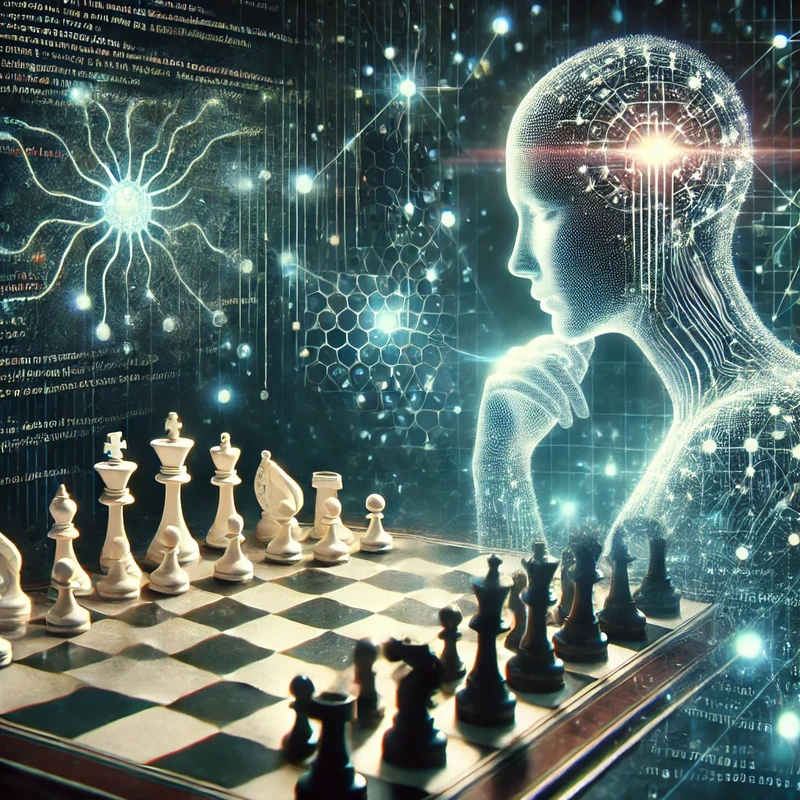
The world of chess has long been a playground for some of the most brilliant minds, both human and artificial. From early algorithms to modern neural networks, AI has pushed the boundaries of chess in ways that were once unimaginable. In this article, we dive into the rich history of AI in chess, tracing its evolution from simple rules-based engines to the sophisticated and intuitive systems that dominate the game today. Along the way, we'll explore how this partnership has transformed chess and what it means for the future of both AI and the game itself.The relationship between artificial intelligence (AI) and chess has always been fascinating. Chess, known for its complex strategic demands and near-infinite possible moves, has long been a testing ground for AI development. The history of AI in chess is a tale of progress—from simple algorithms to advanced systems capable of defeating world champions. In this article, we’ll explore how AI has evolved in the world of chess, and how it has transformed both the game itself and our understanding of artificial intelligence.
Early Beginnings: Chess as a Computational Challenge
The idea of using computers to play chess dates back to the mid-20th century. Chess was recognized as an ideal game for developing computational theories because it relies on logical decision-making and problem-solving. In 1950, mathematician Claude Shannon, one of the founding fathers of information theory, wrote a seminal paper titled "Programming a Computer for Playing Chess." Shannon proposed the idea of using a computer to evaluate different positions on the chessboard and select the best move based on a set of predefined rules.
Around the same time, Alan Turing, a pioneer in computing and artificial intelligence, developed a chess algorithm called the Turochamp, although it was never actually implemented in a computer during his lifetime. These early efforts laid the groundwork for what would become the field of AI-driven chess programs.
The Rise of Chess Engines: From Tinkering to Triumph
It wasn’t until the 1970s and 1980s that chess engines began to make significant progress. The early chess programs were limited by hardware constraints but gradually improved as computer processing power advanced. One of the first notable chess programs was Mac Hack VI, developed at MIT by Richard Greenblatt in 1967. It became the first chess program to defeat a human in a tournament setting.
As computers became more powerful, researchers focused on optimizing chess engines through better search algorithms. One key development was the use of the Minimax algorithm, which enabled chess engines to look ahead several moves and calculate the optimal strategy based on possible outcomes. However, even this method had limitations, and it was the development of alpha-beta pruning that allowed engines to efficiently ignore unpromising moves, vastly improving their performance.
Deep Blue vs. Garry Kasparov: A Defining Moment
Perhaps the most famous event in AI and chess history took place in 1997, when IBM’s Deep Blue faced off against reigning world chess champion Garry Kasparov. Deep Blue was a supercomputer specifically designed for chess, capable of calculating 200 million positions per second. In a highly publicized match, Deep Blue defeated Kasparov, marking the first time a computer had beaten a world champion under standard tournament time controls.
This victory was a watershed moment. It demonstrated the incredible potential of AI and sparked a global conversation about the role of computers in intellectual pursuits. Kasparov's defeat was seen not just as a victory for AI, but as a moment that reshaped how we view the capabilities of machines compared to human intellect.
Post-Deep Blue: The Era of Ubiquitous Chess Engines
After Deep Blue, AI in chess continued to advance rapidly. Chess engines like Fritz, Junior, and Rybka became household names in the chess world, dominating both online and offline competitions. These engines were soon available for personal computers, giving amateur players access to the kind of analytical power that was previously reserved for world champions.
One of the most significant advances came in the form of Stockfish, an open-source chess engine released in 2008. Stockfish is widely regarded as one of the strongest chess engines ever created, consistently topping computer chess rankings. What set Stockfish apart was not just its raw computing power but its advanced evaluation techniques, which allowed it to understand chess positions more like a human player would.
AlphaZero: The Future of AI and Chess
While Stockfish and similar engines dominated the scene, the arrival of AlphaZero in 2017 represented a paradigm shift. Developed by Google’s DeepMind, AlphaZero introduced a new kind of AI: one based on reinforcement learning. Unlike traditional chess engines, which rely on human-created databases and algorithms, AlphaZero was taught only the rules of chess and learned to play by playing millions of games against itself.
In just a few hours, AlphaZero surpassed all existing chess engines, including Stockfish, and demonstrated a unique, creative style of play. It favored long-term positional sacrifices and unexpected strategies that many grandmasters had not seen before. AlphaZero’s success represented a new frontier for AI—showing that machines could not only calculate better but could also "think" in ways that seemed more akin to human intuition and creativity.
AI and Chess Today: A Symbiotic Relationship
Today, AI is an integral part of the chess world. Elite players regularly use chess engines to analyze games, prepare strategies, and study openings. Online platforms like Chess.com and Lichess offer AI-powered analysis to players of all skill levels, providing insights that were once the exclusive domain of grandmasters.
Moreover, AI has influenced how chess is taught and studied. With the vast amount of data that AI can process, we now have access to deeper insights into chess theory, from opening novelties to endgame strategies. AI has also made it possible for anyone, from beginner to expert, to learn from the best players and engines in the world.
The Human-AI Collaboration
While some feared that AI would make human chess irrelevant, the opposite has happened. Instead, AI has enhanced the game, offering new tools and perspectives for players to explore. Human-AI collaboration has become a key feature of modern chess, with players using engines to sharpen their skills and push the boundaries of what is possible.
In addition, the success of AI in chess has sparked interest in other board games and intellectual challenges. Games like Go, Shogi, and even poker have all seen significant AI advancements, often surpassing human experts in these fields.
Conclusion: AI’s Legacy in Chess
The history of AI in chess is a reflection of how far technology has come in understanding and mastering complex human tasks. From early algorithms and rudimentary engines to AlphaZero's neural networks, the journey has been remarkable. Chess, with its blend of strategy, calculation, and intuition, remains one of the ultimate challenges for AI—an evolving battleground where human creativity and machine precision continue to converge.
As AI continues to develop, its role in chess will likely grow, pushing the game to new heights and offering deeper insights into the nature of intelligence itself. Whether you're a casual player or a grandmaster, AI has become an inseparable part of the chess experience—and the story is far from over.
creadit:
WordPress Multistep form builder by whitestudio.team
You may also like
 assax
assaxشطرنج یا شبکه های اجتماعی
شطرنج یا شبکههای اجتماعی؟ چرا قبل از خواب شطرنج بازی کردن به نفع شماستassaxBenefits of Playing Chess Before Bedtime
Benefits of Playing Chess Before Bedtime: A Mindful Escape from Social Media Distractions assax
assax