
Intuition Decisions in Chess
"We understand what a chess engine is capable of, but in this case we are basing our assessment on a human evaluation of the position."
Intuition Decisions in Chess
World champions have repeatedly mentioned the role of chess intuition in decision-making. José Raúl Capablanca sometimes did not think, but felt or simply knew what move to make. Vladimir Kramnik defined intuition as an instantaneous perception of a position based on knowledge, experience and natural abilities. Vishwanathan Anand believed that intuition is the first move that comes to mind when looking at a position. This is also characteristic of Mikhail Tal and Garry Kasparov, who made combinations relying on their own intuition — there are many such examples. A more scientific approach to defining the nature of chess intuition was demonstrated by A. Belyavsky, A. Mikhalchishin and N. Krogius.
N. Krogius identified three stages of chess intuition:
a) logical analysis — as a necessary preparatory stage
b) ntuition itself — in cases where logical analysis is insufficient.
c) verification of intuitive guesses through logical analysis.
A. Belyavsky and A. Mikhalchishin defined chess intuition as a conscious and unconscious process, as a result of which a person obtains a result without lengthy reflection and cannot explain their train of thought. However, they clarified that there are combinational, positional, and psychological motives for chess intuition.
In general, an intuitive decision in chess is a choice of move based not on a deep calculation of options, but on an inner feeling, experience, and knowledge of typical positions. Intuition allows you to make decisions quickly, especially in time trouble. It is formed through many years of practice and studying a large number of positions.
If we look at this issue through the prism of decision-making, chess intuition could be defined as choosing the move that best meets the expectations and goals of the chess player. By calculating, the player can see that some options are easy for the opponent, and then begins to search for a move that creates the most difficult position to evaluate. Such a move allows the player to continue the fight, creating maximum difficulties for the opponent and giving chances for a favourable outcome (victory or draw) depending on the situation. There may be several alternative moves leading to a fierce struggle. At the same time, chess intuition is not necessarily related to time control, detailed calculation or risk assessment, as it can manifest itself in both attack and defence. We understand what the engine is capable of, but in this case we proceed from a human assessment of the position.To illustrate this, I will demonstrate a couple of practical examples.
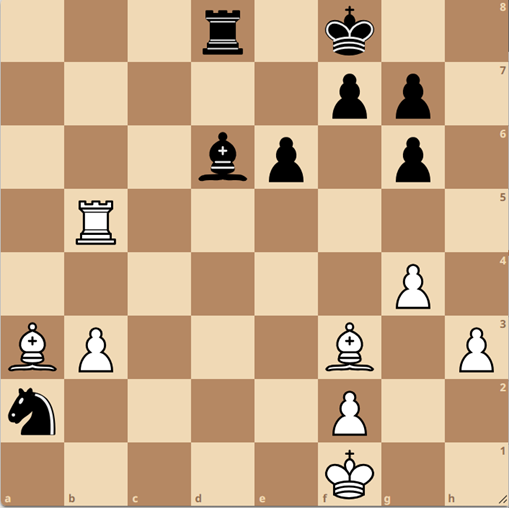
Critical position for tactics. The bishop pin immediately catches our eye. But the pin on d6 is protected by the rook. So, we should distract the rook from defence and accordingly we find 1. Rb8! (Not 1. Bxd6+?! because Rxd6 2. b4 Rd3 3. Kg2 Ke7=)
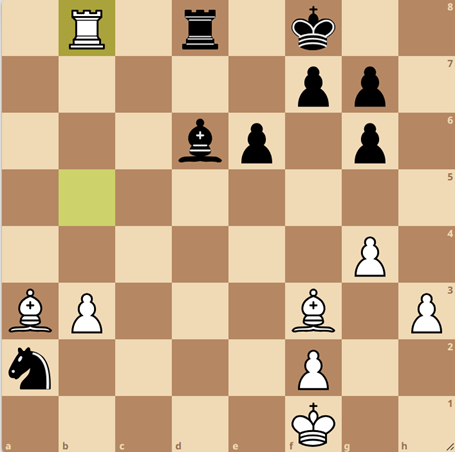
1... Ke7 (If 1... Rxb8 then 2. Bxd6+ +-) 2. Rxd8 Kxd8 3. Bxd6 +- with winning.
Next, we will look at how the pattern of play can be changed in the middlegame.
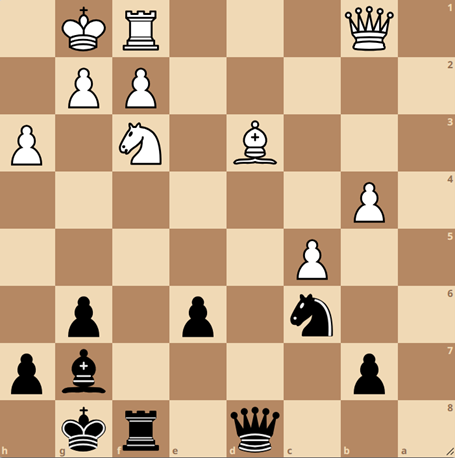
In this position, Black is pawns down, and their pawn structure is worse due to the weakness of the e6-pawn. Furthermore, any potential endgame favours White. Given these considerations, it is clear that Black must change the character of the game, even at the cost of a material sacrifice.
1... Rxf3! (If 1... Nd4? then 2. Be4+-) 2. gxf3 Qg5+
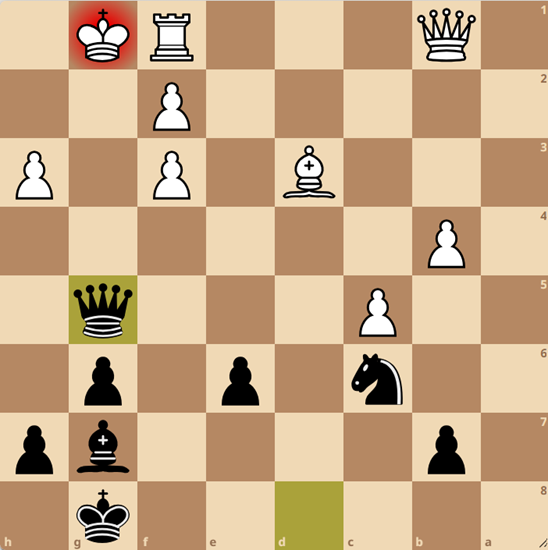
First point: White’s king is vulnerable, Black dominates the dark squares, and the pawn structure favours Black.
3. Kh1 Qf4 The key feature of the position is Black's multiple good alternatives, meaning a draw is not the only outcome. 4. Rg1 Qxf3+ 5. Rg2 Nd4 6. Be4 Qxh3+ 7. Rh2 Qc3
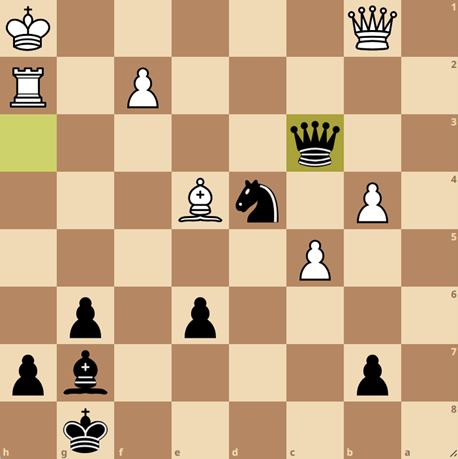
The engine evaluates the position as 0.00, but from a human perspective, it is easier for Black to play to win. His plan is clear: ...Be5 followed by Ke2-f4.
We will now examine an example of how the character of play can shift in an endgame.
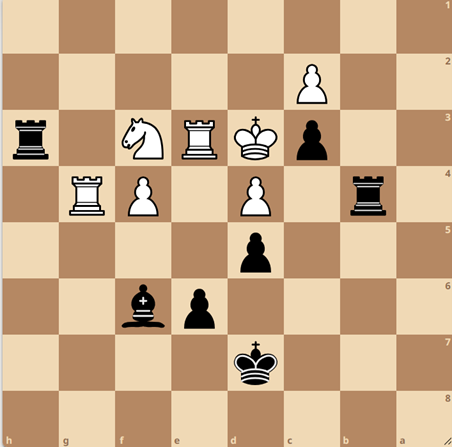
The position offers several drawing paths. Black's key move targets the white d4-pawn. Moreover, our plan is to drive the white king away from defending the c2-pawn, as it blocks the advance of our own passer. Having assessed the risks, we therefore play...
1... Rxf3! (If 1... Rc4 then 2. Ne5+ Bxe5 3. fxe5) (or 1... Rh1 2. Rg6 Bxd4 3. Rexe6) 2. Rxf3 Rxd4+ 3. Ke3 Rd2 4. f5
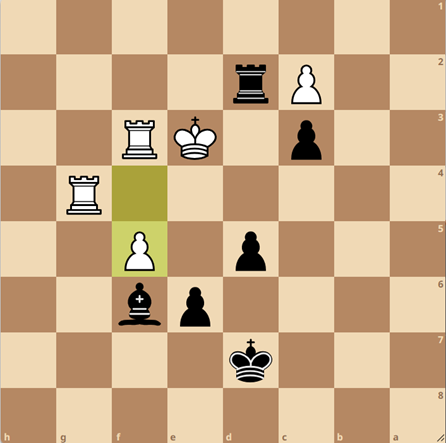
White still faces a difficult task in solving his problems. Black can fight on with several moves:
4...d4+ (4... e5) or (4... Rxc2) The c2-pawn is weak. Black can ignore White's 4.f5, planning to create a passed pawn with ...d3.
Thus, in my opinion, chess intuition is based on the idea that in a critical chess position, we should ask ourselves what type of position in the future could allow us to fight for a win or a draw, and how we can achieve it.
You may also like
 GM Avetik_ChessMood
10 Things to Give Up to Enjoy Chess Fully
Discover how embracing a lighter mindset can help you enjoy chess again and achieve better results. CM blue_tiger98
MY OPENING COURSES ON A NEW CHESS EDUCATION HUB: CHESSFLOW!
Make Your Skill Grow — Join to ChessFlow! TotalNoob69
Did you know Lichess can do this?! Opening Explorer and Tablebase
... do click on that little book button CM akiba182
Wearing your chess seat belt : An important safety measure to prevent blunders!
In chess, the secret weapon isn't just your next move...it's the move your opponent wishes you never… ooohhhmen
3 Overlooked Methods to Skyrocket Your Chess Rating
I want to reach 1000 rating! I want to increase my 1200 to 1800! ChessMonitor_Stats