
The best non-chess book I’ve read for chess improvement
The Will to Keep Winning by Daigo UmeharaI love reading. Fiction, non-fiction, chess books. Like my serve rate with 1.e4, 1.d4 and 1.Nf3, I’ve leaned more heavily towards one or the other at different stages of my life, but in the last few years I’ve been reading more non-fiction. Every now and then, you come across a book that changes how you think about chess too.
Last year, I read five books written by Daigo Umehara, and three of them are the best non-chess books I’ve read for chess players. They make you see something in your own chess life and day-to-day routine in a different light.
The caveat is that they are in Japanese...but I love them so much and wanted to share them with you, my English-speaking audience, that I purchased English copies of the only one that’s been translated (and read it to make sure I wasn’t recommending some horribly translated pale shadow of the original).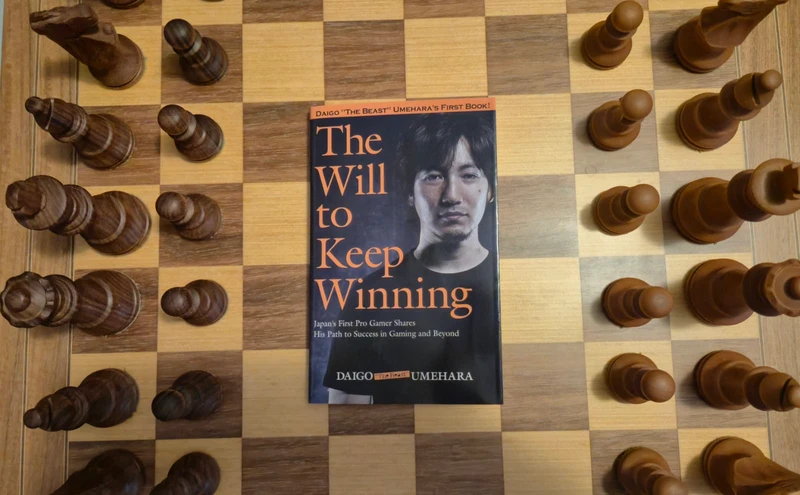
The translation is, well, not perfect but good enough, so here you are reading this.
Let me tell you why this book is worth your time.
Who is Daigo Umehara (梅原大吾)?
Nicknamed “The Beast”, Daigo is Japan’s first professional gamer. He’s a household name in the world of Street Fighter, and he’s held or is holding Guinness World Records like ‘longest earning professional gamer in the world’, ‘highest ranked Street Fighter player’ and ‘most views for a competitive fighting game match on YouTube.’
Ok, there are plenty of people who’ve succeeded in their field and wrote books. Some books are average. Before I share three insights from this particular book that are relevant to chess players, I want to talk about what makes Daigo unusually good at articulating them.
He’s practised sharing insights for decades
Daigo was a kid who could think critically from a very young age and would ask questions about everything. In Japan there’s an expression, “a life set out on the train tracks” that describes the traditional path: study hard, get into a good university, get a good job etc.. Daigo never fit that. He wanted something to dedicate himself to, and he found gaming early.
But gaming was seen as something you just did for fun, it wasn’t a real job. On TV they were interviewing high school stars in baseball and soccer. He was working just as hard as them, but no one cared about what he had to say. So he practised articulating his methods and philosophy in detail so that when gaming eventually got the respect it deserved, he’d be ready to explain what he’d learned. Photo by Thais Lima on Unsplash
He never slacked off from training because gaming was all he had and really cared about. “I know gaming isn’t respected so I need to work like my life depends on it so people don’t associate gamers with laziness or lack of discipline, even for one moment.” Already in high school, he was competing with a goal beyond just winning: he wanted the industry itself to be taken seriously. And he became World Champion at 17.
But even then, gaming was looked down upon. He worked tirelessly for years, but no change could be seen. That hurt him so much, he gradually lost motivation and quit gaming in 2005. Then, after years without playing at all, a casual visit to the arcade brought him an epiphany. He went on to become the first Japanese pro gamer, and the rest, as they say, is history.
Now that you know his background, here are three lessons or insights from this book I want to share with you.
1. 60 is better than 100
I think I got your attention with this one. Daigo writes:
Big discoveries in my daily efforts make me far happier than winning World Championships. I avoid happiness of 100 under normal circumstances, so 80 is the most I’ll allow myself.
Feedback in chess is ultra-fast. You win, the number representing how good you are goes up; you lose, it goes down. Of course, the main objective in the game is to win and that makes it hard not to obsess over ratings and results. You train and study, of course you want to see the proof that you’re getting better. But what started as pure enjoyment of the game at some point turns into an obsession with winning for many of us. I was there for much of my life. You blunder or mess up a winning position and it’s far beyond just a game you’re playing, you feel like a failure as a person.
What I like about Daigo’s approach is that his goal is self improvement, separate from results. The tricky part is how to get to that point, and through reading about his experiences and insights, you start feeling like you want to try that mindset too. Finding joy in making small changes every day, while the actual games becomes somewhere you focus on playing the chess you want to play, regardless of the result. Photo by Fahim mohammed jaseem on Unsplash
2. Shadow a stronger player
Daigo talks about the years when he pursued mahjong with everything he had after quitting gaming. While working in a mahjong house, he shadowed the strongest player (stronger than many pros) all day, every day.
Standing there just watching Tanaka play for up to ten hours straight was rough. ... After a few months of this, I reached the point where I could mimic Tanaka’s style. ... I continued copying his style for another half year. Still, no results. I could play like Tanaka, but I couldn’t win like he did. Before I knew it, it had been two years since I started playing.
The chess equivalent of this would be standing behind a grandmaster all day while they played a tournament game, played rapid and blitz online and worked on exercises as you guessed their moves, trying to understand what they’re thinking with full focus...for a couple of years. Guess-the-move is one of the best methods of study and training I know for long-term improvement for chess training too, but the extent Daigo went to in this case is astonishing.
Although Daigo was probably beyond the intermediate level when he started this shadowing, it reminds me of this recent study where Southwick et al. (2026) analysed over 44,000 Chess.com players on practice activity and performance. They found that while 90% of player time was being spent on playing games, deliberate practice such as studying lessons and reviewing your own games were substantially more efficient for learning and improvement. Daigo’s shadowing sits inside this bigger pattern. At the mahjong house he was playing every day, but the shadowing was where the real learning happened: through Tanaka, he’d see ideas he couldn’t think of himself and get constant feedback on where his decisions differed from a master’s.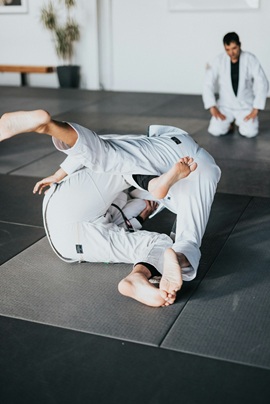 Photo by Nathan Dumlao on Unsplash
3. Confront your weaknesses
It is by actively working with those we dislike and confronting our weaknesses that we are first able to shed our skin and make real strides in growth.
For most of my chess life, my weaknesses defined me as much as my strengths. I didn’t develop a deep understanding of the opening to middlegame phase so I was often worse, but my tactical ability helped me win from those positions. My time management was poor, but my intuition was sharp so I could still beat stronger players in complicated positions. For the large part of 20 years I avoided confronting my demons head-on because I compensated with other strengths, and I wish I’d been able to do so when I was younger.
That’s why with students I think a lot about how I can help them with their weaknesses. Because if it’s something that I can see is really holding them back or is going to limit their chess in the long run, it’s important to start working on them early, to be open-minded about all parts of their chess so they can turn their weaknesses into strengths. There’s no opponent scarier than one who can’t get enough of any area in chess.
The lessons from Daigo are three out of countless in his book. If you’re someone who takes their chess seriously but feel like you’re affected too much by results or your motivation goes up and down all the time, you should give The Will to Keep Winning a go. Because the will to win (one game) and the will to keep winning (as a chess player)...is more different than you might realise.
To me, continual improvement through facing challenges is what it means to be alive.
If you enjoy posts like these, I write a free weekly newsletter to over 2,300 chess improvers on Substack. You can subscribe here to receive my posts in your email inbox.
You may also like
 IM datajunkie
You’re studying chess openings the wrong way (do this instead)
If memorising opening lines made you stronger, many club players would be masters. IM datajunkie
What do I even work on now?
You had a bad tournament. The next day, what do you actually do? IM datajunkie
10 chess books that changed how I see the game
Are chess books still relevant? IM datajunkie
What the scoreboard never tells you
Why results are the worst judge of your chess CM HGabor
How titled players lie to you
This post is a word of warning for the average club player. As the chess world is becoming increasin… IM datajunkie