
Patrick Hawlik on Unsplash
What your self-talk says about your chess
What you tell yourself shapes your focusAt my recent tournament, I was on Board 1 against a GM I played against five times from 2017 to 2022. I’d lost all five games.
So already from the previous night when the pairings came out, I could hear the voices in my head:
He’s better than you.
Don’t mess it up this time.
Don’t make the same mistakes again.
During this game, I caught myself saying one particular phrase in my head over and over again:
It doesn’t matter if you lose. Just play your best.
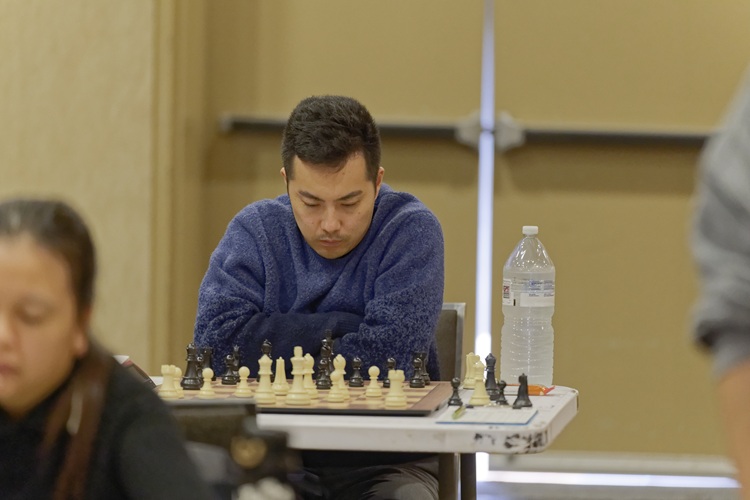 Photo by Gary McNamara
Although I lost, it was one of the best games I’ve ever played, probably the best in the last few years (I went over it in detail on a stream here).
That mantra definitely helped.
It helped me stop drifting into thinking about the result and being dragged down by fear or overthinking, and it also helped me trust myself more and think with more clarity. I was really enjoying playing this game.
And afterwards, I realised something:
The things we say to ourselves before and during games often reveal the exact habit we’re trying to fix as players.
What other players’ phrases revealed
When I posted a Note about this on Substack, quite a few players replied with the phrases they tell themselves in their own games.
What struck me wasn’t just the variety but how clearly each phrase pointed to something that player was trying to improve.
- Some were trying to stay present.
- One was trying to keep motivated in tough positions.
- One was trying to avoid calculating too narrow too early.
- One was trying to pose practical problems for the opponent.
Different words, same basic function: bringing attention back to what actually matters.
What self-talk is really for
That’s what good self-talk can do for you.
A short sentence can act like a little steering wheel, bringing you back to the process and direction that’s important for you and your chess. A magic spell that stops you being swallowed up by your usual demons or a million thoughts that you can’t organise.
And this is so important in chess because most bad thinking at the board is caused by focusing on the wrong things, whether on the board or in terms of emotions or results-based thinking.
- How much you’ve improved.
- How many rating points you’ll gain.
- How you’re better than your opponent.
- Winning this game and people thinking you’re great.
- Too little about the position in front of you.
Of course, self-talk won’t solve everything, and it’s only one part of the game that you can control.
But it can help you access the level you already have more often because it leads to
a) doing less of what you want to avoid—>raising your floor, and
b) doing more of what you want to do—>raising your ceiling.
How self-talk can help you
Some players dismiss this part of the game completely.
Not everyone talks to themselves during games, at least not consciously. Some players play in tournaments for years and never change the way they think at the board.
They don’t realise that their default thinking process is costing them points because they don’t notice what they’re doing well or badly.
Self-talk can also be the anchor to your process goal for a tournament or game.
And you can turn that process goal into an in-game line or mantra.
If your goal is to slow down, your sentence could be:
This is the moment to think properly.
If it’s to stop being intimidated, then:
Play the position, not the rating.
To recover better after mistakes:
Only think about your next move.
To trust yourself more:
Choose the move you believe in and commit to it.
It should bring you back to the thing you want to improve the most in your play.
That’s why I like this idea so much.
Your self-talk isn’t random, because it often points straight at your biggest weakness, your biggest fear or the part of your chess that you really want to change.
And if you listen closely, the words you’re telling yourself might tell you what you most need to work on but hadn’t realised yet.
A question to ask before your next game
So before your next tournament or serious games, ask yourself:
What do I want to do better today?
Then turn the answer into one short sentence that you can come back to when the game gets messy.
For me recently, it was this:
It doesn’t matter if you lose. Just play your best.
I might have lost and now sit at 0-6 against this nemesis, but it helped me play my best chess in years (and I was very close in this game to improving the record).
And that meant a lot more to me than winning one individual game.
I can still improve!
What do you tell yourself before or during a game?
And if the answer is nothing, what might you be missing?
Your mind will take on the character of your most frequent thoughts: souls are dyed by thoughts.
—Marcus Aurelius, Meditations
If you want to get weekly emails with practical tips on chess improvement like these that help you build healthier habits, I write a free newsletter to around 2,000 chessplayers on Substack.
You may also like
 IM datajunkie
5 benefits of OTB tournaments
There's nothing like 9 rounds of 90+30 IM datajunkie
You’re studying chess openings the wrong way (do this instead)
If memorising opening lines made you stronger, many club players would be masters. IM datajunkie
Why you overthink in chess (and how to stop)
It took me 25 years to realise this thibault
How I started building Lichess
I get this question sometimes. How did you decide to make a chess server? The truth is, I didn't. CM HGabor
How titled players lie to you
This post is a word of warning for the average club player. As the chess world is becoming increasin… IM datajunkie