
Luca Ambrosi on Unsplash
Why most players study hard and still don’t improve
“I solve tactics every day, study opening courses, watch videos and read books. But my rating has been stuck for months. What am I doing wrong?”
This is one of the most common questions I get from chess improvers. Photo by Malachi Cowie on Unsplash
The problem for most players is that their study isn’t connected to what actually happens in their games. Then, their study feels productive but it doesn’t build the skills they need.
In this post I’ll show you how to fix it with one question you can ask after every serious game you play.
Let’s start with the trap that most serious players fall into.
Imagine a player, let’s call him Donald. Between tournaments or games at the chess club, Donald has a routine.
On Mondays he studies openings, Tuesdays he does tactics, Wednesdays are for endgames and so on. He logs the hours in a spreadsheet every day and feels good. He built this routine because it felt like the most logical way to cover every part of chess.
But none of it comes from what his games are showing him.
When you study without knowing what you actually need, a lot of the knowledge you’re building doesn’t become something you can use at the board, especially in positions you haven’t seen before.
And in every game of chess you play, you’re going to find yourself in a new position.
Today there’s more chess content available than you could consume in a lifetime. But the fundamentals of improvement haven’t changed. The players who improve fastest are the ones who know how to learn from their own games.
Talented players improve just from playing because they absorb more from one game than most players. But that’s also a disadvantage in disguise. They never have to build the habit of learning deliberately so they often plateau earlier than players who had to figure it out the hard way. That’s the tortoise and the hare. The hare starts ahead, but the tortoise builds something the hare never had to. Photo by Luca Ambrosi on Unsplash
So how do you do things better?
It all comes down to one loop.
- You play a serious game.
- That game shows you something: a mistake, a weakness or a decision that went wrong.
- You turn that into a lesson.
- The lesson tells you what to train.
- And that training shapes how you play the next game.
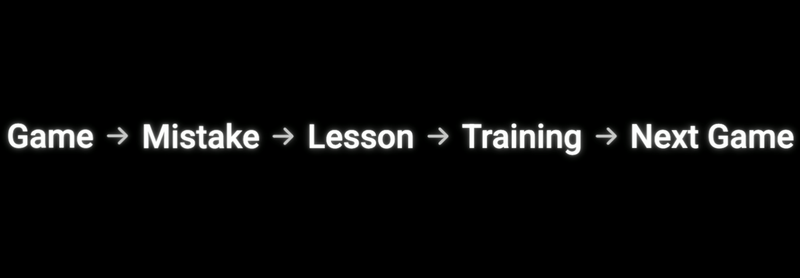
It’s a simple loop, but almost no one is running it consistently.
In Japanese, this is called kaizen (改善): continuous improvement through small but consistent steps. Compounded over months and years of serious games, that’s how most chess improvement happens.
This idea goes a lot deeper than one lesson from one game.
Every part of chess improvement: how you think during a game, how you review it, how you train, how you improve your openings, how you build confidence, connects back to this same loop. When all of those things are connected, improvement stops feeling random and becomes a system.
I spent years building that system, testing it in my own chess and refining it with students until even a player with limited time could use it consistently.
The system has ten habits, each one connecting to the others. One habit helps you find one clear thing to train from every serious game you play. Another helps you spot the mistakes you keep making before they become weaknesses. Together they create a feedback loop, I call it the Improvement Loop, that tells you what to study and why.
And the foundation of it all is this question:
What is my last serious game trying to tell me?
But knowing the question is the easy part. Asking it after every game, turning the answer into training that actually changes how you play and doing that consistently week after week is where almost everyone falls down. That’s the part that takes a system, and that system is what I’m turning into a video course.
I’ll be launching The 10-Habit Chess Improvement System in the coming weeks. It's a step-by-step framework for playing with a clear head, learning from every game you play and building a training routine that fits your chess and your actual schedule.
This course is for the chess improver who studies hard, plays seriously and still feels stuck. The player who’s done with random study and wants a reliable way to improve from their own games.
If you join the waitlist (over 125 players have joined already), you’ll get 24 hours early access before it opens to everyone else. That means you'll have an extra day to decide whether it's right for you while the launch discount is still available.
Join the waitlist here
Studying openings, solving puzzles and watching videos can all help. But none of that is necessarily connected to what your chess needs right now.
You get that by looking at your own games and working on what they’re telling you.
For example, when I was rated in the 1800s to 1900s, I was playing a lot of tournaments both over the board and online, reading chess books constantly, and I was good at spotting tactics. But when I played stronger players, I’d often be left with bad minor pieces in the middlegame and get outplayed. I’d be left with a bad bishop or all of my minor pieces would be passive without any good squares: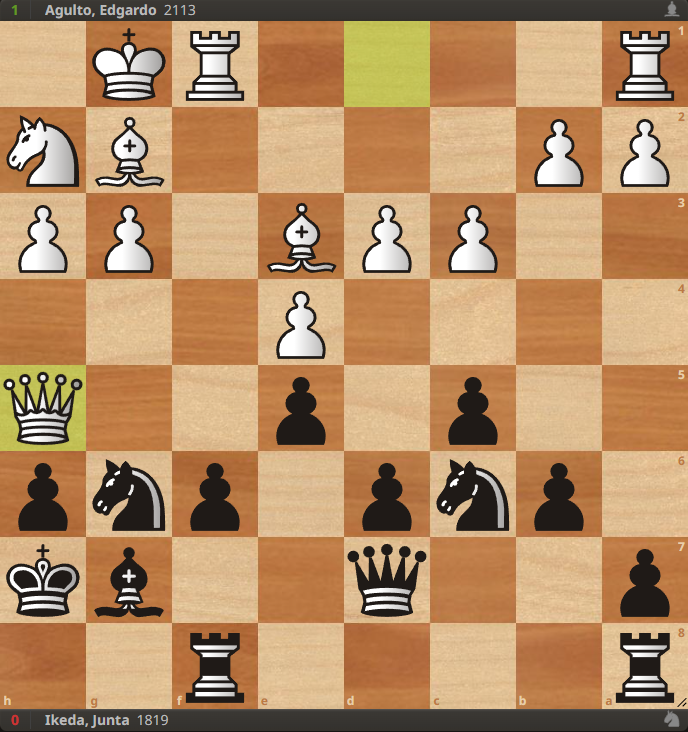
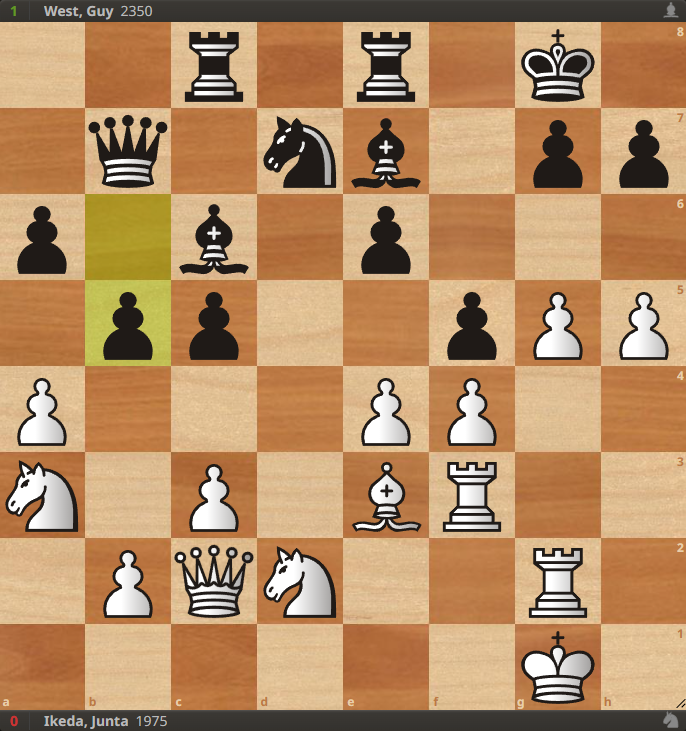 I struggled with this for a long time. Minor piece understanding isn’t something you can fix in a week. So instead of reading annotated games in my books as usual, I decided to focus on minor pieces for a few months. I’d play through a game guessing the moves of one side, but at every position I’d stop and ask questions about the minor pieces.
- Which of my pieces are bad?
- Should I actively exchange them?
- What minor piece can I improve next?
- Which pieces does my opponent want to exchange?
- If this pawn break happens, whose pieces does it help?
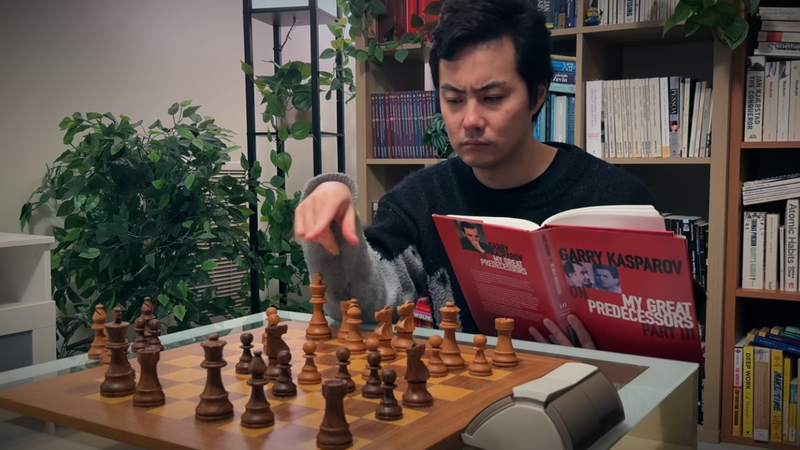
At first it was a struggle, because it was different to how I usually thought. But I kept working through games by players I like, always thinking about the ideas behind their moves in the context of minor pieces. When they played moves I hadn’t considered, I had to try and figure out what they were seeing that I wasn’t. Over time, that changed how I saw the pieces and improved how I thought in my games.
When you focus on something your games are showing you, your study has a direction and improves a specific part of your chess. And when one part of your chess levels up, it helps your chess as a whole.
So how do you find what your games are telling you? It starts with one question. After your next serious game, before you turn the engine on, go through it yourself and ask:
What is game trying to tell me that I should work on?
You want something specific. It might be that you always get into time trouble because you spend too long in quiet positions. Most players have two or three patterns like this running through their games, and they keep losing in the same way because they never take the time to figure out what they are.
Once you start doing this after every serious game, your study stops being random and starts being guided by the one source that knows exactly what you need: your own chess.
That sounds simple, but most players never build a consistent process around it. They analyse one game, skip the next three, then go back to consuming random content and wondering why they’re stuck. The real benefit comes when you turn the most important parts of your chess into habits and keep repeating the cycle.
That’s why the course is built around a connected system. Improvement doesn’t come from knowing what to do once, but doing the right things more consistently over weeks and months.
So the next time you finish a serious game, try asking one question before anything else: what is this game trying to teach me?
I’m excited to share the course with chess improvers in July.
For just as it is not the desire to become famous but the habit of being industrious that enables us to produce a finished work, so it is not the activity of the present moment but wise reflections from the past that help us to safeguard the future.
—Marcel Proust, Within a Budding Grove (In Search of Lost Time #2)
You may also like
 GM Avetik_ChessMood
10 Things to Give Up to Enjoy Chess Fully
Discover how embracing a lighter mindset can help you enjoy chess again and achieve better results. IM datajunkie
"I Knew I Wasn't Going to Be a Normal Person"
A grandmaster's reflection after our game IM datajunkie
Why most chess players never learn from their games
What a fighter pilot coaching a Norwegian soccer team can teach you IM datajunkie
Igor Zaitsev's Attacking the Strongpoint
A philosophy of chess from a man who chose the shadows IM datajunkie
The Upstream Problem
How studying endgames changed my middlegame without me trying IM datajunkie