
FIDE, Maria Emelianova
Interview with GM Swayams Mishra alias mr_bh6 from ChessEnrich

Questions by FM Jens Hirneise
1) Dear Swayams,
you became a Grandmaster at the age of 27 and are one of the leading chess coaches in India with 15 years of teaching experience. Furthermore, you have coached the Indian Women’s national team since 2022, which won the gold medal at the 2024 Chess Olympiad in Budapest. Was there a particular moment when you decided to become a coach while also pursuing the GM title and was it difficult to combine playing and teaching, or do you think both can go hand in hand?
Swayams: Thank you. There wasn’t a single defining moment—it developed quite naturally. I began coaching early while pursuing my engineering degree, and over time I realized how much I genuinely enjoyed the process. Balancing playing and coaching wasn’t always easy, but in many ways they complemented each other. Teaching helped me revisit fundamentals more deeply and understand different ways of thinking, which in turn improved my own game.
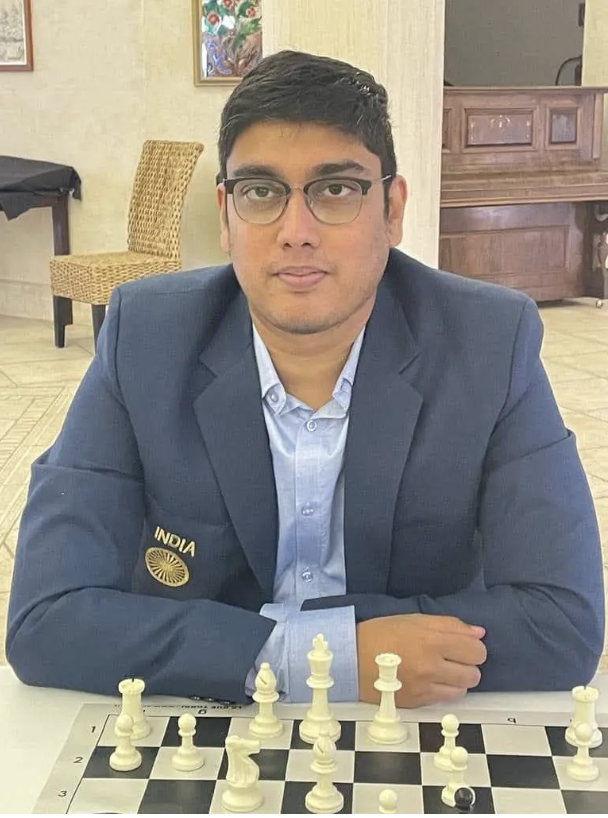 A renowned coach, Swayams currently serves as the trainer of the Indian Women's National Team, which clinched the Gold Medal at the Chess Olympiad, a historic milestone. Over the years, he has mentored numerous Grandmasters worldwide, guiding players to their peak potential through a structured and insightful approach
2) Over the last few years, India has had a chess boom and won both titles at the Chess Olympiad 2024 in Budapest in the Open and Women's section (see November issue 2024). What was your role for the Women's team during the event and what do you think are the key factors of India's chess success over the last few years?
I have been part of the Indian women’s team setup since the 2022 Olympiad, where we won the bronze medal—we narrowly missed gold after drawing the final match would have been enough. In 2024, I was already familiar with most of the players, and they trusted me with opening decisions. For the initial rounds, I also stepped in as captain.
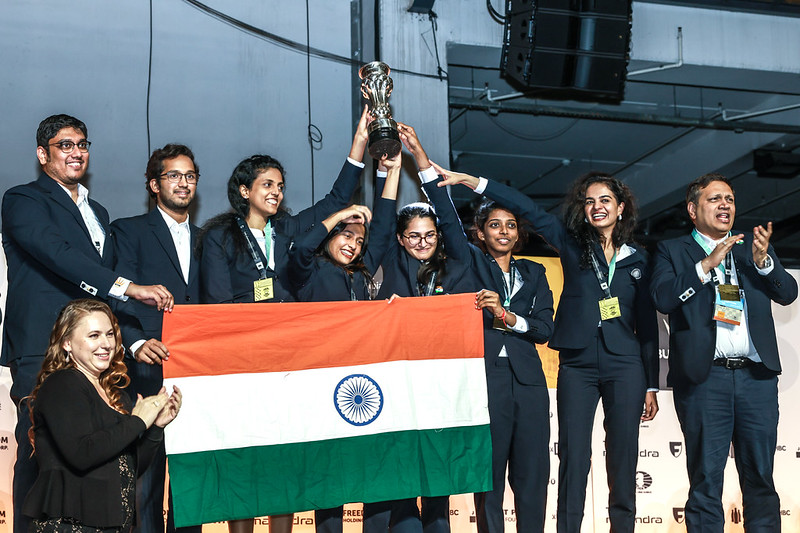 Gold in the Women's section at the Chess Olympiad 2024 in Budapest for India (Photo: FIDE, Mark Livshitz)
India’s chess boom really accelerated during the pandemic, followed by the popularity of The Queen’s Gambit, and then the 2022 Olympiad gave it a massive push. Players started receiving more recognition, which further motivated the next generation. Another key factor has been increased parental support. Families now see chess as a viable career with respect and long-term potential—something that wasn’t as widely accepted earlier. Also, strong performances by Indian players globally have created a positive cycle of inspiration.
3) What are the biggest differences between playing styles of Indian and European chess players from your perspective? Is there a particular skill that European players can learn from Indian players?
If we’re talking about the younger Indian generation, one striking trait is fearlessness. They are consistent in their work ethic and are not overly concerned about ratings. Another important quality is resilience—they are willing to fight in any position. Regular exposure to strong tournaments also plays a role. Players who are constantly tested tend to develop sharper practical skills compared to those with similar ratings but less competitive exposure.
4) You were also captain of the PBG Alaskan Knights at the Tech Mahindra Global Chess League 2025 with the line-up World Champion Gukesh, GM Arjun Erigaisi, GM Leinier Dominguez Perez, GM Daniel Dardha, GM Katernya Lagno and IM Sara Khadem. What was your approach to get the best out of the team and what was the personal highlight of the event for you?
It was an honour to be part of such a strong team, let alone captain it—it truly felt like a dream lineup. Our start wasn’t ideal; we lost four games without a single individual win. However, I knew the players were experienced professionals. My role was mainly to ensure they continued believing in themselves and stayed mentally strong.
 Team PBG Alaskan Knights at the Tech Mahindra Global Chess League 2025
My personal highlight was finishing third in the event, but more importantly, watching Gukesh deliver in a crucial match alongside Vishy—it was a special moment.
5) Together with GM Stany GA and IM Swayangsu Satyapragyan you recently started the online chess platform chessenrich.com. What inspired you to create that platform?
The idea originally came from Stany, who approached me around 2.5 years ago. Initially, it was meant as a tool to create structured homework for our own students. Over time, we studied existing platforms and the market more carefully, refined our approach, and realized that we could scale this into something much larger and more impactful. We also roped in Satyapragyan – who has been our motivating factor and making things very organised.
6) What are the core features of ChessEnrich, and for which level of players is it most useful?
We have three core features:
- Best Move Quest – Unlike standard tactics, this involves exploring multiple variations. The platform may ask why certain moves don’t work, encouraging a deeper and more complete understanding of positions.
- Coach Review – This is quite unique. Users analyze positions for both sides, write evaluations and comments, and then compare with a video solution. We personally review submissions, assign scores, and provide detailed feedback—including demonstrating mistakes through moves, not just text.
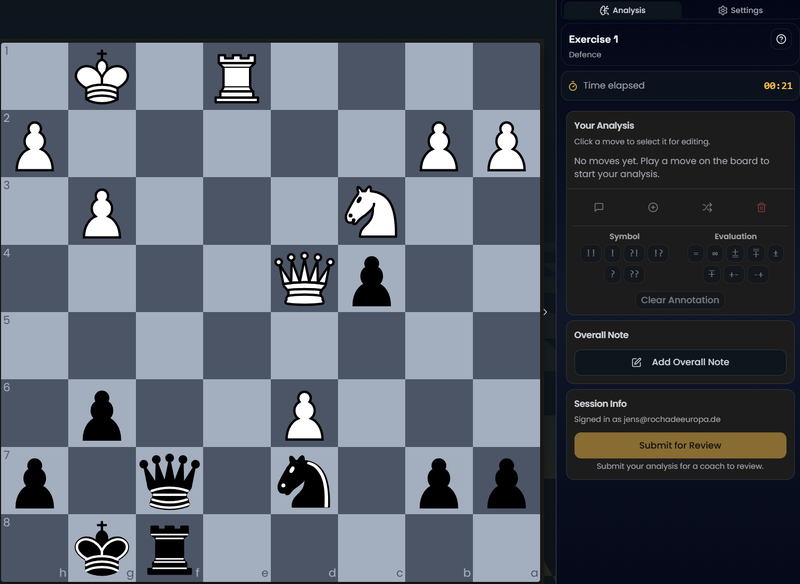
Coach review feature in action - Black to move.
- Guessing Game – Carefully selected and annotated games where users guess moves without knowing the players. The identities are revealed at the end, along with key lessons from the game.
As for level, it is suitable for a wide range—from club players to titled players. In our pilot testing with around 150 players, we saw interesting results: some IMs struggled with positions that 1700-rated players solved perfectly.
7) Is ChessEnrich for free and how much time will the interactive chess homework exercises take for students to solve on a weekly basis?
We offer a one-week free trial with 10 positions released on Monday and another 10 on Thursday. After that, users can subscribe through quarterly or annual plans at a reasonable price. From our testing, solving one set of 10 positions takes about 2–2.5 hours on average. So weekly, students can expect to spend around 4–5 hours.
 Weekly ChessEnrich dashboard with various different middlegame and endgame topics transform traditional chess training into an enjoyable experience
8) ChessEnrich also comes with a leaderboard and rewards system, can you tell our readers a bit about how the scoring system works and which rewards they can expect, if they get to the leaderboard of all users?
Yes, the leaderboard and rewards system plays a big role in motivation. We group players based on FIDE ratings to ensure fair competition—for example: 1400–1699 (Group C), 1700–1999 (Group B), and 2000+ (Group A/Open). Players without a FIDE ID can compete in the open category. We reward the top 3 players in each group every quarter with Amazon gift cards and membership extensions. Additionally, the top 25 players in each group receive a live training session with us. We also plan to introduce annual rewards, including chess merchandise and collaborations with partners for more exciting prizes.
Author's note: ChessEnrich also has its own WhatsApp channel to stay tuned about upcoming updates and news.
9) You (mr_bh6 on Lichess) are also offering online group classes to players above 2300 and below 2100. Can you tell our readers what a typical group class of yours looks like and how they can reach you best if they are interested?
For the 2300+ group, the sessions are designed for strong and titled players. These are small groups (usually under 10), focusing on critical decision-making moments in games. The format is highly interactive, often involving solving positions under time constraints rather than passive listening.
For players below 2100, the groups are larger (around 20–30 students) with fixed schedules and structured monthly topics. Across all levels, I aim to keep sessions interactive by asking questions and engaging everyone actively with also 1 class per month in form of quiz.
Interested players can reach me at: swayams2150@gmail.com
10) What kind of role does sports psychology play in chess and how important do you think it is for players to work also on their mindset besides on their chess skills?
I believe it plays a much bigger role than most players realize. I’ve seen players struggle to achieve their goals primarily due to mindset-related issues rather than purely chess ability. Once they worked on these aspects, they were able to unlock their potential. While athletes in other sports openly emphasize mental training, chess players often overlook it, assuming it only matters at the top level. In reality, developing the right mindset early is crucial for long-term success.
11) Which coaching skills are the most important to learn from scratch for players who are thinking about becoming a chess coach?
Flexibility is key. A coach must understand that students think and calculate differently. What seems obvious to the coach may not be so for the student. While structured plans work well for beginners, coaching at higher levels requires customization based on each player’s strengths, weaknesses, and style.
12) Which chess players, past or present, do you admire the most?
Mikhail Tal is someone I deeply admire — I could never replicate the kind of chess he played.
I also enjoy studying Magnus Carlsen’s games, particularly to understand his mindset and decision-making.
13) What do you think the chess world will look like in the near and distant future?
Chess has already evolved significantly in the past few years, especially with changing perspectives on openings—many previously discarded ideas are being revisited. Shorter time controls may become even more prominent, but I don’t think creativity in classical chess will disappear. At the elite level it may become more precise, but at most levels, creativity will always remain.
14) What are your interests outside of the chess world?
I enjoy travelling and watching movies and web series—though I’m not entirely sure how I still manage to find time for them!
15) Which kind of advice would you give our readers if they wanted to make serious improvements in ...?
Opening: Focus on understanding the ideas behind the moves rather than memorizing them mechanically.
Middlegame: Study games and identify recurring patterns and plans.
Endgame: Make it a priority — many players neglect it. And once you study, make sure to revise regularly.
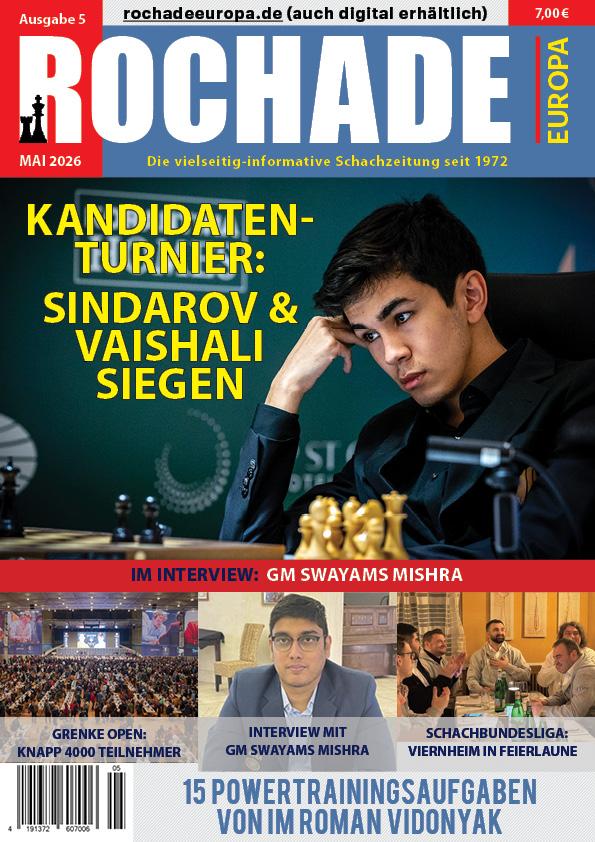
Note that this article was first published originally in German in the May 2026 issue of the German chess magazine Rochade Europa).
You may also like
 FM jeffforever
Interview with IM Lu Miaoyi & WGM Xu Yuanyuan
Get to know the Chinese prodigy IM Lu Miaoyi who won the Women's Tournament of the Sparkassen Chess … FM jeffforever
Interview with GM Zahar Efimenko - New German Women's Team Coach
Get to know the New German Women's Team Coach (Peak Elo: 2708 in March 2011) ChessMonitor_Stats
Where do Grandmasters play Chess? - Lichess vs. Chess.com
This is the first large-scale analysis of Grandmaster activity across Chess.com and Lichess from 200… Lichess
Lichess: End of Year Update 2025
Is it just us, or has this year flown by? As we say goodbye to 2025 and enter 2026, let's look back … thibault
How I started building Lichess
I get this question sometimes. How did you decide to make a chess server? The truth is, I didn't. FM jeffforever