
Reaching 2000 FIDE - a matter of luck?
My experience at the grenke open - the biggest tournament of the world.
On April 17th - 21st I played the A-section of the grenke open and reached my lifelong dream: crossing a 2000 FIDE rating for the first time. What is a fluke? A stroke of luck? That is what I am trying to find out in this blog post by highlighting a few deciding positions from my games.
The grenke open: context
I had been dreaming of playing the grenke open since 10+ years but never really got the opportunity to do so. However this year I was committed to play it and made time for it. The grenke open happens (almost) every year in Karlsruhe (Germany), on Easter week-end. They are renowned for the absurdly high number of player and great attendance for top-players. During these few days I saw Magnus Carlsen, Fabiano Caruana, Vincent Keymer, Maxime Vachier-Lagrave, Etienne Bacrot or Wesley So playing - just to name a few.
The tournament halls are huge: about 1000 players get to play in hall 1 while the rest (2200) played in hall 2. I couldn't get the entire hall 2 to fit into one picture:
My tournament: did I just get lucky?
I went to this tournament with a FIDE rating of 1960, barely higher than the 1950 cutoff for the A-open. I had dreams of reaching 2000 but while I did think that I would manage it at some point (my peak had been 1982), I wasn't confident that I would be able to gain 40 points in Karlsruhe. Little did I know that I would manage to get a 2167 performance and +48 rating points!
Since I came back, some friends and I have been wondering what went so well during this tournament and if I can repeat the performance. One thing is for sure: I had the right state of mind. I was happy to be playing in Karlsruhe, I met many friends and acquaintances from both the German and the French chess world and I didn't have too many expectations. I expected it to be a nice chess holiday and a great learning experience against stronger-rated players: and it was!
Let's list the different things which went well for me or for my opponents and find out if luck had much of an influence.
My good opening prep
At first I was reluctant to be sharing my games here but since they all have been published on the grenke website and will surely find their way into online databases, I might as well dig into the details.
The first round went extremely well on the front of the opening as I got the opportunity to uncork my dear Bb4+ line - courtesy of French WIM Yosha Iglesias :

It looks weird at first glance but it got my opponent to start thinking while I was in my element. I know the plans, I know where my pieces go and I soon got a very enjoyable position.
Later my opponent played the rather inoffensive-looking a3 which turned out to be the decisive mistake - black to move and win!
The rest went smoothly which surely boosted my confidence: I had just proven that I belonged in the A-open.
Another interesting position which arose from the opening is this one, from the McKenzie variation of the Ruy Lopez:
I had it both in round 4 (win) and round 6 (draw)! This opening helped me a lot especially in round 4 because after 8....Nc5 9.Nf5 (sacrificing the bishop) my opponent thought for over 50 minutes! At move 12 he only had 2 minutes left on the clock which ultimately led me to win even if I didn't play optimally. My opponent didn't take the bishop on a5, but here you can see what could have happened had he been too greedy - from a rapid game I played a couple of weeks later:
In round 7 I had another stroke of luck with an easy draw in the scotch gambit against someone rated 117 points higher than me:
Here I offered a draw without having had to think much which allowed me to have a welcome rest afternoon!
These positions show that in a way I was lucky that several opponents chose openings which I can deal with pretty well. Another way to see it is that I was well prepared. Many coaches (including me!) say that openings don't matter very much but the truth is that sometimes they can win you games or give you an easy round for free.
My lack of understanding of some openings
I can definitely attribute a couple losses to my lack of understanding certain openings: round 3 but especially round 5 which my young opponent played very well.
In move 10 of round 3, I took on b5 with the knight instead of taking with the pawn:
The mistake in itself wasn't that bad but it shows a lack of understanding of this specific line. The idea is to take with the pawn, threatening to play b4 which would undermine white's control of the center. I later had a couple of opportunities to equalize the game but I failed to do so, until we reached this position - white to move and win!
Again I have to stress that I didn't lose because of the opening but it put me in a bad state of mind which led me to oversee this easy way to equalize:
I am pretty sure that if a student showed me this position I would be wondering how they could miss the simple Bf8! Exchanging my bad bishop against the active bishop of my opponent. Simple chess!
Again in round 5 I showed a complete lack of the English which led me to play passively and without a clear plan. Here my opponent played the very nice f4! intending to sacrifice his bishop for a deadly attack. It works because I am so under-developed and passive!
After the game I wasn't even mad because my opponent had outplayed me very clearly but there is clearly potential for improvement: I should not end up with these positions in the first place.
I guess I could have gotten luckier in these last rounds, had my opponents chosen openings I am more familiar with? But let's be honest: it is my fault for not coming better prepared to the board.
Last round: my opponent was in a hurry
By the beginning of round 9 it was clear that I was having a great tournament - but would I be able to get to 2000? It turns out that I was paired with black against an IM rated 2136... and I needed to win the game in order to reach 2009! The tournament organizers set the mood for the last round, playing Queen's Another One Bites the Dust at full volume right before starting. Let me tell you: I was HYPED!
My opponent sat down, barely said hello, asked me to write my name on his scoresheet, gave me a limp handshake... and started playing crazy fast. From my point of view it looked like he was sure to annihilate me!
On move 15 he found a "clever" tactic, taking advantage of a pin to grab a pawn on d6:
It turned out to be a mistake: I just needed to move my rook back to f8 and soon I would find wonderful squares for my knights while his would need to retreat. A few moves later he offered me a draw in a losing position, arguing that if I didn't accept he would miss his ride back home. That explains why he played so fast! Unfortunately for him I had to reject the offer (a draw wasn't enough to get to 2000!) and finally won the game after squandering away the +4 advantage and gaining it back later on.
That's how I got to 2009 for the first time!
The kicker is: my opponent then went full Korchnoi, saying that I only won because I played the lottery by not accepting the draw, that we both played terrible chess, etc... well, at least I won! And it gave me the idea for this article!
Conclusion: was it all luck?!
It depends how you see it but my point of view is that chess is a very practical game. Sometimes you get lucky, sometimes you don't. The best way to improve is to help luck find you! I am very happy to report that I managed to reduce gross blunders in my games and that I took advantage of most of my opponents' mistakes. This is the way I see chess improvement: get incrementally better, keep working on your endings, calculation, openings, time management... and at some point the results will come - sometimes gradually, sometimes all at once. Will I manage to repeat the performance again? There is only one way to find out! I am not one to protect my rating at all cost and this week I will be playing the 2025 Strasbourg open tournament. Wish me luck!
About the author: I am a chess coach by day (giving lessons over Lichess - DM me) and a Lichess moderator by night. I also publish the Lichess Elite Database (almost) monthly. You could say I am a Lichess addict but it would be even more accurate to describe me as obsessed by chess in general. These days I manage to play 40-50 classical OTB games per year.
For anyone interested, I collected my grenke games in a study:
https://lichess.org/study/CVi3ryCL
You may also like
 nikonoel
Dirty bullet: practical tips I learned playing Lefongs
"Bullet is no chess", they say. While it is true, bullet is also a rich game on its own. I am not an… nikonoel
Announcing that everyone cheats
A CIA investigation revealed shocking conclusions about cheating rumours. nikonoel
OTB players: calculate your new FIDE rating - and much more!
Presenting EchecsFrance.com, a free and open-source website. Rating calculator, find French tourname… IM theScot
Life Hacks for Getting to IM
A post about the life-skills that help you in chess.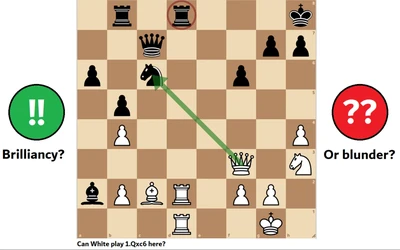 Mcie
McieCalculate until the end.. and one move more!
Blunder or brilliancy, sometimes it all hinges on one more move. ChessMonitor_Stats