
The Neighborhood Gambit: Trophies, Lessons, and Happy Meals on the Chessboard!
Neighborhood Championship... While the weekend was plagued with global news—the advance of Hurricane Erin, the paralysis of Air Canada airlines, the Trump-Putin meeting in Alaska, the delicate surgery of musician Dorindo Cárdenas, or new Wikipedia fraud scandals—a parallel and powerfully silent universe was taking shape among hamburgers and french fries.
SAN MIGUELITO — Daniela's hand trembled slightly over the pawn. Around her, a buzz of adolescent energy and the piercing gaze of two dozen opponents was overwhelming. “Don't worry, look at them, they are here too. The important thing is to have fun,” murmured her father, discreetly pointing at Gabriela and Samantha, the two other girls in the trenches. She nodded, adjusted her pigtails, and advanced her pawn to e4. The battle at the Equus-88 Inter-Neighborhood Chess Club Championship had begun.
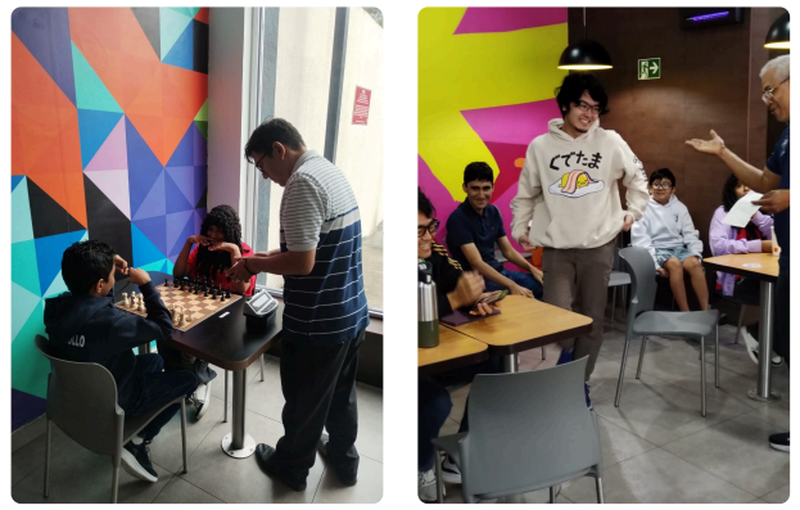
While the weekend was plagued with global news—the advance of Hurricane Erin, the paralysis of Air Canada airlines, the Trump-Putin meeting in Alaska, the delicate surgery of musician Dorindo Cárdenas, or new Wikipedia fraud scandals—a parallel and powerfully silent universe was taking shape among hamburgers and french fries.
The setting, once again, was the McDonald's in Paraíso. Ten tables, twenty players. A microcosm of pure concentration where the smell of fries mixed with the tension of pieces moving silently as the rain poured down outside. The tournament, divided into U-12, U-14, and U-18 categories, was not a mere Sunday pastime. It was a vital channel, an official springboard with acquisitive FIDE ELO points at stake—the precious commodity that starts every career in competitive chess.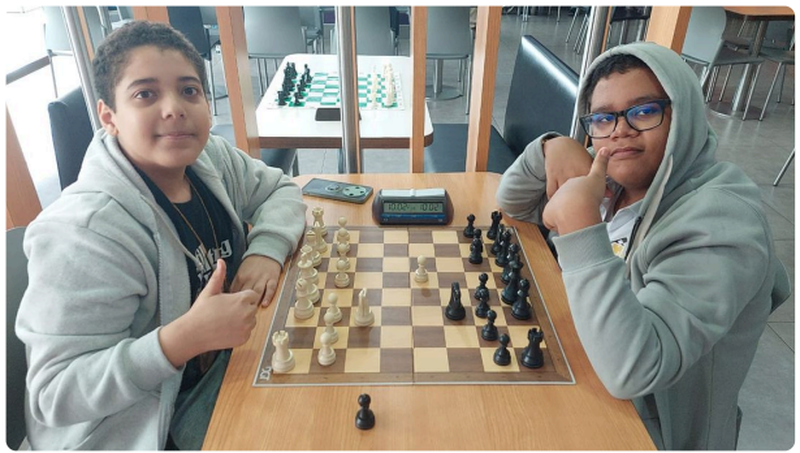
It was a rollercoaster of raw emotions over seven total rounds. At one table, Justo, barely 8 years old, secured his first victory, looking up at his father, Justo senior, with a gaze of pure triumph. His father held back a tear of pride and was there for the trophy photo, a reward for their joint effort. At another, a 10-year-old boy, after losing to an 18-year-old rival, took refuge in his father's arms, frustrated. “It's over, it's done. Now think about the next one. You can do it,” his father whispered in a hug that was both a balm and a pep-talk.

The message sank in. That same boy, with a furrowed brow and wounded pride, sat down the next round against an 11-year-old. He played with the black pieces, with a fierce determination, and won. By the end of the day, that effort would be rewarded with a trophy and the joy of a Happy Meal—a champion's feast.
The stories multiplied. Daniela, Gabriela, and Samantha, though they didn't reach the top spots, fought epic battles. They moved their pieces with a cunning that gave their male opponents more than one headache, proving that the chessboard knows no gender, only strategy.

During the intermission, announced by the organization's spokesperson, Master Félix, at 12:45 pm, the atmosphere transformed. Rivals became companions; 10 and 11-year-olds, and even some teenagers, practiced variations together, focused, while the older players, like Adrián Mirán (17) and Teo (18), analyzed some games—a duel on the brink of disaster due to time trouble—in a corner, a pure spectacle of chess brotherhood.
In the end, nine trophies and a cascade of recognition lanyards for the prominent and "almost winners" crowned the effort. But the greatest prize was intangible: the resilience forged in defeat, the community built between rounds, the certainty that a dream does not require a marble hall to grow, but only an opportunity, however improbable its setting may seem.
The Global Context: A Gambit that Changed the Game?
This local flourishing is not an isolated event. As is widely known, the premiere of the Netflix series "The Queen's Gambit" in October 2020 triggered a monumental global resurgence in the popularity of chess. The series, watched by over 62 million households in its first month, transformed the public perception of the game, leading to an unprecedented wave of engagement.
This cultural phenomenon was quantified by a spectacular increase. Chess set sales skyrocketed by over 1000%, and platforms like lichess & Chess.com registered a nearly 500% increase in new members. More crucially, the series helped break down gender barriers, with a nearly 30% increase in registered female players—a distant but powerful echo of the determination of the Danielas and Samanthas in a San Miguelito McDonald's.
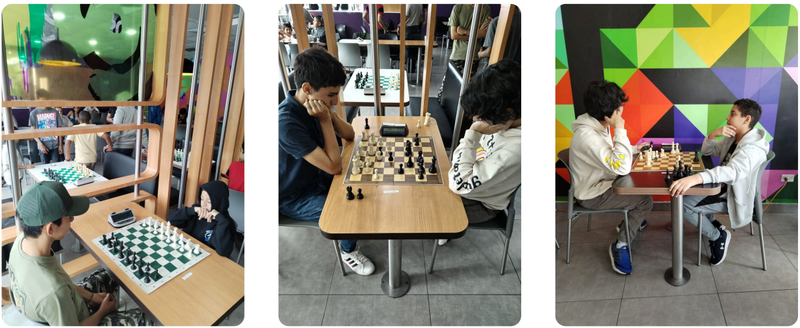
Although pandemic lockdowns served as a backdrop, this renaissance is attributed to the powerful narrative of the series and the charisma of Beth Harmon, which made chess accessible and aspirational. It is the same spirit that drives a father to encourage his daughter, a child to get up from a defeat, and a community to gather around plastic boards: the belief that within 64 squares lies a world of possibilities waiting to be conquered.
Winners of that Day + Proud Parents & Chess Professors.


Thank you for Reading this far, this was an Independent journalism activity... Be safe out there