
How Chess Imitates Art

"Life imitates Art far more than Art imitates Life." ~Oscar Wilde
Creation vs Accidental Beauty
The world of chess compositions streamlines the beauty in chess a lot better than tournaments ever could.
The art equivalent would be Picasso purposefully drawing a landscape versus an abstract painter throwing paint at the wall and seeing what sticks.
Eventually, if you throw enough paint, you might get something beautiful with resemblance to nature, but it would take far more tries.
Chess composers often start with an idea, and then prune the tactical details to make the idea work. Here's an example:
This is called a Valladão task, a puzzle containing a pawn promotion, castling, and en passant in one solution. Moreover, an ideal study has only one solution, where all these moves are a necessity. Something like this is almost impossible to get in a game as the odds are astronomically against you. Even to compose something like this would be an accomplishment considering "cooks" and other problems that arise in studies.
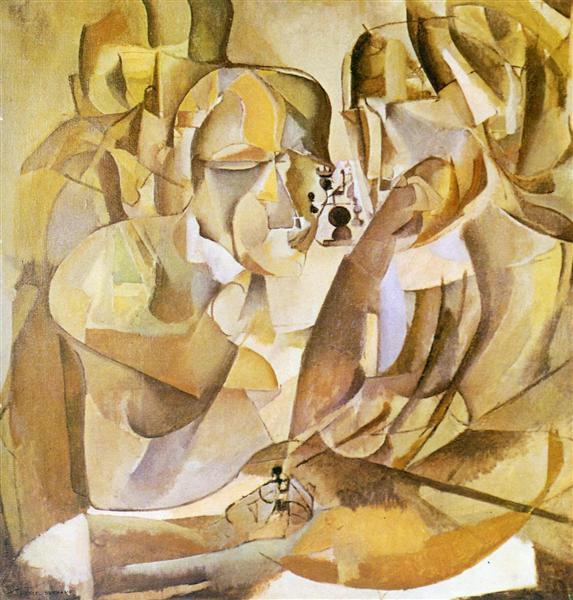
While the Valladão theme is sophisticated, it's pretty easy to come up with a pretty underpromotion study. Thousands have been created, with all kinds of concepts behind them to prove that the queen isn't always the most desirable. Here's one that may blow your mind:
Keep in mind that white had to conjure those bishops, they weren't doing this for fancy flare. How often do you see that many forced underpromotions in tournament games?
Another common theme for compositions is pieces stopping passed pawns. Intuitively, most players can't believe that the piece can still stop such advanced pawns, but that's a pity. Studies are good at pointing out just how many defensive resources are hiding, once we put our biases aside:
It turns out that two connected passers about to promote are still only worth a rook! This draws out the limits of what rook activity can compensate.
Chicken or the Egg?
Over the last 100 years, master composers like Kasparyan, Troitsky, Wotawa, Pervakov, Benko and countless others, have compiled thousands of beautiful positions. These studies either have their own individual concepts, or play on existing concepts. I believe that most strong masters have come across these ideas somewhere in the practice, and assimilate these themes into their pattern-recognition. At the very least, the process of solving studies at home, allows you to solve study-like positions in your games.
Here are some prime examples of "life imitating art" in tournaments.
Here, Botvinnik finds the wonderful 59...g5! to create two passers on different sides, which is enough to win despite opposite-colour bishops. Interestingly, he blew a win at the start of this endgame, with the same idea of giving pawns for the creating of passed pawns. See the line after 48...b3! where ...d4 would be the breakthrough.
I wonder how familiar Botvinnik was with compositions of L. Prokes, like the one here:
There are all kinds of variations on the theme of giving up pawns for positioning in opposite colour bishop endgames, so the motif definitely came in handy for Mikhail.
How about this masterpiece from Anand:
Apart from domination themes around that knight on a1, how about the king chase and the mating net? All started with 32...f6 and 33...e5, which are all indeed study-like. While it's not exactly the same, here's a mating net study by Wotawa with similar clearance themes:
Granted, this is a much simpler version of the breakthrough, where there are less pieces on the board, less options, and less creativity needed. Yet the simplified version may be all the more instructive. I remember using CT-ART software for puzzles growing up, where a wrong answer would be met with a smaller 4 by 4 diagram that drills in the pattern until you can't help but get it right. Studies can reinforce themes in the same way.
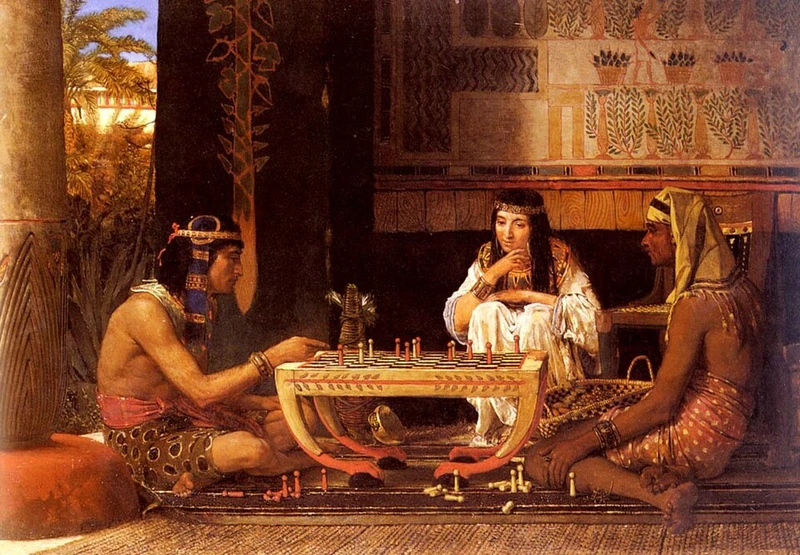
Analysis as an Artform
Back in the days when games were still adjourned, team analysis would often find incredible study-like saves and winning resources. Some of this analysis had composition quality and feel:
Keres saw the problems facing his h-pawn, yet found ingenious ways to keep it, and then overcome the knight stalemate tricks. The sad part of all this is the inherent "iceberg" nature of analysis; most of the brilliant finds were never shown as they were hidden in variations rejected by the opponent, only the two players would see their beauty. Unless this analysis was published, which was the case above.
Sometimes, this analysis was improved upon after the game. In the pre-engine days, players from all over the world would look at published games and search for improvements on the GM moves. Sometimes, relative nobodies would find ideas that completely changed the believed evaluation. In the computer era, players could go back through published analysis and find tons of errors with the help of the engine. For example, Kasparov's predecessors book series is filled with such new engine-inspired ideas/refutations. At the end, we got something approaching Truth with a capital T, even on super-complex games like this one:
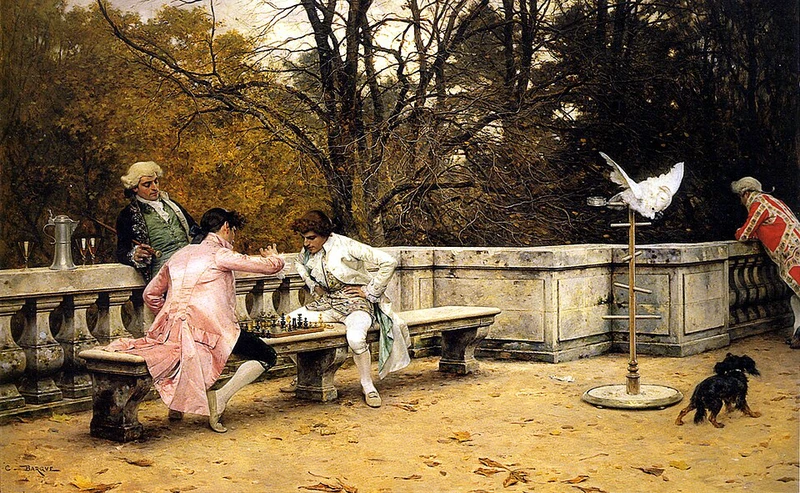
Of course, the interplay between life and art goes both ways; legendary endgames like the one above inspire composers who come up with themes similar to the endgame played:
In this position composed by Averbakh in 1984, the rook is just in time to stop all four pawns. Was he inspired by the Spassky example above which should have been a draw with best play? I'm sure he was, so the chicken and the egg go both ways.
Personal Tragicomedies
I've also had my share of study-like wins, draws and losses, and want to share three extraordinary ones with you. "Study-like" to me entails extreme precision required, usually a series of only-moves with a concept behind them. Usually, there is tactical trickery involved. Here is one where life definitely imitated art:
This was a real travesty in a rook endgame, and of course time trouble had a role. 68.Kd4-d5-d6 was a prime example of snatching defeat from the jaws of a draw, and props to my opponent for finding the study-like theme of pushing my king back till he was lined up with the rook.
The frustrating part is I had seen this exact theme in a study 4 years before that game, but only remembered it once the moves were played.
Here is Lasker's take on this theme:
The difference is that in the study, black was stuck between a rock and a hard place, whereas in my game, I had to deliberately walk into the trap and help black!
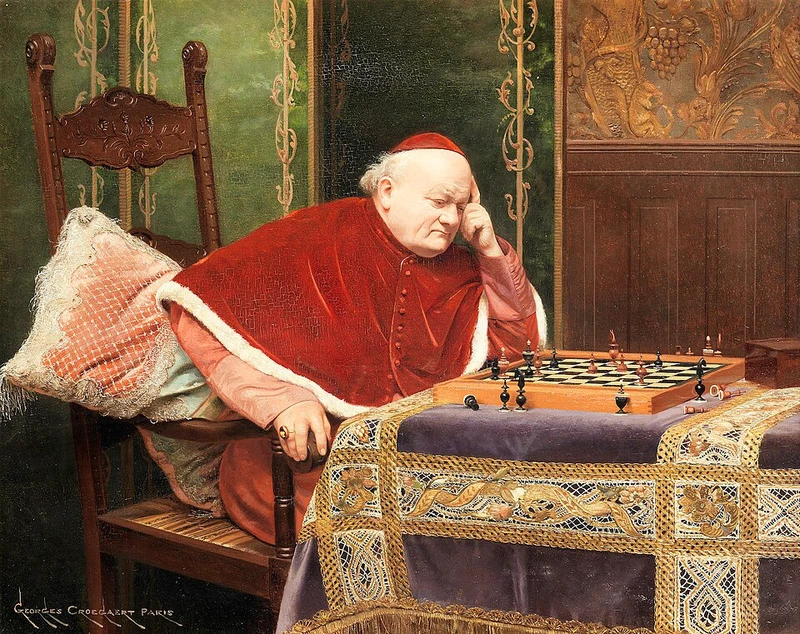
The next one is a real tragicomedy which I managed to swindle:
The funny part is after sneakily working my way from desperation to a drawn endgame of rook+h pawn vs bishop (once the pawn is on the 5th, black holds with best play), I decided to stick the bishop on the wrong diagonal and lose. But once white pinned my king against the wall, miracles started happening, and stalemate resources saved the day. I don't remember the exact study this was imitating, but I'm sure it was subconsciously giving me hope to play on.
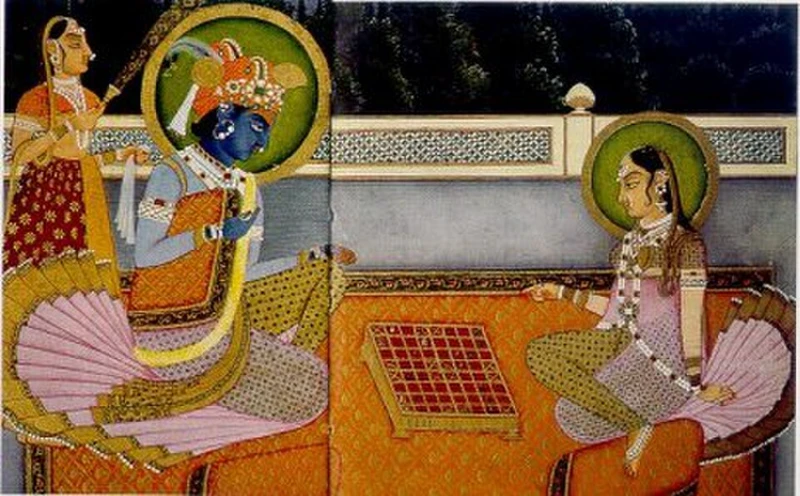
The last example was the most dramatic, mostly because the time control was 5 second delay instead of increment. With 10 seconds left at the end against a minute for my opponent, it was ridiculous to play such a delicate position. Like trying to paint with a time-bomb ticking down 5-4-3-2-1...
After an intriguing line in the French, we reach an endgame where only black should be able to press. The opposite-colour bishops don't help sadly. The surgical 36...b4! Would have been decisive, but it was far beyond me. Instead, things got interesting after the study-like 56...Kc4, sacking the rook. Of course, Yogesh realized that he can't take it, returning to stubborn defense.
On move 58 black has to create something, otherwise their pawns will fall with Bf6. The only question was, 58...Bf7 or Bf5+? Both pose problems! I decided on 58... Bf7 because it seemed less drawish. Would you take this bishop as white?
Yogesh took, wanting to keep the tension I guess. Up to here, 56...Kc4 and 58...Bf7 were cute, but now we're really into study territory. Although black's pawns seem unstoppable, the black king doesn't have many good replies to white's checks. He has to prevent white's Rd4, stopping the pawns. He can't step on c5 because of bishop checks. He can't go on c6 because of e8Q, so his only shelter seems to be d6.
Here Yogesh shocked me with 65.e8N+! which is the only way to survive for white. I had to navigate the minefield of squares with my king, with no time remaining, hence the final blunder. It's sad that anywhere my king goes, the knight+bishop+rook have resources to save the day. A real-life underpromotion study, made by accident!
So perhaps the themes in composed positions are fancier, involving crazy sequences of only moves that are unbelievable. Yet apparently, some rare tournament examples can be stranger than fiction!
I hope you enjoyed this post.
If you're interested in solving studies to improve your game, check out fiftymoves.com, a great resource for endgame training.
If you want your kids to be endgame experts, I run the biggest school in North America for kids and teenagers.
If interested, you can find more details and arrange a free trial class here and do a level assessment here.
Next week is the last week of my summer chess camp in Richmond Hill, which you can find here.
Lastly, If you enjoyed the writing style above, you can check out my book on chess stories, which you can find here.
Cheers!
You may also like
 NM ZugAddict
Are you rated 1600? Good.
It's good to be 1600 and I will explain why IM theScot
French Defense: The "Dullest" of All Openings
A foray into the evolution of the French Defence RuyLopez1000
History of the Knight: Increase Your Horsepower
An Exploration. ChessMonitor_Stats
Where do Grandmasters play Chess? - Lichess vs. Chess.com
This is the first large-scale analysis of Grandmaster activity across Chess.com and Lichess from 200… IM theScot
Chess Stubbornness
A post about how chess lends itself to stubborn moves; on and off the board. flash3s