When to punch, when to duck?
When to punch, when to duck?When to punch, when to duck?
Chess is a matter of delicate judgement, knowing when to punch and how to duck.
Bobby Fischer
The eleventh World Champion’s quote is quite famous and profound. Chess, as often happens in life, is all about timing. This includes the art of waiting. Knowing when to wait and when to act is definitely the hallmark of any great chess player or artist. A recent favourite of mine is this poem by one of the most renowned Tamil poets of all time, Thiruvalluvar, on the importance of timing.
கொக்குஒக்க கூம்பும் பருவத்து மற்றுஅதன்
குத்துஒக்க சீர்த்த இடத்து
A rough translation would be: “One should be like the crane bird, which waits almost indefinitely for its prey and when the time to strike arises, swoops in on it”.
Thinking from the viewpoint of a chess player, this seems to be of primary importance. In fact, this is also what Bobby said about the royal game! I would like to share a few interesting game positions which stem from this theme.
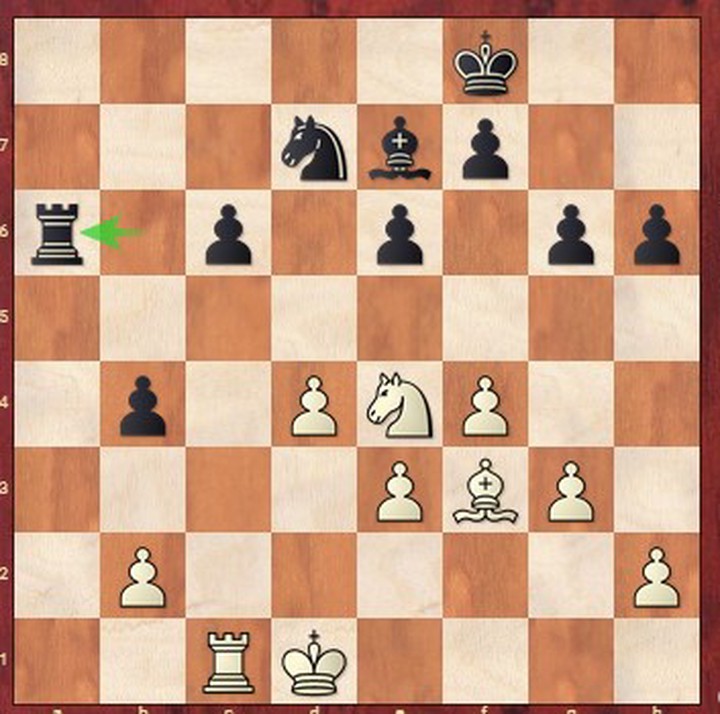
Aronian v. Jakovenko - Chess Olympiad 2010n the above position, after 32 moves, White continued with 33.Nf2!? which is intended to simply improve and regroup his pieces in such a manner so as to make use of future opportunities. Also, the c6 weakness is directly attacked. So Black replied with 33...c5 and the game continued with 34.Nd3 Ra5 35.Ke2! and already Black is not in an easy position to find moves! This signifies at least a practical advantage for White in this position. And here Black continued with 35....Kg7 n the above position, after 32 moves, White continued with
33.Nf2!?
And this moment seems especially instructive to me. White still waited with
36.Rc2!
White keeps all his pieces in readiness, while yet not taking any action. He can feel that his opponent is in an uncomfortable position because he cannot play the releasing move 36...cxd4 due to 37.Rc7!, winning a piece and continuing this further. He sort of expects Black to release one of his pieces from the seventh rank so as to prepare for cxd4 on the next move. So in a sense it was a cleverly veiled trap by Aronian, clearly waiting for an opportunity to strike.
Maybe Black should continue waiting too with 36...Kf8!?, but clearly that was not his idea of playing his king to g7 earlier. Instead, Black went for the most natural move.
36...Bf8?
in order to release his pieces from a possible skewer by the rook on the seventh rank.
And, at this moment, Aronian shows his keen eye for striking at the weakness which is not that easy to spot! The bishop while occupying the f8-square denies it to his monarch, and this in turn makes the square e8 a very pretty one for White’s light-squared bishop.
Essentially Black’s weakest point in this position is the pawn on f7 — which has been spotted by Aronian's eagle eye! The game continued with
37.Bc6! Nb8 38.Be8!
White won the game in a few more moves because of the weakness of the f7-pawn and his better coordination.