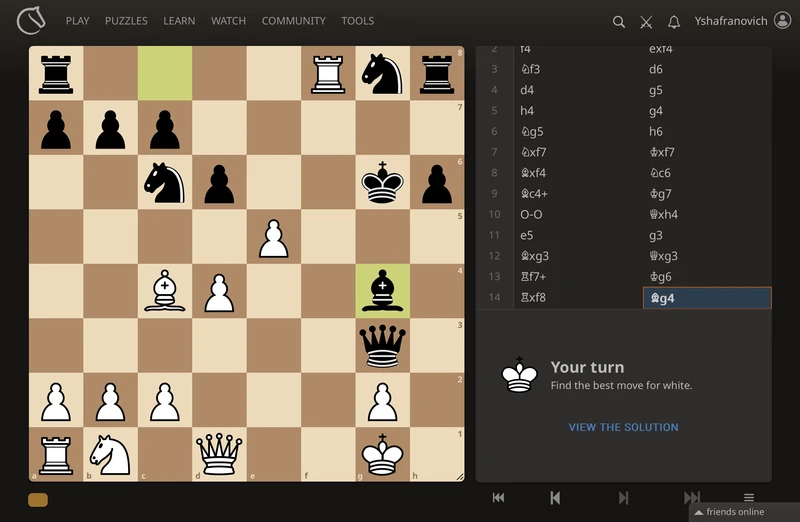
Kattenevos (Val), vs Shafranovich (Yisroel); over the board tournament, 2024.
The benefits of “just playing” chess, with (mostly) human analysis.
Over my chess career I have found that the best way to improve was not just to read chess books (though they are useful for spotting problems in your technique) but to just play games and analyse the thought process behind your moves.Most chess information available to the general public stresses part time play and some computer analysis. However, not many people will notice a notable change in their play, through this method. Chess books and examples given by blogs and the like; show vague examples from games which do not really help you fully understand the underlying concept and apply it to your games. An example of such a blog post is shown below.
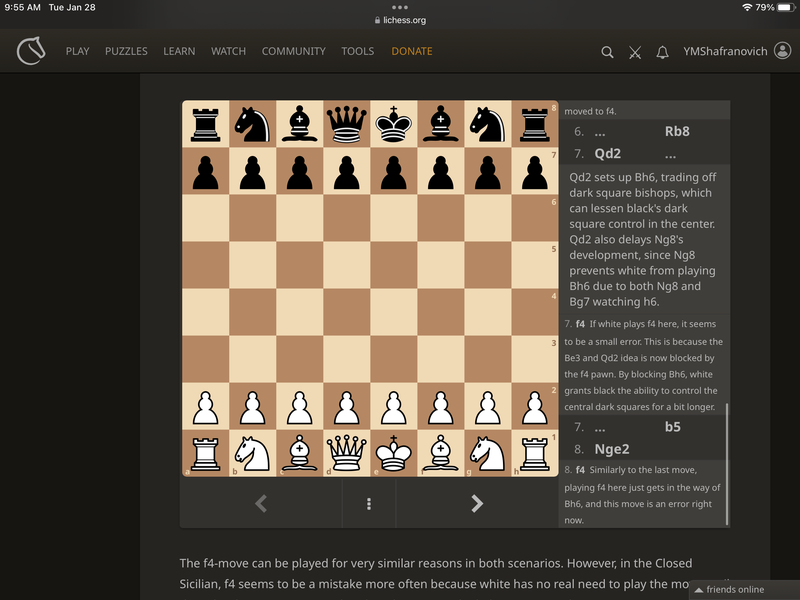
The blog example above gives a very long winded game that (while true) does not give a true understanding of piece blockage and square control. Furthermore, the break down of each move is describing just one step of a thought process. In reality, the best way to improve your games is to analyse your games with out a computer. Essentially the idea being to think through your thought process after the game for every move you made. While it is still important/useful to still use the computer for a quick check, the main part of analysing your games (or more accurately “thinking through your games”) should be by yourself without any computer suggestions. After all, most humans can not spot moves like computers can with little study of the position. Rather every game should be analysed in accordance with the time control of that game and the moves spotted or missed by the individuals on both sides. It is crucial that the moves looked at be ones that you can come up with on your own; and that they should be tactical or strategical patterns you would often spot in a game.
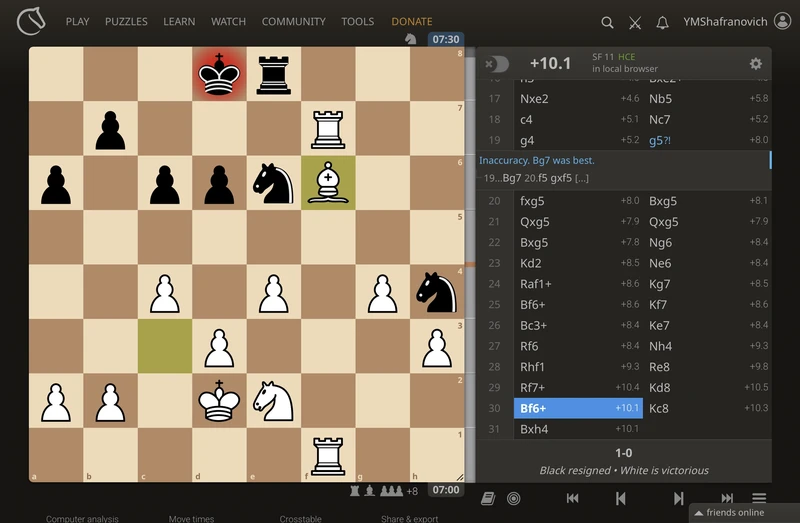
This works especially well with helping you develop a thought process/plan and spot mistakes, but what should you do to help gain new knowledge of patterns or tactics? That is where chess books and blogs come in. One should look through a chess book the same as looking through a game: namely by looking to see what that author spotted in that game and comparing it to knowledge you already have. Often just by looking for a plan on both sides you will come to understand (without help) moves even grandmasters are playing. Likewise, when looking at the possible plan of an opponent you will come to discover moves and tactical patterns you did not see (or know about) before. After writing this blog post I came across a blog by CM Akita183 who talks more about this topic in depth. In addition to all that which I have discussed so far, looking at games of grandmaster (especially from the past such as Kasparov) is especially helpful. The best way to gain the most from those games is to look for the plan on both sides and it will hopefully show you a world of new ideas and tactics. However, if you choose to look at some games make sure to analyse yourself before looking at grandmaster analysis such as a chess book or online game chat. Also, one should analyse after every single game played in depth before moving on to a new game, weather it was a win or loss.
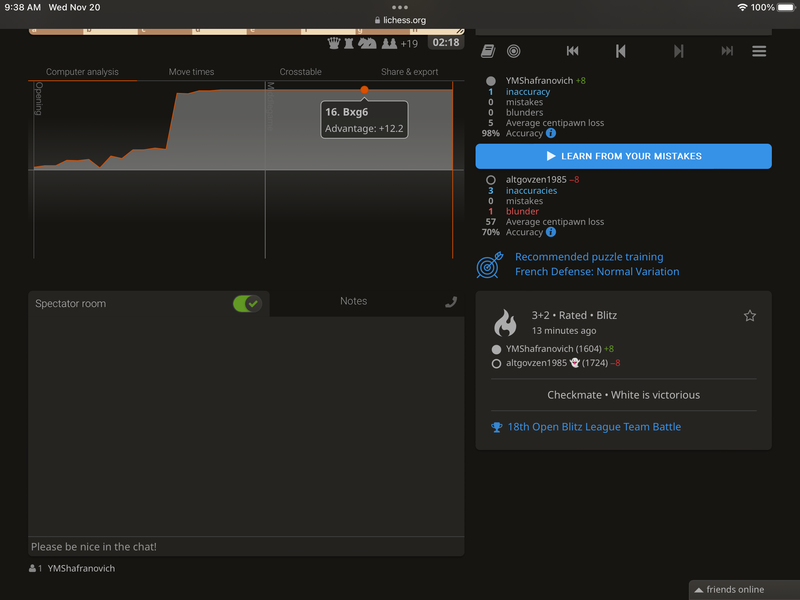
It is also important (as the the above image shows), to analyse your games despite your accuracy; whether you win or not. It is vital that you review you opponents moves in game such as the one above to figure out his thought process as well as your own. This helps you both with thinking out a scenario as your opponent. Also it is crucial to make moves based on thought and planning, rather than intuition.
Computer analysis can be vary tricky. It could be that you played an average came and you think you played a great game when really it was your opponent that messed up. The computer will not tell you that the reason your moves were good because they were the most obvious. The game above was a perfect example for this. When analysing this game I realised I never really had much of a plan. Instead most moves I made were based on intuition; and (in this case) usually responding to a blunder or inaccuracy of my opponent. This became obvious to me when I analysed this game without a computer. I had a hard time coming up with a string of thoughts; the moves I made just shifted pieces waiting for a blunder; often the moves were inaccurate simply because they had no real thought behind them, just some half baked idea I sent at my opponent with the expectation that he could do nothing about it. Most moves seemed to be made just as a reaction to the opponent and not a product of a player with the ability to look three or four moves ahead easily. It was a bad game despite the fact that I won simply because I did not win based on skill, my game would have fallen apart in the hands of a more capable opponent.
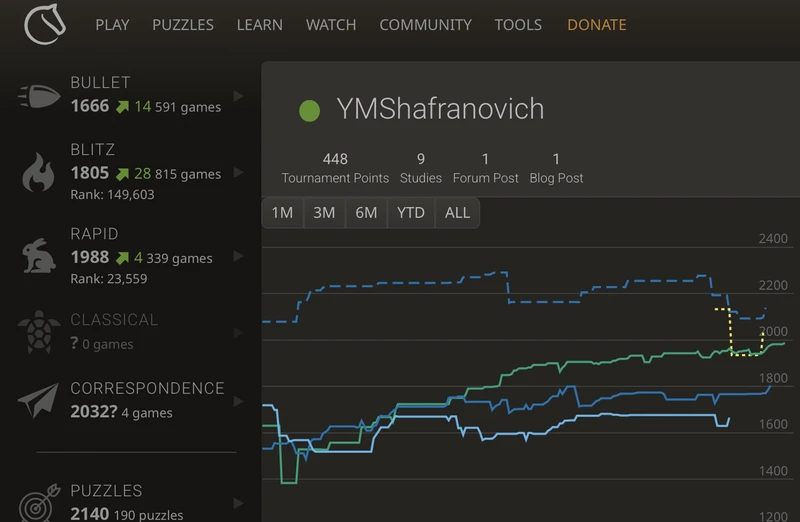
It is very easy to lose sight of this and slip into this way of thinking, however the better players have already moved past this way of playing by correcting their way of thinking, not by increasing their knowledge of tactical patterns. I would like to make the case that if you can just change your way of thinking, you can easily rise two or three hundred rating points with-in a period of one to two months. You can accomplish this without even looking at one chess book or even analysing one game. All the more so, if you do analyse and look at chess books properly you will be able to increase even higher.
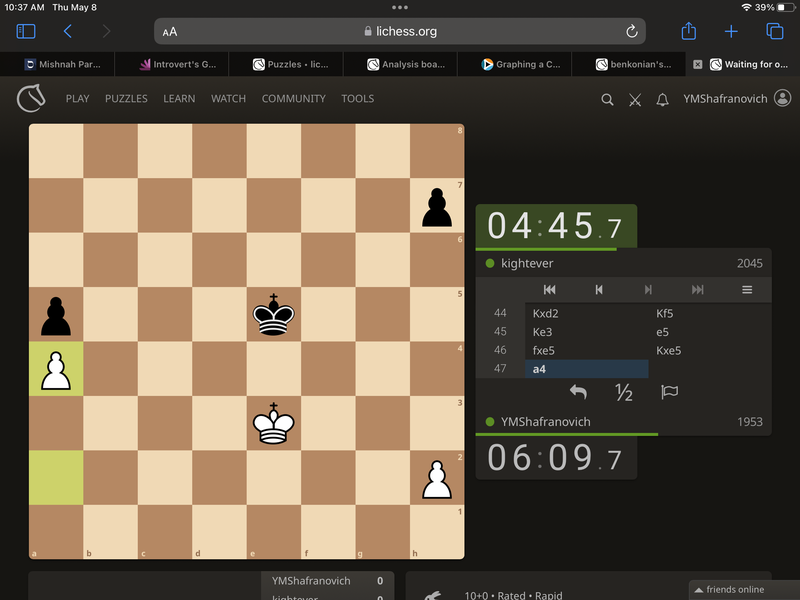
The game above me is a perfect example of the next concept I would like to talk about. Sometimes when you have positions like this one, a person is struck with indecision, it seems to be a draw; but it was a long game and you fought hard. Maybe this game was played following several loses and you are eager to achieve a win. Or maybe the opponent is lower rated than you and you don’t want a draw. Or maybe the opposite, the opponent is higher rated than you and a loss will not cost you much. In all these cases, it’s very easy to not think and make ”interesting”, dubious, and aggressive moves to try to shake the draw. What happens in most cases (including the game above), is a blunder followed by a hard loss. What should have just been a draw, became a lose due to arrogance or ambition. I am not saying all draws are lost that way, but a surprising number of draw turned into loses even on the TOP LEVEL just because of the aforementioned situation. However, since some games such as these do lead to a win it is hard to spot why this is a faulty strategy.
The last thing I will talk about is ratings. Ratings are not designed to be an accurate measurement of skill. Rather it is created to give you an idea of how good you might be in proportion to other people or your strength compared to others. Since some people play both for fun and to “show others” (for some reason) how good they are through their rating (and to some degree a person should use their rating as motivation) but it causes them to treat a game as a means to increase their rating, rather than a fun and creative game. However, I believe this detracts from the beauty of chess. A chess game itself is a study of human intellect and creativity. Often when a person plays a great game there is a feeling of exhilaration, a “high” if you will. They main reason behind this feeling is attributed to your intellect persevering over your opponent. The chess game itself is beautiful in its scope and depth, each combination an artists stroke on a blank canvas. The movement of pieces; large, sweeping, aggressive attacks; subtle attacks and improvements on piece positions, are all part of what makes chess so addicting.