Comments on https://lichess.org/@/habbis/blog/the-only-method-you-need-to-know-for-figuring-out-the-opposition/G4KvLwRm
Comments on https://lichess.org/@/habbis/blog/the-only-method-you-need-to-know-for-figuring-out-the-opposition/G4KvLwRm
Comments on https://lichess.org/@/habbis/blog/the-only-method-you-need-to-know-for-figuring-out-the-opposition/G4KvLwRm
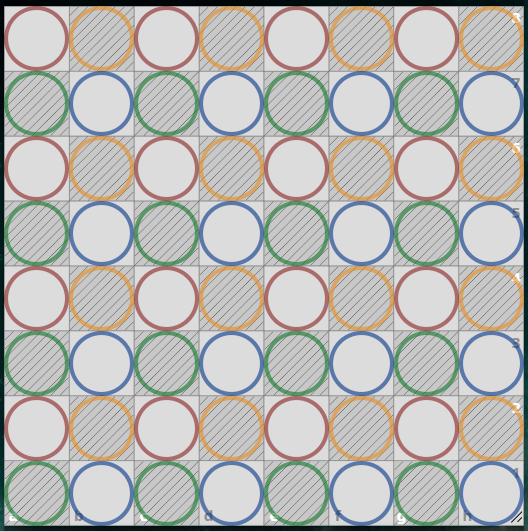
The opposition field covering all 64 squares with 4 classes.
https://i.postimg.cc/W10FktMS/screenshot-2023-11-02-at-22-52-30.jpg
notice each classe contains on corner only. I made a study public. all 4 classes. Each classe can be seen as the 45 angle rotation of the previous one: clockwise from Lower Left Corner (LLC). With the following color code.
(green, red, orange, blue) for (LLC, ULC, URC, LRC). See the following study for 5 chapters.
Opposition Field 4 Classes
https://lichess.org/study/oGkqNpmF/
The last chapter could hold on my tab all the colors above, but I left the maximum that the server can keep, upon reload, there is enough coverage to see how to grow the whole field.
This should complete the 2 shown in the blog. Distant oppositions (with various angles) can be retrograded or derived back from direct or diagonal (direct) opposition, itself might be needed as in blog for some pawn related sub-goal to break the otherwise draw 2 king problem outcome..
The opposition field is just a component of planning, and is for study purposes. For those who like visual understanding of the tools they might use in play. I find that understanding helps reduce the amount of rote things to keep in mental storage. But mostly it helps me accept other tools as less mysterious and dropped from above.. (which might amount to same thing in the end, small brain happier).
I am updating the above linked study. with some introduction chapter. Almost done. 23-11-10. I backlink here and blog and habbis blog study there. and Explains what I like about the opposition field point of view, in relation to more practical endgame problems. One could try to revisit the blog and study to see in mind's eye the full opposition field. That opposition is a tool, of planning but not a recipe to use blindly. It explains and retrogrades all notions of immediate opposition to the whole board.
From one color look at the neighboring colors. Play with king placement. Fake some abstract target points (small squares) to control with either king. But first.. try to play "tag the other" .. which king will end up keeping opposition if there were a target on the board.. how much room is there to shift from one class to the other.. Mileage might vary. But I thought I would share my small eureka. This is the kind of visual logic I might be talking about here and there, or there.