
Why I Created a Hungarian Chess Corner in Manhattan
Recently I finished a small project that means a lot to me: creating a Hungarian Chess Corner and Hungarian Chess Wall of Fame inside Budapest Cafe & Restaurant on Manhattan's Upper East Side. The idea started with a simple question: where can someone encounter Hungarian chess history in New York City?
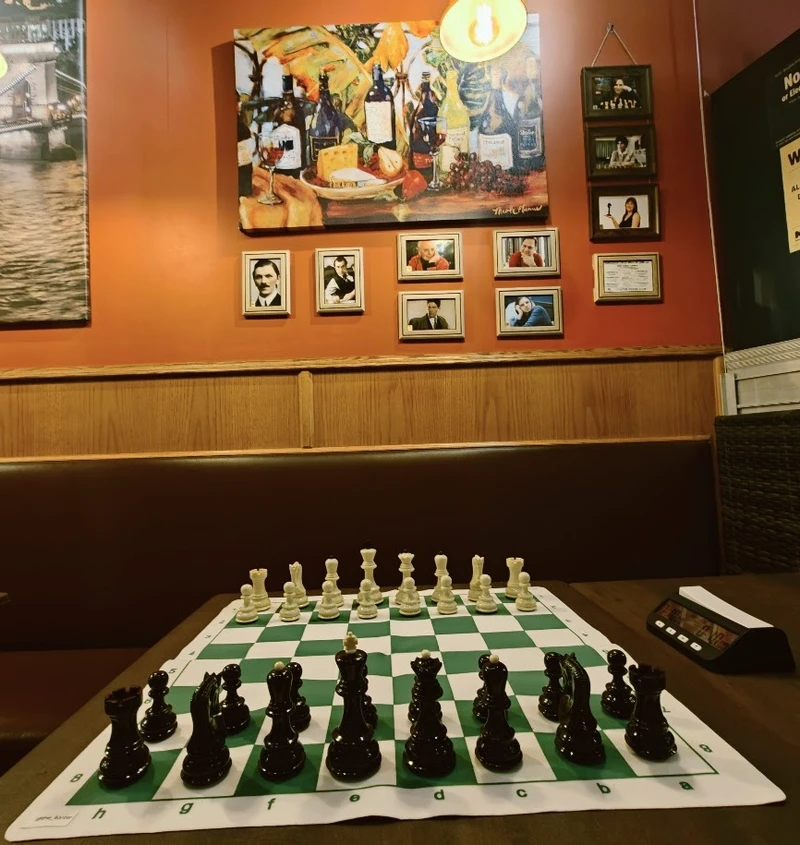
Every chess player knows the Benko Gambit.
Many players know the Maroczy Bind.
Far fewer know much about the men behind those names.
The idea stayed with me because through Lionter Chess Club, a US Chess affiliate, I have spent a great deal of time organizing free community chess events and looking for ways to connect chess with culture, history, and local communities.
Several months ago I began thinking about Hungarian chess history in New York.
The city has strong connections to Hungarian culture, but there are only a handful of places that still visibly represent that heritage. I initially considered creating a chess corner at the historic Hungarian Pastry Shop. However, after several visits I concluded that the practical conditions were not ideal for regular chess activity. The tables were small, customer traffic was heavy, and the atmosphere was often crowded.
Eventually I approached Budapest Cafe & Restaurant on the Upper East Side.
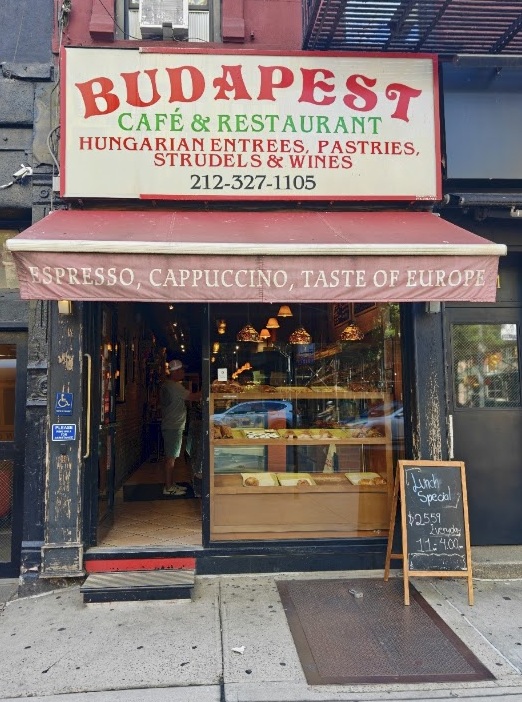
The management was supportive, and together we found a way to create a permanent Hungarian Chess Corner.
I donated chess sets, clocks, framed photographs, and educational materials.
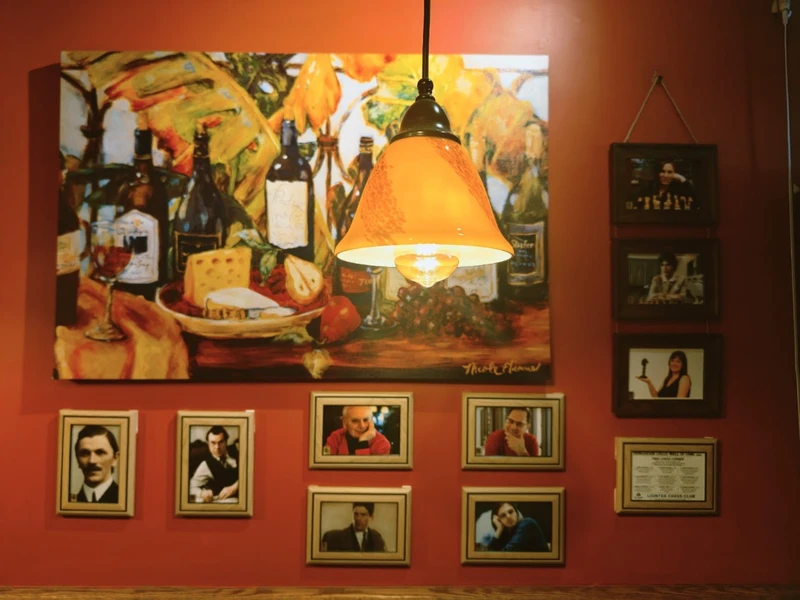
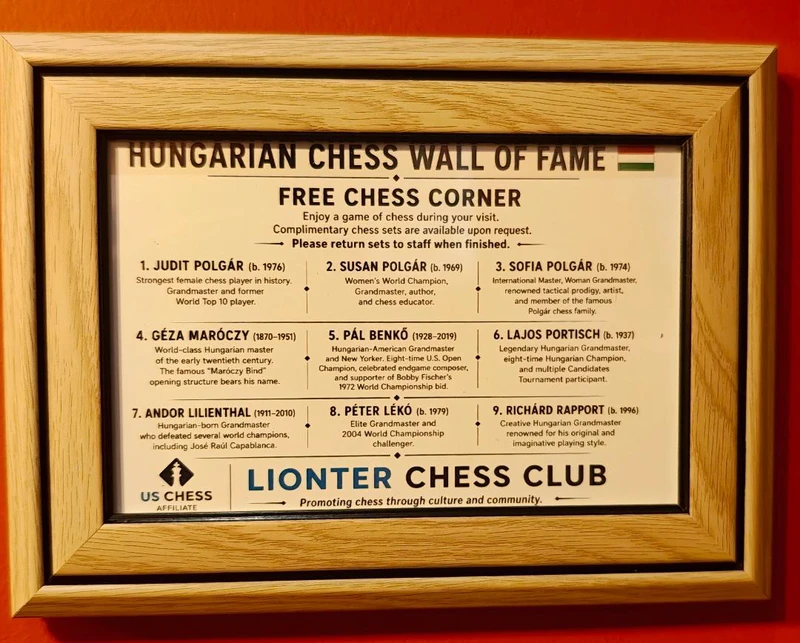
The centerpiece is a Hungarian Chess Wall of Fame featuring Judit Polgár, Susan Polgár, Sofia Polgár, Géza Maróczy, Pál Benkő, Andor Lilienthal, Lajos Portisch, Peter Leko and Richard Rapport.
Of all the players on the wall, Pál Benkő may be the one I think about most.
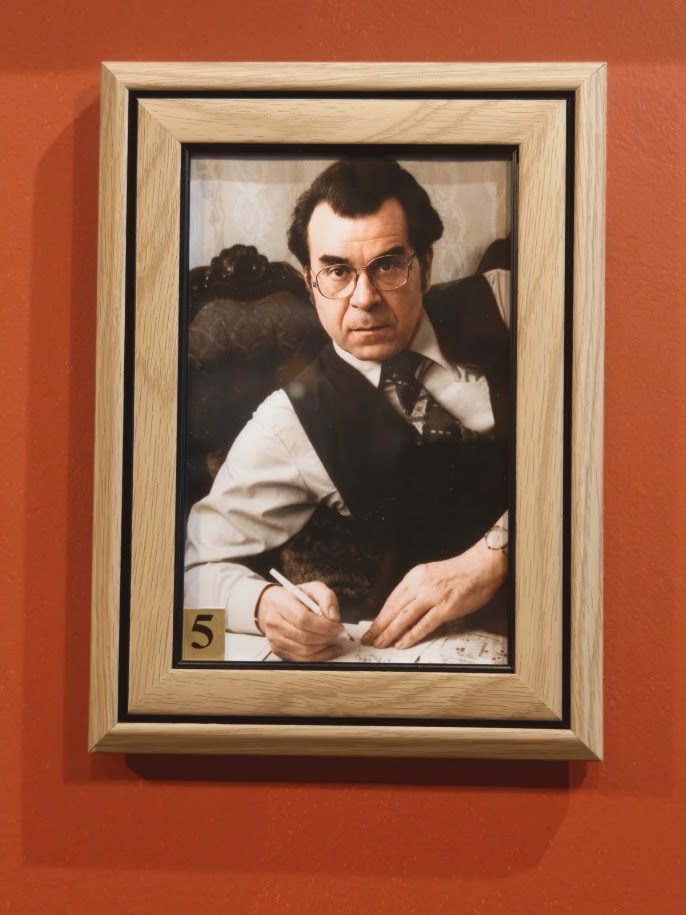
Benkő was not only one of Hungary's strongest players. He also became an important figure in American chess and spent much of his life in New York. Yet unlike Marshall, whose legacy remains visible through the Marshall Chess Club, Benkő has relatively few public reminders of his connection to the city.
The same is true for Maróczy. His name survives every time someone discusses the Maroczy Bind, but the man himself is slowly becoming less familiar to many players.
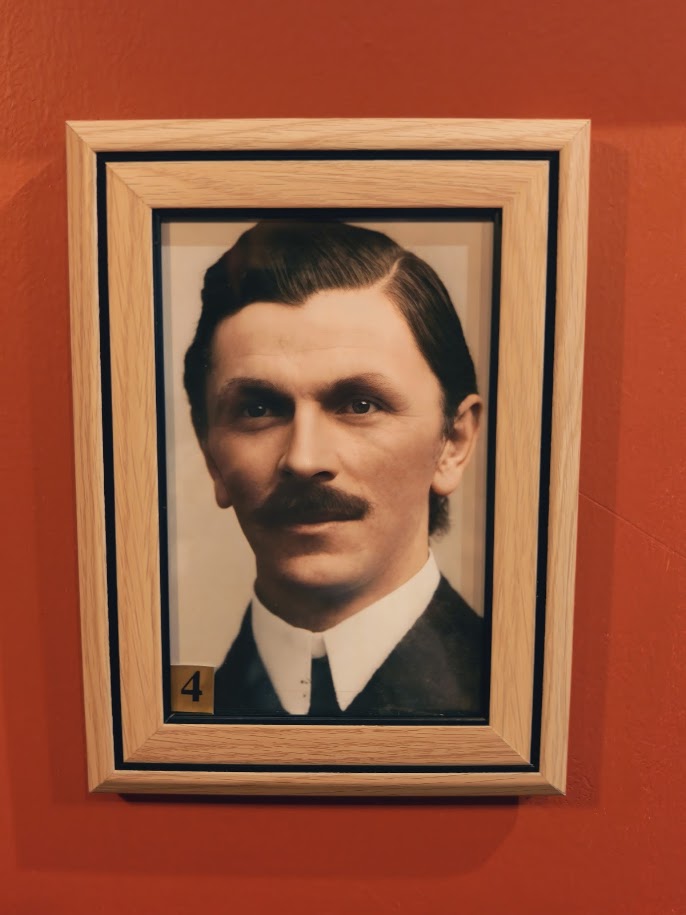
The purpose of the project is not nostalgia. It is education.
A visitor who notices a photograph of Benkő may decide to look up his games. A young player may discover that the Maroczy Bind was named after a real person. Someone who has heard of the Polgárs may become curious about the broader tradition of Hungarian chess.
Chess history survives when it remains visible. My hope is that this small corner of Manhattan will help keep a few important names visible for years to come.

