
Beat the Jobava 2
A full dive into the Jobava for Black
Now, that I have over a year of experience in playing against the Jobava with 3...a6-b5, I think it's time to create a follow up to my old study and blog. It's only 5 chapters, so I'd reccomend looking through both of those before, to get a feel for the variation I'm going to show, if it's your first time seeing this.
Back then I said White has 4 ways of continuing their development: quick Nf3–Ne5, natural Nf3–Bd3–O-O, symmetrical a3–b4, or playing a4. That's kinda wrong. White has 2 more unique ideas: Bd3–Ne2 intending to meet c5 with c3 and delaying the development of the g1 knight (waiting for us to play e6) in order to achieve g4.
First let's take a look at the baseline — White simply castling short.
Normal development
The move order is very important. We play 4...b5 instead of 4...e6, so White can't get g4 that easily. Playing 5...Bb7 would allow White to play 6.a4! b4 7.Na2! attacking b4 7...e6 8.c3! undermining the pawn. We want to meet that with bxc3–c5, but the bishop on b7 is vulnerable (Qb3). 6...Bb7 is also important, as 6...c5 allows White to take and play 8.e4 (lines there get pretty crazy).
Having established the move order, let's look at the position. To an untrained eye it looks peaceful, boring even. Remember the thumbnail? The position where we are completely winning, despite for a moment being down 15 points of material arrises from here! How's that possible? First let's look at what White can do.
The obvious pawn break is e4. White can support that with Re1 or Qe2. a3 is also useful, to stop any b4 intermezzi. Another plan for White is to try and use their develompent advantage to generate kingside play with Ne5–Qf3.
Our next move regardless is Nbd7. It's the mose flexible, as we don't always want to castle, but the knight always goes to d7.
Ne5–Qf3
A very interesting idea of playing 11...g5 out of the blue. The queen on h3 is rendered out of play. If White chooses 11.Qg3 instead, they run into a fork, losing the bishop pair, but the trouble doesn't end there, as the bishops can be immediately felt after O-O–f5–Rf6–Nxe5–Rg6. If white chooses to wait with 9.a3 instead — the same problem 10...g5! with an attack brewing.
And that's only an apperizer! The real magic after White goes for the e4 plan supported by Re1!
Re1–e4
Crazy right? 4 moves and White can be lost from such a peaceful position. How likely is it to happen? Since discovering the idea I faced the Jobava once, and actually got it in a game already! Btw the position referred in the thumbnail arises after 9.a3 Nbd7 10.Re1
Now you might be wondering what can we do against Qe2–e4? White defends f2. Surely it's a boring draw right?
Qe2–e4
Honestly, this position deserves a study, or at least a chapter dedicated only to itself. If you aren't a GM with 90 minutes on the clock, don't go for this
That's what I said over a year ago in my study against the Jobava about a line I'm about to show you. Even with f2 defended White fails to avoid trouble!
Yeah... is there any value to analyzing the position so deep? Probably no. Was it fun? Yes! On some serious note, this sacrifice isn't as scary as it may seem. Remember, after 13...Qe7 White can't let us castle, so the queen has to stay on the a2–g8 diagonal and since Bd5 is a thing, the only move is 14.Qb3! Bd5 14.Bc4! Then our idea is Qf7, but we want to gain some initiative on the queen. If White plays 17.Qb3 instead of Kh1, 17...Qf7 becomes much more dangerous, as the idea of Re1–Re6 comes with only one threat — Ng5, which we can stop with h6 initializing manual castling. Otherwise we get the queen trade. White has a much tighter rope to walk on, so I think the risk of 10...b4 is worth taking.
The best part is White can avoid that by starting with a3. This is the tamest of all continuations, also the safest one for White. 11...d4 12.Nb1 Nh5 is an interesting continuation, even with possible f5 break, but it's very complicated, and with perfect play White get's very fast counterplay on the queenside with 13.Bd2 e5 14.b4–a4
From my research most people who play e4 indent on pushing the pawn to e5 if possible — therefore my reccomendation 11...Bb6. We want to bait 12.e5 and strike with 12...d4. Even if White navigates the complications correctly we still get an edge. Interesting position arrises after 12.exd5 aswell, where we recapture back with a pawn, getting an interesting IQP position, with d4 on the table.
Okay, with our baseline established, let's look at White's Ne5 deeper.
Ne5 – Madman
Everytime this move is played White makes their intentions clear — an attempt at kingside attack. Whether it's with the queen, or g4–g5 isn't yet revealed. I already covered what happens after Bd3–Ne5–Qf3 with O-O included, is there a difference if White delays castling, or maybe goes long?
Bd3–Qf3
If White tries to get a Sicilian attack, they will run into more counterplay than they can handle, thanks to the open c-file. 9.Qf3 gollowed by 10.g4 is very interesting, as castling short quickly will land us in trouble, but there is a brilliant defensive resource 10...Bf8! preemptively defending g7, so 11.g4 can be met by 11...Nxe5 12.Bxe5 Nd7!
Clearly with less space White can't comfortably launch an attack. An interesting way of dealing with that is going for a quick g4, hoping to get g5 for free.
g4
7...Nfd7 is a very strategical move, but funny thing is, even if White played something like 7.a3 or 7.Be2 it's still a great move, as the logic behind it stays the same — take on e5, if the d-pawn recaptures go for Nd7–Bb7, if the f4-bishop go for Nc6 threatning Nxe5 and when the bishop leaves cxd4. It wouldn't work against 7.Qf3 though, due to 8.Nxf7!!, there you can play 7...Nbd7! instead.
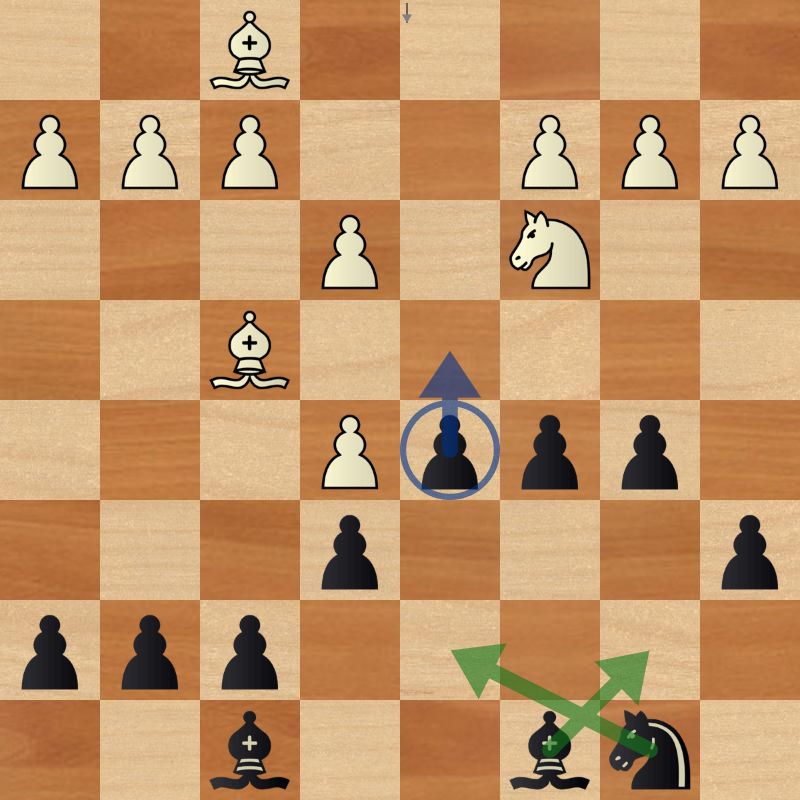 After dxe5 you want the bishop on b7 due to the d5 pawn mobility, so the knight belongs on d7.
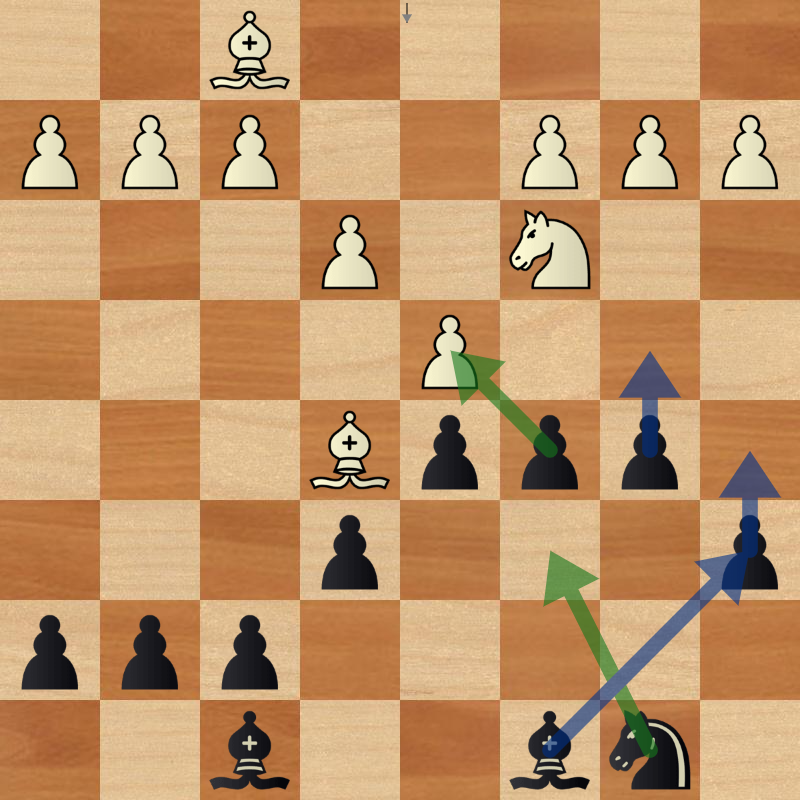 With d5 blocked Bb7 isn't good, so blocking the diagonal doesn't matter. The bishop could get traded after a5–b4–Ba6 for example.
That should cover all fast Ne5 tricks. Now let's look at a very unique approach — a4.
a4
White want's to quickly clarify the queenside structure in hopes to create a weakness, or freeze our play allowing for a free kingside initiative.
Na2–c3
There is no other justification to playing Na2 than following it up with c3. White can delay it, but will have to play it at some point. We want to meet that with dxc3. If White recaptures with the knight there are 2 weaknesses on b4 and b2 meaning the b-file control is crucial, but White's London Bishop defends the b8 square, which means we HAVE to play Bd6. In case of bxc3 we aren't in such a hurry.
Ne2
It comes down to pushing c4, when we have a good answer to b3. If White were to play 8.Ng3 9.Bd3? for some reason, we have 9...c4 10...a5!? intenting to defend c4 with Ba6, but we can't play a5 before c4 due to Bb5+–Ne5, so this only works when c4 comes with a tempo.
If White were to capture on c5 all you have to watch out for is Nd4–Bxb8–Nc6. If you don't blunder that Black just stands better. Nbd7–Re8/Qe7 is good, trying to play e5. If White goes for Ne5 we as always take and retreat to d7.
There isn't really much to the a4 move. If White delays it with 5.Nf3, 5.Bd3 or plays it even further down the line, the ideas remain the same. That's all about this unique approach. Now it's time to move onto the "critical" line with a3–b4
a3-b4 – Strong opponent
It's quite rare. Out of 41 lichess + 26 chess.com games In the Jobava I faced this 4 times. If your opponent pulls up with this it likely means they are prepared. At least they think so, as with the right move-order you can likely trick them into a lost posotion. The best part is how often this trick works. Out of those 4 games, I got it thrice: 2400 chess.com, FM 2550 chess.com, FM 2450 lichess and here's the fourth game.
Out of curiosity I checked if GM Oleksander Bortnyk (a co-author of a Jobava course) has ever fallen for this trick, and to my surprise in the following position he blundered in 8 out of 9 games he played (on his chess.com account):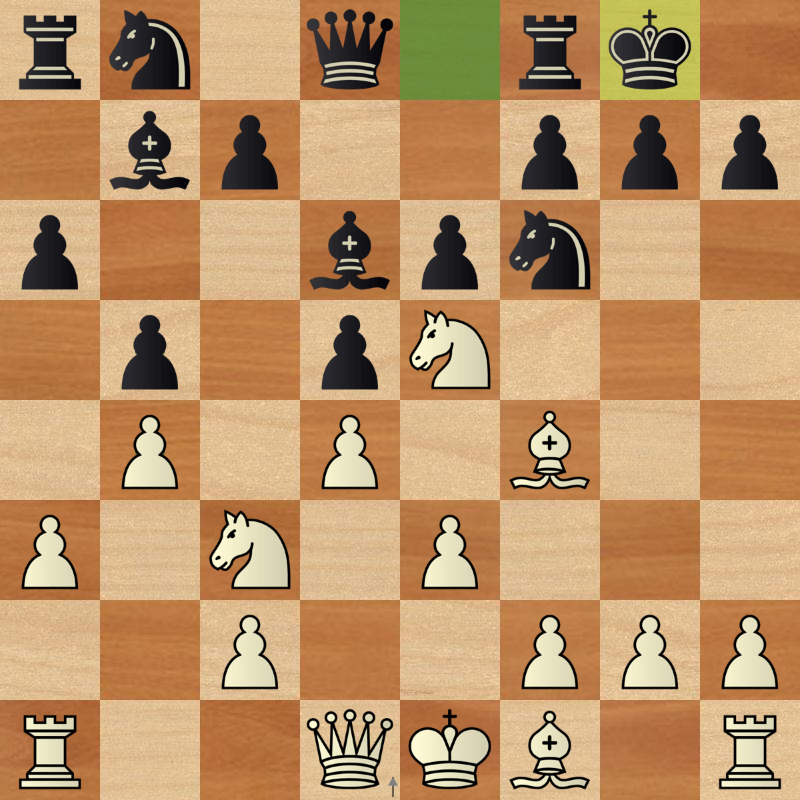 The most natural 9.Bd3 is actually a blunder!

How is that a mistake? First let's talk about the idea behind a3–b4. Similarly to a4 White wants to clarify the queenside early, the difference being here we won't be able to play c5. Achieving a5 is also difficult, because White has good pressure on b5. Which means all opening play will be in the centre and on the kingside. The downside of White's setup is the undefended c3 knight, which would stand much better on d2.
White aims to launch a very quick attack on the kingside with Bd3–Nf3–Ne5–Qf3–Qh3–Bg5, meaning Black can't afford mindless moves. Okay, now let's talk about how 9.Bd3 in the position above is a mistake!
Nf3–Ne5–Bd3
If White ever throws in Bxe4, we always take on e4 first. The knight on g4 will get trapped by h5. If it retreats to f3 continue bulldozing with e5 looking for a fork on f2, or Nxg3–e4. That means White should delay Ne5 after castling.
Nf3–Bd3–O-O
There are more unique move-order tricks you can go for like 7.Nf3 Nbd7 8.Bd3 Ne4 9.Bxe4 dxe4 10.Nd2 f5 11.O-O? h5! with g5 on the next move, but for the sake of simplicity I want to give White a chance to transpose into that lost variation.
The position is quite dry, but it's possible to get a nice long-term advantage like the e5 pawn.
Similarly to White playing quick a4, here I don't have much more to say aswell. Next I want to tackle another idea often deployed by stong players, which is the move g4.
g4 — True Jobava
Since we are delaying e6, White has to play smart to achieve it, waiting for us to play e6 first. There are a couple of ways White can go about this — 5.a3, 5.Bd3, 5.h4 or even 5.Qf3. We want to meet g4 with h6, so if White wants to play g5 White will have to play h4 and defend the h1 rook.
The thing about this is it's just a good plan. The way we want to meet g4 is h6 slowing White down, then a quick c5. White will have to play both g4 and h4 to justify their unprincipled decision, so 5.h4 h6 will transpose to a different 5th move. Remember, we play h6 so white has to play both h4 and defend the rook in order to play g5, this will be important against 5.Qf3
Let's look at White's most common waiting move — 5.a3
a3–g4
White can choose how they want to defend the rook and if they want to take on c5. We don't have a one for all cure, but I find very interesting, that against Bg2 allowing g5 is fine and even better for Black!
The 8...Qa5 move is a novelty, so there isn't much analysis, but I really like how this move looks.
Now let's look at what seems to be a much better way of playing g4–g5–Bd3 — 5.Bd3
Bd3–g4
I think a very practical choice 8...c4 should deal with this setup. If White takes on c5 beforehand, we have a nice idea 9...h5! seen in the last chapter aswell.
On the topic of practical ideas White could try to achieve g4–g5 with a very trichy 5.Qf3
Qf3–g4
Why don't we play 5...e6 6.g4 h6? Because in this case it doesn't do anything.
Remember, we play h6 so white has to play both h4 and defend the rook in order to play g5
Since the queen is already on f3 defending the rook, after 7.h4 White already threatens g5 and we aren't in time with our counterplay. That's why here I reccommend a slightly different approach with isntant c5 "sacrificing" a pawn.
That leaves us with White's last way of playing, IM Alex Banzea's (upcoming Jobava London course author) reccommended Bd3–Ne2–c3. This is actually preferred by some strong engines according to my local analysis, but is extremaly rare in human play. The point is simple, White wants to solidify the centre before doing anyhing else.
Bd3–Ne2
The truth is I've never faced this, and it looks like a normal position. I don't see any value to analysing it deeper with an engine. Also this is a cool correspondence game:
That will conclude my deeper dive into the Jobava London. I'm really happy with the lines I found against White's natural development, taking on c5 and playing for e4, where my games tended to liquidate. I also like positions abter 5.Nf3–Ne5, especially my simple solution if White doesn't take on c5 — 7...Nfd7. Another setup I'm happy I've went through is White's quick g4, as that can be difficult to punish sometimes.
I hope you found some value in this post, or maybe you got convinced to try the 3...a6–b5 line for yourself. In any case thank you for reading, leave a like if you enjoyed and see you next time! Study link.
You may also like
 CkickyCheck
The Most Embarassing Loss Of My Life
Literally lost in 6 moves thibault
How I started building Lichess
I get this question sometimes. How did you decide to make a chess server? The truth is, I didn't. CM HGabor
How titled players lie to you
This post is a word of warning for the average club player. As the chess world is becoming increasin… FM MathiCasa
Chess Football: A Fun and Creative Variant
Where chess pieces become "players" and the traditional chessboard turns into a soccer field ChessMonitor_Stats
Where do Grandmasters play Chess? - Lichess vs. Chess.com
This is the first large-scale analysis of Grandmaster activity across Chess.com and Lichess from 200… CkickyCheck