
Kotov’s Chess Candidate Moves & Analysis Trees
What are the origins of Kotov's ideas and their importance?
Although one of the most well-known chess books, Russian Chess Grandmaster Alexander Kotov’s Think Like a Grandmaster (1970) is little known outside of chess. Kotov was a former Russian chess champion but best remembered as an author, advocating the Soviet style of play that dominated chess for most of the 20th century. The ideas of Think Like a Grandmaster are relatively simple; I read the book at my father’s recommendation in grade school. Think Like a Grandmaster goes over many basic principles of chess psychology and gives insight into the thought process of chess grandmasters. One of the most notable ideas in Think Like a Grandmaster is the concept of candidate moves and analysis trees, with Kotov’s recommendations for finding the best move and mentally examining as many possibilities as the human mind can manage in an organized fashion. Although Kotov’s method is controversial among chess trainers today, almost all top players are aware of the concepts, and the study of chess often centers around finding the best candidate moves and composing mental analysis trees.
In this essay I will briefly explain what candidate moves and analysis trees are and why they are so crucial to advanced chess play. From there, I will provide the historical context of mathematics, economics, and cognitive psychology, where Kotov’s ideas arose, and why these thought processes are essential to theories of mind today. I include Think Like a Grandmaster as not only one of the greatest chess books ever written but possibly one of the greatest books ever whose ideas can be applied to meditation, mind improvement, and mental techniques. Candidate moves and analysis trees are relevant to vast interdisciplinary studies and are a pillar of my Multiple Truth Hypothesis. Candidate moves and analysis trees are some of the most important concepts learned from chess, helping to develop stronger thinking skills and being helpful in all mental activities and fields of study. Although the idea of candidate moves and analysis trees is simple enough for a young child to understand, similar ideas are sparse in other fields. Many people never come across the candidate moves and decision trees, possibly making chess worthwhile to master these concepts to help make better decisions in life in general!
I will trace the origins of general theories of decision-making, the various disciplines in which they arise, and why analysis trees became the underpinning of computer intelligence and theories of predictive mind, hypothesizing that the human mind subconsciously might operate using similar methods to candidate moves and analysis trees. Many players likely intuited the concept of candidate moves and analysis trees within chess, but it is hard to find pre-Kotov origins. Adrian De Groot’s famous Thought and Choice in Chess (1946) has all the precursors necessary for the concept but falls short of the formulation, focusing more on examining the thinking out loud of top players and tests of players of various strengths calculating ability, more related to the development of chunking theory. A Candidate Move is simply moves that, upon initial observation of the position, warrant further analysis. A given chess position might have tens of possible legal moves, from which a player will choose a small number of plausible options to analyze in greater depth before choosing one by discarding potentially poor moves and giving further mental effort to analyze potentially good moves deeper. The Analysis Tree arises from the exponential structure of each candidate move that could lead to multiple possible replies by the other player, which in turn leads to numerous moves the player would plan on their next move, leading to an expansion that appears similar to a tree and branches, hence the name analysis tree. People commonly assume top chess players calculate many moves in advance, but with exponentially expanding analysis trees, that is oversimplified. Kotov explains this process with examples. He gives specific advice for an orderly thinking process of thoroughly going through one branch and then the next without jumping back and forth. That recommendation concerns a more considerable dispute among chess masters and experimental data on how the mind works, which I will return to in future essays. Another key theme is recognizing which candidate moves warrant more profound thought and which can be quickly discarded. Although Kotov gives many other valuable insights into the thinking process, basically all relevant to normal thought processes, the idea of the candidate moves, and the analysis tree is the most important and applicable to general decision-making.
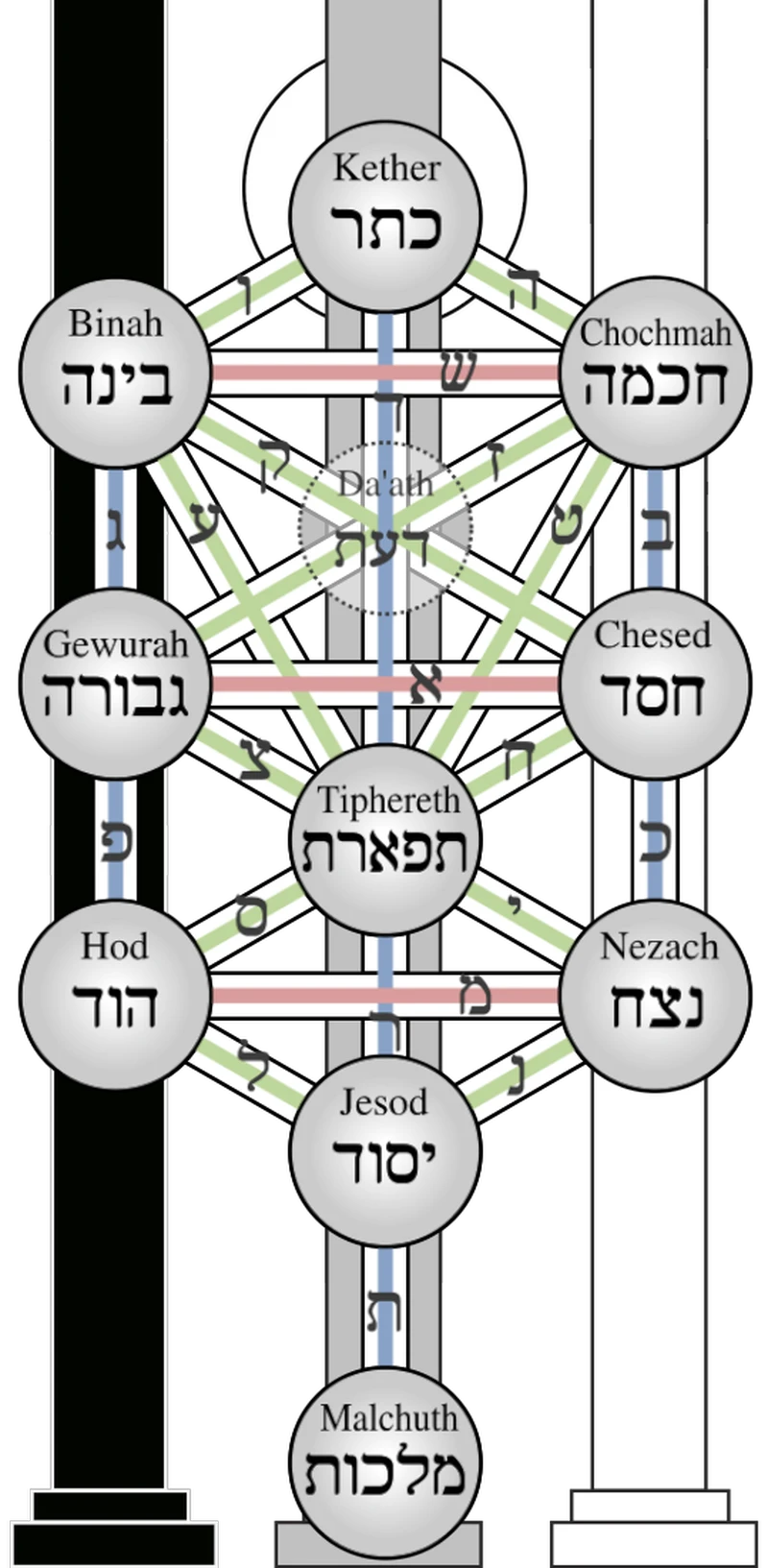
The Kabbalistic Tree of Life
The concept of decision trees has a long history, appears in many diverse fields, and can be abstracted to the theory of mind to help advance understanding of consciousness. Decision trees are found in different forms in ancient esoteric spiritual writings such as Kabbalah and Karma related to free will and action-reaction, including discussions on the meaning of games, including chess as a form of divination. I will leave that for a topic for future essays. Ancient concepts of logical proof, the method of exhaustion, and theories of mind do not seem enough to have produced this simple concept that can now be taught to children. About 800-900 years ago, tree diagrams, including the Kabalistic Tree of Life, became very popular. Decision-making arises more in mathematics, economics, and game theory, including chess. Analysis trees are similar to the expected value/utility theory.

Luca Pacioli, founder of modern accounting
Luca Pacioli, a contemporary of Leonardo Da Vinci and best known for the first writings on double ledger accounting, discussed expected value, which was crucial in developing banking and insurance. Risk assessments, especially determining insurance prices, require charting various possibilities (candidate moves), and the likelihood of those occurring is a precursor to decision trees. Pacioli also describes the expected value and game theory and uses mathematics to determine the best course of play in games and gambling. Choices in simple games can be mapped on game trees that exhaustively examine all possibilities. Blaise Pascal and Pierre de Fermat further developed expected value as a discipline of mathematics related to the Problem of Points, a popular game of that time. The Bernoulli family of mathematicians further developed mathematics in the Expected Utility Hypothesis in relationship to the St. Petersburg Paradox. Expected value/utility is a statistical method to estimate the likelihood of possibilities in terms of a value between 0 and 1, a percent likelihood, or a monetary amount related to financial decisions. Within economics, the mathematics of decision-making has been a centerpiece of research for hundreds of years, using game theory to decipher the best decision in various situations, with the expected value of the calculated average of all possibilities to a single number of, on average, the most likely outcome. Many techniques and statistical methods have been developed in the last few hundred years, like Boolean Algebra and Markov Chains, with Bayes’ Theorem one of the most widely used today. Bayes’ Theorem is critical for many materialistic models of consciousness and computer intelligence. Bayesian Decision Theory is a statistical approach based on tradeoff qualifications among various classification decisions based on probability and the costs associated with the decisions. The Russian chess school was indeed familiar with these precursor ideas.
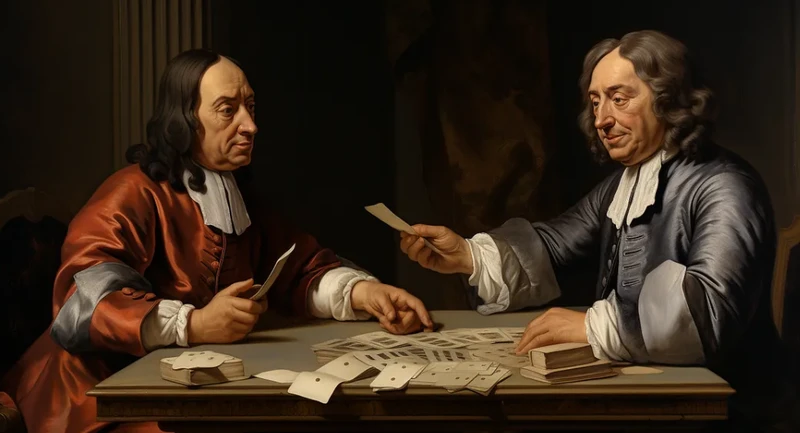
Blaise Pascal and Pierre de Fermat developed probability theory in games and theology
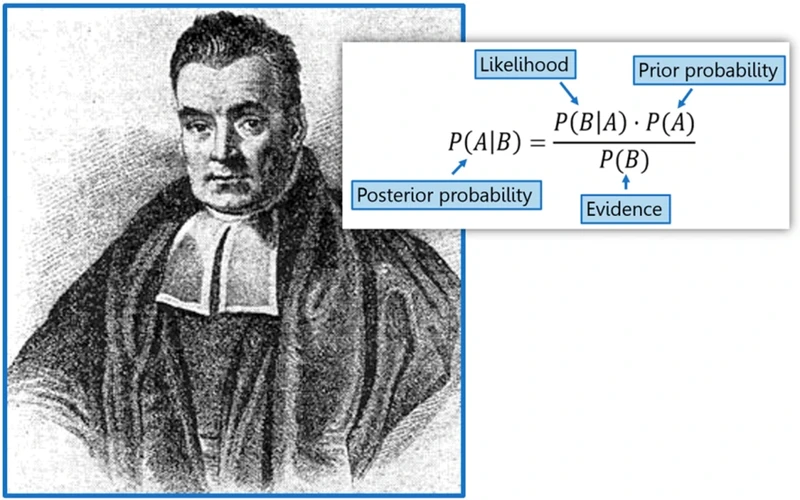
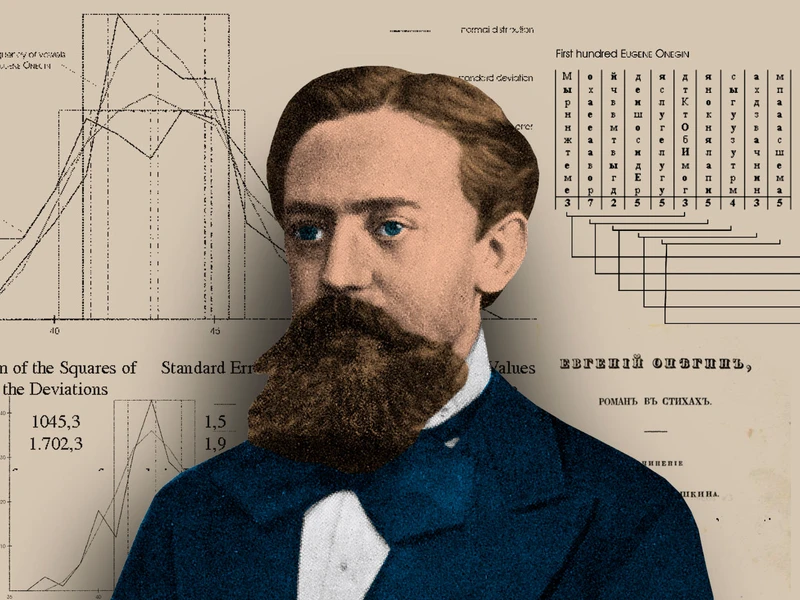
Bayes' Theorem and Markov Blankets
Western thinkers like Descartes and John Locke and the ancients like Aristotle hypothesize models of mind and how ideas are acquired, remembered, and manipulated. However, theories of mind were not subjected to the scientific method till the rise of psychometrics in the late 1800s, like Ebbinghaus and his experiments on memory. One of the fathers of psychometrics, Gustav Fechner, wrote Elements of Psychophysics (1860), measuring sense perception and people's ability to decipher minor differences. Fechner and his colleague Weber devised the Weber-Fechner Law using Bernoulli’s Expected Utility Principle. They abstracted their psychophysics theory to economic decisions and what has become the field of behavioral economics, one of the main fields utilizing decision trees. As mentioned in the last essay on Cognitive Dissonance, most psychometricians were behaviorists who did not focus on cognitive processes but on the mathematics of the hypothetical best decisions, believing people could be conditioned to make optimal decisions. Kotov can be considered part of the more significant cognitive revolution with cognitive dissonance, publishing just years before Chase and Simon’s work Chunking Theory (1973), focusing more on cognitive processes than behavior. Behavioral economics combines mathematics and economics with psychology, not just determining the best choice people should make but also understanding and modeling irrational human behavior and the economic implications, often using Cognitive Dissonance to explain irrational financial decisions.
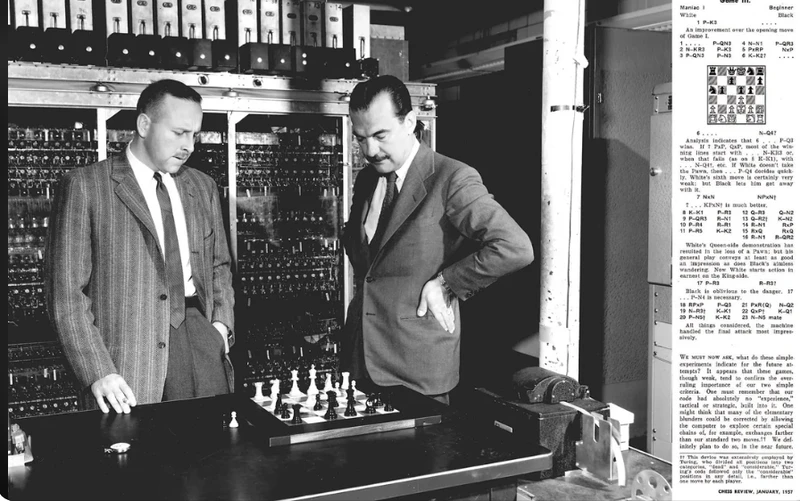
MANIAC 1956 first computer to beat a human on 6x6 chess board (no Bishops) developed by John von Neumann
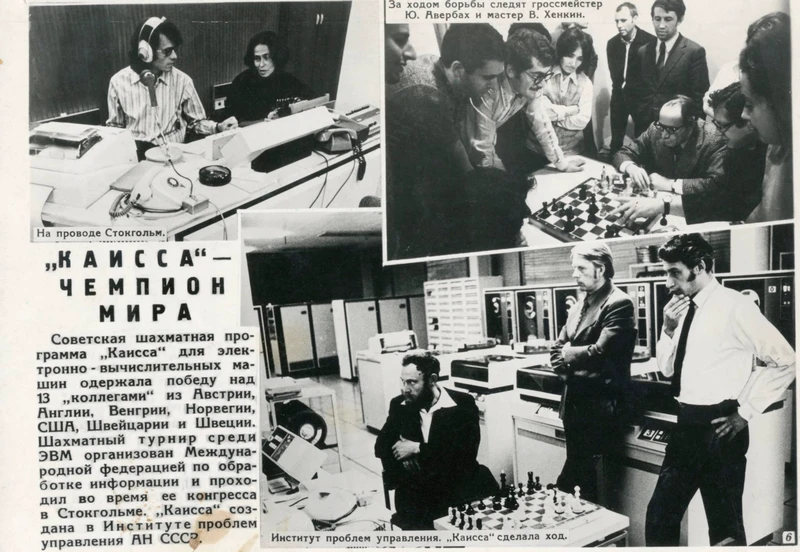
The most significant precursor to Kotov’s idea of candidate moves and analysis trees is computer programming and circuit logic. Alan Turing developed an algorithm called Turochamp in 1948 that used a system of analysis trees by analyzing all potential moves, opponent replies, and further considerable moves. Turing died before Turochamp could be implemented, but a similar program was used on the first computers with vacuum tubes in the 1950s with a method similar to Turing. In 1958, McCarthy, Newell, and Simon developed alpha-beta pruning algorithms similar to Turochamp by using an expected value and only analyzing variations with higher expected values. Arthur Samuel first pioneered this method for checkers. A game tree, like a decision tree, dates back hundreds of years. Game trees are an exhaustive method of creating an analysis tree of all possible variations, capable of solving simple games. Chess with near-infinite variations cannot be solved even by today’s most powerful computers and requires a method of deciphering which variations are worthy of analysis. It took till the 1980s for computers to reach master level; in the early 1980s, the top chess computers could analyze 1,500 moves a second. By 1966, the Soviets and Americans had chess computers that competed against each other, reaching ratings of around 1500. I hypothesize that Kotov’s Think Like a Grandmaster was a reverse anthropomorphism, mapping computer algorithms onto the human mind. Think Like a Grandmaster was written towards the end of Kotov’s life. He was already in his late 50s, and 1970 was more than a decade after the advent of the first chess computers. Although the Russian chess greats likely went through intense training and mental exercises to maximize calculating ability, the concept of candidate moves and analysis trees was reverse anthropomorphized from computer science to the human mind, drawing from the best of all fields of decision-making, mathematics, logic, computer science, behavior economics and more.
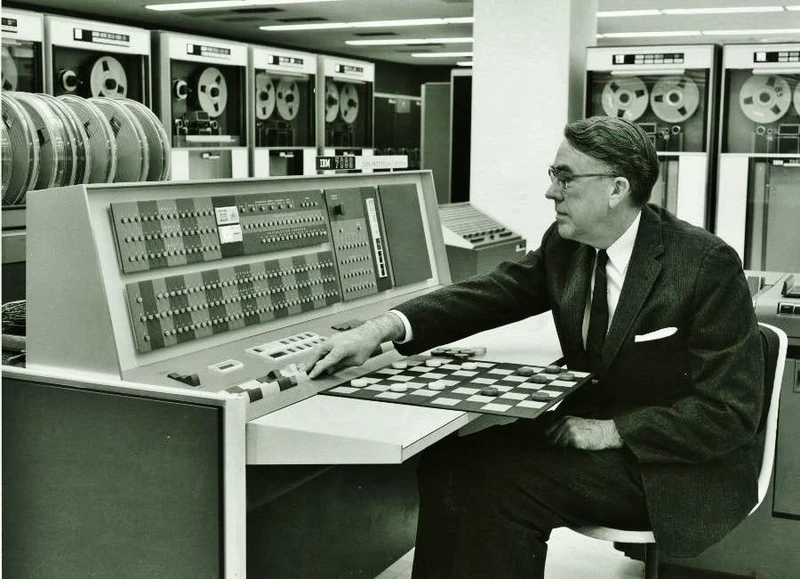
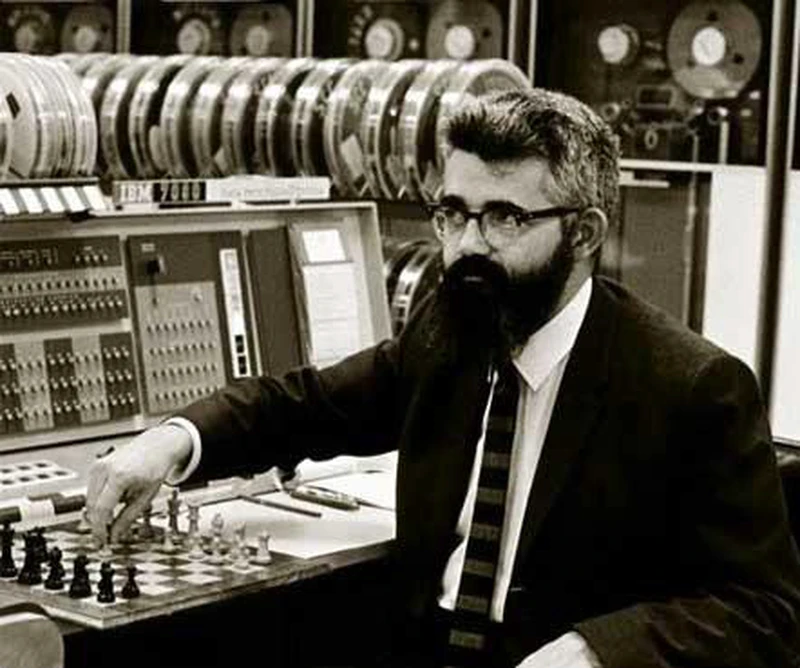
Pioneers of computer science first chess / checkers programs
The thinking tools recommended in Kotov’s Think Like a Grandmaster are not unique to chess. Chess is one of the easiest methods to learn these complex ideas without advanced mathematics, computer programming, psychology, economics, or philosophy. However, young children can learn the simple concept of candidate moves and analysis trees through chess. The essential idea is quite simple. As a chess coach, I teach children basic decision-making skills that can be applied to all aspects of life, from analytical thinking for math and science to Karmic principles of action-reaction. In regular dealings with others, we have many options to choose from that elicit a reaction and another plethora of possibilities in response. In difficult life decisions where options are limited, in cases of uncertainty and risk, the concept of candidate moves and analysis trees is helpful to navigate life, probably one of the reasons for the popularity of chess.
In future essays, I will go into more detailed chess studies, in-depth models of decision-making processes, chunking theory, and more. I will also abstract the concept of candidate moves and analysis trees to theories of mind, specifically the predictive brain models of consciousness where possibly all mental processes can be understood to arise from this process. We will also return to statistical methods, computer intelligence, behavior economics (Kahneman-Tversky’s Prospect Theory), game theory, and more, mainly how the concept of candidate moves and analysis trees can be used in my Multiple Truth Hypothesis.
You may also like
 DIAChessClubStudies
Chess as a Pedagogical Tool – Four Basic Concepts
How to use Chess to teach children basic thinking skills! DIAChessClubStudies
Cognitive Dissonance and Chess Improvement
Why do the least enjoyable training methods have the largest impact? CM HGabor
Effective training methods - calculation training
A post about improving your calculation skills. DIAChessClubStudies
3D Printing & Additive Manufacturing
A History and Overview of 3D Printers CM HGabor
How titled players lie to you
This post is a word of warning for the average club player. As the chess world is becoming increasin… IM theScot