
Science of Consciousness Conference & the Penrose-Hameroff Hypothesis
Does one need a Theory of Mind to understand Chess Improvement?
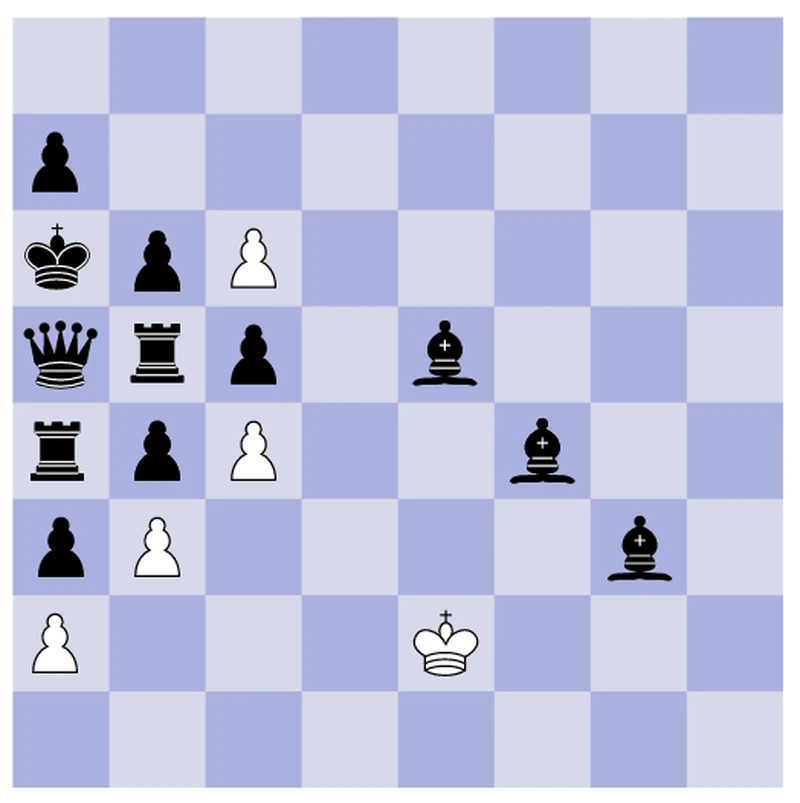
White or Black, to play and draw? Sir Roger Penrose's chess problem was designed to confuse chess computers, who used to fail to analyze positions properly.
The Science of Consciousness is related to my research into Chess Improvement and Models of Expertise. Although one can research chess improvement without putting thought into consciousness, one seeking more insight will need a deeper understanding of how the mind works. Most models of expertise rely exclusively on psychometric data, measuring performance over periods of time. Data might include self-reporting and actual measurement of performance. But what about what happens inside the mind? The problem is we can't measure what goes on inside the mind. We are limited to introspection and reports of introspection. The mind's output can be measured, and we can create models (cognitive architectures) that computers simulate. A working model can be compared to neural correlates and used to make predictions of performance that can be compared with psychometric data. These limits the current state of research in terms of consciousness. Chess is a central area for research into cognitive architectures, computer science, and psychometrics. Before continuing with the Models of Expertise series for more advanced students and cognitive psychologists, I want to give a primer on the Science of Consciousness Conference and some of the significant theories of mind.
Modern research requires an interdisciplinary approach due to problems of conflicting theories based on different presuppositions, methods, and tools used for measurement. Consciousness studies are the pinnacle of multi-disciplinary research. Historically, consciousness studies have been part of theology and philosophy. Only in the last century have advancements in physics, biology, computer science, and technology allowed a more scientific approach, leaving us thousands of years of understanding of consciousness coded into religious and philosophical language not always corresponding with the latest scientific developments. In this essay, I will briefly discuss the Science of Consciousness Conference, the Hard Problem of Consciousness, Orchestrated Objective Reduction (Orch OR / Penrose-Hameroff Hypothesis), and how multi-disciplinary studies advance our understanding of consciousness. Finally, I will offer some closing remarks on how this relates to models of expertise and chess improvement.
Stuart Hameroff, an anesthesiologist fascinated with the nature of consciousness, was the main driver behind the conference. Although the conference travels worldwide, it is regularly hosted by the University of Arizona, where Dr. Hameroff is head of the Center for Consciousness Studies. In 1987, Dr. Hameroff wrote ‘Ultimate Computing’ detailing biomolecular mechanisms that may give rise to consciousness, most notably microtubules. In 1991, Hameroff helped organize a conference on consciousness, which was attended by primarily academics from Arizona. In 1994, he created the now biennial Science of Consciousness Conference, recruiting some of the greatest thinkers and researchers on consciousness around the globe. Early participants included David Chalmers, Benjamin Libet, Roger Penrose, and more. Over the decades, a wide array of experts have joined, discussing research related to consciousness with an even wider variety of attendees interested in the subject, including an appeal to people with more spiritual leanings and topics such as the effects of psychedelics. Thirty years later, the conference is still growing, as is the interest in the subject, leading me to sign up and join the conference myself.
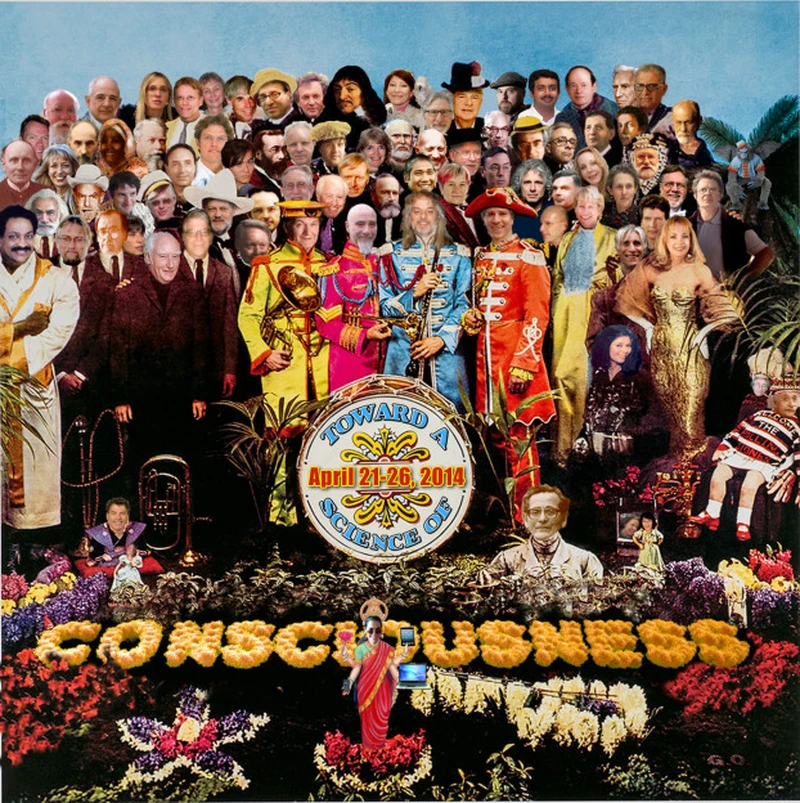
2014 Advertisement for Science of Consciousness conference with faces on Beatles Sgt. Pepper's Lonely Hearts Club Band
I will briefly go over the ‘Hard Problem of Consciousness’ and then discuss the development of the Hameroff-Penrose Hypothesis. David Chalmers, in 1995 ‘Facing Up to the Problem of Consciousness’ and 1996 ‘Conscious Mind’, outlines the difficulties in producing a scientific understanding of how consciousness can arise from the physical, referred to as the Hard Problem of Consciousness, questioning why and how we have qualia or phenomenal experiences. Easy problems of consciousness deal with how the brain integrates information, categorizes and discriminates environmental stimuli, and focuses on the various qualia and individual aspects of consciousness. Chess and models of expertise generally fall in this category of easy problems, but how we solve easy difficulties of consciousness varies on proposals to the hard problem. Most study of consciousness centers around explaining various single aspects of consciousness, referred to as qualia, as a complete model of consciousness is far beyond the ability of the current state of science to explain and more complicated than solving a bunch of easy problems of consciousness. An explanatory gap exists between our understanding of the biological mechanism and the phenomenon of our experiences, even for single qualia. There are many approaches to the easy problems of consciousness. Approaches that propose all conscious experience can be reduced to physical mechanisms, mainly of the brain, are referred to as reductionists.
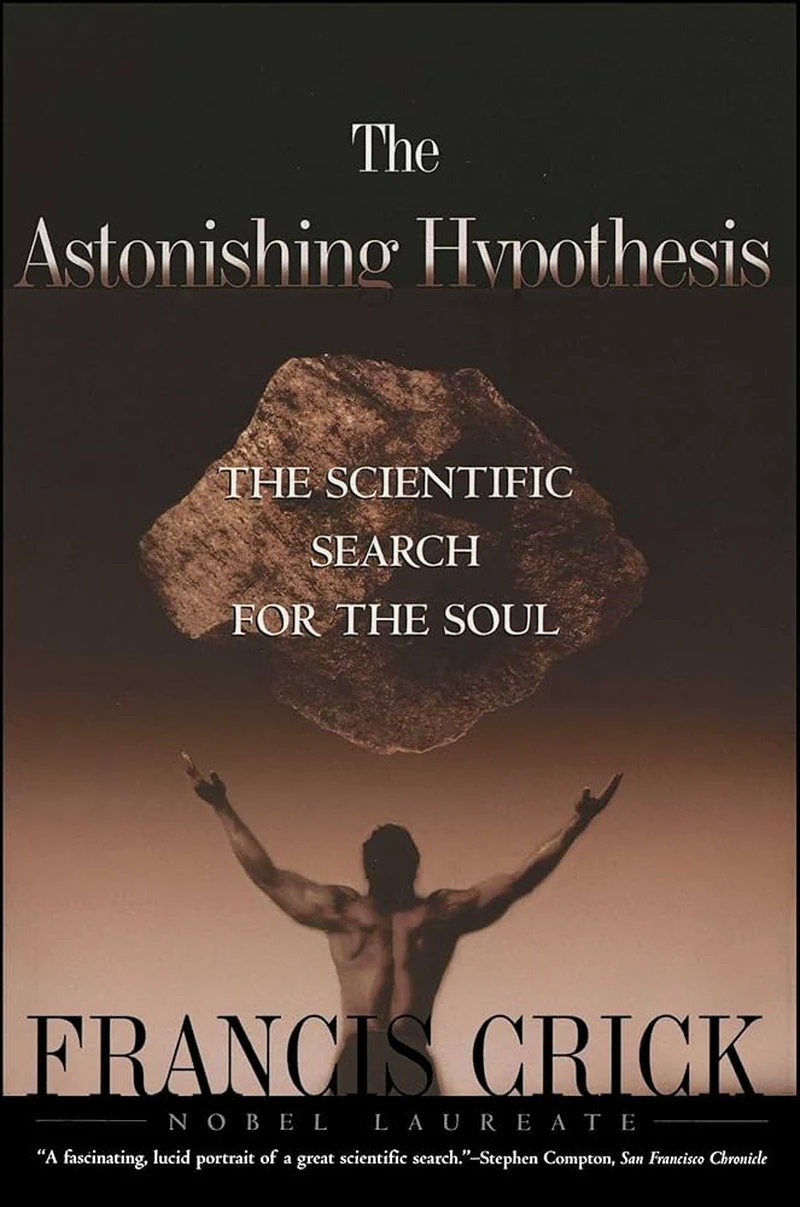
In contrast, non-reductionists like Chalmers hold that consciousness is more complex than can be explained to arise from physical mechanisms. One extreme school of reductionism is eliminative materialism, which holds that consciousness and most mental states don’t exist; they are just illusions of the mind. Possibly supporting eliminative materialism in the 1980s, Benjamin Libet’s ingenious studies show that unconscious neural processes precede and potentially cause volition retrospectively, which is felt to be conscious motivation. Most leading experts in the science of consciousness are materialists but not eliminative materialists. Francis Crick, in 1994, wrote the ‘Astonishing Hypothesis’ positing a person’s mental activity is entirely due to the behavior of nerve cells, glial cells, and the atoms, ions, and molecules that make them up and influence them, proposing that further scientific investigations will discover how the physical gives rise to consciousness. The majority of research in consciousness studies is searching for and explaining the physical mechanisms of consciousness.
The two primary schools of materialism are Neural Correlates of Consciousness and Integrated Information Theory. The Neural Correlates of Consciousness is an empirical approach using a minimal set of neuronal events and mechanisms sufficient for specific conscious precepts. Scientific research centers around correlating various conscious phenomena with neural activity using the latest technologies to measure brain activity. Multiple tests correlating specific conscious events with neural events using the scientific process give rise to Models of Consciousness, which aim to answer some easy problems. Christof Koch, the President of the Allen Institute of Brain Sciences, is a leading proponent of Neural Correlates of Consciousness. Institutions worldwide continually produce new studies of various neural correlates to facets of consciousness. Integrated Information Theory is another popular framework for why physical systems are conscious, working backward, trying to understand consciousness through the minimal biological building blocks required to produce conscious experience. All materialist schools face the ‘explanatory gap’, which explains how physical properties give rise to how things feel when experienced. Other schools include New Mysterianism, including Flanagan and Chomsky, as opposed to the ‘old mysterians’ who were dualists and thought consciousness cannot be understood scientifically because it operates according to non-natural principles, framing consciousness not a hard problem that might eventually be solved, but a mystery that will always cause wonder.
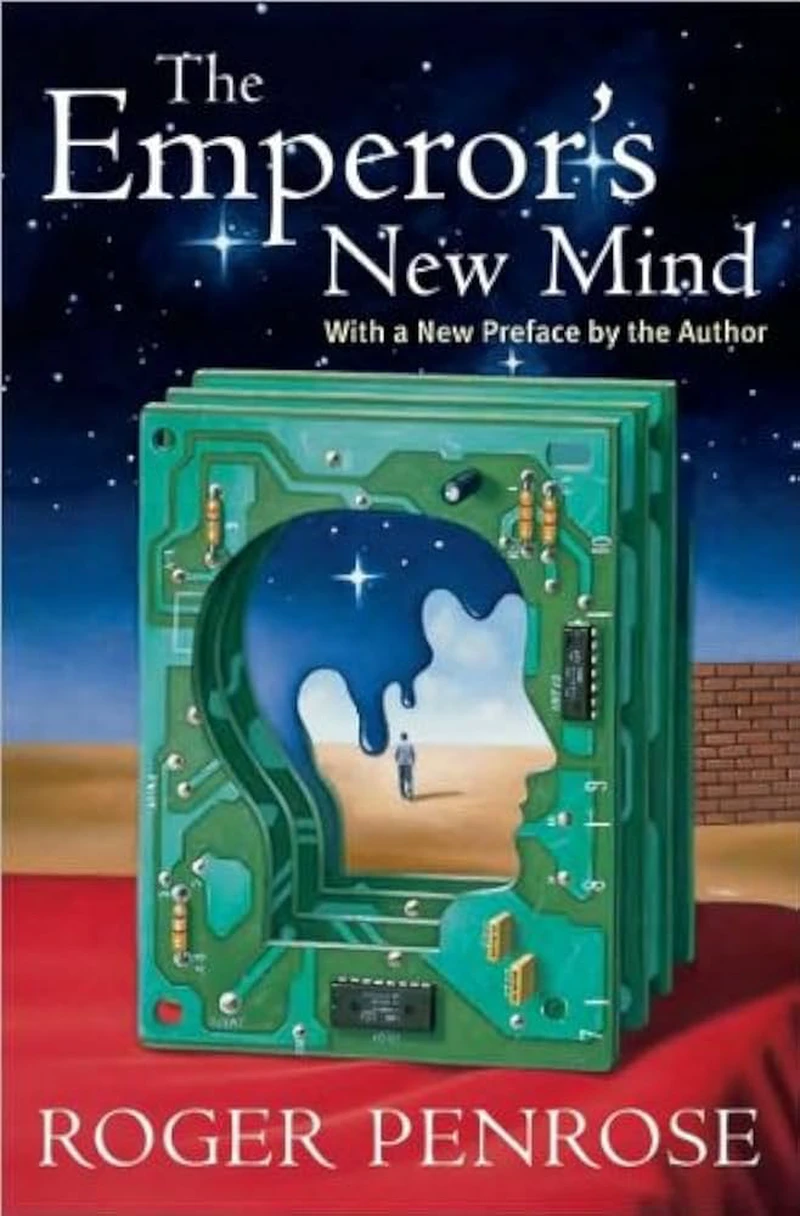
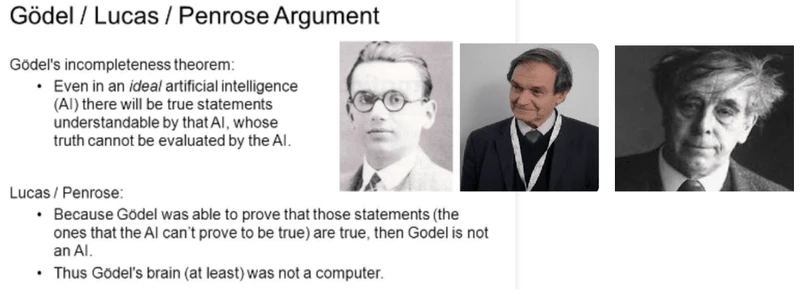
I also want to give a brief overview of Objective Orchestrated Reduction (Orch OR), the Penrose-Hameroff Hypothesis, one of the main areas of study related to the Science of Consciousness Conference. As mentioned, in 1987, Stuart Hameroff wrote ‘Ultimate Computing’, giving an overview of biomolecular mechanisms for consciousness, specifically microtubules. Concurrently, in 1989, Roger Penrose wrote the ‘Emperor’s New Mind’, discussing how quantum effects might give rise to consciousness. Quantum Mechanics is complicated by the famous measurement problem related to Schrodinger’s Equation and the collapse of the wave equation. Diosi & Penrose had forwarded an objective collapse theory to the measurement problem centering around gravity (as opposed to multi-world theories). In the 'Emperor’s New Mind', Penrose posits that consciousness is non-algorithmic, invoking Gödel’s Incompleteness Theory (1931), suggesting that due to the limits of the Incompleteness Theory, mathematicians must be using some non-computable process, most likely the waveform collapse. After reading Penrose’s ‘Emperor’s New Mind’, Stuart Hameroff informed Penrose of the possibility that microtubules might be the mechanism that consciousness utilizes for the waveform collapse. In 1994, Penrose wrote ‘Shadows of the Mind’ updating his theory with Hameroff’s suggestion, creating the Penrose-Hameroff Hypothesis, Objective Orchestrated Reduction, positing consciousness is based on non-computable quantum processes performed by qubits on microtubules amplified by neurons. Decades later, Penrose-Hameroff is one of the leading models of consciousness, with countless researchers making discoveries yearly.
Despite the best efforts of great minds, the explanatory gap remains, and the Hard Problem of Consciousness is unanswered with regular progress made in solving some of the easy problems. The nature of consciousness studies requires interdisciplinary studies, and the few places dedicated to consciousness studies try to bring together experts from diverse fields, many times housed in Medical Schools usually related to anesthesiology, sleep studies, and neural psychology, fields that require accurate understandings of consciousness using the scientific method. However, historically, consciousness has been a subject of philosophy and theology. Our lexicon describing consciousness comes from a dualistic heritage focusing on the mind/body problem, assuming that consciousness derives from the soul and is not limited to the restraints of natural law. Theologians and religious scholars have a long tradition of consciousness studies, prayer, and meditation that predates the scientific method based on introspection and Sage wisdom. Advancement in our understanding of consciousness uses the best of all approaches and an integrated approach. Difficulties arise in the extreme expertise required to understand the sub-disciplines, such as quantum mechanics, neural science, brain anatomy, and the historical canon of philosophy and theology related to consciousness.
With this introduction to consciousness studies, how does this influence theories / models of expertise, specifically chess improvement? To some extent, it doesn't; the science of consciousness has little influence on models of expertise and almost none on chess training. Although most players, trainers, and educators try to use science-based evidence for their training methods, little exists. Most evidence-based practices are based on statistics and psychometric data, simply replicating what works based on statistical studies of psychometric data. Trainers might be more likely to use heuristics and traditional methods predating the cognitive revolution. Many coaches, trainers, and educators are mystics, not bound at all by applying the scientific method. Chess studies that want to be in as much accordance as possible with the scientific method generally follow the reductionist Neural Correlates of Consciousness approach, focusing on studies that might track eye movement or measure brain activity while performing specific chess tasks. The chunking theory is more in line with integrated information theory, which attempts to build up expertise from the smallest units of understanding. Currently, however, most chunking-based theories, although possibly related to how neurons work, are more based on computer models.
Moving forward with our tour of the major Models of Expertise, advanced students should note the related presuppositions about consciousness and what type of 'scientific evidence' there is for the models, if any. Almost all the evidence is based on statistical psychometric data analysis, which can effectively tell what works but provides little evidence for why one method or model has more explanatory power. Also, understanding the problematic nature of the interdisciplinary approach required explains why there are so many different models, often with contradictory implications. But we will do our best to draw out commonalities towards a universal model of expertise, specifically universal principles for chess improvement.
You may also like
 DIAChessClubStudies
IM Carissa Yip conducts Simultaneous Exhibition at Detroit Institute of Arts
4x US Woman's Chess Champion encourages Detroit girls to pursue their ambitions! DIAChessClubStudies
Cognitive Dissonance and Chess Improvement
Why do the least enjoyable training methods have the largest impact? NDpatzer
Science of Chess: Can you tell a human opponent from a machine?
Do chess engines pass the Turing Test? ebk1976
Aging in Chess
The age too old for gold. WFM fla2021
The Power of the Fixed Center
In this blog you will learn some tips of what you need to do in fixed center positions, take a look … DIAChessClubStudies