
A low quality screenshot from me...
The Halloween Gambit!
The Halloween Gambit is a dubious piece sacrifice in the opening, but it can be effective if your opponent isn’t careful.
The Halloween Gambit (also known as the Müller–Schulze Gambit or Leipzig Gambit) is an aggressive chess opening gambit in which White sacrifices a knight early on for a single pawn. The opening is an offshoot of the normally staid Four Knights Game. The name's lore is a pretty funny story. The modern name "Halloween Gambit" was given by the German player Steffen Jakob, who explained that "Many players are shocked, the way they would be frightened by a Halloween mask, when they are mentally prepared for a boring Four Knights', and then they are faced with Nxe5." It's also a gambit very dear to me, getting me many wins and reaching peak positions in bullet and blitz. It's awesome.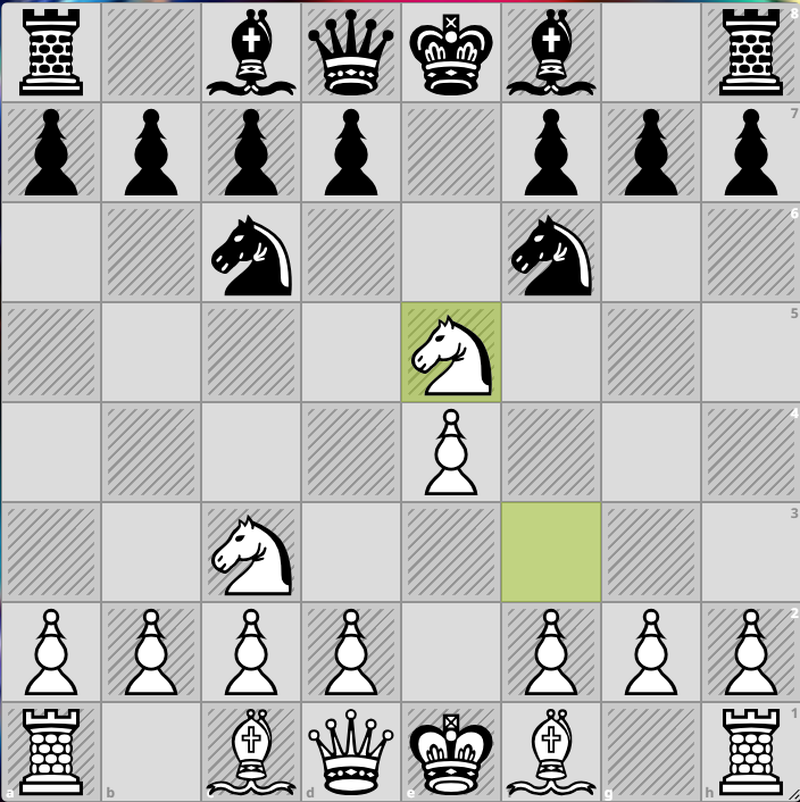
This is a very tricky gambit that's rarely ever declined, and because 85% of players don't know about it, they are very likely going to make the wrong moves. 4. Nxe5 4. Nxe5 so now you're down a piece for a pawn. Now what do you do? 5. d4!
If black declines in any way you are in a winning position.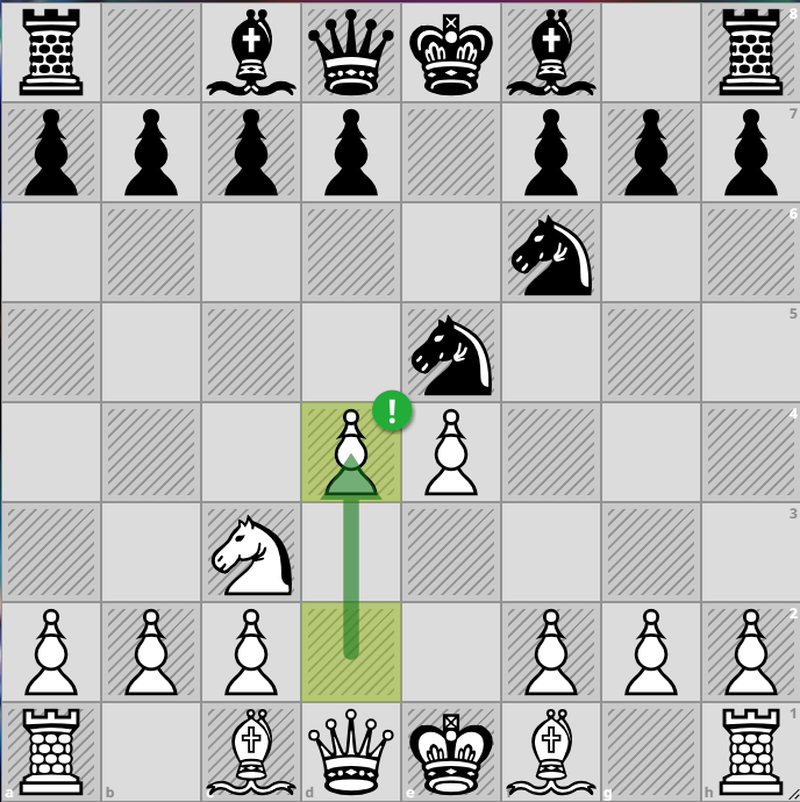
Here, black can play a lot of moves.
5...Nc4?? For some reason, in fast time controls like blitz, this can come up often. But it literally just hangs a knight because you can take with the bishop.
There is only 1 move black can play that doesn't hang a knight. I don't recommend this opening in bullet though, because those players are gonna be making premoves and that'll break the whole gambit.
5...Nc6 the only move. Now, you play 6. d5! bullying the knight even more!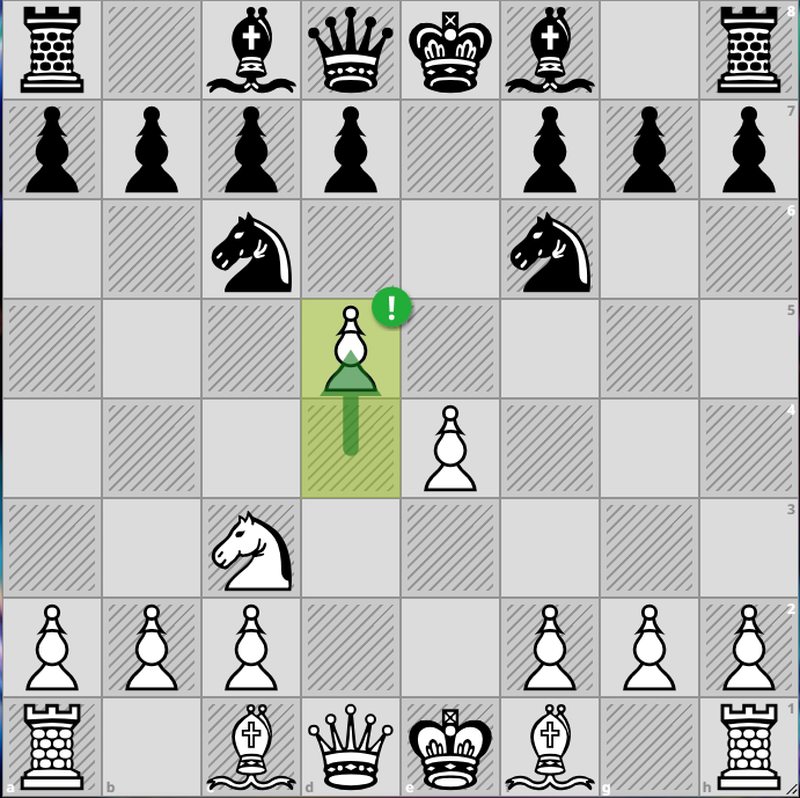
From here, there are 2 moves the opponent can play.
6... Nb4 7. a3 Na6 Look at the sad little knight in the corner. 8. e5 Qe7 9. Bxa6 (...bxa6? 10. O-O if black takes the pawn then we play Re1 pinning the queen to the king and winning the game) ...Qxe5 10. Be2
Here's how one game of mine went with this gambit. The gambit name almost speaks for itself this game. https://lichess.org/study/2qU5XUKM/xVhm9X9g
The main line move, however, is 6...Ne5. Now, you play 7. f4! Bullying the knight even more!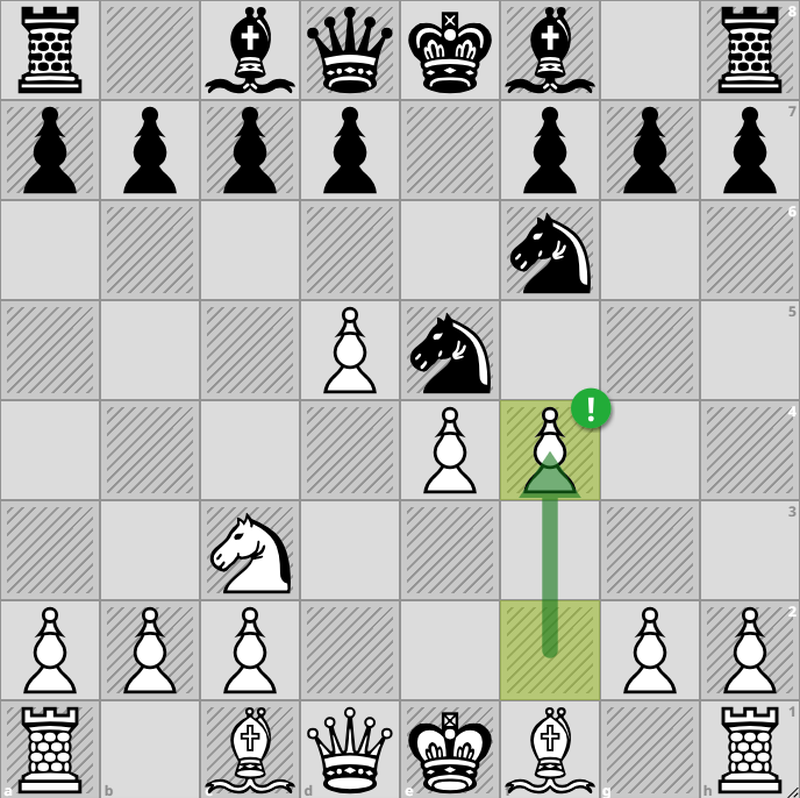
Here, if you've made it this far in the game, there are a few options for black, but only one really good one.
7...Bd6 8. fxe5 Bxe5 you should be relatively okay, but you may have to deal with your kingside weaknesses sometime or later.
The main line move is 7... Ng6. But we're not done yet! 8. e5! The knight either will be taken or embarrassingly return back to g8! 8... Qe7? 9. Qe2 white is now winning.
A scary line for white is 8... Bb4 9. exf6 Qxf6 10. Be3 Bxc3+ 11. bxc3 Qxc3+ 12. Kf2 losing castle rights... it's VERY unlikely that your opponent will find this in blitz unless you're playing Zhigalko Sergei or something. Also, just don't play this opening at the master level in general...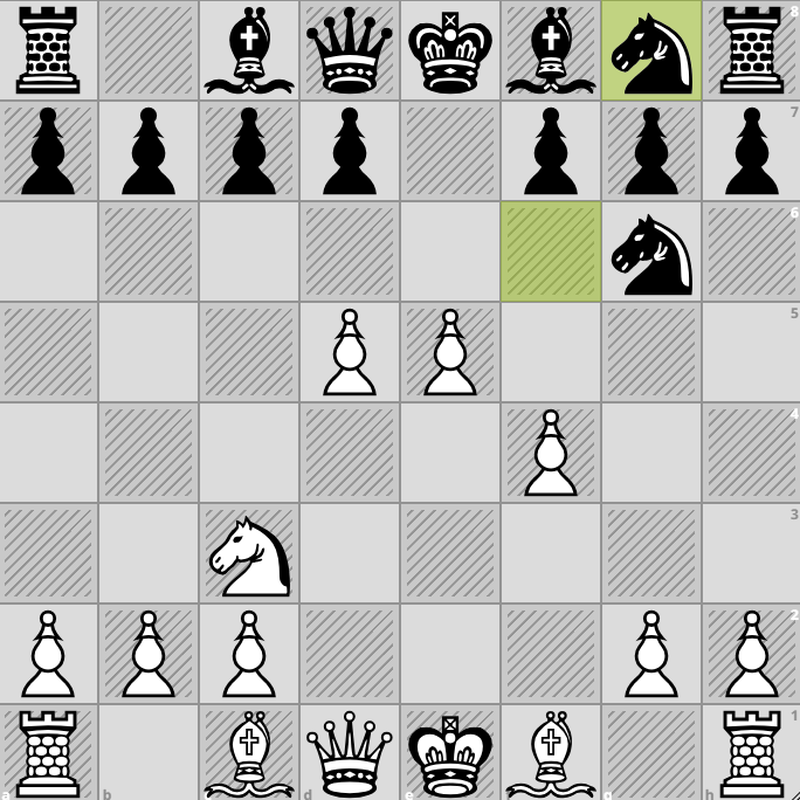
So you have 3 center pawns and a pawn for a knight. But we're not quite done yet. 9. d6 cxd6 10. exd6 White is threatening to give a check on the e-file that black cannot black without losing a piece, with Qe2. Black might want to consider moving the queen so that the king can come to the d8 square if needed.
10... Qf6.
If 10...Qh4+? (which for some reason comes up often) 11. g3 Qf6 Black gained nothing from provoking the move g3, so perhaps the black queen should have come to f6 straight away.
11. Nb5!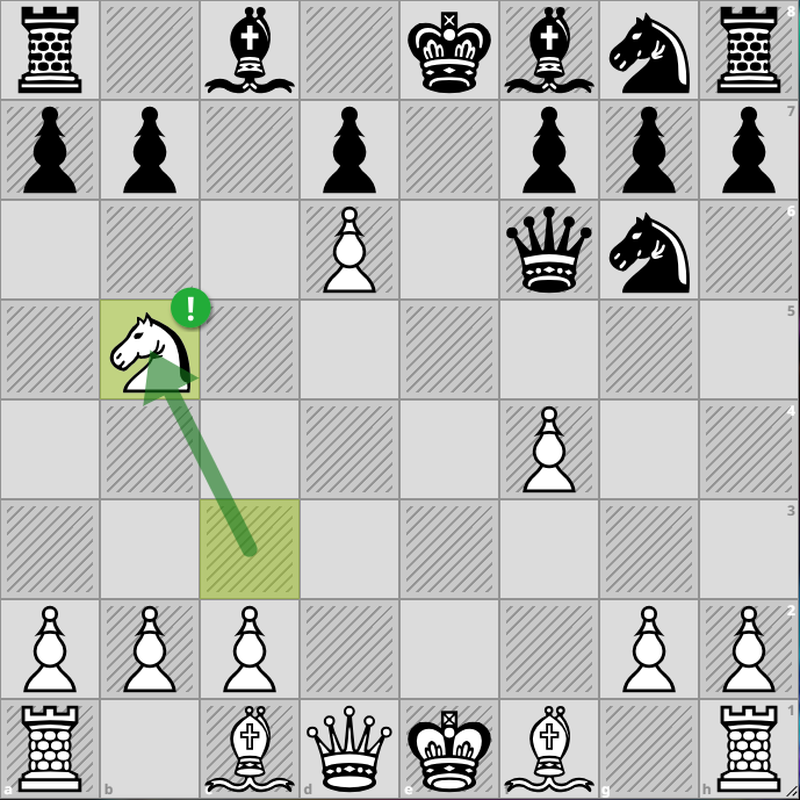
The threat of 12. Nc7 is coming! There are lots of moves black can play in this position, like 11... Nxf4 (the best move) but the main line goes 11... Kd8 to defend the threat, but of course giving up the right to castle is a sizable concession! It’s starting to look like white has plenty of compensation for the knight.
The main line continues 12. Be3 – possibly targeting the a7 pawn, but also stopping black from kicking away the knight due to the threat of a windmill tactic! 12. Nc7? Rb2 You literally mess up the whole thing. The analysis is -3.
12... a5??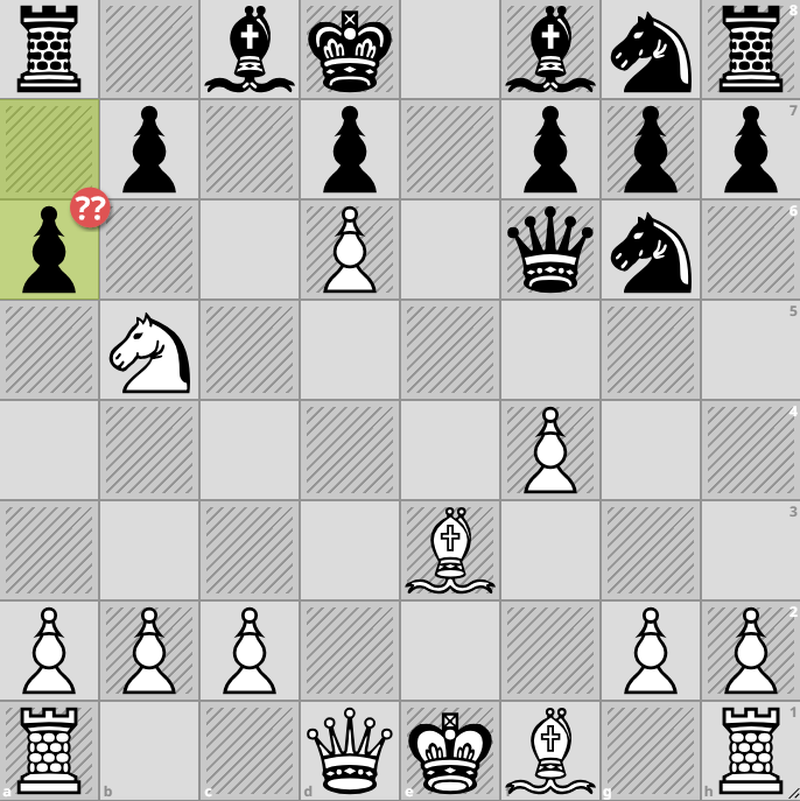
A logical looking move trying to kick out the knight. But something is terribly wrong with this move, evident by the analysis change from +0.9 to +10.9
13. Bb6+! Ke8 14. Nc7+! A windmill tactic!! Absolutely crushing the opponent!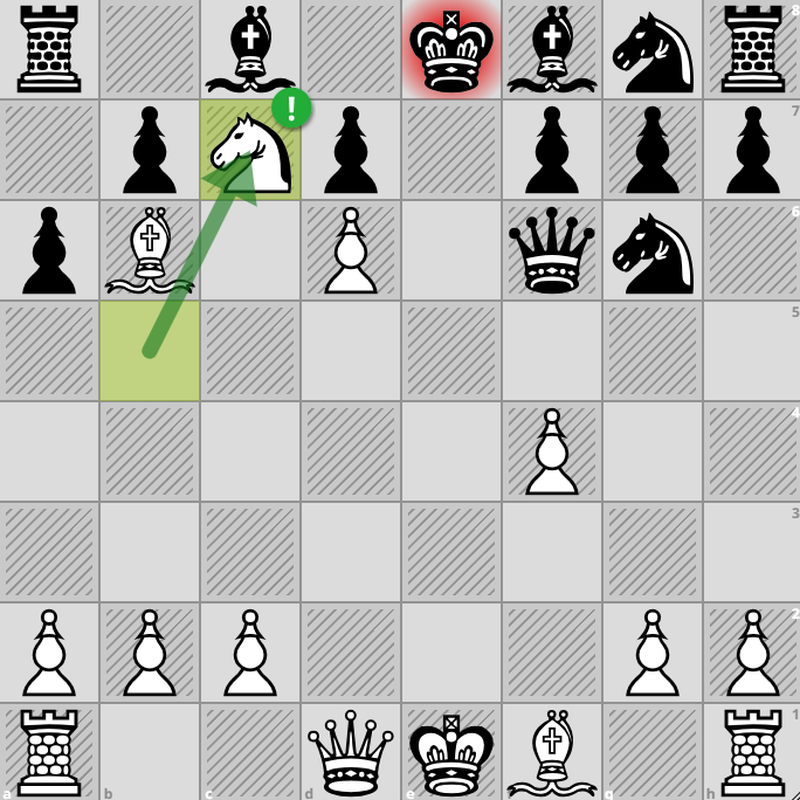
From here I think you can see where this is going.
14... Kd8 15. Nxa8+ Ke8 16. Nc7+ Kd8 17. Nxa6+ Ke8 18. Nc7+ Ke8 and now for the final blow... 19. Nd5+!!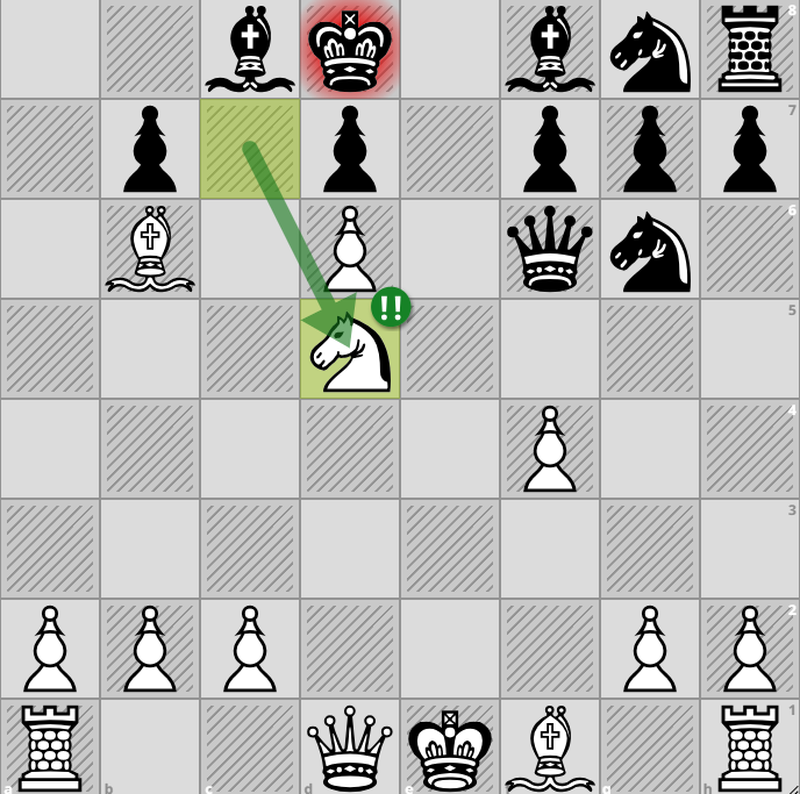
19... Ke8 20. Nxf6+ Nxf6 Phew, the worst is over...
21. Qe2+ What good gambit (like Englund gambit or Blackburne-Shilling gambit) didn't have a line straight to checkmate!? 21... Be7 so close to checkmate, yet so far... 22. f5! Removing the defender! The game is over! 22... Nf4 23. Qxe7# Of course, if you know the Blackburne-Shilling gambit and the Englund gambit, you know that these types of checkmates happen only if your opponent plays these natural looking (but wrong) these moves. Your opponent can play lots of different moves like not even blundering a6. And don't worry, I personally haven't even gotten this exact checkmate. But even if you don't reach checkmate, the Halloween Gambit is a interesting gambit that's very exciting and flips all expectations.
Also, I made a part 2 of this blog because there are a few lines, check it out if you want.
