
A psychological (wow!) guide for zero and beginner ranks
Human brain. Brodmann areas
In the process of human evolution and with the emergence of new problems that humanity successfully solved, the brain also developed, increasingly transforming into the brain of modern humans capable of solving complex problems. However, not everyone is capable of thinking, and this problem is due to the individual characteristics of the brain of each individual. Human brain is the most variable organ, and even within a single family among close relatives, brains vary greatly, determining differences in intellectual abilities. People may look similar to each other, but the quality, performance, and potential of the brains of relatives can differ by tens of times! Mental abilities are not determined by race, nationality, or skin color. Everything is determined by the areas in the brain responsible for abilities in a particular field of human activity. Thus, your brain structure plays a key role in your intellectual abilities.
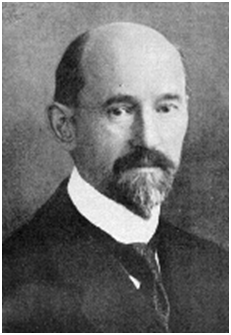 Korbinian Brodmann 1868 – 1918 image: Wikipedia. Public domain. Unknown author - http://www.uic.edu/depts/mcne/founders/page0014.html Korbinian Brodmann 1868 – 1918 image: Wikipedia. Public domain. Unknown author - http://www.uic.edu/depts/mcne/founders/page0014.html | ||
|---|---|---|
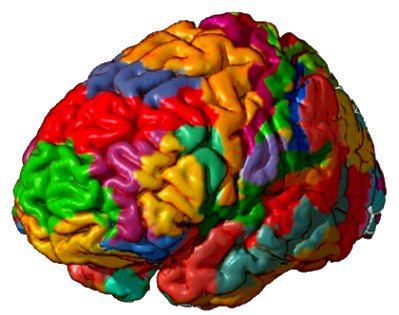 Image: Wikipedia. Public domain.Mark Dow. Research Assistant BrainDevelopment Lab, University of Oregon http://lcni.uoregon.edu/~dow/Space_software/renderings.html Image: Wikipedia. Public domain.Mark Dow. Research Assistant BrainDevelopment Lab, University of Oregon http://lcni.uoregon.edu/~dow/Space_software/renderings.html |
Wikipedia: “Historically, the cortex (the grey matter) has been divided into approximately 60 functional areas called Brodmann areas based on cellular structure, and modern mapping projects have identified up to 180 distinct areas. Korbinian Brodmann was a German neuropsychiatrist who is known for mapping the cerebral cortex and defining 52 distinct areas, known as Brodmann areas, based on their cytoarchitectonic (histological) characteristics... Brodmann areas have been discussed, debated, refined, and renamed exhaustively for nearly a century and remain the most widely known and frequently cited cytoarchitectural organization of the human cortex. Many of the areas Brodmann defined based solely on their neuronal organization have since been correlated closely to diverse cortical functions”.
How does this information relate to chess? It does directly. It turns that if you have larger Brodmann areas in charge for chess then you are lucky to have more chances to succeed in the game... Meaning larger than “regular-size” Brodmann areas responsible for visualization, imagination and cognitive capabilities like memory, attention, logic, reasoning and information processing. It's been proven that humans even have extra, bonus Brodmann areas in their brains that make them exceptional in their field of human activity like no other or, say, one in a hundred million Regular Joes (race and skin color do not matter—that is a scientifically proven fact). Given this fact, in the future, high-resolution electron tomography may make it possible to determine the presence such abilities in human brains. To point young people to the area of human activity for which their brain is best suited. Here's a movie script for you to make a greatest ever movie on another story never told. Here's a roadmap for making people happy. But I'm sure that people will ruin this idea by making it commercial, of course...
Learning chess you are not just up for one of the logical games. You are up for your brain development. Analyzing your games and taking chess as a research project, you, among a ton of other goodies for you, create powerful feedback loop, you develop new and strengthen existing synaptic connections, you improve your focus and long-time resistance, increase your stamina, build and enhance your strategic planning, you better understand what responsibility is, you don’t trust maybes, etc.
The “Aha! Moment” or why do chess players stare at the ceiling?
“The "Aha! moment" (insight) is a sudden, unconscious, and non-linear cognitive restructuring of a problem, resulting in a new, clear understanding. Neuroscientifically, it involves a split-second burst of high-frequency gamma waves in the right hemisphere's temporal lobe, triggered by a shift from focused attention to a resting state”. The Cognitive Neuroscience of Insight. John Kounios and Mark Beeman. Department of Psychology, Drexel University, Philadelphia, Pennsylvania, 2014. Copyright 2014 by Annual Reviews. All rights reserved.
Just a few non-scientific cents here. Visualization that has already done its job is no longer needed and human consciousness switches to other Brodmann areas responsible for cognitive functions.
As a zero or a very beginner, you better start with playing longer time control games like 60+ for having enough time to calculate moves and kick your visualization developed and working. That way you, as well, develop your analytical skills despite the fact that your analytics are still leading you in the wrong direction (because in the very beginning of doing anything new mistakes are unavoidable)... because by analyzing ways of doing things you develop your “analyzer kit”. Your personal survival kit is going to get updated with every new game you play or book you read—every time you get a new info your brain is going to process, synthesize and store it for your future reference.
