
From Zero to Kilo in two steps
Zero level in chess refers to the lowest possible rating, a bottom tier of knowledge and skills. Moving from zero to understanding chess basics takes a few weeks to few months of consistent practice. Between understanding and the ability to use your knowledge in practice there is a lap of time that depends on your abilities, perseverance and memory. Becoming an intermediate chess player of 1200-1500 can take anywhere from six months to several years, depending on your talent, perseverance, and ability to learn and digest huge junks of info. Below are some suggested plans for getting your footing in the chess world from zero level.
I divided the transition into two stages: Stage 1. ZERO TO 500+ and STAGE 2. 500+ TO KILO.
In this stage 1 article I would like to present the opinions of chess experts whom I trust more than others, believing that the most important component of the learning process is game practice and tactical training.
Stage 1. ZERO TO 500+
Board coordinates practice
Chess basics
Checkmates and Fundamental Tactics
Time to spend few weeks to few months. The skills above are vital for making your very first steps in chess!
Once you have mastered the main points from the list above, you can continue moving on.
TACTICS! TACTICS! TACTICS!
Tactics decide most of very beginner and advanced level games (500-2000). Higher-level players make fewer tactical mistakes, so they don't give tactics much priority in their preparation. Although I remember the answer of one of the top ten female Grandmasters in the world to surprised questions about unexpectedly quick defeats of her opponents in one of the recent tournaments years ago: “Tactics! I have been doing tons of tactics lately!”
A tactically weak player loses material or even gets checkmated right up in the opening. Trying to teach openings to beginners is both futile and harmful: your opponent will most likely not play your script, so you should better work on development of your tactical vision from your very first days in chess. The three pillars on which your development is based are:
(1) VISUALIZATION. The ability to mentally move pieces on the chessboard without touching them. Ability to see the end-up position after you installed your piece on a new square. Ability to see the consequences of the mentally played move... just about there the calculation emerges.
(2) CALCULATION. The process of evaluating potential moves and their consequences. Visualization and Calculation combined is the number one priority to a zero and beginner chess player, oherwise you cannot play chess. Starting with opening puzzles is a wise approach: that way you will be getting familiar with tons of opening setups.
(3) A chess player’s THINKING PROCESS. Systematic cycle of evaluating positions and variations on the board after every single move made, assessing your opponent’s threats, planning your candidate moves... based on your mental library of tactical and positional patterns, on which your brain keeps constantly working and synthesizing the new information even while you are out of the game and off the board. Checks, Captures and Threats (CCT). This takes time and thousands of games played after which you will reproach yourself for assessing consequences before making your move.
All that for the sake of tactics, your tactical vision! Without tactics you cannot play chess. Period.
Puzzles by Openings You may never encounter a particular opening setup in your games over the board, but tactical patterns are always the same.
Important! Once you have registered on lichess and created your profile, lichess automatically adjusts tactical puzzles to your current level separated from your game rating. Normally your puzzle rating should be 300-600 points higher than your live game ratings. There you’ll have your Puzzle Dashboard, a comprehensive analytics tool, displaying your progress on specific tactical patterns. The dashboard breaks down your rating and accuracy for every specific tactical pattern (a theme). Nice! You can identify your tactical weaknesses right there on the fly. You can review puzzles you failed to crack. After a rated game you can use the Analysis board to generate puzzles from your blunders.
ENGINE IS YOUR BEST 24/7 SPARRING PARTNER!
Playing against material-down Stockfish level 8 (2600+). How about that? This "coach" can't speak a word and can't explain simple chess truths to you, but you can discern the truth by moving pieces back and forth on the board and peering into the computer's positional evaluations and suggested moves like you would into the eyes of your beloved dog.
Very beginners are not advised to play against weakened Stockfish due to the engine’s unrealistic, non-human behavior but you can play against the strongest level 8 Stockfish by depriving the engine of the queen and both rooks. There you will use the subsequent analysis of the game to see your mistakes in exploiting your overwhelming material advantage. You'll have a very instructive post-game analysis, which will be an excellent class in itself: terminology, chess basics, strategy, etc.
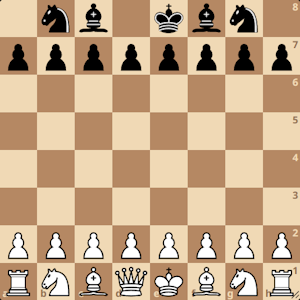
Lichess - top menu - TOOLS - Board editor - remove black’s queen and both rooks from the chessboard - CONTINUE FROM HERE - PLAY AGAINST COMPUTER - select the strongest level Strength 8 (2600+) - select white pieces - Play against computer.
You already know how pawns and pieces move, and what you don't know or have forgotten, you'll learn right in this game. So, you, playing white pieces, have an overwhelming material advantage of more than 13 pawns. Your task is to defeat your opponent. Thanks to the material advantage you have been given in this game, you can immediately exploit the vulnerability of the black king "stuck" in the center of the board. It is through the blown open center files (vertical columns of squares) that you will be able to throw your rooks (heavy pieces) into the game escorted by your queen (tremendous power), which is impossible to do in a normal game because, unlike in this training game, your opponent will have all the resources to prevent you from doing this. Of course, you can bring your rooks into play along their files (vertical columns of squares), but there they will not directly threaten the opponent's king and therefore your rooks will not be able to immediately engage in an attack. The ability to quickly exploit a material or positional advantage is an indicator of a chess player's strength and technique. After playing the same training game from a given starting position several times, you'll quickly learn how to capitalize on your advantages, and the position will no longer be relevant to you. Set up a different position and beat level 8 Stockfish. You can master any typical position in the same way, but that's in the near future, not now. Right now, your goal is to beat Level 8 Stockfish in the fastest possible way. A hint / or a spoiler: (1) quickly blow up the cneter files an jump on the other guy on e8 with your pieces, then trade pieces on the board, thereby revealing and aggravating your opponent's material disaster in this game; (2) try to find positional vulnerabilities in your opponent’s setup and try to exploit them. Post game analysis is the most effective way to improve your chess! Never miss that blessing opportunity!
"Pawns are the soul of chess". François-André Danican Philidor
Your “Getting better in chess” plan could be this:
(1) Learn chessboard coordinates (Lichess – top menu – LEARN – Coordinates).
(2) Learn basics (Lichess – top menu – LEARN – Chess basics).
(3) Tactics, tactics, tactics (Lichess – top menu – LEARN - Practice – Fundamental tactics, Advanced tactics).
(4) Join a chess club to play with friends and discuss things.
(5) Play against Stockfish level 1 to 3 your sparring games: engine is available 24/7 and ready to play whatever position (Lichess – TOOLS – Board editor – set a position – select Stockfish strength – select color – Play against computer.
... ... ...
Feb 20, 2026. Lichess discourages excessive image posting in blogs and forums, preferring text-based content, as excessive image usage can be seen as low-effort or against site etiquette. They prefer that you keep image-heavy content to a minimum to maintain a good, readable experience for all users. That's why I made a website where you can see the book and learn a stuff from an intermediate-to-advanced rank
* This Stage 1 article on website
* Stage 2. 500+ to Kilo to-do list and example sessions
* Developing Visualization and Calculation skills
You may also like
 CM HGabor
How titled players lie to you
This post is a word of warning for the average club player. As the chess world is becoming increasin… FM MathiCasa
Chess Football: A Fun and Creative Variant
Where chess pieces become "players" and the traditional chessboard turns into a soccer field ChessMonitor_Stats
Where do Grandmasters play Chess? - Lichess vs. Chess.com
This is the first large-scale analysis of Grandmaster activity across Chess.com and Lichess from 200… JoeDavidLavante
A psychological (wow!) guide for zero and beginner ranks
Human brain. Brodmann areas. The “Aha! Moment” or why do chess players stare at the ceiling? thibault