Does Chess Really Make You Smarter
Many say the game of chess improves your brain, but is that a stone-cold fact or a myth?
Does Chess Really Make You Smarter?
One of the biggest reasons why I started playing chess in the first place was because I heard from other people that playing chess is good for your brain-it helps you relax, focus, and think strategically. At the time I was dealing with a lot of unusual things happening in my life, and I wanted a mental break from it where I could just relax and think to myself. That's part of why I started playing chess, and why I still play chess now even though I'm bad at it. But, for a long time, I wondered, "is this really true?". Does chess actually make you smarter? That's what I've done some research on recently, and this blog post is the product of what I found.
Well, what's the answer?
Well, it's a little complicated. There are several upsides and downsides to playing the game of chess, but overall, the short answer is yes. We'll look at why.
Seeing from Another Viewpoint
One of the biggest pros of playing chess is that it allows you to view things from your opponent's perspective. Have you ever seen Hikaru Nakamura drawing endless arrows when playing chess? That's his spectacular ability to predict and calculate his opponent's next moves and his best responses to them. Playing chess significantly improves this skill of seeing things from another perspective, since you need to be able to calculate your opponent's best moves and how you can counter them.
A research paper discussing a 2019 study from the National Library of Medicine titled "Secret of the Masters: Young Chess Players Show Advanced Visual Perspective Taking", states that "Visual perspective taking performance was assessed among 11- to 12-year-old experienced chess players (n = 15) and their counterparts without chess training (n = 15) using a dot perspective task. Participants judged their own and the avatar’s visual perspective that were either consistent with each other or not. The results indicated that the chess players outperformed the non-chess players...". This study showed that playing chess develops this perspective-taking ability in those who practice the game faster than those who do not, suggesting that playing chess can help you with putting yourself in someone else's shoes and seeing from another viewpoint.
Seeing from another viewpoint is important because it helps with many skills in everyday life. For example, when creating media for an audience to view, such as books, movies, or articles, the creators of these posts must be able to see from the audience's perspective to decide what their post should be about based on what their audience likes. Hypothetically, let's say a director wants to create a children's TV show directed at young kids under the age of 5. The director would have to see from the childrens' view to see their common interests in order to create a TV show they can enjoy. For example, the director could use this perspective-taking skill to find out that young children can be sensitive to flashing lights and fast movements, so he/she would make the TV show with non-flashing colors and slower, steadier movements.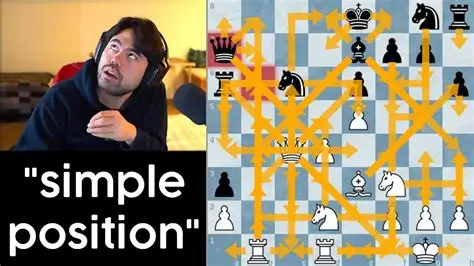 image from a YouTube video
Improving Memory
Another benefit of playing chess is that it helps with your memory. Chess is a game that has what we call 'theory'-moves that have been heavily studied, and 'openings', which are a set of moves that are 'theory', so a set of moves which are heavily studied. Oftentimes, learning a specific opening in chess helps you succeed, since learning one specific opening helps you understand it deeper than playing a different opening every time. Advanced chess players often study 'variations' of openings as well-specific lines underneath an opening, for example, the "Sicilian Defense: Kan Variation" is 1. e4 c5 2. Nf3 e6 3. d4 cxd4 4. Nxd4 a6. All of this helps chess players have a better memory than people who don't play chess, since chess involves memorizing various combinations of moves and what your opponent might do against them. Furthermore, various studies have shown that experienced chess players can recognize visual patterns much faster than non-chess players. This pattern recognition skill combined with studying theory, middlegame and endgame tactics, and practicing often helps chess players improve memory and recall things faster than non-chess players.
Improving memory is important because memory is one of the foundations of learning-memory allows you to understand concepts, absorb new knowledge and skills, and retain important information. Memory is also crucial for everyday life as well-you need a good memory to remember how to brush your teeth, do simple math problems, and get dressed! Lastly, a good memory also helps with social connections and bonding-remembering names, faces, and other details helps make meaningful interactions with other people, leading to a healthy relationship and a healthy mind.
Bolsters Creativity
The last benefit of playing chess that I'll cover is bolstering creativity. A research paper from healthline.com titled "The 9 Benefits of Playing Chess" states that "Researchers at a school in India tested the creative thinking skills of two groups of students. One group was trained in chess playing, and the other was not.
The tests asked students to come up with alternate uses for common items and to interpret patterns and meaning in abstract forms. Students who played chess scored higher on tests. Researchers concluded that chess increased the students’ ability to exercise divergent and creative thinking."
This evidence proves that chess helps with creativity because the group of students who were trained in chess playing came up with better alternate uses for common items and were able to interpret patterns in abstract forms, meaning they had the creativity to be able to think of alternate ways everyday items could be used, and were able to recognize patterns even when the patterns were presented in an abstract manner. The group of students who were not chess players struggled more and lacked the creativity to do these things.
Creativity is one of the most important skills to have because it greatly assists in creating new ideas for products, visual media, games, and more, and it also helps with problem solving skills. Being creative is what helps authors write fantastic stories, movie directors make entertaining movies, businessmen make exciting new products, and many more. This is essential in the long run because success comes from original work, which comes from creativity. You can't be super successful repeating something that's already been done. Creativity is also important for problem solving skills, since the ability to think critically and creatively helps solve harder problems in a faster and more efficient way, which saves time and effort. shiksha.com
One Potential Downside of Playing Chess
Finally, one downside of playing chess is that it can be very stressful. Most main chess platforms such as Lichess.org and Chess.com use a rating system, which gives you a rating based on how many games you win or lose. This can cause severe stress in chess players because they get too stressed about their rating, or "Elo". This has happened to me before. You lose a game, lose rating points, and get upset that you lost rating points. Then you keep playing more and more games and keep losing more and more rating and get more and more angry. This is called 'tilting' and has a severe negative impact on people who experience it. Tilting can cause sudden outbursts of anger and frustration from losing Elo. Tilting can also prevent us from appreciating life and having fun with friends and family as we are too focused on how we can bring our rating back up. Some have gotten so stressed from this that they even call chess "mental torture".
So, Does Chess Really Make You Smarter?
The answer is yes; chess can make you smarter. This is because chess helps improve several cognitive skills such as memory, pattern recognition, and creativity, all of which are useful for everyday life. I only covered three of those in this blog post. However, chess can also have a negative impact if chess players are too stressed about performance. So, chess can make you smarter if you focus more on learning from the game rather than focusing solely on rating. So, the next time you lose a chess game, remember to use the loss as a learning experience rather than a time to be frustrated.