
The xQc variation in the Van't Kruijs
... seems amateurish, but it is valid
Intro
In this post I will examine a variation into the Van't Kruijs variation (or from the Van Geet and the Reversed Nimzowitsch in two other less common move orders). The name comes from the famous YouTuber xQc who, in a bout of noob brilliance, discovered this line and it turned out to be good - at least that's what Eric Rosen says.
As always I will be looking at games played by 1800 rated players or higher and excluding Bullet games.
Companion study here.
So let's examine this opening that looks like the Scholar's Mate, but is almost always winning an extra pawn and never leads to a losing position.
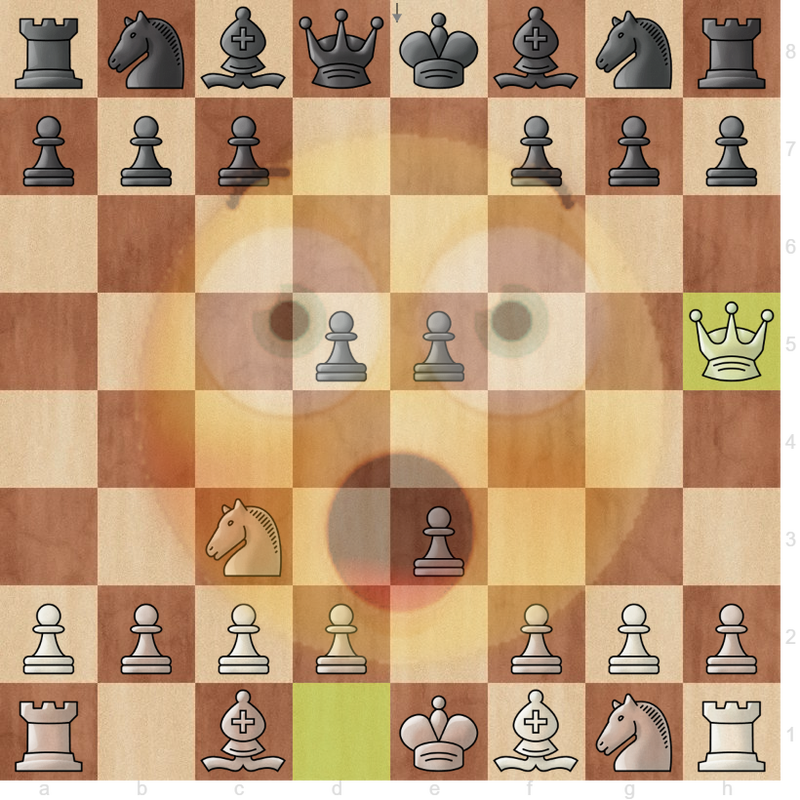
The idea
You can get there from the Van't Kruis (1. e3 e5 2. Nc3 d5 3. Qh5), the Van Geet (1. Nc3 d5 2. e3 e5 3. Qh5) or the Van Geet, Reversed Nimzowitsch (1. Nc3 e5 2. e3 d5 3. Qh5), but starting with 1.e3 is a lot more common.
In this ridiculously amateurish looking position, White is threatening e5 and there is no way to defend it without undermining the defense of d5. One way or the other, one pawn will fall.
Now, depending on the engine, this position is either completely equal, slightly better for White or slightly better for Black. But the best move in the position for Black is actually not defending e5 and instead developing pieces with 3... Nf6 or maybe 3...Be7. And even in this line, the result is a pawn up for White and the position better for Black.
I know most intermediate to expert players will always take positional advantage over material one, but there is no clear refutation of this idea. In any case, on Lichess players 1800 and higher play Nf6 in non-bullet games only 6%.
Does Black immediately lose if they play something else? Not really, but the position gets really uncomfortable and in the most common lines they blunder the game in just a few moves.
The responses
There are only four responses worth mentioning from Black (and one computer move that no one ever played, but it's also best :) ):
- Nc6 - 74% of the games - theoretically equal, but Black usually makes the wrong choice at move 6
- Bd6 - 7%, where Black just gives up the d5 pawn and develops pieces instead - looks scary, but the eval is +0.8
- Qd6 - 7%, queen vs. queen - theoretically fine, but Black often blunders at move 7
- Nf6 - 6% of the time, abandoning the e5 pawn - one of the best moves, leads to equal position
- Be7 - never played, but getting to a position that was reached 41 times by other moves - one of the best moves, with best play transposes in the Nf6 line
If we add them up, it's not an immediately winning variation, except that most games lead to a +2 or larger advantage for White in 6 to 7 moves. From 34 thousand games, White wins in 55.4% with a win margin of 14%. That's pretty good for something that looks like a Counter Strike player trying to play chess for the first time.
Let's examine the most common line: 1. e3 e5 2. Nc3 d5 3. Qh5 Nc6 4. Bb5 Qd6 5. Nf3 e4 6. Qe5+ Qxe5 7. Nxe5 Bd7 8. Nxd7 Kxd7 9. Nxd5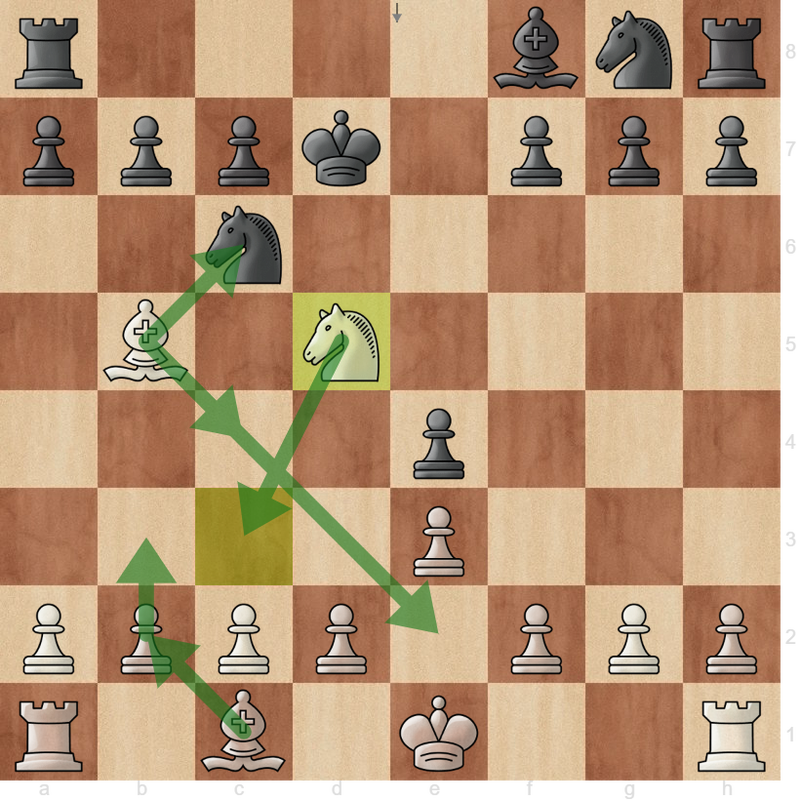
Evaluation is +2.3, Black's king cannot castle and we have clear plans for developing and attacking, plus an extra pawn. White only lacks space, but they will easily get it in the next few moves. You will be glad to hear that the Masters database also shows the same line as the most played by the 7 people who did.
The plans
In three of the five responses above, Black just abandons a pawn. I don't really need to talk more about that. You take the pawn, then move the queen to f4 when it's harassed, then you play chess a pawn up.
In the most common line Black tries to defend with Nc6, which you neutralize with a pin to the king with Bb5 - the only non losing move for White, BTW. Then you're kind of in the same situation with two extra moves.
The queen line, Qd6, is the most interesting. Following best moves you usually exchange queens in this position, after attacking e5 with d4. You don't win a pawn, but you get good attacking chances and lines where the opponent usually blunders. But there is another option, a gambit like line that is captivating, although it doesn't lead to a spectacular win either: 4. f4, in which you gambit a pawn instead.
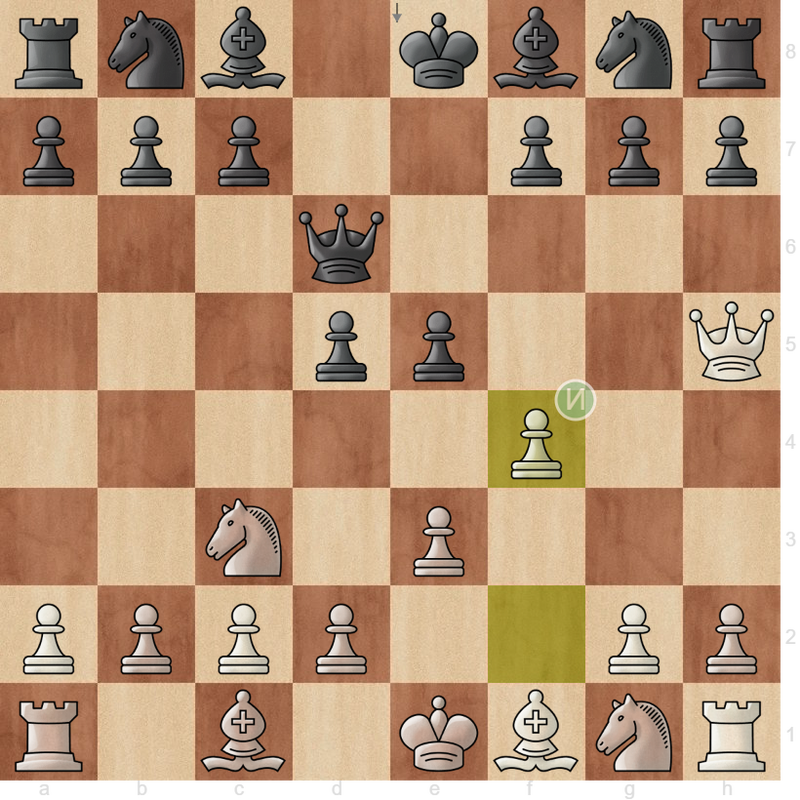
It's something to analyze, maybe even try out, but I can't recommend it, even if it looks kind of juicy.
Conclusion
In this short post I've examined an interesting opening that looks silly, but is pretty disrupting. You can see all of the lines in the study I created researching this. I am sure there are more captivating lines hidden in this, but I didn't have the time to examine things more carefully.
Enjoy!


