
Delaying d6 in the Indian Defense
... valid lines, very unintuitive
Intro
For a while now I have been playing the Indian Defense as a response to 1. d4, on advice of a friend. Doing so, I quickly noticed that there are some lines that are played a lot in this variation, all involving d6. But what if I don't want to play d6?
By examining the positions, I reached some really unintuitively equal or even winning positions for Black.
Note: I am looking at Explorer moves and statistics in Lichess, but I am filtering out bullet and ratings under 1800.
The very main line
Check this line out: 1. d4 Nf6 2. c4 g6 3. Nc3 Bg7 4. e4 d6. The position has been reached 11 million times! As a comparison, the most played line in the Italian Game at the same depth gets to a position that has been reached only 4.4 million times. Cloud evaluation says it's +0.6 for White. The King's Indian has been played to death! Even if you are a complete beginner, you have probably seen this position:
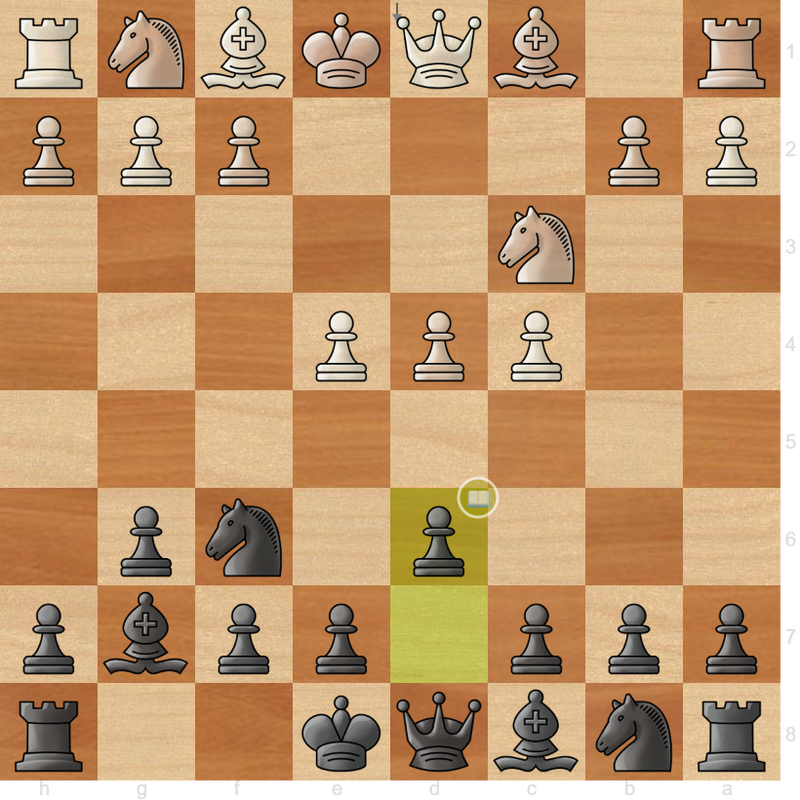
I always assumed that the reason for the d6 move is to blunt an e5 push or Bf5 and that NOT playing it would be really bad. I mean, it's theory, right? It's played 78% of the time. But looking at the stats, the next best moves are O-O and c5 with about +0.7 for White, 10 centipawns difference. Stockfish approved! Castling is done by 20% of the people and c5 by less than 1%!
And it's not like some really cool gambits come out of those moves. The only official gambit to play from the position is the Sämisch Gambit and you need to play d6 from this position to get there.
The alternative
The next best move is short castle, to let's see where it gets us. There are five major responses:
- Nf3 - giving us one more chance to play d6
- e5 - the one move where the absence of the d6 pawn makes a difference
- f3 - weird move, but playable
- Be2 - almost enginey, prepares castling as fast as possible
- f4 - for Connect 4 players
All of these moves are playable leading to a more or less equal position and for any of them other than e5, since we are conceptually refusing to play d6, I recommend c5. Thing is, in every such position, dxc5 is the correct move for White, but almost no one plays it! With c5 you have effectively equalized and maybe even got your opponent out of prep.
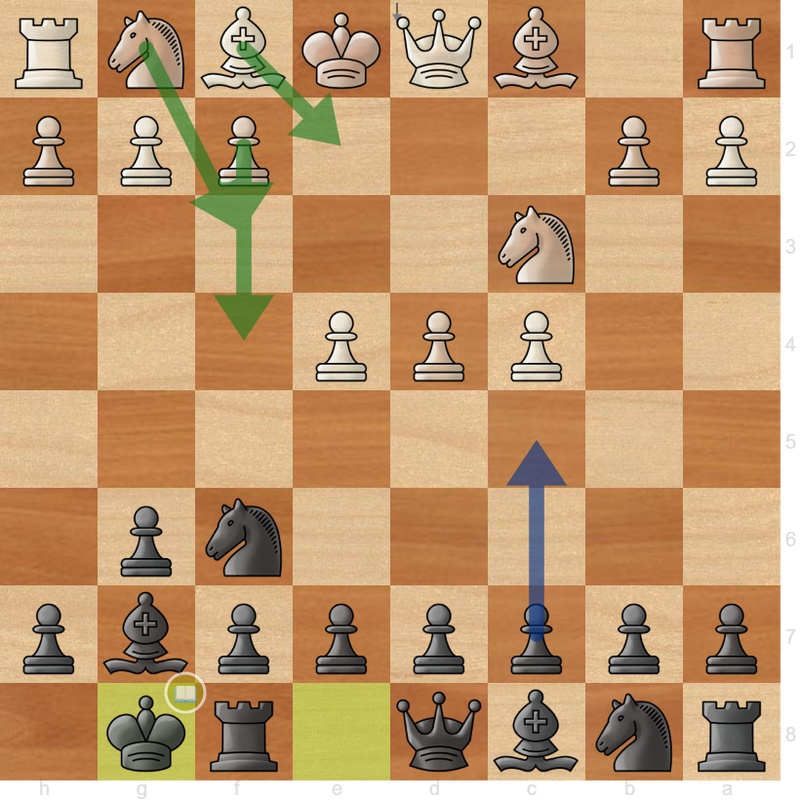
I will not cover those moves in this post. Maybe I will explore them and write a follow-up to this. But now, I will focus on what happens after 5. e5.
The same moves
I believe the attraction of the Indian Defense is that you can pretty much ignore what White does until very late in the game. There are no sacs, no exchanges, for a long time. It's all pawn breaks and knight moves. And you make the same moves. I am talking tough about refusing d6, but there are a lot of lines that transpose because, if you are not going for the e5 push yourself, most lines will sooner or later have d6, castles and c5.
If we let White play e5
The knight is attacked and the only move that doesn't hang it is Ne8. After this retreating move, the cloud eval is pure 0! So what it's saying is that White maybe had 0.7 pawns advantage, but after this, there is none. Engines start with +0.3, reach 0 at depth 30. Stats show a slightly higher chance of victory (2%) for Black!
We have no activity to speak of, White has all the space, the only advantage of our position is king safety.
From this, Stockfish wants to play d6, no matter what White plays. Let's play 6... c5 instead! The later we get to move c5, the less probability that White will take and will play an inferior move. In the following position, for example, if we play d6 eval goes to -0.6 on low depths and stabilizes at -0.3.
The moves so far are: 1. d4 Nf6 2. c4 g6 3. Nc3 Bg7 4. e4 O-O 5. e5 Ne8 6. f4 c5 7. d5
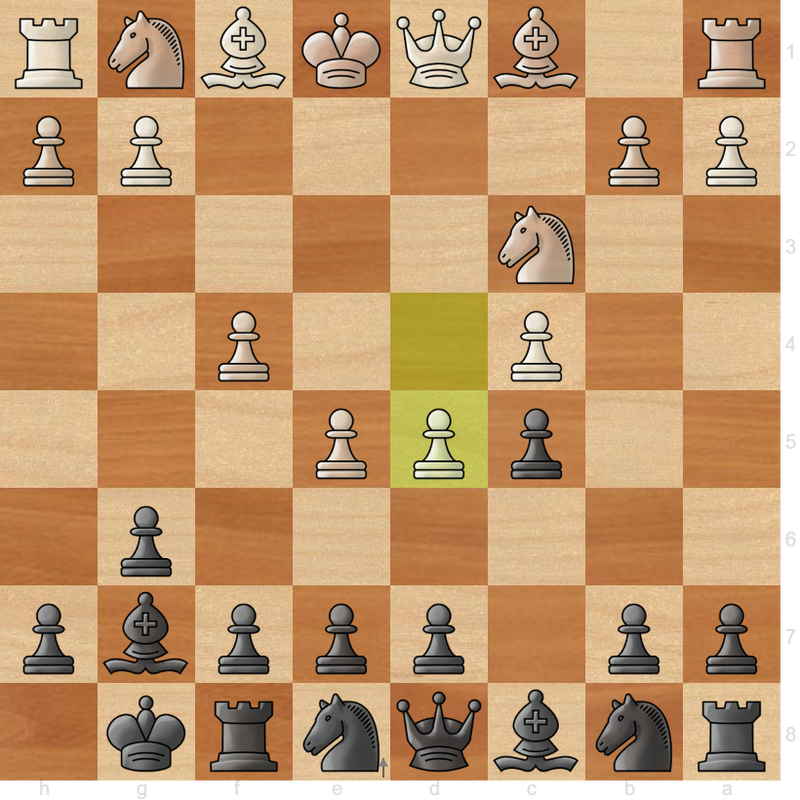
You have to play d6
To be honest, there is no good line that doesn't play d6. Best effort is some Benoni like attack on the queen side, with a6 and b5 or directly with b5. It's a pawn sac and it gets reflected in the evaluation. My instincts tell me to go for it, but common sense and Stockfish agree I shouldn't do it yet.
My point is that d6 right away is predictable, reaching positions that a lot of people have played before. Playing it later will give White permission to make some other moves that feel punishing, like e5, and overextend. At least you get them out of prep for a bit.
Let's examine a game that plays d6 in the position above:
Another one delays d6 even more:
Can we delay it even more? There is one game :
Conclusion
While these lines are more or less transpositions of existing theory and they don't lead to spectacular gains, they do lead to unintuitive positions. A White "bathtub" pawn structure, with two pawns on the 5-th rank, while Black's pieces are all on the 8-th rank and the pawns have barely moved? How is that not fantastic for White?
And yet White struggles to convert their space advantage, while Black has a perfectly safe king and completely outflanks White on the queenside.
Main ideas:
- allow the e5 push - if they don't do it, you can always revert to a previous plan
- move the knight on e8 after castling, where it protects everything until it's time to attack via Nc7.
- delay d6 as much as necessary
- break with c5, but not too early - White rarely knows to take the pawn
- continue with the b and a pawn pushes, sac one of them for open lines
- queen, knight and the fianchettoed bishop are monsters on White's queen side, the rook also has open lines of attack
- exchange your LSB for their LSB (light squared bishop)
- the White e5 pawn will eventually be lost, while attempts to protect it will gain you tempi
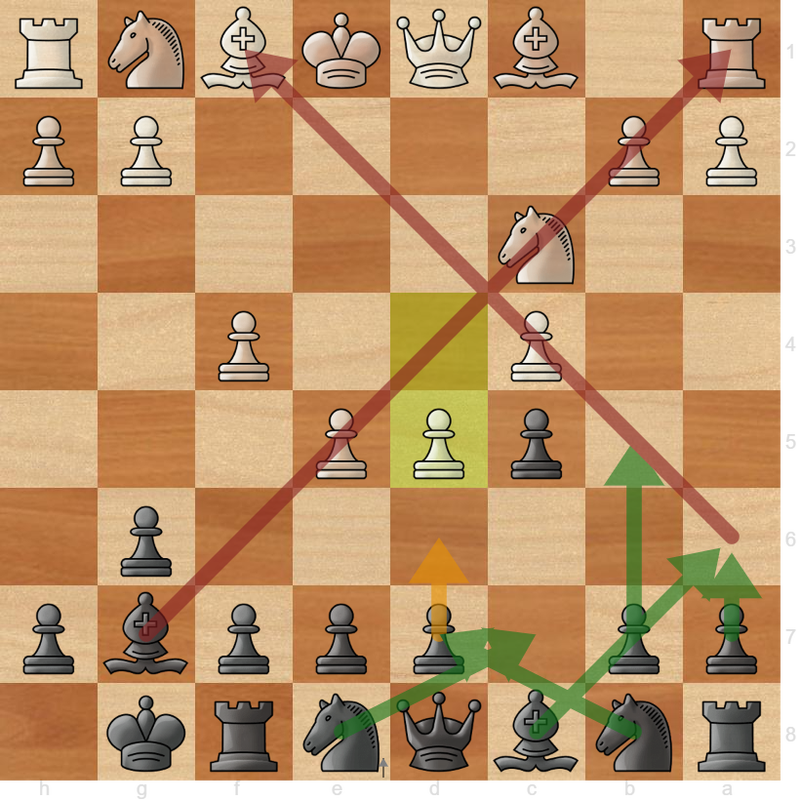
This was mainly an exploration for myself, but I thought I would share it. Let me know what you think.
You may also like
 TheMagnusAura
General Plans of Common Pawn Structures (Part 1)
''The pawns are the soul of chess'' - Philidor thibault
How I started building Lichess
I get this question sometimes. How did you decide to make a chess server? The truth is, I didn't. CM HGabor
How titled players lie to you
This post is a word of warning for the average club player. As the chess world is becoming increasin… TotalNoob69
The REAL value of chess pieces
... according to Stockfish TotalNoob69
Idea that brings us closer to measuring the difficulty of moves
... context is for kings flash3s