
Endgames In the Open
Endings force clarity. Perhaps this is why many people don’t enjoy studying or entering endgames, as the blunt truth about the stakes on the board is not an all-time favorite job for those hiding behind complexity. Fewer pieces on the board, empty squares full of potential for decisive blows, and stripped illusions that the game could somehow be finished somewhere in the middle. Much like the aging process, when maturity and “wisdom” hit you whether you like it or not.
Endgames carry the scent of a climax that offers final revelations. Not always as dramatic as in my favorite modern series Dark, or the cataclysmic destiny of a wounded Star Wars hero, Anakin, who ends up as the darkness endgame piece, Darth Vader. Still, the moment appears unavoidable. Contrary to the belief that fewer pieces make the game easier, this is only partly true. What endgames really do is accentuate precision and accuracy.
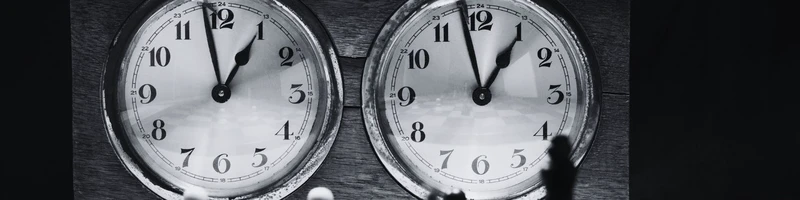
You can no longer hide behind messy middlegame positions and invented complexity. You have to sit down and carefully watch those tempos, making sure you don’t arrive late to the promotion square. The rule of the square appears as one of the greatest visualization techniques, training both anticipation and calculation. Pawns also gain greater respect, despite their undeserved title of being the weakest, while their transformational potential transcends the strength of any other chess piece invented so far. There is less room for excuses and grand plans, but a demand for clear vision that reaches beyond theoretical positions. Complexity in the middlegame can be a hiding place. Endgames don’t care about your fears of clarity and joyfully remove that shelter.
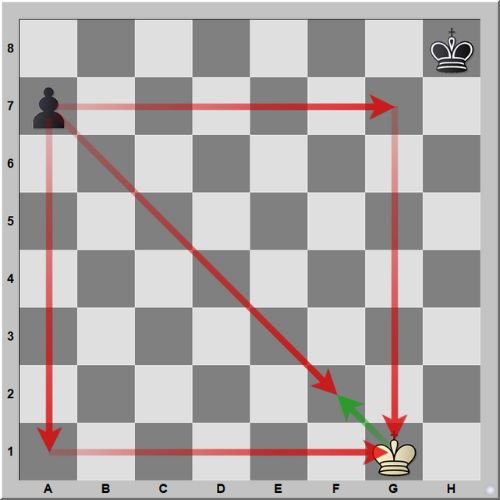 The rule of the square is an endgame technique used to determine whether a king can catch a passed pawn. By imagining a square from the pawn’s current square to its promotion square, one can see whether the defending king can enter it in time. If White is to move, the king can stop the a-pawn, but if Black moves first, the pawn advances (a7-a5) and White’s king cannot catch it.
As pieces are exchanged, positions simplify and options narrow. Psychological pressure increases as options decrease, as there is naturally a greater opportunity for fatal mistakes. What you could compensate for in the middlegame with initiative or positional sacrifices loses its importance in the endgame, and every material loss or slower reaction time can instantly cost the game. Endgames best introduce the concept of zugzwang, teaching the cruelty of timing in its purest form. There are moments when waiting is impossible, but moving in any direction is fatal. You are forced to choose between losses and how artistic they may appear, under the psychological pressure of being required to act. Like when they keep telling us there is free will, which probably borders on my only chosen sane religion, but in real life comes under constraint. Choices are sometimes made without good options. So I am back to atheist mode the moment complexity increases again.
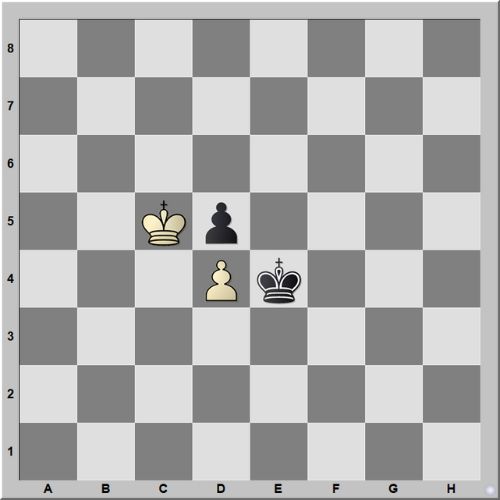 This is a classical example of zugzwang. The side to move must abandon the pawn’s protection, thereby entering a lost pawn endgame.
Complexity collapses over time, reducing everything to essentials: king activity, pawn structure, passed pawns, tempo. The point of the game becomes almost absurdly central, checkmate the king by using your own. There is no help in trying to checkmate the opponent’s king with your queen if yours is resting somewhere in the distance. The dormant days follow the bear’s ingenuity when it finally leaves the cave after a long winter to join the arena again. Its activity becomes crucial once the board clears. Clumsy, but heroic at last. Be like the bear and centralize the king once the endgame of spring enters the board.
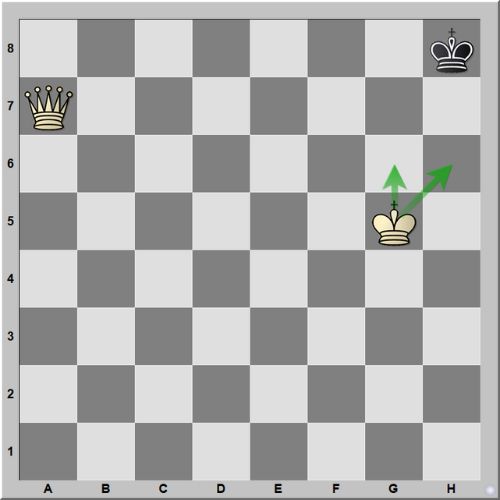 Without the White king joining the hunt for the Black compatriot, the game would turn into a tiresome check-fest.
When the excess pieces disappear, fundamentals and judgment prevail. Pressure and simplicity expose what you actually know, and how well you navigate paths cleared of noise and tactics. Endgames define positions as material vanishes, and this transformation through reduction places higher expectations on the remaining pieces and their inevitable roles.
You may also like
 WGM jovanaeric
Confidential Chess Files: Knight
After the pawn’s entry diary, we continue our series exploring the true stars of the chessboard and … WGM jovanaeric
The Center Is Not Where Power Lies
Controlling the center often paints a target. WGM jovanaeric
Confidential Chess Files: Pawn
We are entering serious territory now, as I’m starting a series exploring each piece in what is esse… IM datajunkie
Why your tactics aren’t improving
The 4 fixes that can help you become a tactician CM HGabor
How titled players lie to you
This post is a word of warning for the average club player. As the chess world is becoming increasin… WGM jovanaeric