
Photo by Brett Jordan
Pause. Breath. Resume.
How pacing is helping me avoid the rollercoaster ELO ride
2320 goal update
Since we last spoke, I had set up a goal of 2320 for my blitz ELO. Here is how that's going:
- Games played since: 40 (20 wins, 19 losses, 1 draw, for a total ΔELO of +2)
- I took two full day breaks on Friday and Saturday, to deal with some personal stuff
- I started doing a similar thing on another online chess site
Identifying one of my problems
When left to my own devices, I can be either calm and collected, dismissive, or a complete madman when it comes to Blitz. Most of the time I will find an excuse to keep playing one game after the other, after the other, after the other.
"I'm playing super well! Let's keep going..."
"Ugh... I wasn't paying attention. Let's get the ELO back."
"Ooops, accidentally started a new one without even thinking..."
Rinse and repeat...
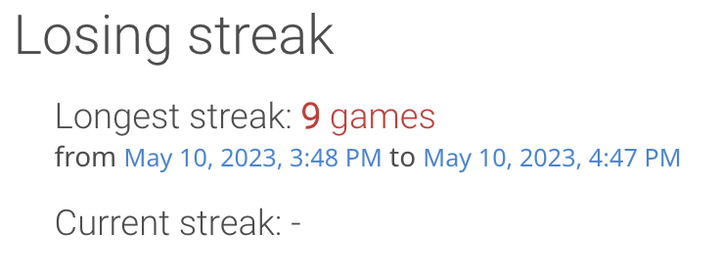
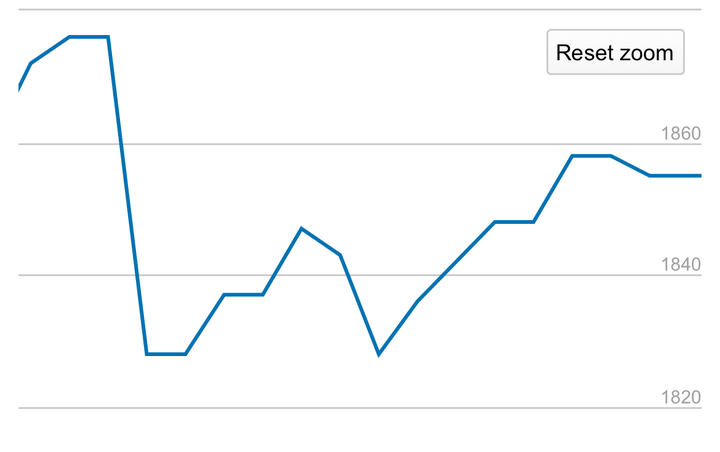
As you can expect, streaks like these are not uncommon when I'm like that. 9 losses back-to-back in 1 hour. If that doesn't seem extreme, consider that I usually play 3+2, and that streak means I lost a game every 6.6 minutes, which means I wasn't spending much time between losses.
PS: If you're thinking "well maybe the winning streaks are just as common", let me give you a major spoiler: they don't. Not for me at least.
Pacing myself
Coach and I realized that I needed structure if I was ever going to conquer my goals. No more endless, aimless, mindless blitzing. I need to break the cycle and willpower alone isn’t doing the trick for me.
So we created a pace to which I can stick. Since I have a 9-5, a family, and other responsibilities, I decided that on most days I can commit to 8 games throughout the day. It wouldn’t be too much, it wouldn’t leave me with a feeling it hadn’t been enough. That way I can squeeze a couple games in the morning, a few at lunch, and close out the day with whatever is left.

Photo by Scott Graham
I created a spreadsheet to keep track of my pace, which forces me to stop after each game, update the tracker and take a breath. It also gives me an opportunity to measure some KPIs, hopefully making Socrates proud of me since
The unexamined life is not worth living.
While this sheet has no magic powers to simply halt of mindless blitzing (yet!!), I still had a couple of red mindmoments, but I did find that keeping track like this is helping me keep my focus, my intentions, and my presence at higher levels when it comes to Blitz chess. I have also found that it’s easier to understand my streaks a little better.
Today, for instance, I had a 4 loss streak. Since I was stopping after each game, it was easy for me to take an breath and ask myself what was going on. I figured I was distracted. So I tried to address it, but I was still distracted. So I was at least able to stop playing, take a walk and then come back for a couple wins. I’m not saying taking a break made me win, mind you. I’m saying that taking a pause allowed me to breath, change my mindset, and resume with renewed intention. That, I think, is what allowed me to turn the tide for the day.
One pace to fit them all? Not quite...
Some days, I might be busier than usual, which means I won't be able to make it to 8 games. Other days, I might have some extra time on my hands.
For this reason, we have also set a smaller pace of 4. In the days I have less time, I can at least make it halfway through my large pace, and that should be enough for a fair session. In the days where I'm left wanting more chess, and I actually have the time for it, I can add this smaller pace on top of the large one, making it 12 total for the day. This way I don't just fall back into the trap of playing incessantly.
I made sure I added a mandatory minimum 1 hour of break between paces, in order to make sure I am taking a long pause between sessions.
After one week of pacing
I can report that after a full week of pacing like that, I feel like I'm definitely in control of my journey. The swings are not as vicious, and my mindlessness is much more manageable (although not totally gone).
The mandatory chess position
I'm taking this one from a game I played today (on a different platform). In the following position, we are playing the black pieces and I think I have found a brilliant move, so I played it: Nf2+??
https://lichess.org/study/T2GfYsek/nNWxA49E
Not that I would never miss 14. Rxf2, I have made that mistakes countless times. My point is that after the rook takes my knight, I can play 14... dxc3 (exposing an attack on the rook) 15. Re2 cxb2 16. Bxb2 Qxb2 17. Nd2, recovering the piece and winning a pawn and the bishop pair. I figured I'd be almost winning after this position. What I completely missed is that White can simply play 15. d4!!, and all my threats are neutralized and I'm just a piece down (because if I try 15... cxb2 16. Bxb2 Qxb2?? 17. Bxh7+ and I have lost my queen).

Photo by Guillermo Latorre
Last week I showed you a position and talked about defense. Well, our opponents can be great defenders too. The great thing about practicing defensive ideas, is that now I can appreciate it when my opponent finds them, and be in awe of their prowess.


