
Analyzing a single position
... by a noob
The position
Sometimes I play around with Explorer Practice and get to lines and positions that seem interesting to me. Then maybe I write a blog post about it.
Here, I was in a King's Indian Defense position and the "opponent" slipped up. Now I had to decide what to capture with, knight or bishop. Take a look:
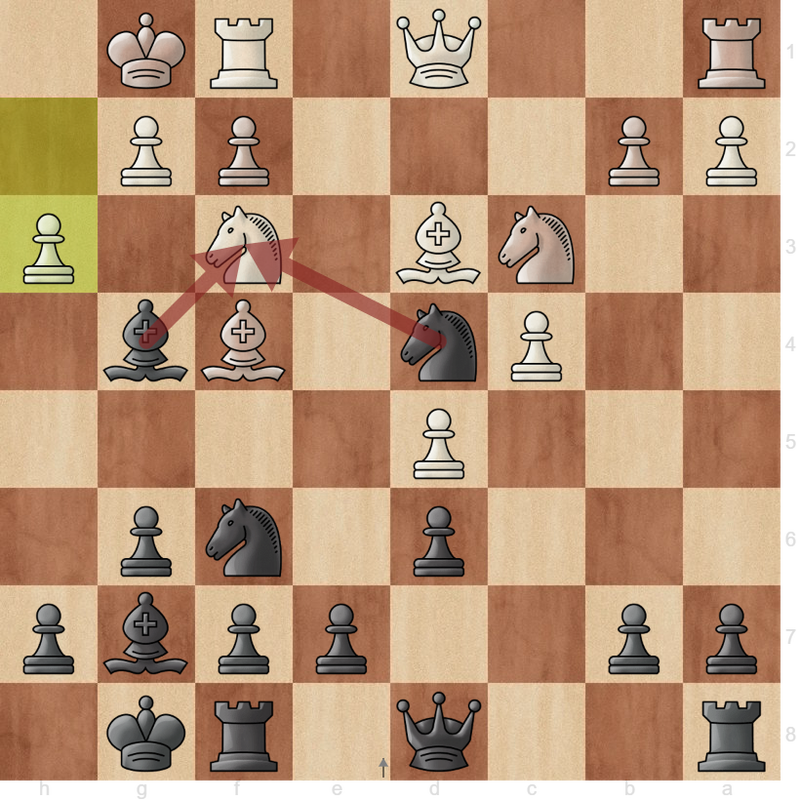
The line
While you consider this, let's talk about how we got here. It started as a typical KID: 1. d4 Nf6 2. Nf3 g6 3. c4 Bg7 4. Nc3 O-O 5. Bf4 d6 6. e3 to which I replied with 6... c5. It's the best computer move, even if third as used by 1800+ rated people and only 13% of the time. I guess when you start with a setup that prepares an e4 push you are reluctant to change plans.
Anyway, position was objectively equal until an ill advised d5 push by White and then an inexplicable h3, which lead to our position.
So, have you thought it through? Which is the best move?
Gathering information
Taking with the knight (with check) would force White to take with the pawn, leaving the h3 pawn undefended to take with the bishop, with tempo on the rook. This leads to this position and possible immediate plans:
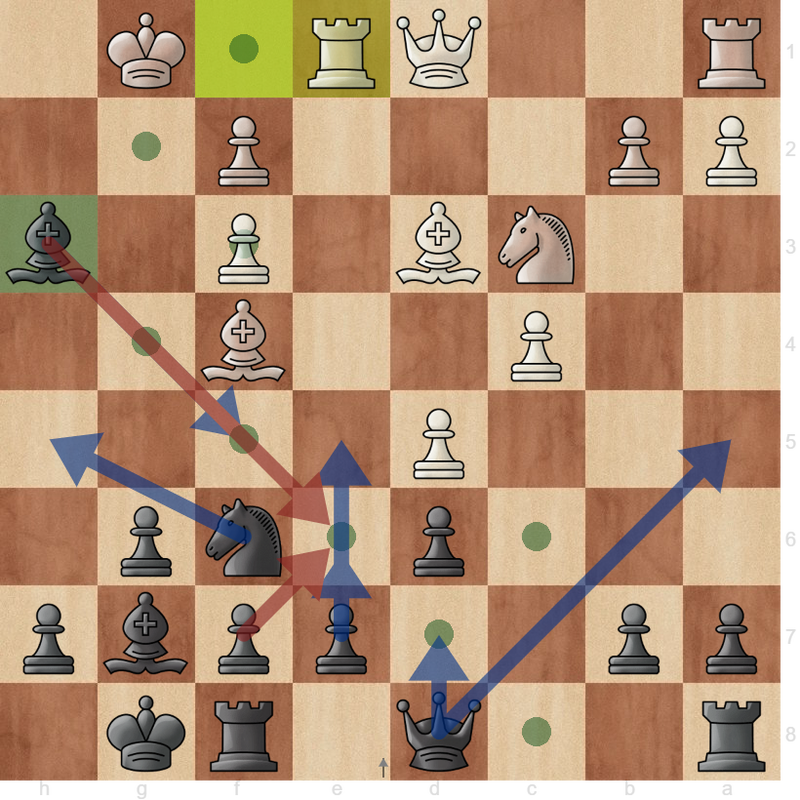
Let's look deeper. It's an Asymmetric Transformation of the Maróczi pawn structure. King safety, material and pawn structure favor Black, while piece activity and space favor White, according to the K-MAPS analysis. Piece coordination and overall position quality favor Black.
Now let's see what happens when we capture with the bishop:
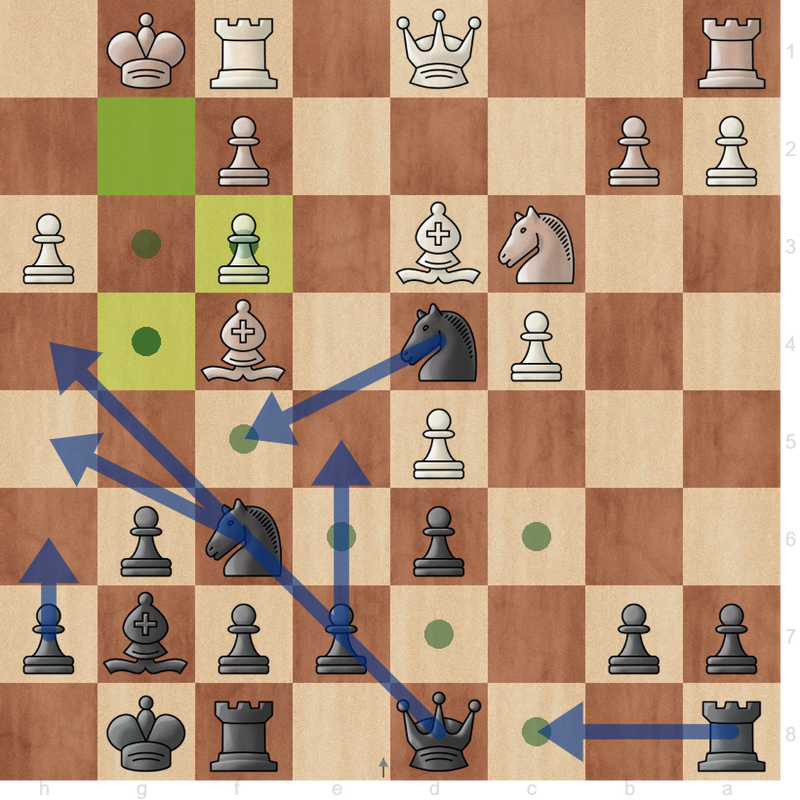
Same pawn structure, of which Mauricio Flores Rios says
White typically attempts a mating attack while Black will gain counterplay on the queenside. Black has a backward pawn on e7 which could become a target for White's rooks. However, Black can often neutralize this pressure by simply placing his dark-squared bishop on f6.
According to the same, Black's medium term plan should be:
- Attack White's c4-d5 chain with the break ... b7-b5xc4.
- Open the a-file with ... a7-a5-a4xb3. If White responds to ... a5-a4 with b3-b4, then the c4-d5 chain becomes weaker, and the break ... b7-b5 could be stronger.
- Simplify the position to minimize White's attacking chances.
K-MAPS analysis says that only king safety and pawn structure favor Black now, while material, activity and space slightly favor White.
The immediate Stockfish derived plans also seem to be less aligned to the theory on the pawn structure, with all pieces focusing on the king side, rather than the queen side. Plus, you lose your bishop pair.
The Nxf3 line is sharper (less drawish) than Bxf3, according to Lichess database statistics for all games.
Computer analysis
So what does the computer say? Evals are -1.5 and -2.1. Bishop takes is 40% better! But why?
When knight takes, Black wins two times out of three. People overwhelmingly continue with Nh5, even if Stockfish would like e6 first, with little extra evaluation effect. An example on how this could continue (at my level) is Cuchilloo (1983) vs FernandoRivera_PUCP (1969) where Black had mate in four before they blundered and lost.
Stockfish, on the other hand, would go with e6, getting rid of pawns to free rooks and bishop diagonals and relentlessly go for the unsafe White king.
When bishop takes, only jorgesebasti (1842) vs kuzmenoka (1802) reached that position, but I wouldn't try to learn anything from that game.
Stockfish doesn't really have a clear plan, either. It gets rid of the f-pawn to free one rook, exchanges the centralized knight and replaces it with the other knight, then centralizes both dark bishop and king rook.
Both computer lines reach a -2.5 eval for Black.
Chessagine APIs have Nxf3 as most likely (Maia 1800 69%, Maia 2600 78%, Elite Leela 71%). Only Leela T1-256 prefers Bxf3 at 62%.
Conclusion
I think this is one of those positions where the computer evaluation is actually misleading. All of the other metrics, including human intuition, are saying that taking with the knight is best, which means it's a much easier to play position for a person. Even when going full machine mode, there are no significant differences between the two lines in terms of evaluation - true, following low depth computer lines, because I don't have all day.
There is one thing that jumped at me, though, while looking at the immediate Stockfish plans for each position. The Bxf3 variation has absolutely all pieces trained on the enemy king. There are no hints of any attention to the queen side. It's a full attack mode, aggressive and focused. The Nxf3 has immediate advantages that then get muddled in operations on both sides of the board, with not so clear ideas on how to attack.
For a machine, aiming all weapons at the enemy is more valuable than a clear position, for a human the reverse might be true.
As always, I welcome your input. I would like to learn more about how to analyze chess positions and what I am doing wrong right now. Let me know in the comments what your take is. Thanks!
Here is the PGN of my explorations.
You may also like
 GetDiscombobulated
Interesting Patterns : Breaking the Bg4 Pin
In this Blog I'd like to explore examples of breaking the Bg4 Pin FM mizant83
When The Engine Makes You Worse At Chess
The advice I'm about to give sounds completely absurd - if you're trying to improve at chess, one of… TotalNoob69
Discerning chess plans with Stockfish?!
... surely this can't be a thing CM HGabor
How titled players lie to you
This post is a word of warning for the average club player. As the chess world is becoming increasin… TotalNoob69
Idea that brings us closer to measuring the difficulty of moves
... context is for kings thibault