
Blake Weyland on Unsplash
How to think like a master in quiet positions
The 3CE methodIn the previous post, I wrote that I played one of my best ever games against a GM.
This week, I want to show you the thinking method I used in the quiet positions.
3CE = 3 Candidates, Comparison, Elimination
I try to come up with around 3 reasonable options, compare what each move is trying to achieve and eliminate the ones that I don’t like for practical or positional reasons.
The 3CE method is mainly for quiet positions. If there are forcing sequences your decision will be based on calculation instead, and if you find a move that clearly wins material there’s no need to compare options.
In positions with no tactics, you’re often comparing different factors in the position and asking questions that help you decide on a move that’s good enough: which move
- improves my worst piece?
- creates a useful weakness?
- seems most logical in this pawn structure?
- lets me create threats quicker than the opponent?
- leads to the kind of position I actually want to play?
- gives my opponent a more difficult decision to make?
- avoids giving the opponent some tempi in the near future?
This is why quiet positions are hard. You’re weighing up factors like piece quality, time, weaknesses, king safety, initiative, pawn structure, practicality and others.
Masters do this too, but usually not by ticking off these factors one by one. A lot of it comes from experience and intuition.
That’s where the 3CE method helps:
- Come up with around three candidates, or reasonable options. This stops you from getting tunnel-visioned into one option without considering any others.
- Compare them: what does each move improve, allow, fail and lead to?
- Eliminate the moves that have drawbacks, whether they be concrete, positional or practical.
Of course, you also need to be practical with your time - because it’s hard to be more confident about which move is best if there are no tactics, you also need to trust your feeling and judgment so you don’t overthink things.
Decision 1: Where should the queen go?
(have a think if you want to use these for your own training)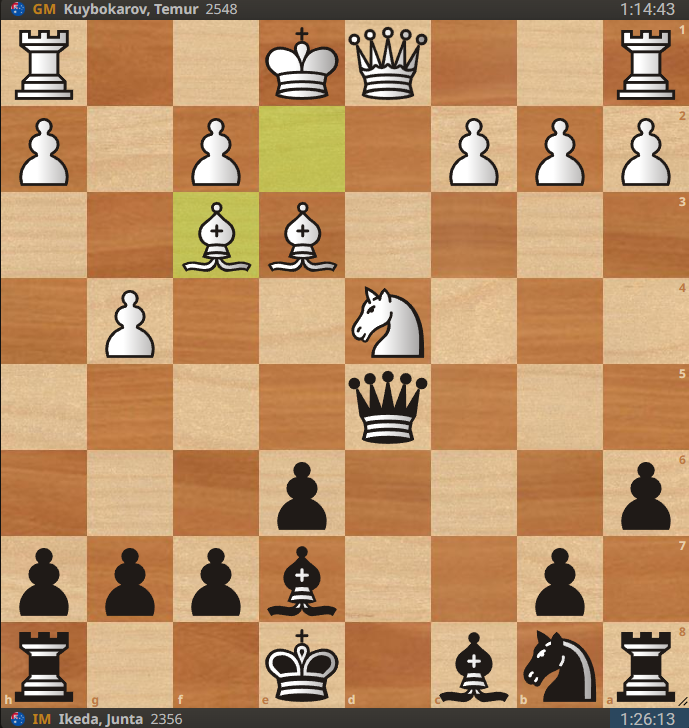 I considered three options: 11...Qa5+, 11...Qd6 and 11...Qe5.
The first thing I wanted to compare was not just where the queen was active but also where it would cost me the least time later.
- 11...Qe5 looks active and sets up ...Bg5, but White can stop this with 12.h4. Even if I inflict White with an isolated pawn on e3 in a line like 12.Qd2 Bg5 13.O-O-O Bxe3 14.fxe3, I’m spending too many tempi while my pieces are still undeveloped. So I eliminated it.
- 11...Qd6 threatens ...Qb4+, but White can meet it with 12.Qe2 and after queenside castling I’ll have to use another tempo to evacuate the queen.
- That leaves 11...Qa5+. This was the move liked most because if White plays Qd2, I can swap queens when g4 looks more like a weakness than a strength.
Lesson: In quiet positions, active moves are tempting - but also ask whether that activity will cost you tempi later.
Decision 2: Castle or stay flexible?
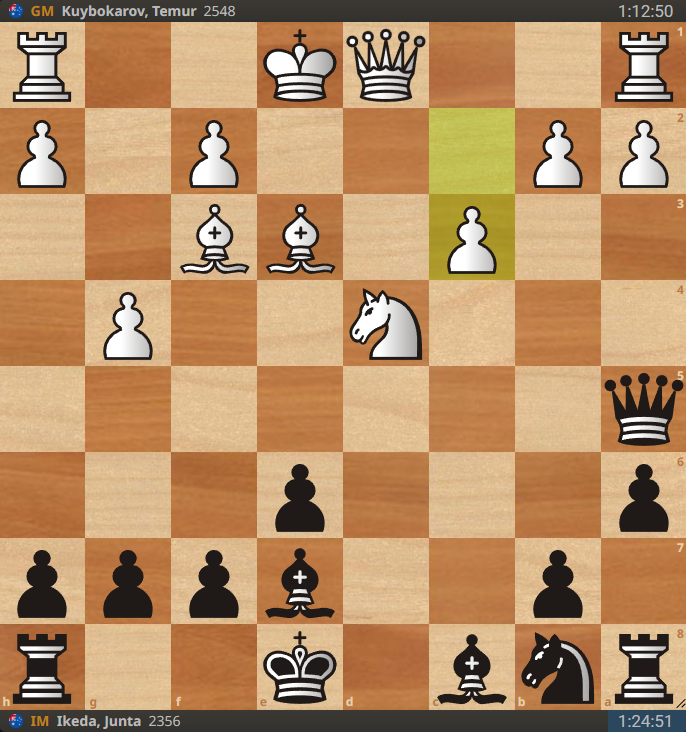 This time I considered these options: 12...Nd7, ...O-O and ...Qc7.
- 12...Qc7 was playable but felt too modest. It prepares ...Bd7 and ...Nc6, but it moves the queen again and heads to a position where White’s decisions are pretty easy and they have nothing to worry about. So I eliminated it.
- 12...O-O was the natural move. But once I castle, White’s kingside expansion with h4 and g4-g5 looks decent - committing my king gives White something to aim for.
- 12...Nd7 I liked more because it gives me more options (...Ne5 going for ...Nc4 or ...Nf6 followed by ...e5 or ...Nd5 in some cases) and it doesn’t give White a target.
Lesson: Natural moves are usually playable, but in quiet positions you should ask whether they make your opponent’s next few moves easier or give them a simple plan.
Decision 3: Where should the queen go?
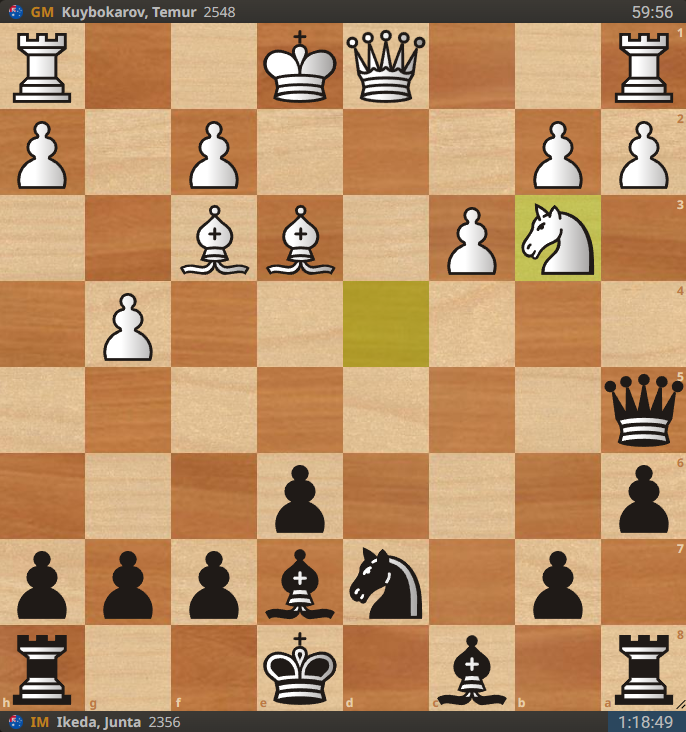 This one was more about avoiding things I didn’t want.
- If I went to e5, it would be vulnerable again and White can gain tempi on it soon.
- I also considered moves like 13...Qa4, but after 14.Qd4 White can force a queen swap and my queenside pieces are still hard to develop and awkward.
- So I chose 13...Qc7. It keeps queens on the board, avoids unnecessary tempo losses and leaves me with useful moves like ...Ne5 and ...Nf6.
Lesson: Sometimes comparison isn’t about finding the most exciting move - it’s about rejecting the positions or lines you don’t want to get into.
Decision 4: Responding to a threat
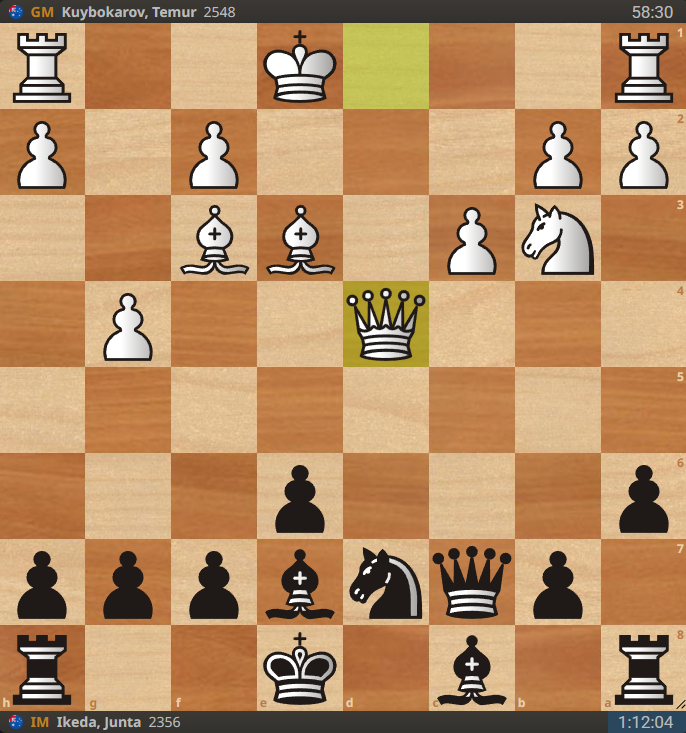 Here there’s a concrete threat so the options are more limited.
- 14...Bf6 gains a tempo but White will gain it back with interest with g5 later.
- 14...e5 was playable but it commits the pawn structure and gives up some flexibility (I don’t have ...Ne5 any more).
- So I chose 14...O-O keeping both ideas available: ...e5 with tempo and leaving the pawn on e6, depending on what White does.
Lesson: Even when there’s a concrete threat and you can respond with a tempo move, think about what’s changed in a position at the end of the tempo moves.
Decision 5: White castles long
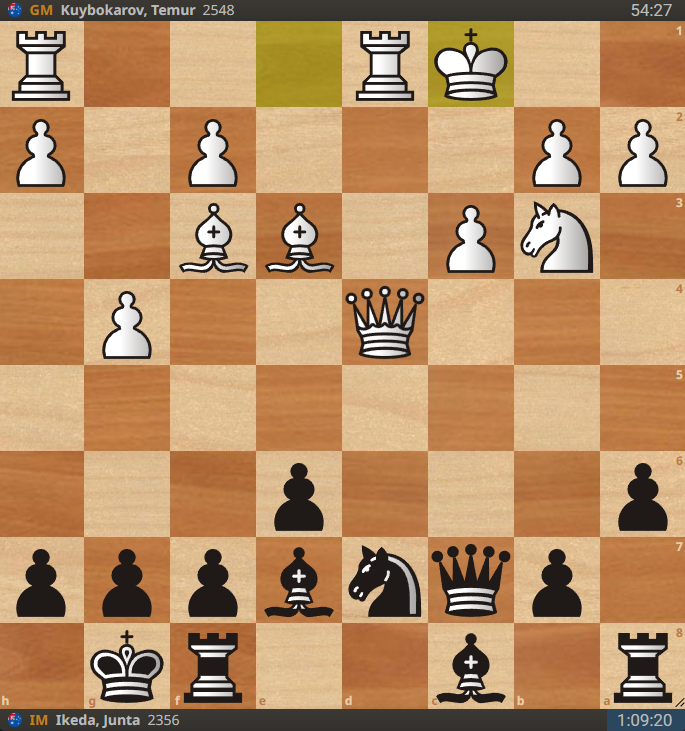 This was a major decision by White. When your opponent changes their king position in the middlegame, you need to reassess the whole position. Plans that were secondary one move ago can suddenly become more urgent.
Here I mainly compared 15...a5 and 15...e5.
- 15...e5 was attractive. It prepares ...Nf6 attacking g4 after which I can develop more of my pieces with moves like ...Be6 or ...Rd8
- But 15...a5 felt more critical because ...a4 and ...a3 becomes a serious problem for White. They either have to weaken the queenside with a pawn move, move the knight backwards or move the queen again so the knight can come to d4. I chose this move because it asked White the more uncomfortable question.
Lesson: After opposite-side castling, don’t only think about which move improves your position but which move forces your opponent to make the most unpleasant concession and where the upside is biggest.
Decision 6: Choosing the critical continuation
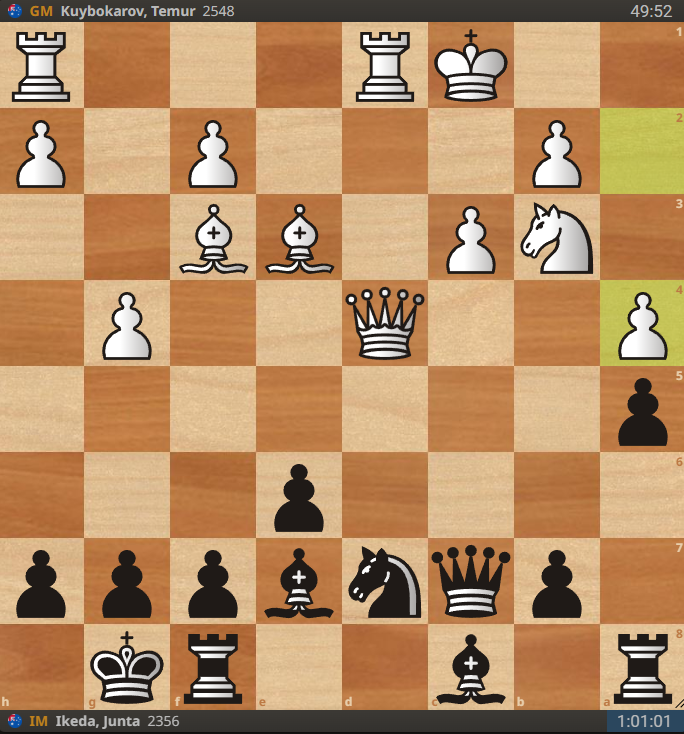 After White’s reply, a4 became both a short-term and long-term weakness. That made ...e5 stronger.
- Even in quiet positions, you have to check concrete lines. After 16...e5, White has ideas like Qd3 or Qd5, followed by Qb5 in some lines, aiming at b6 in case my knight moves when my a5-pawn can be a weakness too
- I also looked at slower moves like 16...Ra6 which could prevent some of those ideas. But in the end, 16...e5 preparing ...Nf6 felt more critical.
Lesson: I couldn’t fully calculate what happens after 16...e5, but it was the move that creates the most problems for the opponent and felt like the most fighting one
White played 17.Qd3.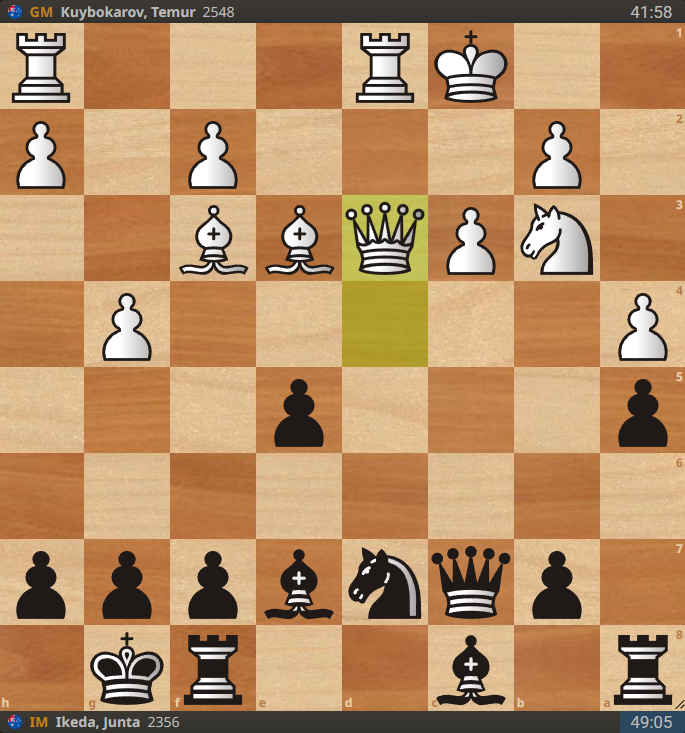 The game continued 17...Nf6 18.Qb5 e4 19.g5 exf3 20.gxf6 Bxf6
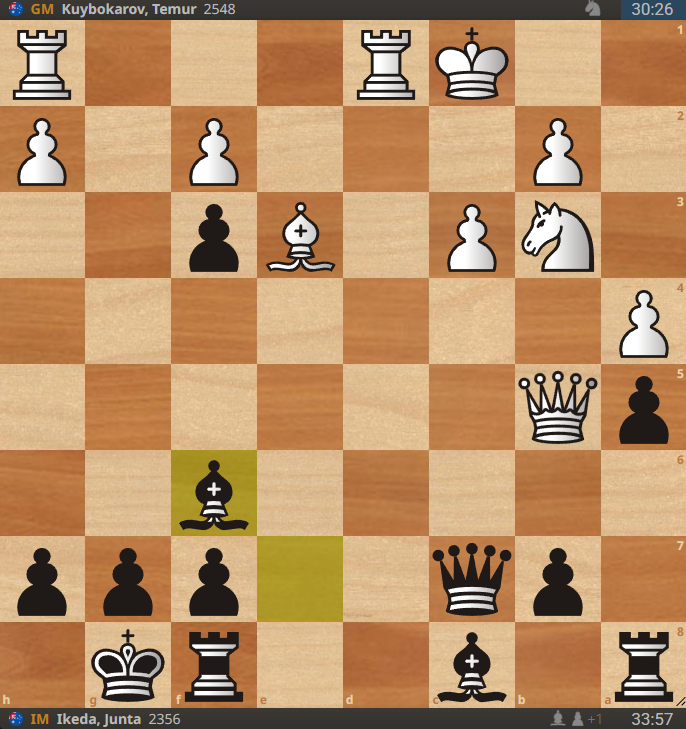 And Black was slightly better: temporarily a pawn up, with the two bishops and plenty of pressure, though the position is still complex.
There were still many adventures ahead in this game, but the important part for this post is how I got to the position above.
In this phase of the middlegame, there were no brilliancies or tactical shots - but in chess, most of your positions will be like that. You want to find a few reasonable options, compare what each one does and eliminate the ones that don’t fit the position or where you want to take it.
If you want to get weekly emails with practical tips on chess improvement like these that help you build healthier habits, I write a free newsletter to over 2,000 chessplayers on Substack.
At the amateur level, two problems come up again and again.
The first is getting attached to the first move that looks good. You see an active queen move, natural developing move or tempting pawn break and suddenly you completely forget that any other options exist. Sometimes your instinct might be right, but you aren’t considering the position or your options deeply enough.
The second is separating calculation from positional thinking. Many players can find tactics or calculate short lines but without asking the bigger questions:
- Which weaknesses matter here?
- Is king safety an important factor here?
- Which move makes my opponent’s next few moves harder?
- Which options gives me practical chances without positional drawbacks?
The 3CE method helps because it gives your thinking a simple shape.
So next time you reach a quiet position and don’t know what to do, try this:
- Don’t immediately calculate the first move that catches your eye. Pause.
- Come up with three candidate moves.
- Compare them.
- Eliminate one.
- Then choose between the remaining options.
You won’t suddenly think like a master in every position, but you’ll start asking better questions.
And in quiet positions, better questions are often where better moves come from.
Agnes subtracts from her self everything that is exterior and borrowed, in order to come closer to her sheer essence (even with the risk that zero lurks at the bottom of the subtraction). Laura's method is precisely the opposite: in order to make her self ever more visible, perceivable, seizable, sizeable, she keeps adding to it more and more attributes and she attempts to identify herself with them (with the risk that the essence of the self may be buried by the additional attributes).
—Milan Kundera, Immortality
You may also like
 IM datajunkie
You’re studying chess openings the wrong way (do this instead)
If memorising opening lines made you stronger, many club players would be masters. CM HGabor
How titled players lie to you
This post is a word of warning for the average club player. As the chess world is becoming increasin… IM datajunkie
Do this on your opponent's turn
5 simple habits to use your time better and level up your chess NDpatzer
Science of Chess: Knowing when to think (and when to just move)
Some positions deserve a lot of thought and some don't - but do players know which is which? IM datajunkie
5 benefits of OTB tournaments
There's nothing like 9 rounds of 90+30 IM datajunkie