
Comments on https://lichess.org/@/bosburp/blog/my-first-chess-composition/dADd1WUT
Interesting to see how composition works.
Interesting to see how composition works.

I actually solved your composition before you released the blog.
I actually solved your composition before you released the blog.

Congrats on your first chess composition! I love this underrated field of chess art and am astounded by the ingenuity great chess composers/problemists have displayed.
Your puzzle was fun. A few notes that are not meant so much as criticism as things to possibly think about in future creations:
-
It is rare for the first move of a direct mate (mate in X) puzzle to be a check. The first move of a direct mate puzzle (in contrast to, say, a study) is called the "key" move and usually designed to be a least somewhat counter-intuitive. There are exceptions to this, of course, but usually those exceptions are due to extraordinary circumstances.
-
It is a great idea to work backwards from a set idea. Many composers do this but with the idea often being a strategic or tactical motif, such a particularly surprising interference, deflection, or discovery. Here's a famous example of a well realized (if somewhat gussied up) strategic concept by one of the greatest masters of 19th century puzzledom:
Mate in 3
3r3r/pbp2p1p/1p5q/8/Q6P/B2B1PP1/1R2P1N1/2k2K1N w - - 0 1
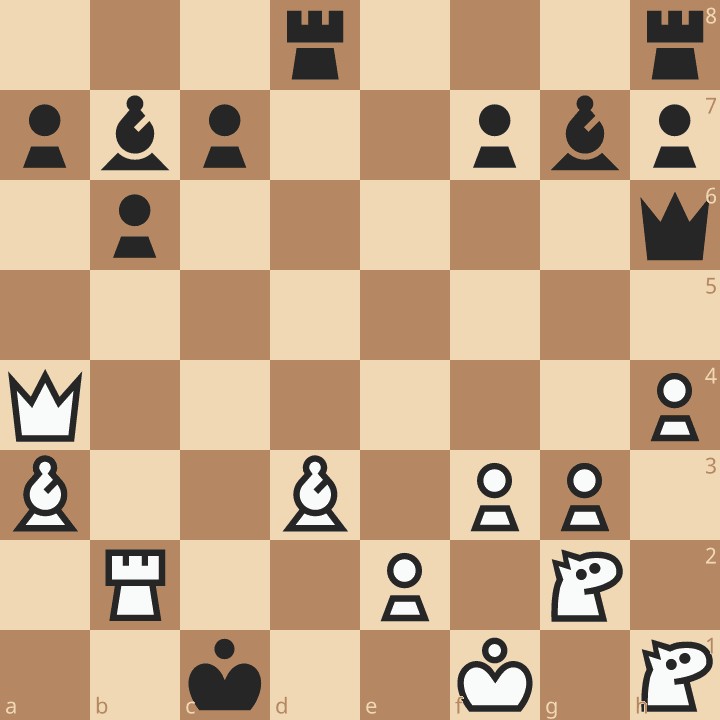
- One thing that a lot of puzzles do to keep things interesting is to have multiple possible lines with different (though sometimes thematically related) lines (basically defenses and counters to those defenses) as opposed to a string of sacrifices ending in a checkmate which, no matter how spectacular, will tend to resemble a study or actual game situation. There's a often concept of "set play" which is pre-existing moves black can play and the responses white has for them which the solution of the puzzle often needs to mutate or abandon. This creates strategic interest. Here's an example (again, mate in 3):
8/1n4K1/qpB4p/3R3P/4kp1N/2p4P/2P1pP2/6R1 w - - 0 1
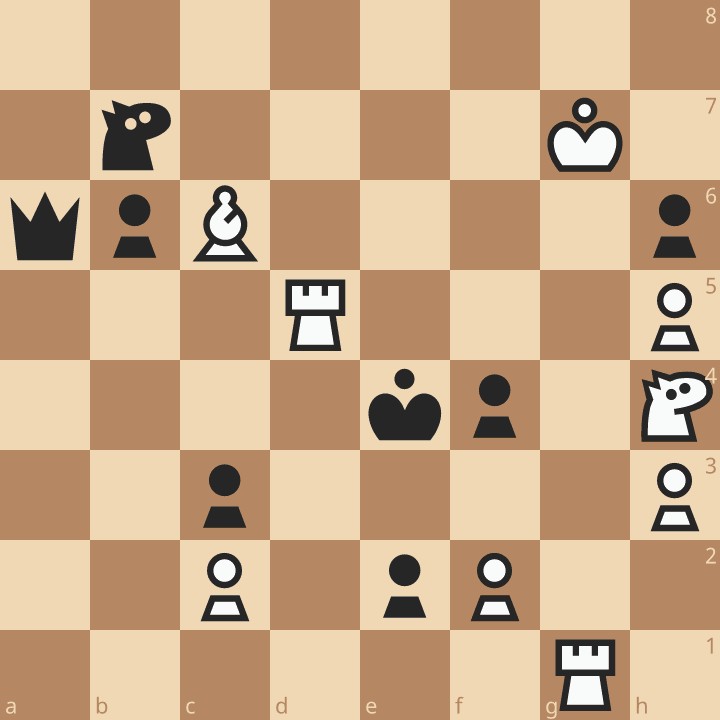
Here the "set play" would be against black's pawns :...e1=Q meets Rxe1++ and ...f3 runs into Rg4++. Can you find the solution?
Cheers,
- Zug
Congrats on your first chess composition! I love this underrated field of chess art and am astounded by the ingenuity great chess composers/problemists have displayed.
Your puzzle was fun. A few notes that are not meant so much as criticism as things to possibly think about in future creations:
1. It is rare for the first move of a direct mate (mate in X) puzzle to be a check. The first move of a direct mate puzzle (in contrast to, say, a study) is called the "key" move and usually designed to be a least somewhat counter-intuitive. There are exceptions to this, of course, but usually those exceptions are due to extraordinary circumstances.
2. It is a great idea to work backwards from a set idea. Many composers do this but with the idea often being a strategic or tactical motif, such a particularly surprising interference, deflection, or discovery. Here's a famous example of a well realized (if somewhat gussied up) strategic concept by one of the greatest masters of 19th century puzzledom:
Mate in 3
3r3r/pbp2p1p/1p5q/8/Q6P/B2B1PP1/1R2P1N1/2k2K1N w - - 0 1

3. One thing that a lot of puzzles do to keep things interesting is to have multiple possible lines with different (though sometimes thematically related) lines (basically defenses and counters to those defenses) as opposed to a string of sacrifices ending in a checkmate which, no matter how spectacular, will tend to resemble a study or actual game situation. There's a often concept of "set play" which is pre-existing moves black can play and the responses white has for them which the solution of the puzzle often needs to mutate or abandon. This creates strategic interest. Here's an example (again, mate in 3):
8/1n4K1/qpB4p/3R3P/4kp1N/2p4P/2P1pP2/6R1 w - - 0 1

Here the "set play" would be against black's pawns :...e1=Q meets Rxe1++ and ...f3 runs into Rg4++. Can you find the solution?
Cheers,
- Zug
@ZugAddict said ^
Congrats on your first chess composition! I love this underrated field of chess art and am astounded by the ingenuity great chess composers/problemists have displayed.
Your puzzle was fun. A few notes that are not meant so much as criticism as things to possibly think about in future creations:
It is rare for the first move of a direct mate (mate in X) puzzle to be a check. The first move of a direct mate puzzle (in contrast to, say, a study) is called the "key" move and usually designed to be a least somewhat counter-intuitive. There are exceptions to this, of course, but usually those exceptions are due to extraordinary circumstances.
It is a great idea to work backwards from a set idea. Many composers do this but with the idea often being a strategic or tactical motif, such a particularly surprising interference, deflection, or discovery. Here's a famous example of a well realized (if somewhat gussied up) strategic concept by one of the greatest masters of 19th century puzzledom:
Mate in 3
3r3r/pbp2p1p/1p5q/8/Q6P/B2B1PP1/1R2P1N1/2k2K1N w - - 0 1
- One thing that a lot of puzzles do to keep things interesting is to have multiple possible lines with different (though sometimes thematically related) lines (basically defenses and counters to those defenses) as opposed to a string of sacrifices ending in a checkmate which, no matter how spectacular, will tend to resemble a study or actual game situation. There's a often concept of "set play" which is pre-existing moves black can play and the responses white has for them which the solution of the puzzle often needs to mutate or abandon. This creates strategic interest. Here's an example (again, mate in 3):
8/1n4K1/qpB4p/3R3P/4kp1N/2p4P/2P1pP2/6R1 w - - 0 1
Here the "set play" would be against black's pawns :...e1=Q meets Rxe1++ and ...f3 runs into Rg4++. Can you find the solution?
Cheers,
- Zug
Thank you for the kind words and the detailed feedback! Your comments are very helpful. I didn't know about those points before. I'll definitely keep them in mind for the future and make sure to study the examples.
Thanks again for taking the time to read the blog and leave such a detailed comment!
@ZugAddict said [^](/forum/redirect/post/D5jxBoTR)
> Congrats on your first chess composition! I love this underrated field of chess art and am astounded by the ingenuity great chess composers/problemists have displayed.
>
> Your puzzle was fun. A few notes that are not meant so much as criticism as things to possibly think about in future creations:
>
> 1. It is rare for the first move of a direct mate (mate in X) puzzle to be a check. The first move of a direct mate puzzle (in contrast to, say, a study) is called the "key" move and usually designed to be a least somewhat counter-intuitive. There are exceptions to this, of course, but usually those exceptions are due to extraordinary circumstances.
>
> 2. It is a great idea to work backwards from a set idea. Many composers do this but with the idea often being a strategic or tactical motif, such a particularly surprising interference, deflection, or discovery. Here's a famous example of a well realized (if somewhat gussied up) strategic concept by one of the greatest masters of 19th century puzzledom:
>
> Mate in 3
>
> 3r3r/pbp2p1p/1p5q/8/Q6P/B2B1PP1/1R2P1N1/2k2K1N w - - 0 1
>
> 
>
>
> 3. One thing that a lot of puzzles do to keep things interesting is to have multiple possible lines with different (though sometimes thematically related) lines (basically defenses and counters to those defenses) as opposed to a string of sacrifices ending in a checkmate which, no matter how spectacular, will tend to resemble a study or actual game situation. There's a often concept of "set play" which is pre-existing moves black can play and the responses white has for them which the solution of the puzzle often needs to mutate or abandon. This creates strategic interest. Here's an example (again, mate in 3):
>
> 8/1n4K1/qpB4p/3R3P/4kp1N/2p4P/2P1pP2/6R1 w - - 0 1
>
> 
>
>
>
> Here the "set play" would be against black's pawns :...e1=Q meets Rxe1++ and ...f3 runs into Rg4++. Can you find the solution?
>
> Cheers,
>
> - Zug
Thank you for the kind words and the detailed feedback! Your comments are very helpful. I didn't know about those points before. I'll definitely keep them in mind for the future and make sure to study the examples.
Thanks again for taking the time to read the blog and leave such a detailed comment!
Thank you for the kind words and the detailed feedback! Your comments are very helpful. I didn't know about those points before. I'll definitely keep them in mind for the future and make sure to study the examples.
Thanks again for taking the time to read the blog and leave such a detailed comment!
You're welcome! One quick apology - the first puzzle is mate in 2, not 3 :)
@Bosburp said [^](/forum/redirect/post/Aqj7Njal)
> Thank you for the kind words and the detailed feedback! Your comments are very helpful. I didn't know about those points before. I'll definitely keep them in mind for the future and make sure to study the examples.
>
> Thanks again for taking the time to read the blog and leave such a detailed comment!
You're welcome! One quick apology - the first puzzle is mate in 2, not 3 :)
Nice post as really is interesting how you create these
Nice post as really is interesting how you create these

Nice one.
We can take away the pawn c4, the knight a8 and the pawn f2. That is still mate in 7, starting with Rg6. The additional possibility 4.Qa8 allows an extra mate:
https://lichess.org/WWeZgHFH#1
It is not perfect though, as the last move can unfortunately also be a promotion to queen.
Nice one.
We can take away the pawn c4, the knight a8 and the pawn f2. That is still mate in 7, starting with Rg6. The additional possibility 4.Qa8 allows an extra mate:
https://lichess.org/WWeZgHFH#1
It is not perfect though, as the last move can unfortunately also be a promotion to queen.
Okay, the pawn f2 may stay, so that the line Rg6+ Kxg6 Bb1 fxe1Q Bxe4 still works. Edit: Further, in the line Rg6+ Kxg6 Bb1 Nxf6 both Qc3 and Bxe4+ would mate in four. So, keep the pawn f2.
Okay, the pawn f2 may stay, so that the line Rg6+ Kxg6 Bb1 fxe1Q Bxe4 still works. Edit: Further, in the line Rg6+ Kxg6 Bb1 Nxf6 both Qc3 and Bxe4+ would mate in four. So, keep the pawn f2.

Yeah I made like 5 compositions Here’s one of my hardest
8/8/8/8/3kP1N1/1P1N1B2/1KP5/8 w - - 0 1
Just kidding that’s not my composition
Here the real
1k1r1bnr/p4ppr/Bp1pNqnb/1N2p1pp/1B5p/B5Q1/5r1N/3B1N1K w - - 0 1
And this one
3rk3/R7/B3K3/Q1P3q1/4p3/4P3/8/4nnnn w - - 0 1
And then i made a compositores club too! Because I thought that it would be great have a compositors community
Yeah I made like 5 compositions Here’s one of my hardest
8/8/8/8/3kP1N1/1P1N1B2/1KP5/8 w - - 0 1
Just kidding that’s not my composition
Here the real
1k1r1bnr/p4ppr/Bp1pNqnb/1N2p1pp/1B5p/B5Q1/5r1N/3B1N1K w - - 0 1
And this one
3rk3/R7/B3K3/Q1P3q1/4p3/4P3/8/4nnnn w - - 0 1
And then i made a compositores club too! Because I thought that it would be great have a compositors community